


The Opéra Royal de Wallonie presents a distinctive and interesting double bill combining Mese Mariano by Umberto Giordano and Suor Angelica by Giacomo Puccini. Mese Mariano is a rarely or never performed work by Giordano, who is mainly known for Andrea Chénier. Puccini's opera is usually given as part of Il Trittico (thus together with Il Tabarro and Gianni Schicchi).
Presenting Suor Angelica and Mese Mariano in a single performance is nonetheless far from far-fetched, as both operas share an equal restraint and sadness of subject matter. Both deal with the intense despair of a mother who must endure the terrible fate of losing a child. Moreover, there are scenes in Giordano's 1911 opera that anticipate the atmosphere of the convent in Puccini's Suor Angelica (1918).
Umberto Giordano: Mese Mariano
The set by Francesca Mercurio cleverly takes advantage of the opportunity to design a unified set that also offers the possibility for variation. The inner courtyard of the orphanage in Giordano's Mese Mariano is the inner courtyard of the convent in Suor Angelica. The colonnade is adapted, the background with a view of Naples gives way to the more central entrance of the church. While the slide with a view of Naples appears somewhat kitschy, the overall design is an attractive and functional set.

In both operas the lead role is performed by the same singer, Serena Farnocchia. In Mese Mariano she is the unfortunate mother Carmela, who comes to visit her little child in the orphanage. In her dialogue with Suor Pazienza, a childhood friend, we learn that as a young girl she was abandoned by the father of the child. The man she subsequently married forced her to bring the child to the orphanage. She goes to pray in the church while the sisters fetch the child. The little boy has died that night, but the Mother Superior decides not to tell Carmela this. She is sent away with the lie that her child is singing in the choir in preparation for the month of Mary ("Mese Mariano") and cannot come to her now. Carmela leaves the convent in tears. Giordano's music expresses the poignancy of the deceived mother's pain.
Serena Farnocchia portrays a fragile and touching mother figure in a story in which Giordano mingles his dramatic vision of the events with lyrical-mystical sounds. It is a pity that her voice has a somewhat shrill timbre. The scene of the deceived and sad mother, situated in a simple context, fits perfectly within the period of verismo. After a short introduction there is a little scene with children playing games to lively rhythms. A cheerful passage that contrasts with the tragedy that follows. As the Countess arrives and then the director of the institution, sounds of unrest gradually seep through.
The dialogue with her friend is accompanied by music with agitated accents and broken rhythms that deeply move. They correspond with the events of Carmela's miserable life, especially in her melody "Tremante mi accostai".
[caption id="attachment_28305" align="alignleft" width="250"] © J. Berger[/caption]
The delicate intermezzo continues with the sad wistfulness of the singing lines and somewhat announces the fatal outcome. Aurore Bureau radiates aristocracy as Contessa and Viorica Urmana embodies a determined and cool Mother Superior.
This Mese Mariano introduces us to a short and delightful score, in which we must not overlook the role of young conductor Oksana Lyniv. She has conjured a small jewel from this composition, full of refinement and expressive power. With the alternation between simple passages of local color and episodes of sentiment and sounds full of dark sadness, Giordano may not have composed a masterpiece, but certainly an opera in which the music underlines the text and the feelings.
Giacomo Puccini: Suor Angelica
In Suor Angelica we get an equally poignant story, though listening to it directly after the other, it becomes apparent that Puccini excels through greater refinement and utmost nuance.
The opera from Puccini's triptych takes place in a castle convent at the end of the 17th century. After the birth of her child, Suor Angelica was forced to enter the convent to spare her family from dishonor. She has lived there for seven years and never receives a visit, until one day Zia Principessa, a noble aunt, comes. Suor Angelica must sign a document and hesitantly asks about her little son. The aunt indifferently tells her that the child has been dead for two years. Suor Angelica cannot bear this news and commits suicide, while she implores the Virgin Mary to forgive her for this act. She receives forgiveness in the miracle with which the opera ends and the virgin appears with the child in holy light.

In this opera too, mourning over a child clashes with the harshness of the outside world, here with the aristocratic authority of the Zia Principessa. Serena Farnocchia delivers a credible Suor Angelica, who evolves from the somewhat mysterious and lonely sister, who finds comfort and meaning in caring for the plants, to the frustrated mother who finds redemption from her suffering precisely in those plants. The delicate intermezzo reprises previously heard singing and becomes, in light of the events, a perfect notturno, interspersed with the surprised exclamations of Suor Angelica.
The staging has Suor Angelica prepare her suicide like the ritual that Cio-Cio-San employs in Madama Butterfly, another tragic mother figure in Puccini's oeuvre. The fear of mortal sin grips her in doing so. Then the miracle unfolds quickly, in contrast to the cruel reality of suicide. The ecstatic dream of the child as an angel received in heaven by the Virgin Mary is like a sublime apparition that, in the serene music of Puccini, elevates the opera above banal sentimentality. Heavenly voices sing clear motifs of understanding and humility.
[caption id="attachment_28306" align="alignleft" width="250"]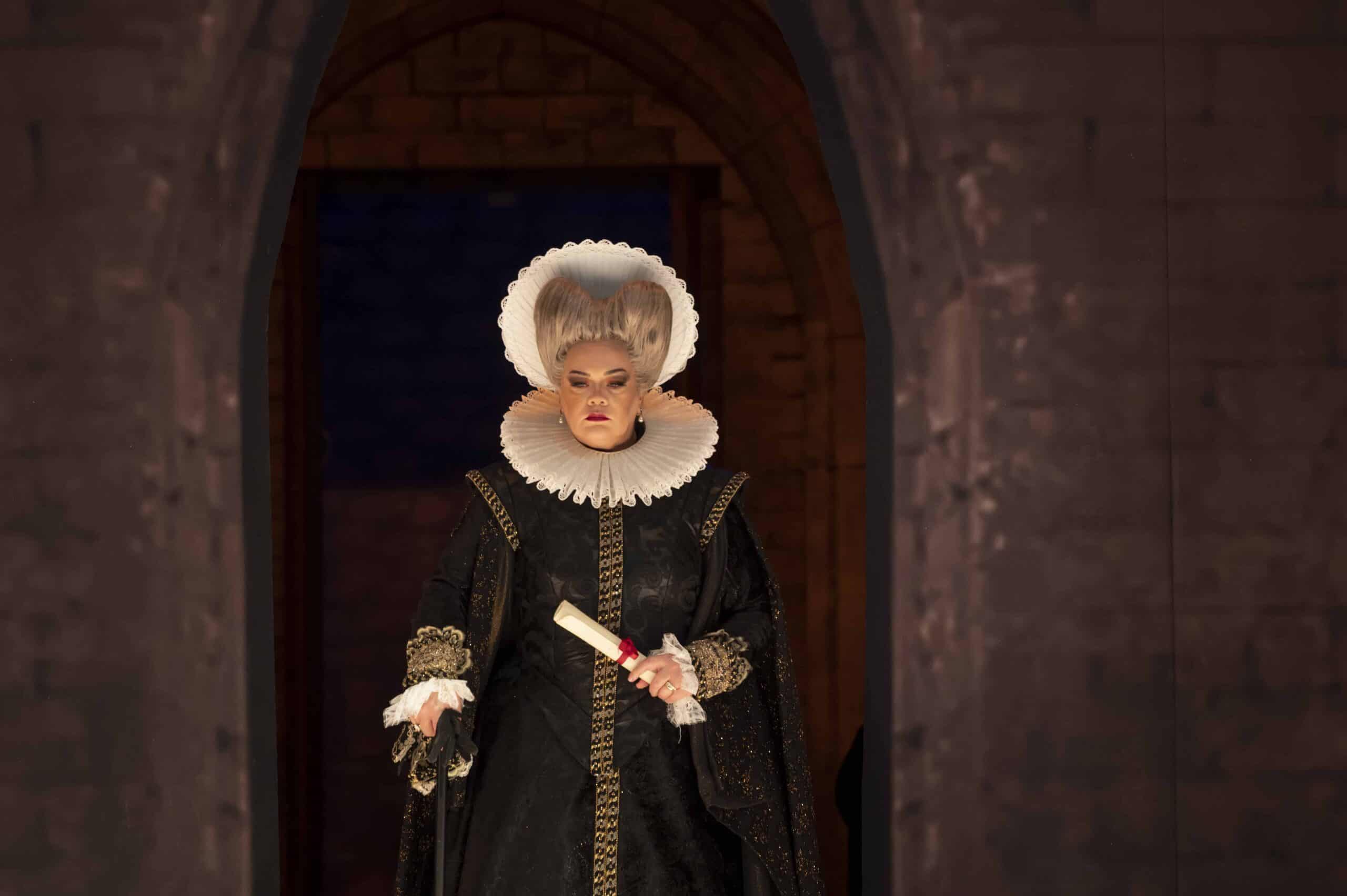 © J. Berger[/caption]
Serena Farnocchia sings "Senza mama", the serene lament to the imagined child with the sensitivity of a soul-stricken sister, but unfortunately she sounds somewhat shrill here too and her voice becomes sharp in the highest notes. Viorica Urmana commands the scene as a convincing and frightening Zia Principessa and she possesses mezzo tones that pierce heart and soul. Here too all praise for the young conductor who conveys the nuances and refined colours from Puccini's score with precision to the orchestra. The convent life is gently introduced by the silvery rhythms of the bells, upon which the serene choir of the sisters enters and the sharpened, mournful notes of the piccolo repeat themselves.
The numerous secondary characters are beautifully cast in both one-act operas and form a perfect context for the central action to unfold. Special mention should certainly be made of the smooth and artless-cheerful children's choir of the Maîtrise of the Opéra de Wallonie in Mese Mariano. This diptych of the Opéra Royal de Wallonie is in its entirety a beautiful and refined symphonic-vocal fresco.
WHAT: Umberto Giordano: Mese Mariano / Giacomo Puccini: Suor Angelica
WHO: Lara Sansone [director], Oksana Lyniv [conductor], Serena Farnocchia, Viorica Urmana, Sarah Laulan, Patrick Delcour, Julie Bailly and others, Orchestra, Choir and Maîtrise Opéra Royal de Wallonie-Liège
WHERE: ORW, Liège
WHEN: February 6, 2022 (final performance)
Streaming on Francetvinfo.Fr/culture (from 14-2-2022)
S. FARNOCCHIA
Suor Angelica - Puccini
ORW Liège 2022
© J. Berger
Maîtrise
Mese Mariano - Giordano
ORW Liège 2022
© J. Berger
V. URMANA
Suor Angelica - Puccini
ORW Liège 2022
© J. Berger
S. FARNOCCHIA & S. LAULAN
Mese Mariano - Giordano
ORW Liège 2022
© J. Berger


