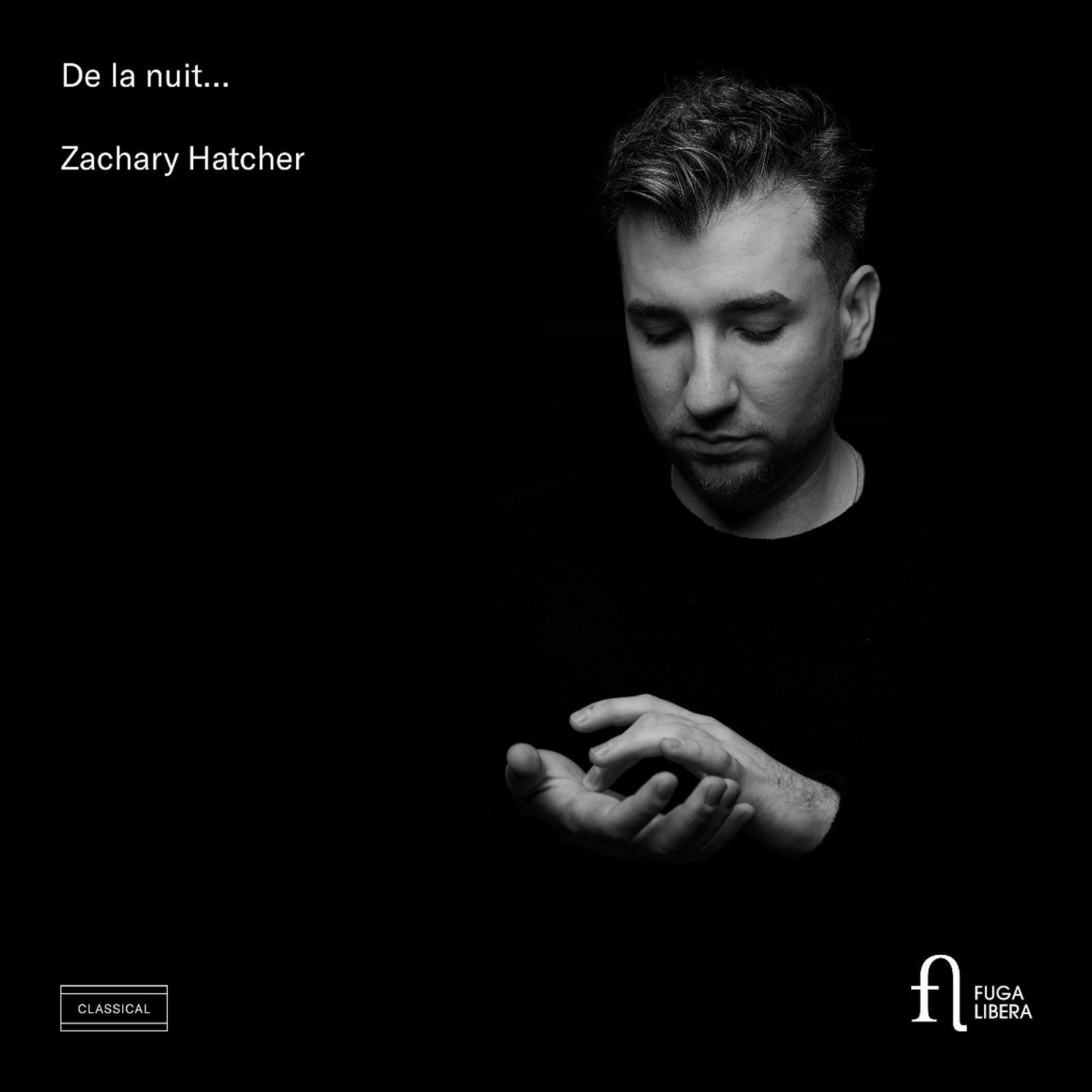
The harp quickly conjures up an image of ethereal sounds, elegant melodies and lightness. On his first solo album, De la nuit…, American harpist Zachary Hatcher shows that the instrument cannot be confined to that sound world. Alongside refinement and stillness there is room for unrest, dark expression and sharp contrasts. The programme combines his own work with compositions by Per Nørgård (1932–2025), Paul Hindemith (1895–1963), Henriette Renié (1875–1956) and Maurice Ravel (1875–1937). The night from the title thus takes on more than one face: from contemplation to music that grates and challenges the familiar image of the harp.
Beyond the familiar sound image
Hatcher opens with his Sonata for Solo Harp from 2024, a work in three movements in which the harp immediately reveals itself from different angles. The Burlesque is restless and at times unruly. In the Waltz, the dance form sounds less self-evident than the title suggests. The closing movement, Prayer, lasts almost ten minutes and brings a very different atmosphere. The music searches and gropes, as if asking questions for which there is no simple answer.
At times Hatcher seems to quote a familiar melody, only to fragment it. This produces an estranging effect, without the musical coherence being lost. With him the instrument need not sound sweet or dreamy: it may twist, resist and even deliver blows. In Prayer he moreover builds a piercing climax, with sharp sounds that give way to refined, intense glissandi. The work ends in stillness. A strong introduction to Hatcher's own musical language.
A different kind of concentration can be found in the two short works by the Danish composer Per Nørgård. In Consolation: As a Roselike Flower and Swan Descending, small musical gestures suffice to evoke a mood. The music does not need to spread itself wide: Hatcher gives the sounds time to resonate, while subtle changes keep the attention alive. Precisely in these miniatures he shows how little is needed to hold the listener.
Between unrest and stillness
Between the two Nørgård pieces sounds Hindemith's Sonate für Harfe from 1939, for me the surprise of the album. The beginning sounds somewhat tentative, as if Hatcher first explores the musical possibilities. That approach compels you to listen attentively: where is the music heading? In the question-and-answer game that unfolds, the musical lines gain more and more relief. Hatcher lets various facets of the harp be heard without the music becoming abstract.
He makes the structure and melodic coherence clearly audible without smoothing away Hindemith's idiosyncrasy. Those who associate the composer mainly with angularity and inaccessibility will discover here how directly his music can speak. The combination of expressiveness and the constant tension between form and freedom gives this performance a special power of expression.
That tension takes on a different character in the second movement, which sounds livelier. The charged, song-like ending then leaves a contemplative impression. Hatcher does not soften the sharp edges of the music; the moments of slowing down do give the musical lines room to resonate.
From drama to impressionistic refinement
Henriette Renié's Pièce symphonique (1907) also shows how powerfully the harp can sound. In the three episodes, seriousness, drama and reflection alternate. The Marche funèbre takes on a restrained, solemn character, after which Appassionata drives the music forward with greater mobility and emotional intensity. Hatcher makes that development audible without losing sight of the lyrical moments. In the closing movement, calm returns. The music becomes more contemplative, as if the initial pain does not disappear but gradually acquires a different meaning. Renié, herself a harpist and composer, exploits the instrument's possibilities to the full. The virtuosic passages contrast with moments in which the harp sounds delicate and singing.
The highlight of the album is Ondine, the first movement of Ravel's Gaspard de la nuit, in a transcription by Hatcher himself. The music begins quietly and cautiously and evokes a dreamworld that gradually reveals itself to the listener. The glissandi give the harp a very distinctive colour and make this arrangement particularly engaging alongside the familiar piano version. Hatcher masters the technical challenges with natural ease and at the same time preserves the balance between movement and stillness. The rippling figures acquire a different lightness, while the melodic lines remain clearly articulated. I find this transcription more appealing even than the original for piano. It almost makes you wonder why Ravel did not arrange the work for harp himself.
A harp with many faces
De la nuit… is convincing above all in the way Hatcher gives each work its own character. He does not seek one recognisable sound or approach, but adapts his playing to the diverse musical languages, from Hindemith's unruliness to Ravel's dreamy sound world.
The recording also adds to the listening pleasure. The harp sounds clear and natural, without disturbing reverberation. The basses are full, while the high notes remain refined. In this way both the power and the finer nuances of the instrument remain clearly audible. With this solo debut Hatcher reveals himself as a versatile musician with his own vision of the repertoire.