The Association of the Belgian Music Press awarded the Caecilia Prizes on April 15, 2021. This time without a festive ceremony due to the coronavirus situation. This will not diminish the joy of the laureates. We provide you here with the complete overview including the jury reports.
CD & DVD
- Carlo Gesualdo da Venosa
Tenebrae
Graindelavoix, Björn Schmelzer
Glossa
Mourning and remorse: few were marked by it as deeply as Carlo Gesualdo, Prince of Venosa and nephew of Saint Carolus Borromeus. Remorse over his crimes (the "honor" murder of his wife and her lover), mourning over the death of both his children: it seems reflected in his polyphony pushing against the boundaries. But perhaps it was boundless passion that was the foundation of his moral and musical extremism. Few have given Gesualdo's responsories for Holy Week such raw and yet compassionate voice as Björn Schmelzer's extraordinary ensemble Graindelavoix in their new recording. More than three hours of mourning and remorse. (Stephan Moens)
- Andreas Hammerschmidt
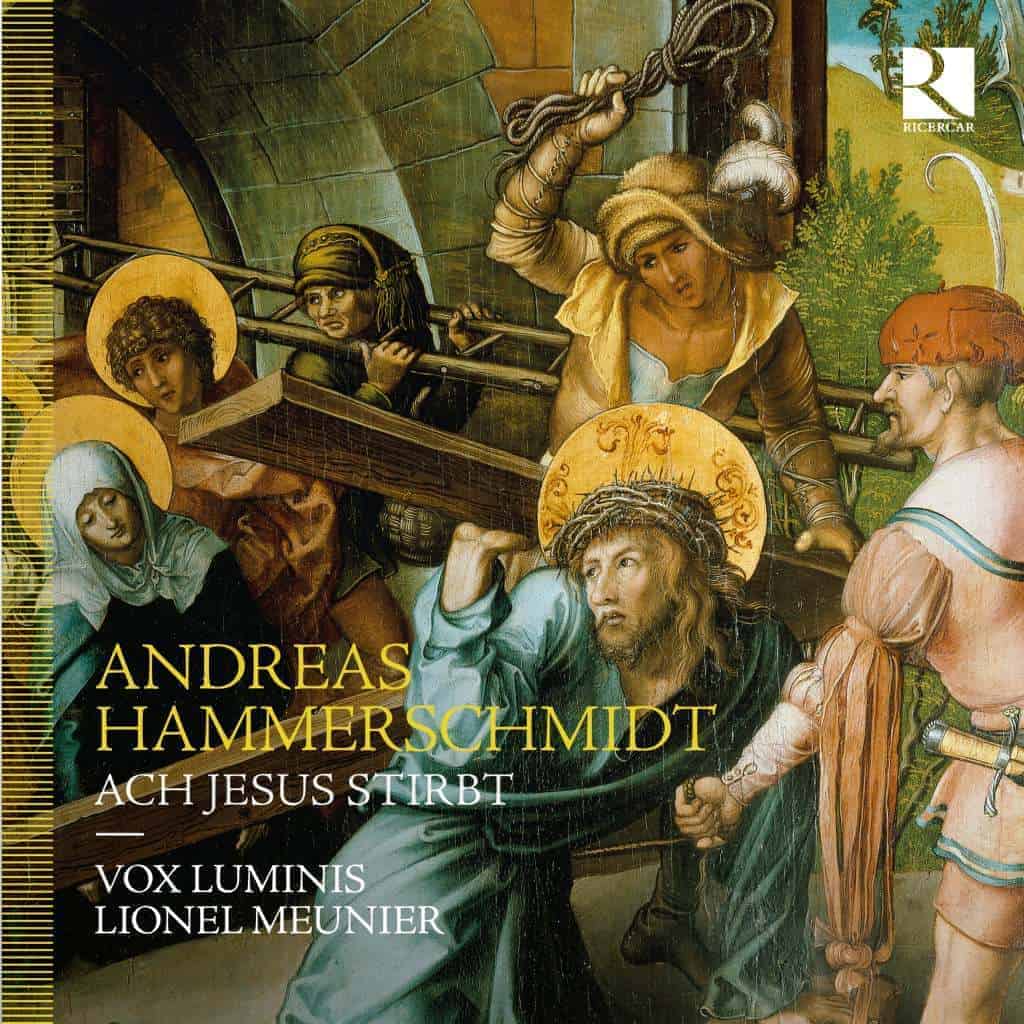
Ah Jesus stirbt
Vox Luminis, Lionel Meunier
Ricercar
During and after the Thirty Years' War, German Protestant church music (often condescendingly labeled as "pre-Bach") produced remarkably poignant works. We know fine examples from Schütz. Now you can certainly add Andreas Hammerschmidt to that. The choice Lionel Meunier has made from his extensive oeuvre rightly focuses on works for the Passion and Easter season. There you find the most moving, most compelling music. Soloists, choir, and orchestra focus precisely on expression and fervor. (Stephan Moens)
- Georg Friedrich Haendel
Agrippina
Joyce DiDonato, Franco Fagioli, Jakub Józef Orliński, Marie-Nicole Lemieux, Elsa Benoit, Luca Pisaroni, Andrea Mastroni, Carlo Vistoli, Biagio Pizzuti, Il Pomo D'oro, Maxim Emelyanychev
Erato
It has been said before: Haendel operas belong in the hands of the very greatest singers and conductors with an unbridled sense of drama. That certainly applies to Agrippina, which, thanks to Venice's liberal climate, is perhaps the most satirical and funniest opera by the genius from Saxony. And then you have Joyce DiDonato in the title role and Maxim Emelyanychev conducting at the harpsichord. Joyce dominates but the rest of the cast – including a brilliant Franco Fagioli as Nero – hardly falls short of her (Stephan Moens)
- Louis Adam, Ludwig van Beethoven, Daniel Steibelt
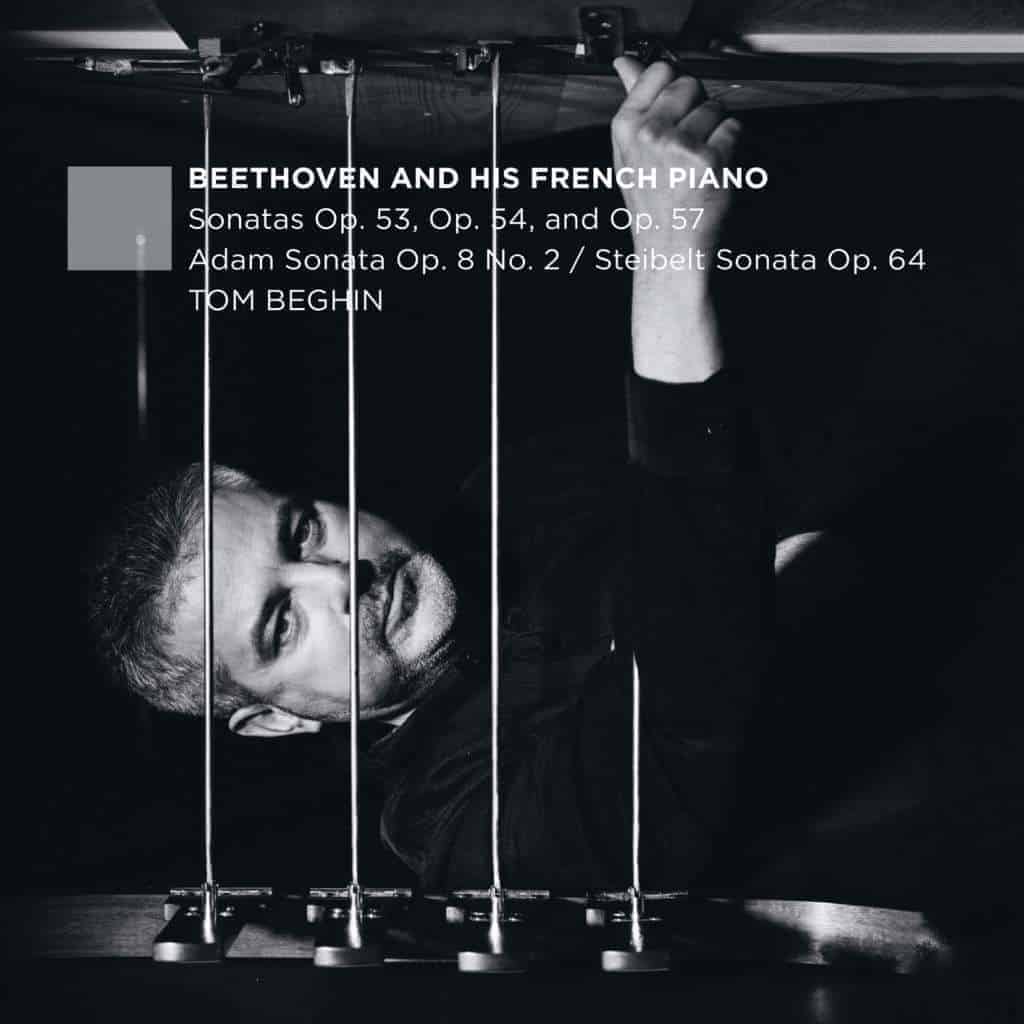
Beethoven and his French piano
Tom Beghin
Evil Penguin
What if Beethoven had moved to Paris? What if he had not had his Erard piano rebuilt (and ruined) in Vienna? What if he had been able to compose his Appassionata on that piano in its original state? Such and many other questions arose in Tom Beghin's latest project. For this he had the piano in question rebuilt by Chris Maene to play the Waldstein, the Appassionata, and the playful sonata op. 54 on it. Beghin guides us through French examples (Louis Adam and Daniel Steibelt) to the discoveries, problems, and frustrations Beethoven encountered in his work on that piano and his attempts to provide an answer to the French virtuosos. The CDs include extensive essays and access to lectures and documentaries on the internet. This is the textbook example of what a CD can still mean in the future, and moreover one that has been made entirely by Belgian people and with Belgian resources. (Stephan Moens)
- Ludwig van Beethoven, Franz Schubert, Wolfgang Rihm
Vanitas
Georg Nigl
Olga Pashchenko
Alpha
Georg Nigl never ceases to surprise and move us, both through his commitment in opera productions and on this "Vanitas" CD. Everything started with Vermischter Traum, a cycle of seven songs that Wolfgang Rihm wrote for the baritone in 2017. Nigl moves us through his art of singing in an increasingly natural, credible, and intimate way. Even when he sings pianissimo, he declaims—or rather: he lives—every sentence, every word even. His timbre is unique. With Beethoven's An die ferne Geliebte, Nigl here also presents a second cycle, as well as a selection of Schubert songs with popular numbers such as Die Forelle or rarities such as Das Zügenglöcklein. Pianist Olga Pashchenko rightly chose a copy of a Graf fortepiano from 1819 for this. This recording convincingly shows that the lied has a bright future both in the concert hall and on CD. (Hans Reul)
- Robert Schumann
Stille Liebe
Samuel Hasselhorn, Joseph Middleton Harmonia Mundi
The young German baritone -accompanied by the perfectly playing pianist Joseph Middleton whom he met during the Queen Elisabeth Competition in 2018, when the singer won first prize- provides an excellent first recording. He chose for little known songs where he shows a rarely heard balance -so important in this repertoire- between unconditional commitment and a form of self-effacement. Beautiful voice, clear and expressive diction, infallible technique. Hasselhorn rounds off the recording with a splendid version of the Fünf Lieder where both poetry and passion can be found. (Martine D. Mergeay)
- Béla Bartók, Johannes Brahms, Franz Liszt
Alexandre Kantorow
BIS
Four youthful works that sound almost like one opus! Two legendary rhapsodies -by Brahms and Liszt- frame the Second Sonata (actually the first) of the 21-year-old Brahms, the brilliant and rarely performed Rapsodie Nr. 1 by the clearly Liszt-inspired 23-year-old Bartók. The performance by the young French pianist excels through a natural and organic development, where the music resounds as an epic and virtuosity becomes pure beauty. (Martine D. Mergeay)
DVD
- Ambroise Thomas
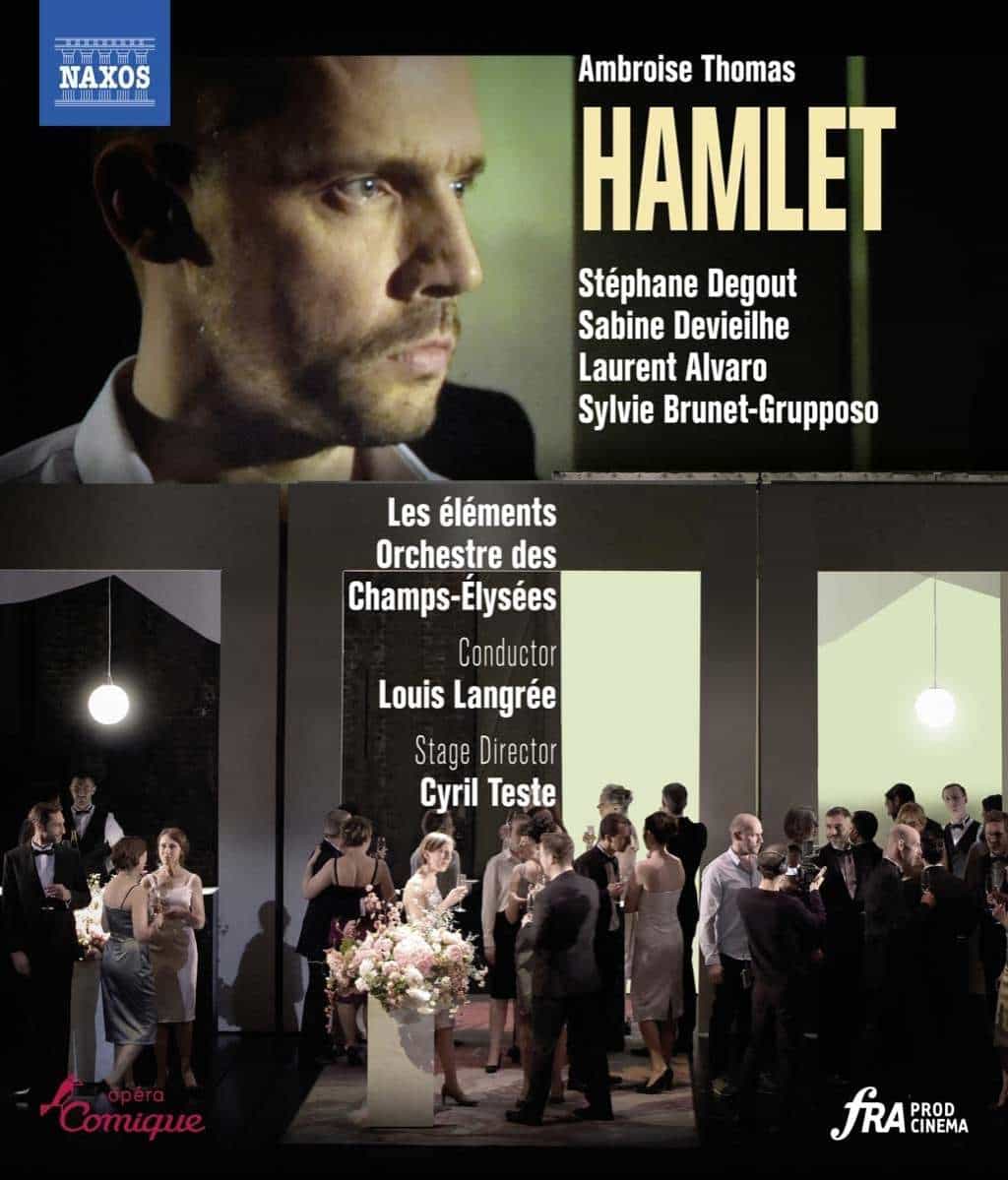
Hamlet
Stéphane Degout, Sabine Devieilhe, Laurent Alvaro, Sylvie Brunet-Grupposo, Les éléments, Orchestre des Champs-Élysées, Louis Langrée
Naxos
What an impressive spectacle! This production from the Paris Opéra-Comique does full justice to this rarely shown work by Ambroise Thomas. The musical direction rests in the very capable hands of former OPRL-chief Louis Langrée and the roles are brilliantly cast, including Stéphane Degout as Hamlet and Sabine Devieilhe as Ophélia. Everyone deserves credit here for the impeccable diction, perfect phrasing and musicality, and also convincing acting. The staging by Cyril Teste is extremely engaging. The director demonstrates thoughtful and considered modernity and succeeds in perfectly combining music, theater and cinema. The scenic action using videos -theater within theater- is perfectly captured on this DVD, which is rather rare. (Hans Reul)
- Arnold Schoenberg, Anton Webern, Alexander von Zemlinsky
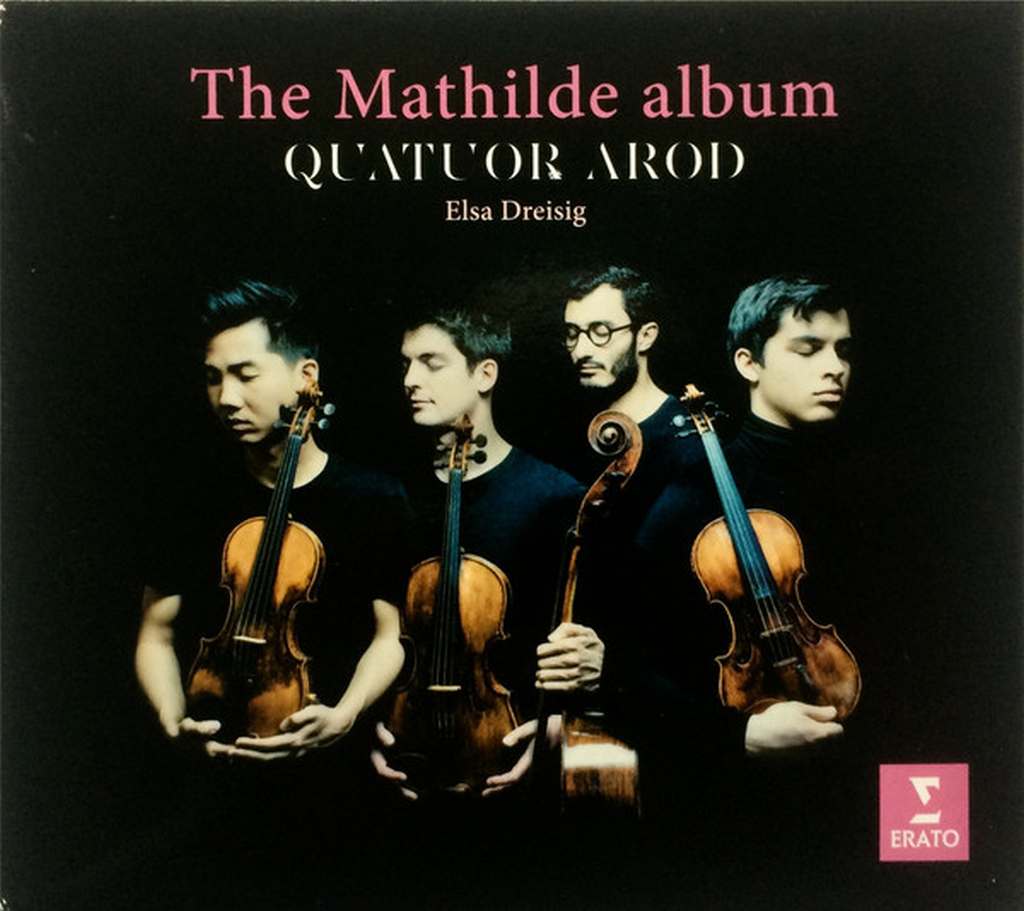
The Mathilde album
Quatuor Arod
Elsa Dreisig
Erato
Actually, it doesn't matter whether we really owe the existence of these two beautiful quartets to Mathilde, sister of Zemlinsky and wife of Schönberg (in turn the teacher of Webern, whose Langsamer Satz opens the program), to her. The Quatuor Arod provides top-shelf performances here. It always manages to strike the right tone, both in the acute late Romanticism of a Schönberg venturing on the path of atonality (with a beautiful contribution from soprano Elsa Dreisig) and in the long and lush work of Zemlinsky, Schönberg's brother-in-law and teacher. (Patrice Lieberman)
- Gérard Grisey, Joseph Haydn, Luigi Nono
La Passione
Barbara Hannigan
Ludwig Orchestra
Alpha
Barbara Hannigan's art stands firmly in our time and lends current accents to every work she takes on. She dusts off Haydn and – unlike so many other performers – makes him modern again. In this way, connections are drawn between the fierce contrasts of the 'Sturm und Drang' symphonies, the razor-sharp manifestos of Luigi Nono and the stark emotion of a Gérard Grisey. Under the direction of the Canadian conductor and soprano, the Ludwig Orchestra (which celebrates its tenth anniversary this year) brings Haydn's symphony 'La Passione' Hob I:49, Nono's Djamila Boupacha and Grisey's Quatre chants pour franchir le seuil a rarely seen passion. (Olivier Vrins)
PRIX SNEPVANGERSPRIJS
For an excellent Belgian production
- Bernard Foccroulle
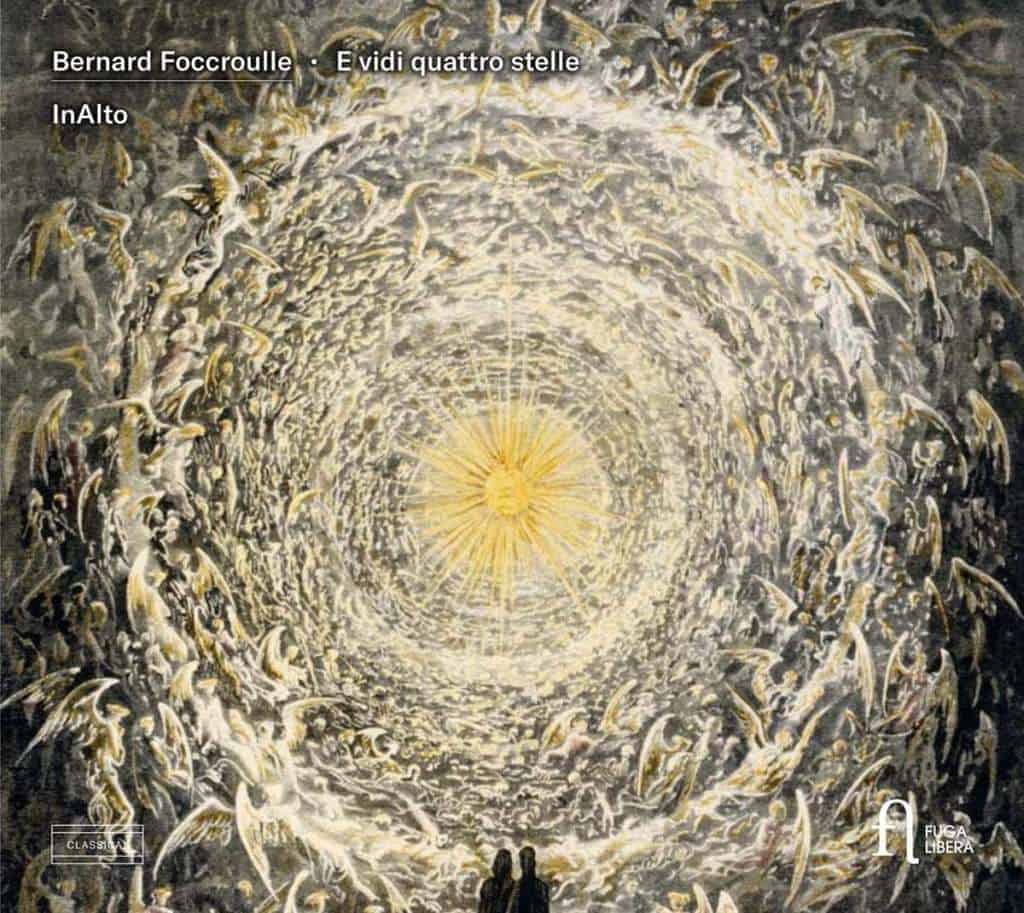
E vidi quattro stelle
InAlto
Fuga Libera
For this commission from Bozar and Ars Musica on the occasion of the inauguration of the now so damaged organ of the Brussels hall, the composer drew inspiration from Dante's Purgatory, from which he carefully selected the sung texts for this admittedly unusual work (oratorio? cantata?). The work charms through refined, purified and timeless writing that points both to the present and to the past (including through the use of authentic instruments) and that evokes a genuine but restrained emotion in the listener. Bernard Foccroulle demonstrates his skill as a sound alchemist here. (Patrice Lieberman)
SPECIAL PRIZE OF THE JURY
- André De Groote
Ludwig van Beethoven
Integral
of Sonatas for Piano Et'cetera
To conclude the Beethoven year beautifully, there could be no finer link between two life stories than the reissue of this integral performance of the sonatas by our countryman André De Groote (who, by the way, celebrated his 80th birthday in 2020). This version already appeared in 2000 with the record label Naxos. These are recordings made between 1995 and 1998 at the Brussels Conservatory and which were preceded by another integral performance, when André De Groote presented these sonatas in 1993 at a mythical place - the Beethoven-Haus in Bonn. We hear here the rich, authentic, cultivated bond that exists between composer and performer, and which translates into an exceptional and unforced mastery. A wonderful opportunity to rediscover one of the great pianists of the 20th century. (Martine D. Mergeay)
ALBERT DE SUTTER PRIZE / HISTORICAL RECORDING
- Masters of the German Baroque
Ricercar
Record label Ricercar celebrates its fortieth anniversary with an extraordinary publication. Since 1980, Jérôme Lejeune has been engaged in discovering and rediscovering repertoire. In the early days of Ricercar, he also published recordings devoted to contemporary music, but his curiosity about and especially love for Early music took precedence. It is primarily German Baroque music that fascinated him, leading him to search for unjustly forgotten works or choose to record well-known masterpieces in new and exemplary performances. Masters of the German Baroque comprises 31 records, accounting for 40 hours of music. Here we certainly hear the musicians who have left their mark on the Ricercar adventure, beginning with Max van Egmond and loyal friend Bernard Foccroulle through to Vox Luminis. An extremely meritorious collection and a well-deserved special prize for the publisher's remarkable work. (Hans Reul)
YOUNG MUSICIAN OF THE YEAR PRIZE
The Young Musician of the Year Prize is awarded alternately to a Dutch-speaking and a French-speaking or German-speaking musician.
Traverso, harpsichord, artistic director Ensemble Musica Gloria
Young Musician of the Year 2020 - Beniamino Paganini (by Roger Creyf)
Laureate of the Association of the Belgian Music Press
It was not easy for the Association of the Belgian Music Press to award the Cecilia Prizes for the pandemic year 2020. That went, like so much, through zoom sessions and extensive email correspondence.
Based on the annual selection made by members and followed by the final decision of a jury, these Cecilias are awarded to the best CD recordings. And each year a prize is also awarded to a "Young Musician of the Year", alternately for a musician from the Dutch-speaking Community and the French-speaking one. Due to corona, the official presentation can only take place in the autumn.
For 2020, that became the 26-year-old Beniamino Paganini. He is artistic director of the ensemble Musica Gloria and is primarily himself a traverso player and harpsichordist. Other candidates were oboist Nele Vertommen (who also plays with Musica Gloria) and sopranos Annelies Van Gramberen and Deborah Cachet.
When I was still studying music history at the Brugge Conservatory with cellist Arne Deforce, a very clever young man would regularly listen in. During those lessons, the teacher would often throw questions at the group, and before any of those adult students could respond, the astute observations and witty answers most often came from that young teenager: he was then 15.
Once after class, he distributed invitations to a Christmas concert that he was organizing with his young friends in a small church near Brugge. I thought I should bring such youthful talent to the News, the television journalist in me. Unfortunately, that didn't happen because on the day of that Christmas concert there was such heavy snowfall that camera crews had to be deployed elsewhere. A missed opportunity? But no, talent always manifests itself, even without the media.
Our Young Musician of the Year is now 26 and absolutely wanted to study music theory already in the first year. And at age 12, he was already organizing "Christmas concerts in Baroque style" with musical friends, already under the name Musica Gloria, the ensemble of which he now has artistic direction. Baroque music was his love from the start. Hence also the choice for the warm sound of the traverso, but he plays the harpsichord equally well. He obtained his master's diplomas in Traverso (2016), Harpsichord (2017), Maestro al Cembalo (2019) and bachelor's diploma in Musicology (2018), all with great distinction. And he also performs regularly (concerts and recordings) with other ensembles such as Il Gardellino (Jan De Winne and Marcel Ponseele), Scherzi Musicali (Nicolas Achten), B'Rock and La Petite Bande (Sigiswald Kuijken). And we've also already seen him performing on the "corona TV channel" Podium 19 and heard him in De Twintigers on Klara. The awarded 'Young Musician' receives a concert gift at BOZAR on October 3, 2021, in the 'Rising Stars' series.
JURY COMPOSITION
Roger Creyf, Klassiek Centraal
Patrice Lieberman, President of the Association of the Belgian Music Press, Crescendo
Martine D. Mergeay, La Libre Belgique, Musiq3
Stephan Moens, De Morgen
Hans Reul, BRF
Olivier Vrins, Crescendo