

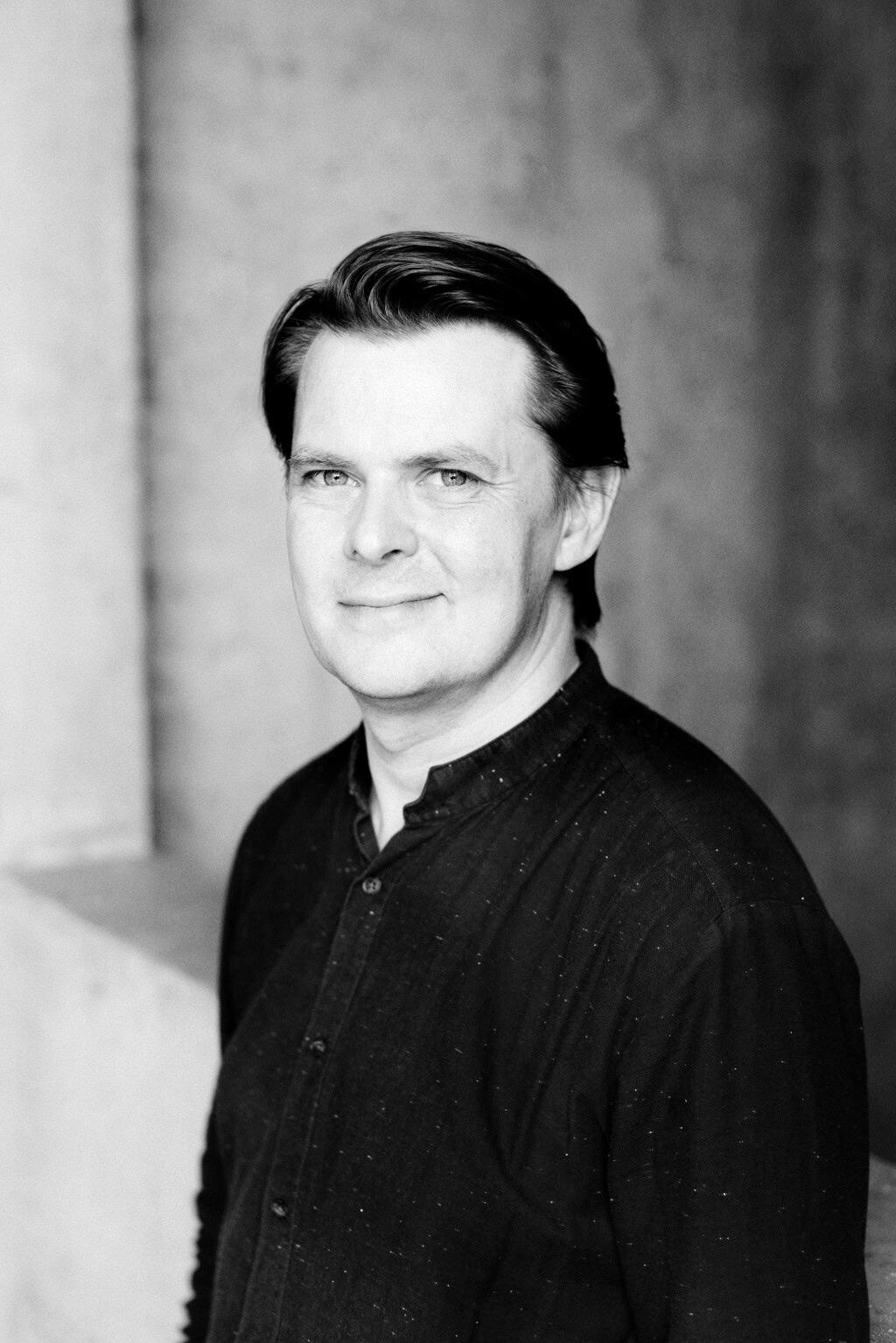
Twenty-five years ago, Bart Van Reyn stood before a handful of young singers. What began as a small choir project grew into Octopus, one of the most influential vocal ensembles in Flanders.
Under his leadership, the choir developed a recognizable sound and its own identity, in which precision, dedication and humanity go hand in hand. Today, Van Reyn is not only artistic director of Octopus, but also chief conductor of the Flemish Radio Choir. In an interview with Klassiek Centraal, he shares how he builds bridges between tradition and innovation, between notes and humanity, between idea and execution.
Conducting as listening and breathing
For Van Reyn, conducting is much more than beating a measure. It is a constant balancing act between communicating, listening and structuring. "It starts with understanding the composer's idea at home, imagining how every note should sound. Then you go to a choir or orchestra as a kind of advocate for the composer. The real work only begins when you listen to what you get back. It is a dance between utopia and reality that you are constantly engaged in: you have an idea of how it should sound, but at the same time you must also dare to depart from the sound of the ensemble." "In my early years, I was almost always unfaithful to the plan I had drawn up myself, which gets you into trouble. Now I know exactly how much time a group needs to sound concert-ready."
"You have an idea of how it should sound, but at the same time you must also dare to depart from the sound of the ensemble. And then there is the enemy: time. Good time management is vital. After a number of years you learn to feel when you can keep going, when detail work is needed, and when letting go is the right thing to do." He has learned to alternate between playing through and detail work while rehearsing all the sections he had planned: "That is a dance with time in which feeling and experience are crucial." Breathing together, also with orchestras, forms the foundation for one sound. Silence and emptiness must be conducted; sometimes even the audience. "You conduct the audience along, between movements or at the end of a work. The conductor then becomes a director of time and silence."
Dedication cannot be rehearsed. "Most of the time in rehearsals goes into precision: rhythm, intonation, text, articulation, ensemble playing, rhetoric… Only when that is at level does dedication come. And that is difficult to simulate: you can directly feel during a concert when an ensemble is going to throw itself completely into the music. Then you let the precision slip a bit and go along with the inspiration of the moment. It is the moment for the conductor to also explore uncharted territory together with the performers and audience." Physical presence, breath, gesture and posture also influence the sound. "It is metaphysical. Body language plays a major role, and it remains a mind game. I have seen in master classes how the same orchestra sounds completely different under different conductors."
Voice and language as connection
For Van Reyn, language is just as important as sound. "I pay a lot of attention to the colour of the language and perfect pronunciation. This creates homogeneity and crystal-clear communication with the audience. It is essential that singers are imbued with what they are singing. After all, the composer of a text also once started from a piece of paper." The moment when a choir truly sings together, you recognize it in small gestures: eye contact between the singers, a smile. Only then do singers really listen, free from the score. Moreover, singing is a vulnerable profession. "Singing is physically more demanding than, for example, playing a string instrument. Constructive criticism hits more directly when you yourself are the instrument. At the same time, the human voice is the most beautiful instrument; you also notice this in the popularity of vocal music with the audience. That makes vocal music so connecting and irreplaceable, especially in an increasingly digital age."
"Vocal music is the epitome of what you want to experience live: opera, oratorio, Christmas concerts, all moments of connection that AI can never approach." Van Reyn believes in humanity in leadership. "The age of authoritarian conductors is behind us. I see myself as primus inter pares: I take the lead, but there is always room for questions and suggestions. Natural leadership is built with a group you work with longer; with new ensembles you start, and I also find that fascinating, with a blank slate."
Historical practices and contemporary context
Van Reyn likes to start from the colour palette of the composer's instrumentation and enjoys working with period orchestras. "But we perform in modern concert halls, often much larger than before, for an audience of today that is not expecting three hours of concerts in which only excerpts of works are performed. Informed yes, dogmatic no. The goal is always to serve the composer, not to follow strict historical rules." "The only 'correct' way to sing Bach is not necessarily with boys' voices as sopranos; we have moved past that stage. The context determines how we can best present the work."
Octopus: an idea that endures
Van Reyn still has a clear memory of Octopus's first days. "Exciting, and I wanted everything at once. Those eight poor singers we immediately had sing Bruckner's 'Christus factus est', because I was completely crazy about it." The choir grew quickly: from eight to twelve, sixteen, and in 2002 to 26 singers. "If a couple of singers were unavailable, we had to rehearse 'beheaded'. Then I realized: you achieve quality from quantity. That is how Octopus grew steadily."
"The real turning point came in 2010: four performances of Beethoven 9 with Symfonieorkest Vlaanderen, followed by James MacMillans St John Passion. Compliments from a world-renowned composer confirmed we were on the right track. We had to start speaking of a Chamber Choir and Symphonic Choir, a major quality choir that could share stages with all the great symphonic orchestras. In the years that followed, unforgettable moments such as at Théâtre des Champs-Elysées and the Mahler Second with Budapest Festival Orchestra and Iván Fischer made this symphonic choir story truly special."
Today Octopus counts 200 singers, selected per project, with 327 concerts and 183 programs behind them. "In 2013 we unexpectedly received 4 years of subsidies and mainly professionalized the Chamber Choir. Our a capella cd Birds of Paradise was internationally praised". Octopus is more than a choir: "It is an idea that hundreds of singers have contributed to. People come and go, the idea remains. The sound is independent of individuals, the choir always sounds similar, despite the group being composed differently each time. The loss of three singers brought us closer together, especially when we paid them our final respects together with music." The values remain unchanged: integrity in auditions, balance between experience and young voices, a repertoire with Bach, Beethoven, Brahms, Händel, Haydn, Mozart and Mahler. Van Reyn's ultimate dream: Mahler 8 in the Concertgebouw Amsterdam, "with both sides next to the organ full of Octopus."
A quarter century of breath and devotion
After 25 years, it is clear with Bart Van Reyn that conducting is not only an action, but a way of listening, connecting and shaping. Octopus has grown into a sonic world and an idea that transcends individuals: people come and go, the project remains, and the recognizable sound is preserved. For Van Reyn it is about the breath that connects the group, the devotion that makes a concert unique and the human closeness that gives meaning to each performance. One word sums it up: devotion.
In every performance, the spirit of Octopus reflects that music connects, inspires and brings time to a brief standstill. That may well be the most beautiful result of 25 years of Octopus: a community of voices, an idea that remains and a future full of possibilities. Vocal music remains according to Van Reyn the ultimate way to experience humanity and connectedness, especially in this increasingly digital and individualistic world…