

Muziekcentrum De Bijloke - Bad Composers Festival
Sunday 24 April from 10.00 to 22.00 (6 concerts)
Attempts to sweep all forms of violence and exploitation under the carpet are legion, virtually everywhere in the world. Sexual abuse thrives in silence. For years, what am I saying... for centuries perpetrators have been able to go about their business with impunity.
The higher the rank, the more influential men think they can do as they please: clergy, professors, doctors, managers… Powerful men hire lawyers to silence their victims, especially when threats and intimidation have no effect. The #MeToo movement has recently, however, given a tremendous boost to the development of reporting sexual aggression or harassment.
It is infuriating that Russian soldiers in Ukraine are molesting and raping women, abusing them as a war tactic to humiliate a people. Mass graves are being discovered. The aftermath of the abhorrent and murderous rule of a despot. The emotional toll that victims pay for suppressing their memories is hard to fathom.
WOKE <> SOUGHT
The art world is not exempt either. TV maker Bart De Pauw, artist Jan Fabre, football coach Marc Overmans, rockstar Marilyn Manson, Prince Andrew… In every field, the biggest stars are falling from their pedestals.
In the world of classical music, it remained relatively quiet. Until now! Uncompromising in his efforts to bring the truth to light and prevent it from slipping further into the folds of history, Maarten Quanten, programmer of De Bijloke in Gent, exposed the less attractive sides of some composers. At the BAD COMPOSERS FESTIVAL, Muziekcentrum De Bijloke asks critical questions about great composers with highly controversial lifestyles. This results in a spicy mix. Maarten Quanten provides more insight into the project for Klassiek Centraal.
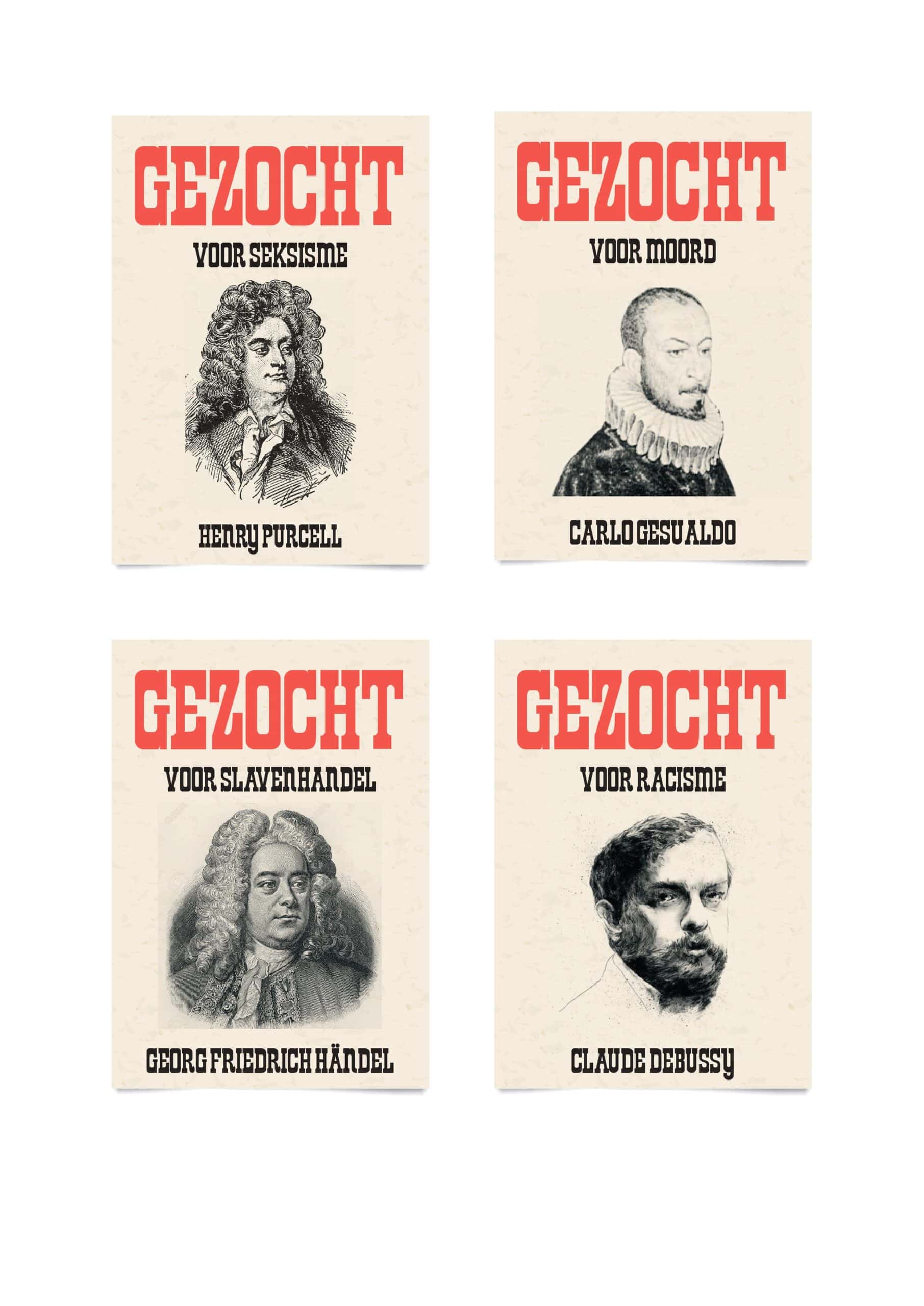
- That some composers were not saints is already well known, but with the #MeToo trials, the woke movement, Black Lives Matter, cultural appropriation and the war in Ukraine, everything is coming to a head and this concert series is becoming hyper topical!
Such questions have been bubbling up for some time. But it is certainly not the intention of De Bijloke to uncover hidden truths or nail composers to the pillory – we want to be neither detective nor judge. Actually, our starting point was rather the way composers are talked about. In our sector, we like to talk about composing geniuses and articulate their incredible artistic qualities. These stories frame their music and perhaps even steer the way we listen to their work. Inspired by the zeitgeist, we simply wanted to distort that framework. So we are not bringing new, juicy affairs to light, but simply articulating an aspect that is often underexposed in favour of heroic deeds. We do this from the question of how to deal with artists and, above all, their artworks that may reflect a zeitgeist that is no longer ours, certain ways of speaking and thinking that we even condemn. From that perspective, Bad Composers is a kind of 'artistic essay'.
- Is the public a bit too lax, too tolerant or beatific admirers of artists?
We don't want to take a stand on that with this festival. Nor is it intended to moralise. Rather, we want to experiment with the framework through which we listen to music and we want to invite the public to think about it. If we were to push for never programming Händel and Gesualdo again, we wouldn't have done it ourselves either now. Moreover, we absolutely believe in the qualities of their work. But that does not change the fact that the circumstances associated with the creation of that art should not be hidden behind heroic narratives. Händel was indeed involved in the activities of the South Sea Company and Royal African Company, which traded in slaves, just as a considerable part of his audience and financial backers did. So these are also conditions within which his art was created and which, in a sense, stick to it. Such 'stains' may become part of the stories surrounding Händel's work, especially since we not only preserve his music in an archive but bring his compositions to sound again, actualise them, experience them and enjoy them.
And… Gesualdo's music is of course unique. Who knows, perhaps the extreme dissonant and wrenching chromaticism is an expression of his tormented spirit? And perhaps that condition was the result of the murders he committed and for which, thanks to various privileges, he was not punished? That is absolutely not sympathetic. How do you listen to 'beauty' created by someone whose way of life is completely at odds with your own value system? Someone we would even call a monster today?
In a way, the Bad Composers Festival is a counter-reaction to the way we so easily talk about composers: "Figures who are elevated above the normal by their musical genius." Our intention is to bend that position. Starting from the stain, I suspect there is still enough left that is worth showing and listening to… But then within a new field of tension.
- The writer Gaea Schoeters was brought in. What is her role in all this?
Her contribution is a very important aspect of how we have approached this festival. The form that Bad Composers has taken is part of a broader search for new concert concepts in which we can use music to encourage reflection on certain topics. As a contemporary concert hall, we find that a very important task. This also includes searching for ever new ways to engage with art from the past. That engagement seems obvious, you simply show the art and enjoy it… but that engagement perhaps sometimes needs to be problematized.
In this case, we approached Gaea in her capacity as an activist intellectual, opinion maker and artist… who is moreover very familiar with the classical music world. With the help of musicologist Melissa Portaels, who provided historical-scientific commentary, Gaea would write six texts relating to the six topics that are central to the concerts and all dealing with morally 'good' and 'bad' in the context of music.
- Actors are being used. Are they the voice of the composer or rather critical observers who reflect on their work?
Gaea Schoeters chose to have the texts performed or read by actors whom she herself selected. Sometimes they embody the transformed voice of the composer by Gaea, sometimes there are other observers speaking. For example, Johan Heldenbergh plays the role of Händel and Gene Bervoets steps into the shoes of the Nazi musicologist who appears as a witness in a trial against several composers. Then it quickly becomes about how such an authoritarian regime presented musical forms as 'good', 'bad' or even 'harmful' and thus tried to steer the musical experience of an entire society. You see, it doesn't always have to be about composing villains.
- The librettos of operas also do not escape your sharp gaze! Opera sometimes revels in malice and sexism. 'Opera Too?' received it as an appropriate description.
Opera lends itself very well to demonstrating how a zeitgeist can be embedded in artworks. With abstract, instrumental music, that remains difficult to discern, but once text is used, time-bound ideas of course come much more clearly to the surface. We need this festival to establish that. After all, a lot has already been written about the place of women, mainly in 18th and 19th-century operas. Here the question arises again: "How do we deal with that?". After all, such operas have helped construct certain notions of gender! Actually, the entire festival is an exercise in that. An attempt to present the past in a different way than simply letting the artwork speak.
- Bringing harmony and dissonance together!
Exactly, that's well put. The lives of important composers are often told as a hagiography. Their genius is highlighted with admiration. Nevertheless, they are people of flesh and blood who lived in a certain time and were products of it. And that naturally applies to their work as well. Then you don't get very far by repeatedly raising the label 'timeless'. When we revive their work today, 'produce' it time and again on a stage, then reflection on the manner in which this is done is more necessary than ever.
- The gentlemen composers are dead and buried. They can no longer have their say.
We are not going to put them in the defendant's chair either. We are not bringing many new things into the spotlight. These are stories that are already known.
- The worldview has not changed much for the better. We still struggle with human trafficking, hostility to women, war…
The world and times constantly change between the two poles of good and evil. You can hyper-relativize everything and say: "Händel was a product of his time, etc., etc…" But that time was of course crucial in creating the situation that exists today. Today's racism is built on the slave trade of centuries past. You cannot erase it or downplay it. It is effectively hurtful. That is why it may be worthwhile to articulate those blemishes sometimes. The question is: "How do we deal with that today, do we cancel that music entirely or do we place it in a perspective that is open and clear?" It is worthwhile to deal with it in that way. You have to search for: what concepts can we use to take the audience along in the questions that arise around this dilemma.
- It is not only composers who are being targeted. The music itself can also sometimes be questioned!
That seems to be something of all times. Music certainly has a great emotional impact on listeners. It should come as no surprise that in certain contexts this was and is considered dangerous. Think of concerned 20th-century fathers wanting to protect their teenage daughters from dangerous rock devils. The Nazis, on the other hand, assumed that atonal music or jazz would have a harmful impact on listeners.
- Even Plato believed that certain rhythms and melodic modes would lead to unwanted behavior. He also saw benefit in strictly regulating music in education.
Such reflections seem to have largely disappeared from our engagement with music. But these days, other questions simply arise: what do you do with Claude Debussy who, with his Golliwogg's Cakewalk, not only plays with clichéd, mocking representations of Black people but also engages in a form of cultural appropriation by using the Cakewalk idiom. Such pieces are currently being removed from playlists in the United States – they are linked to historical injustice and are hurtful to groups of people who were victims of it. There are also subtle forms of appropriation that nonetheless raise questions.

Sit back, relax and enjoy the music is then perhaps no longer the order of the day – such stories and histories stick to works of art and are part of them.
Programme thematic
- 10.00 Servir Antico & actor Nico Boon
Le Chancelier and Perotinus (bad notes according to Plato and Boethius)
- 12.00 B'Rock Orchestra, Dmitry Sinkovsky and actor Johan Heldenbergh
Händel (slave trade)
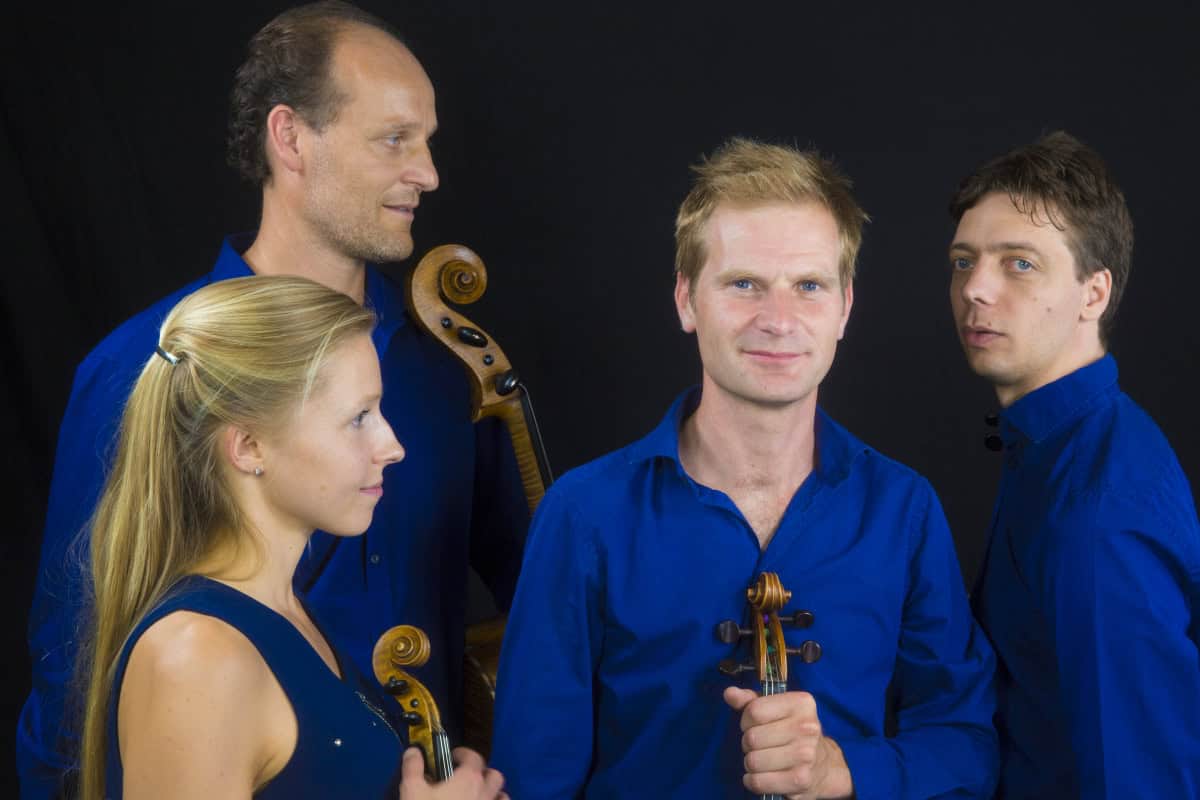
- 14.00 Taurus Quartet & actors Joke Devinck & Gene Bervoets
Webern & Respighi (Nazi Germany, fascist Italy)
- 16.00 International Opera Academie
Purcell (#MeToo & gender stereotypes)
- 18.00 Het Collectief
Debussy, Ravell, Poulenc and Jean-Pierre Deleuze (cultural appropriation)
- 20.00 EXAUDI
Gesualdo (murder & violence)
