You can't believe it and yet: two works by Johann Sebastian Bach (1685-1750) were discovered in Brussels. This means that the catalog list known as BWV (Bach-Werke-Verzeichnis) with all of Bach's known works has been expanded. This is big news for the music world. What is not the case is that these works are 'new' of course. They were part of the Fétis collection in Brussels. Read the official press release below.
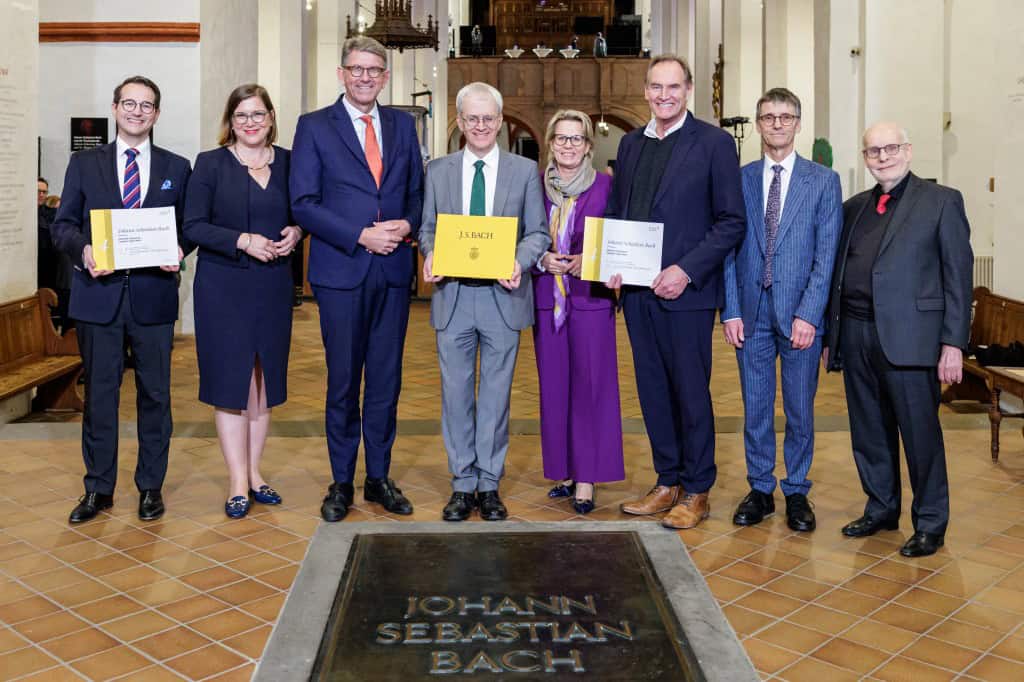
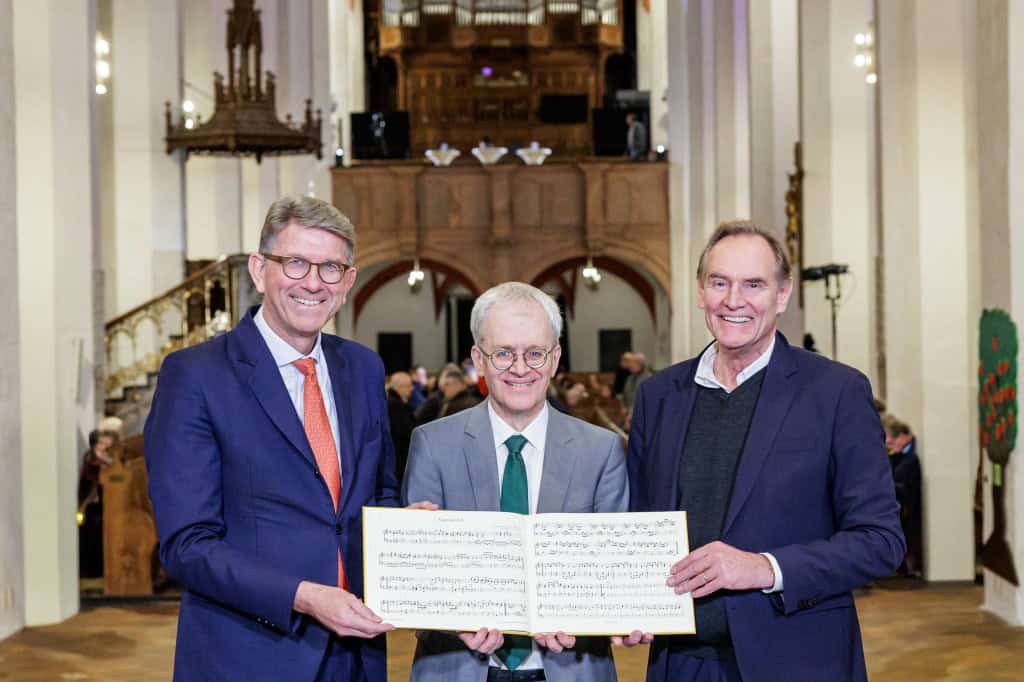
Brussels / Leipzig, 17 November 2025 – In the exceptional Fétis collection, preserved in the Royal Library of Belgium (KBR), two previously unknown organ works by Johann Sebastian Bach have been discovered. These pieces, which were recently authenticated by the Bach-Archiv Leipzig, were presented on 17 November at an exceptional concert in the Thomaskirche in Leipzig.
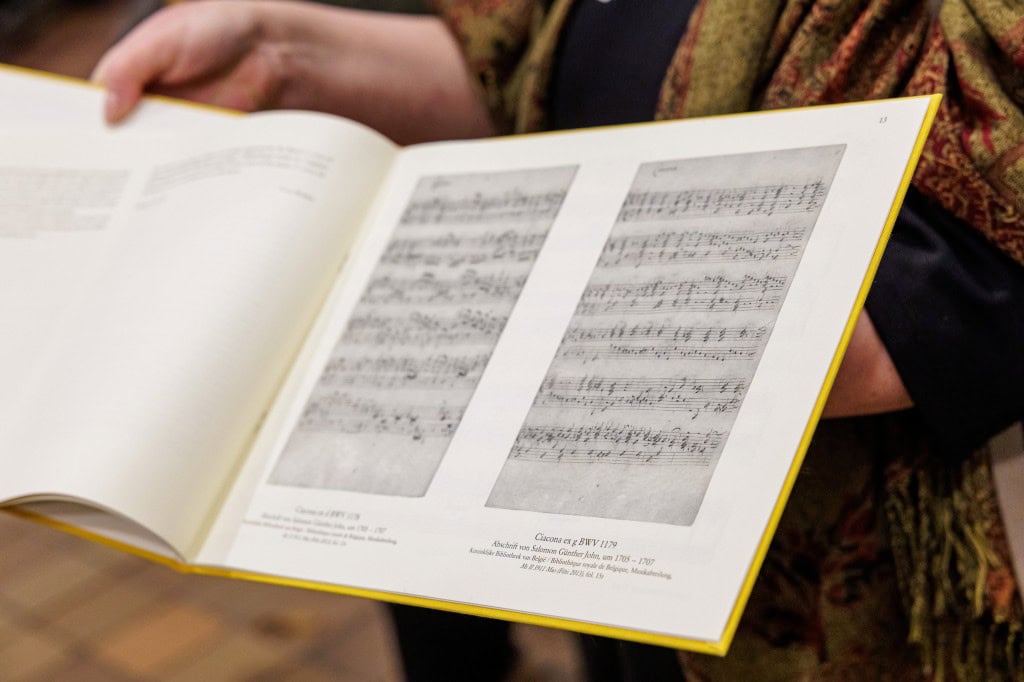
The catalog of Bach's works will henceforth be expanded with two new pieces: the Ciacona in d minor BWV 1178 and the Ciacona in g minor BWV 1179. After years of research, Peter Wollny, director of the Bach-Archiv Leipzig, was able to attribute these compositions to Johann Sebastian Bach with certainty, after discovering that the copies, made around 1705, were made by his pupil Salomon Günther John.
Prof. Dr. Dr. h. c. Peter Wollny explains: "We can state with certainty today that the copies were made around 1705 by Salomon Günther John, a pupil of Bach. Stylistically, these works also exhibit characteristics that are typical of Bach's compositions from that period, and that cannot be found in any other composer. I would like to express my sincere thanks to the colleagues at the Royal Library of Belgium and the Bach-Archiv Leipzig for their years of support in this research. My thanks also go to the partners of our foundation – the Federal Commissioner for Culture and Media, the state of Saxony and the city of Leipzig – for their continued confidence in the work of the Bach-Archiv and for the financial support that makes our mission possible."
The works are preserved in a manuscript from the Fétis collection, a monumental collection compiled by musicologist and composer François-Joseph Fétis (1784–1871), the first director of the Royal Conservatory of Brussels. He built up an extensive library during his lifetime, consisting mainly of musical documents, which is now housed in the KBR.
This collection also includes an autograph by Bach: the Suite für Laute BWV 995 (an adaptation of the fifth cello suite BWV 1011), which can be consulted online here.
About this collection, Marie Cornaz, curator of the music department of the Royal Library of Belgium (KBR), says: "With the François-Joseph Fétis collection (1784–1871), the Royal Library of Belgium preserves an exceptional treasure of precious manuscripts and prints from the 15th to the 19th century, of inestimable value for international musicological research. Our institution is one of the most important reference libraries in Europe, and we are particularly delighted that our Bach collection is enriched today with two new works."
The two chaconnes have just been published by the music publisher Breitkopf & Härtel (Leipzig) and are now accessible to the general public. The digital images of the KBR manuscript in which the works are preserved can also be consulted online here.
The inaugural concert, the first public performance of these works in 320 years, performed in the Thomaskirche by Dutch organist Ton Koopman, can be viewed upon request via the channels of the Bach-Archiv Leipzig.
The Bach-Archiv Leipzig, the international research center for Johann Sebastian Bach, celebrates its 75th anniversary in 2025. The institute researches the life, music and legacy of the composer and the extended musical Bach family. It also preserves and makes this heritage accessible as a cultural and educational wealth. The Bach-Archiv is part of the Conference of National Cultural Institutions and is one of Germany's cultural landmarks.
[embed]https://www.youtube.com/watch?v=4hXzUGYIL9M[/embed]