

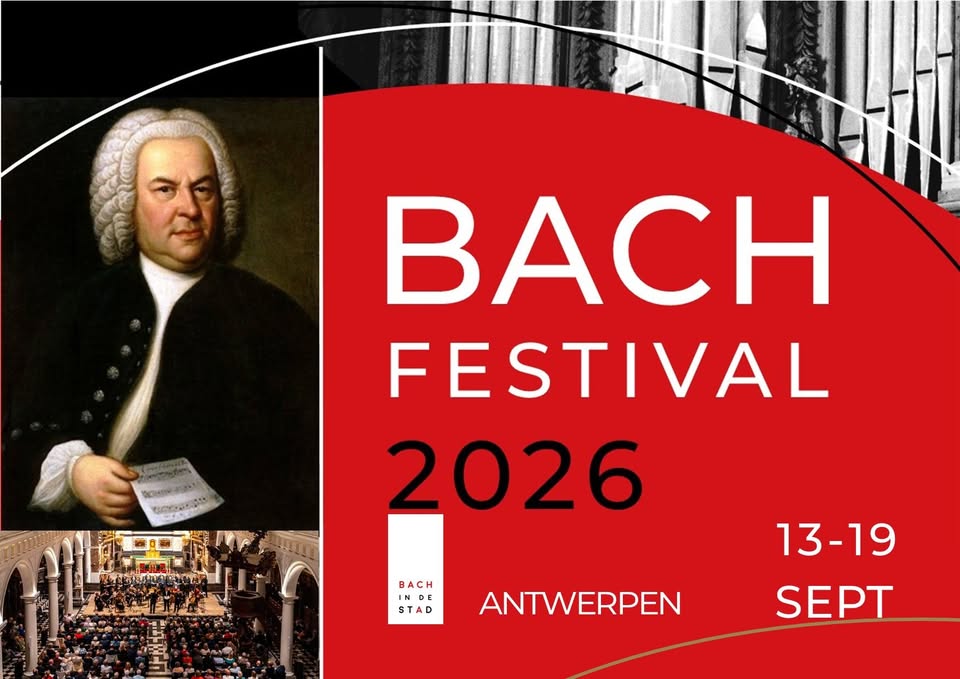
Summer is high season for music festivals. Not only for the large, popular festivals that make the news, but also for the many festivals around early music. In recent weeks you could already read here about Saint-Michel en Thiérache, I was a guest at the MA Festival in Brugge and soon we will report extensively about Laus Polyphoniae. And then there is of course Utrecht, later in September the festival in Laon and so many other places where early music gets all the space this summer.
Plenty of choice then. But among all those international names, there is also a festival in Antwerpen that has particularly interested me for years: the BACHFESTIVAL
A local festival, certainly. But one with a history that goes back much further than the festival itself.
Back to 2011
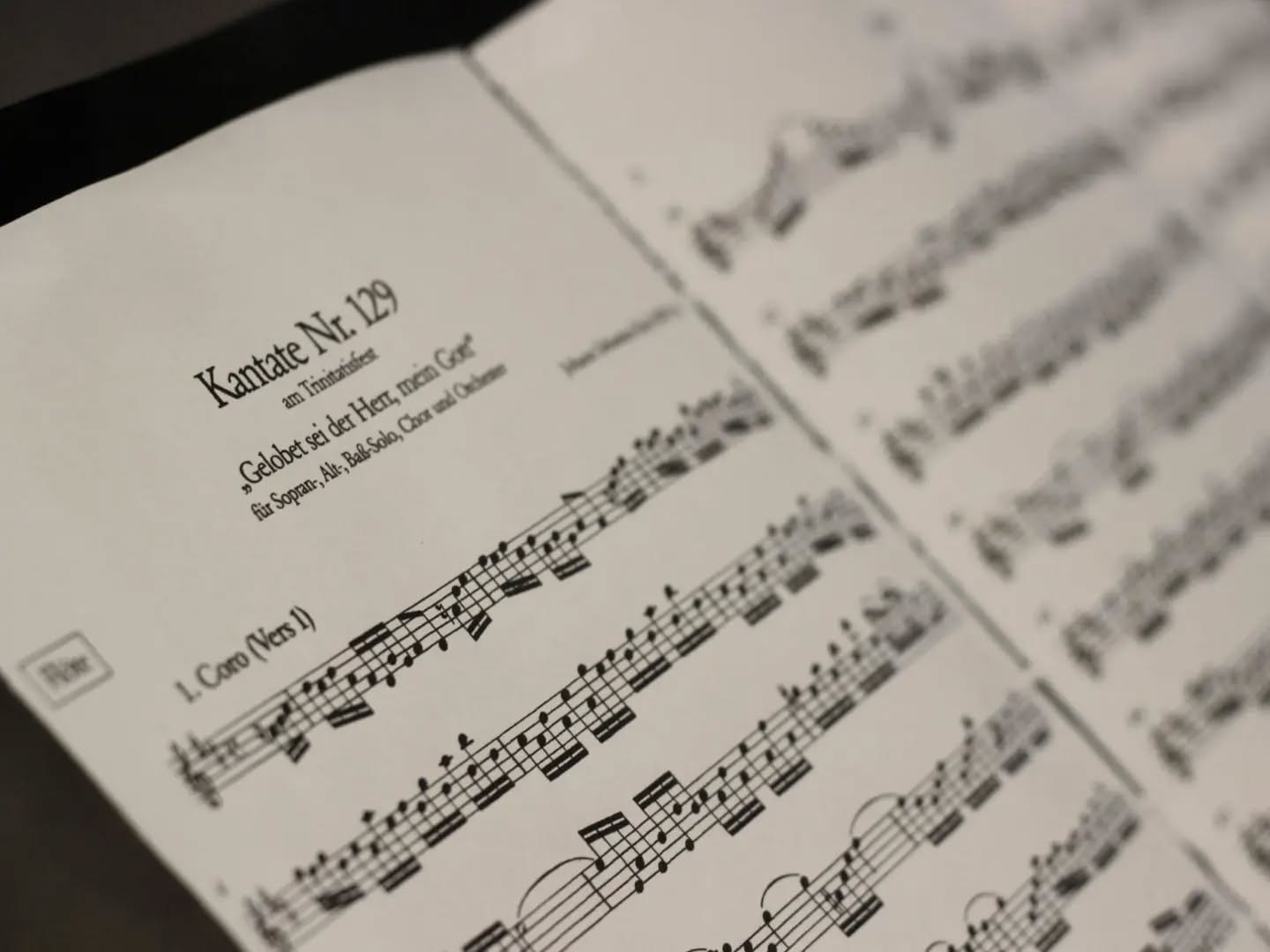 My first encounter with the festival dates from 2011. Or rather: with what would later become the organization BACH in de STAD. In the Sint-Norbertuskerk at the trendy Dageraadplaats, the Bachcantatediensten began back then.
I found that a particularly intelligent approach from the start. Bach did not write his cantatas to be performed centuries later in a concert hall as autonomous works of art. They were part of the liturgy, connected to the Gospel of the Sunday and intended to musically comment on and deepen that Gospel.
Why not perform them again in that context?
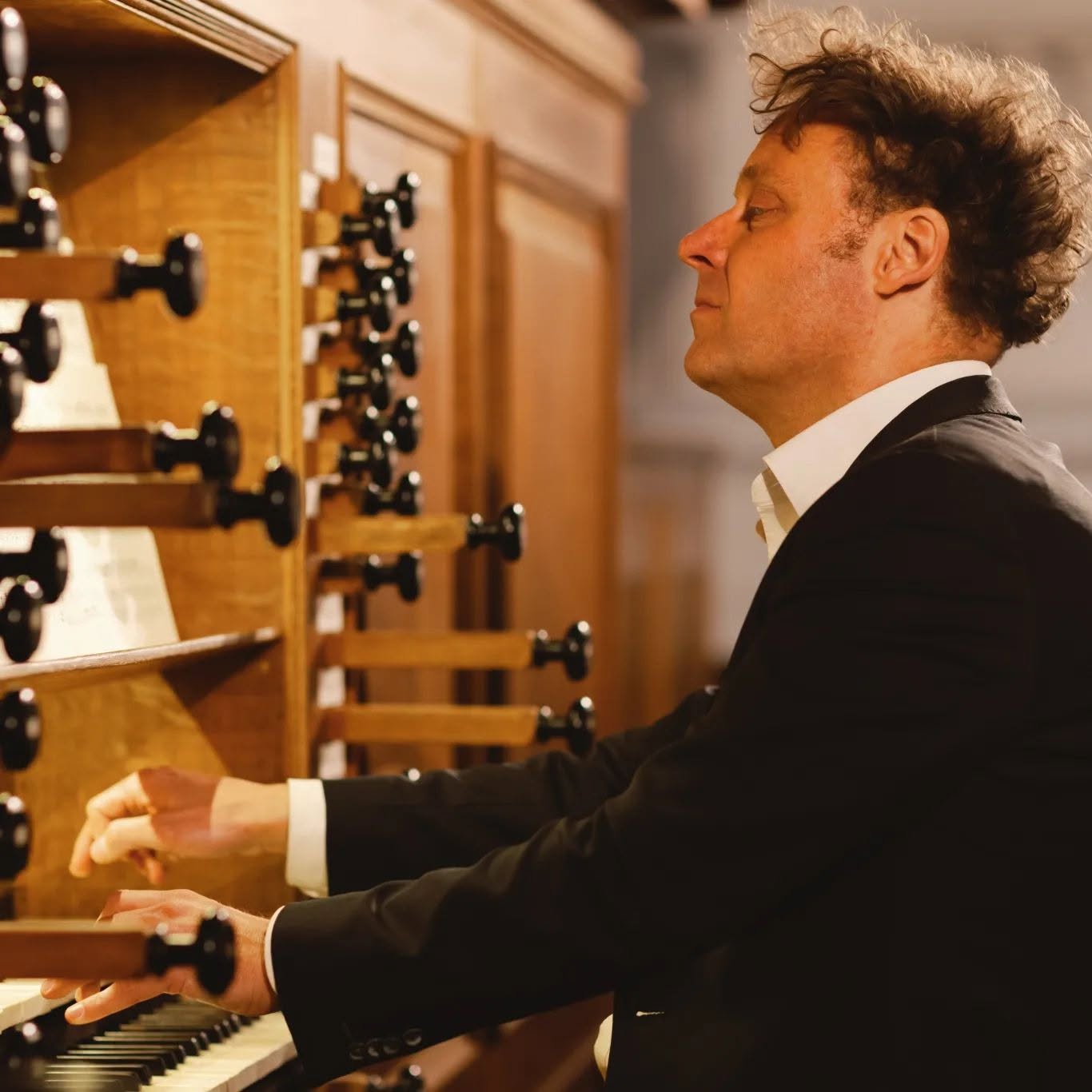
That was precisely the question organist Emmanuel Van Kerckhoven asked himself. He is today artistic director of BACH in de STAD, organist-titular of the Sint-Norbertuskerk and Carolus Borromeus and artistic leader of The Antwerp Baroque Orchestra. The Antwerp Baroque Orchestra was founded for the cantata services and thus the project also gained its own professional musical foundation.
Moreover, it was not just a Bach project. From the beginning there was a pronounced ecumenical idea behind it.
A pastor in a Catholic church
Whoever tells the story of BACH in de STAD without mentioning pastor Dick Wursten is missing, in my view, an essential piece of the puzzle.
The Bachcantatediensten were and are connected with a sermon or explanation by Wursten, who from his Protestant background connects the biblical readings with the text and music of the cantata.
That is more than a nice side note.
In 2016, there was a look back at the then five to six year old collaboration between Van Kerckhoven and Wursten. The premise was as simple as it was special: why shouldn't cantatas originally written for Lutheran liturgy be heard again in a liturgical context, but on an ecumenical basis?
Thus arose in the Sint-Norbertuskerk that remarkable and at the same time very natural combination: a Catholic Eucharistic celebration, a Protestant preacher and the music of a Lutheran composer.
And it worked.
Four to five times a year a cantata service was organized. Interest grew. Bach was not only heard but reconnected with the Word, the liturgy and the space for which such music was originally intended.
Wursten, by the way, came to Bach far from accidentally. He had been active for years at the intersection of Protestant theology, Antwerp churches and early music. The collaboration with Van Kerckhoven was thus not a chance meeting between an organist and a pastor, but grew out of a shared interest in the significance of Bach within his original religious context.
And that is exactly, in my view, the real origin of the Bach Festival and BACH in de STAD.
Not with the festival but with a cantata service.
Antwerpen needed Bach
Antwerpen has a particularly rich musical history, but in the field of historical performance practice around Bach, a kind of void had emerged at the beginning of this century. Those who remember the Antwerp early music scene, for example, think of figures like Michael Scheck and the Antwerp Bach Choir, but that story had largely ended by the turn of the century.
So there was space. And that space was gradually filled again from 2011 onwards.
Not by immediately launching a large festival, but organically: cantata services, musicians, an orchestra, audiences, collaborations and then increasingly more activities around Bach and the Baroque.
In 2017, BACH in de STAD vzw was officially founded. With this, the organization also gained its own structure. What had started as a series of cantata services in one Antwerp church could continue to grow.
And that is perhaps the most beautiful part of the story: the festival was not thought up at a conference table. It grew from an existing practice.
From Sint-Norbertus to Antwerpen
 Today BACH in de STAD rests on three pillars.
The Bach cantata services remain the original foundation. They still take place in Sint-Norbertus and adhere to the idea that Bach sounds anew in the liturgical context for which his music was intended.
Alongside this are the Abendmusiken, concerts in which Bach and his contemporaries are central.
And then there is the Bachfestival Antwerpen: an annual festival week in which Bach is literally sent out into the city.
Because that word city in the name is important.
BACH in the CITY is meanwhile much more than Bach in Sint-Norbertus Church. It attempts to connect Bach with the cultural, historical and musical fabric of Antwerp.
This sometimes happens very literally.
Take for example Bach & Beiaard. Then Bach is not heard in a church interior or concert hall, but from the Antwerp towers. The carillon of the Cathedral of Our Lady possesses historic bells from the seventeenth century, cast by the famous Amsterdam bell founders François and Pieter Hemony. The oldest bass bell even dates from 1459.
Then Bach suddenly becomes part of the Antwerp cityscape.
The music of a German composer from the eighteenth century sounds from an Antwerp tower across a city that is itself centuries older.
That is more than a concert. It is an encounter between history, heritage and music.
Bach everywhere
The 2026 edition also continues this line.
There is the familiar cantata service in Sint-Norbertus, but also a Bach lecture in the Nottebohmzaal, Bach on the Antwerp carillon, a project for children and young people, an organ concert in Sint-Carolus Borromeuskerk and a grand closing concert with The Antwerp Baroque Orchestra.
The locations are thus not chosen by chance. They tell the story. The church, the library, the tower, the organ, the historic city centre: they all become a kind of stage for Bach.
And thus the name BACH in the CITY becomes ever more literal: Bach comes into the city.
No Bach museum
What personally appeals to me in this story is that BACH in the CITY has never remained stuck in the idea that Bach is a monument that you should approach with due reverence.
Quite the opposite.
By placing him anew in the liturgy, by setting him alongside his contemporaries, by letting him sound on a carillon, by involving children and young people and by connecting him with Antwerp places, Bach becomes a living composer again.
That is also why the festival remains interesting after all these years.
BACH in the CITY is not a festival that organises a number of Bach concerts in one week somewhere. It is the result of an organically grown Antwerp music practice that once began with a question that was actually very simple:
What happens if we let Bach's music function anew for what it was once intended?
The answer began in 2011 in Sint-Norbertus Church.
Fifteen years later, the answer sounds throughout the entire city.
And whoever has already visited a number of the major early music festivals this summer does not necessarily need to travel far for the next encounter with Bach.
Sometimes Bach simply comes to you.
Into the city.
all info & reservations: https://bachindestad.be/