Starting with Mendelssohn and continuing with some of the greatest Russian composers: that was the successful formula of the final day at Resonances. The international chamber music festival celebrated its tenth anniversary this year, and that brought out a lot of wonderful people. More than enough reason to subject the Château de Halloy to a peaceful siege.
"One's destination is never a place, but a new way of seeing things". However picture-perfect this quote by Henry Miller may be, on this sunny Sunday not a word of it rang true. On the way to Ciney in the heart of Wallonia, curiosity about the Château de Halloy was growing. For several (Middle) centuries, the prince-bishops of Liège had had a residence here – after all, Ciney belonged to their select club of Bonnes Villes. Today, the castle with its extensive park has been providing the quiet setting for the Resonances Festival for ten years. But however brilliant the countless shades of grey of this winged monument, it was mainly the ears that were well fed here four days in a row. A public masterclass by German violinist Antje Weithaas – "vermutlich der bekannteste Geheimtipp in der klassischen Musik" – was the prelude to a total of seven chamber music concerts. To bring those to a successful conclusion, artistic director Amy Norrington and the enthusiastic festival committee had once again called upon their extensive network. Thus Norrington succeeded not only in securing Weithaas, but also her colleague and fellow countryman Steven Isserlis. It is quite remarkable to find that one of the most acclaimed cellists in the world suddenly appears in a barn in the hamlet of Braibant. Both top musicians were excellently surrounded during the festival, both with young talent and several other established names such as (alto) violinist Yura Lee, pianist Dénes Várjon and cellist Martijn Vink, husband and co-organizer of Norrington. An inspiring place, all that beautiful company and a week of rehearsal time: hoping for "a new way of hearing things" the journey went thus towards la capitale du Condroz …
Mendelssohn Mo(u)rning
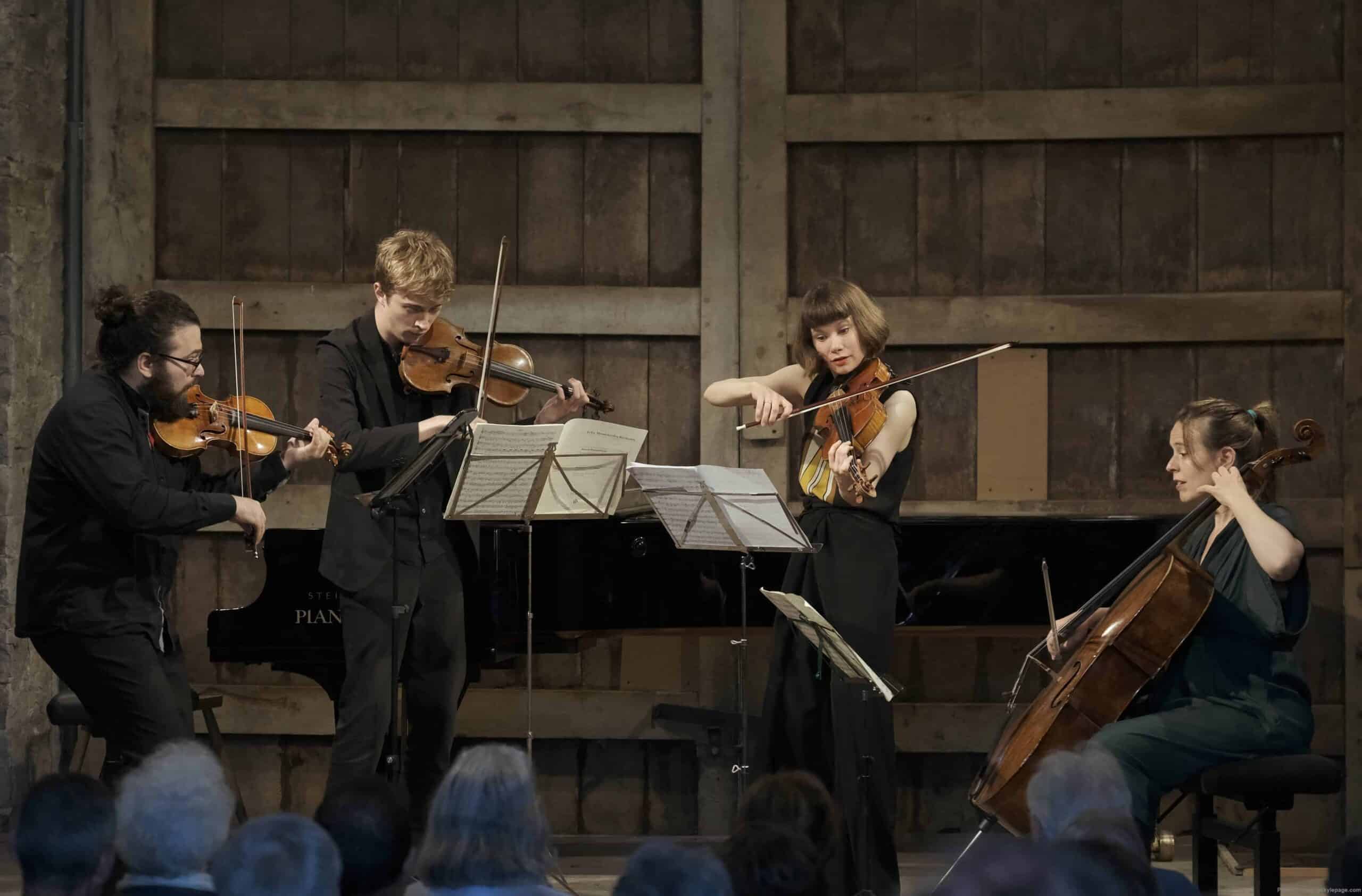
From a chamber music festival blowing out ten candles, you naturally expect a fairly festive programme. But on this final day, some composers skillfully put the brakes on their deepest spiritual stirrings. The Mendelssohn Morning began with a mourning protagonist. His last string quartet was after all conceived as a requiem for his eldest sister Fanny (1847). She had suddenly left him in May of that year. Subsequently, opus 80 also turned out to be Felix's ultimate masterpiece. This astounding work bathed in an atmosphere of tragic unrest. With the exception of the Adagio, all movements are in a minor key, while the accompanying tempo markings impose a murderous rhythm. The ensemble under the direction of the young, Greek-Albanian violinist Jonian Ilias Kadesha fully engaged only in the stormy opening movement (Allegro vivace assai). From the first short strokes and the vigorous wave of tremolos that followed, the tension was palpable. The quartet played engagingly together and in doing so created an almost obsessive pulse. Yet the greatest outburst of energy came at the end. Or how relentless driving produced a fine interim result. After this early highlight, noticeably much gas was pulled back. Somewhat too much to be really good. The concertmaster began the scherzo so sluggishly that his three fellow players – Tim Crawford, Lilli Maijala and Norrington herself – lost the drive (Allegro assai). Then the slow movement, a testament to immeasurable sisterly love, sounded considerably more convincing. With a breathtaking sense of empathy, lucid question-and-answer play and subtle nuances in the dynamics, a fragile, breakable and above all moving statement was made. Also in the frenzied finale, the restrained tempo once again raised questions. But certainly for the finale, a finger-breaking Presto that borders on madness, that is quite defensible. It was not with the speed at which he played, but rather by the way Kadesha phrased his hellish part, that this fellow showed his unmistakable class. Courage clearly has many expressions, and thus delivered a new way of listening and a hearty applause. The face of the emotional Norrington spoke volumes. Her sigh of relief just as much.
The subsequent first piano trio (opus 49) aligns much more with what we are accustomed to from the gifted darling Mendelssohn: effortlessly inspired and formally impeccable classical romanticism, which consistently follows the line of least resistance. Precisely because of the lack of an edge – and also for other, less kosher reasons – this composer could not please everyone over time. But informed contemporaries knew better. Thus, none other than Robert Schumann wrote about the popular piano trio in D: "Es ist das Meistertrio der Gegenwart […]; die nach Jahren noch Enkel und Urenkel erfreuen wird." He was right. This crown jewel remains to this day one of the most performed and beloved works in the genre. Why that is so, Katharine Gowers, Steven Isserlis and Dénes Várjon made clear once again with their enthusiastic (joint) playing. Though it must be immediately noted that the difference in temperament within the trio was quite striking. While Isserlis and Várjon certainly put their full force into it in both outer movements, the violinist let herself be carried away less easily by this brilliant music. Otherwise the fireworks might have been even more powerful at moments. Fortunately, there was no real need for that in the most tender passages of the Molto allegro agitato. Because from the lyrical duet between the strings upon the return of the initial theme you are as a listener always knocked over anyway. Equally impressive, but then at the transition between the first two movements, was how a transformation took place at the piano. As possessed as Várjon concluded the first movement, so inward-looking he sounded throughout the beautiful and by his fellow players also particularly touching Andante con moto tranquillo. In the scherzo (Leggiero e vivace) the sharp accents in each of the three parts created a unique listening experience. This typical fairy dance had never come across like this before. The finale, at times even more spirited than what preceded it, was pure rock-'n-roll (Allegro assai appassionato). Drowsy old folks had no chance of dozing off. The ensemble had too much to say even in the more delicate passages. A morning not soon to be forgotten then.
Russian roulette
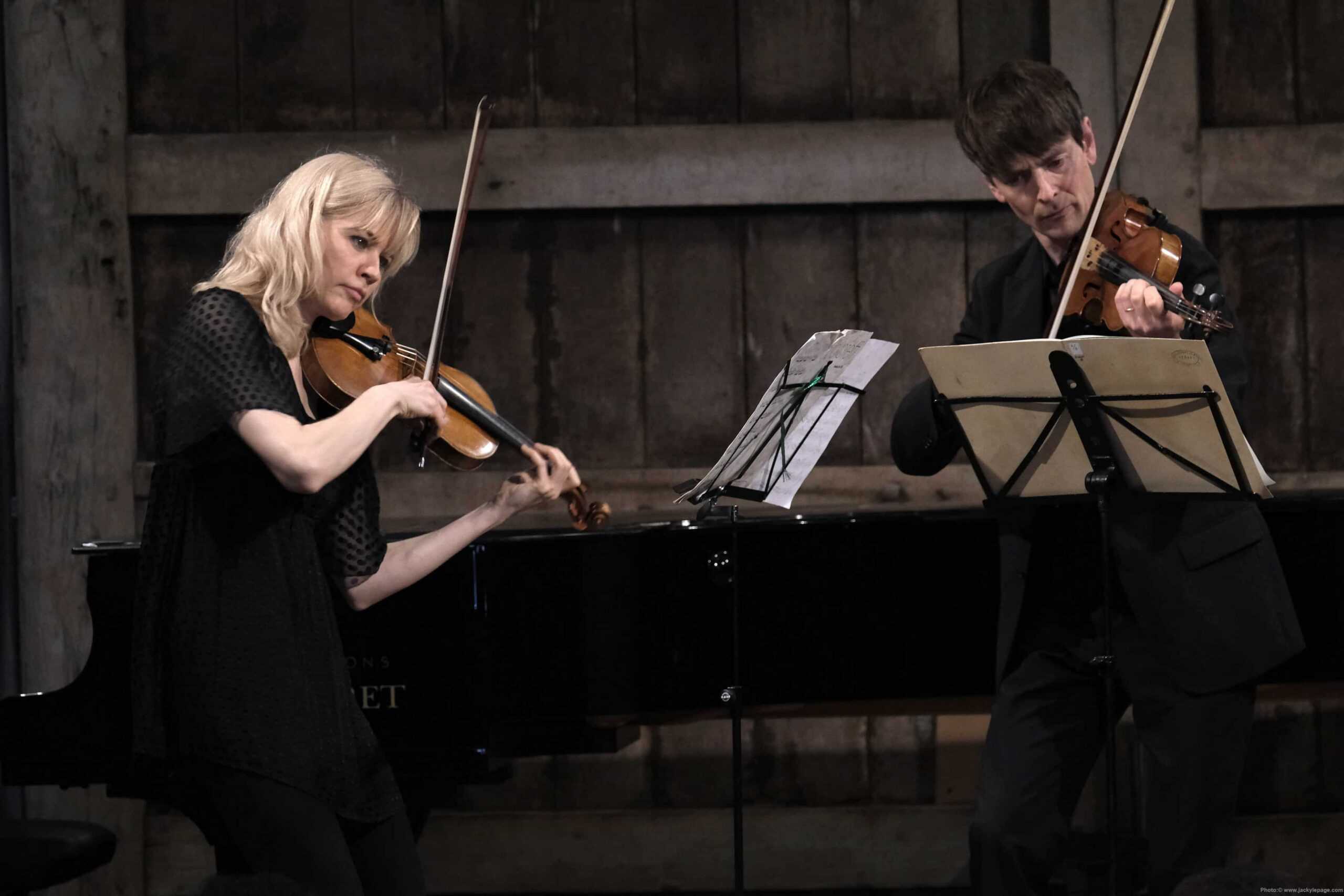
After a pleasant meal and a walk in the gently rolling garden it was soon time to seek coolness again in the barn. To continue the musical idyll with a few Russian masters? Partly. For even during the closing concert of this special birthday edition, that gentleman did not always want to join the celebration. It was probably not due to Prokofiev's sonata for two violins – performed this afternoon by Katharine Gowers and Matthew Truscott – (opus 56). This four-part pas de deux was written during the interwar period and is an inventive creation with depth and vitality (1932). That first aspect came through rigorously in both the Andante cantabile and the Commodo (quasi Allegretto) through the alternation of delicate lyricism and more incisive discourse. But in the playful Allegro and the sometimes humorous and then again intense finale (Allegro con brio) both violinists made too little connection to make this duo sonata a dazzling experience. Truscott also failed to thaw the somewhat reserved Gowers. The occasional quartet under the skilled direction of Weithaas proved more moving. Already in the first edition of his widely disseminated Handbuch für Streichquartettspieler German musicologist Wilhelm Altmann wrote that one should not neglect the third string quartet by Tchaikovski (1876) […] because it ranks among the most valuable works in the genre. A judgment that our company could certainly agree with after today. And likely the entire audience with her. Both in the introduction to the Allegro moderato sostenuto and during the conclusion, at every music stand pianissimo was played with such refinement and agreement that it soon became clear: something engaging was about to happen here. The transparency with which this composition was subsequently bowed, you do not always encounter even with many permanent ensembles. The chuckling after the delightfully lively scherzo (Allegro vivo) indicated that the right chord had been struck, though especially Yura Lee distinguished herself with her colorful intervention in the middle section. During the muted yet simultaneously gripping sound world of the Andante funebre e doloroso, like the entire work dedicated to the deceased violinist Ferdinand Laub, the quartet did play with sordino, but the impact was unmistakable and forte. Very strong how unitedly this emotional lamento took shape, and the role that second violin Tim Crawford assumed in it. The jovial conclusion brought in ultima res life back into the proceedings (Allegro non troppo e resoluto). For the hall more than reason enough to jump to their feet.
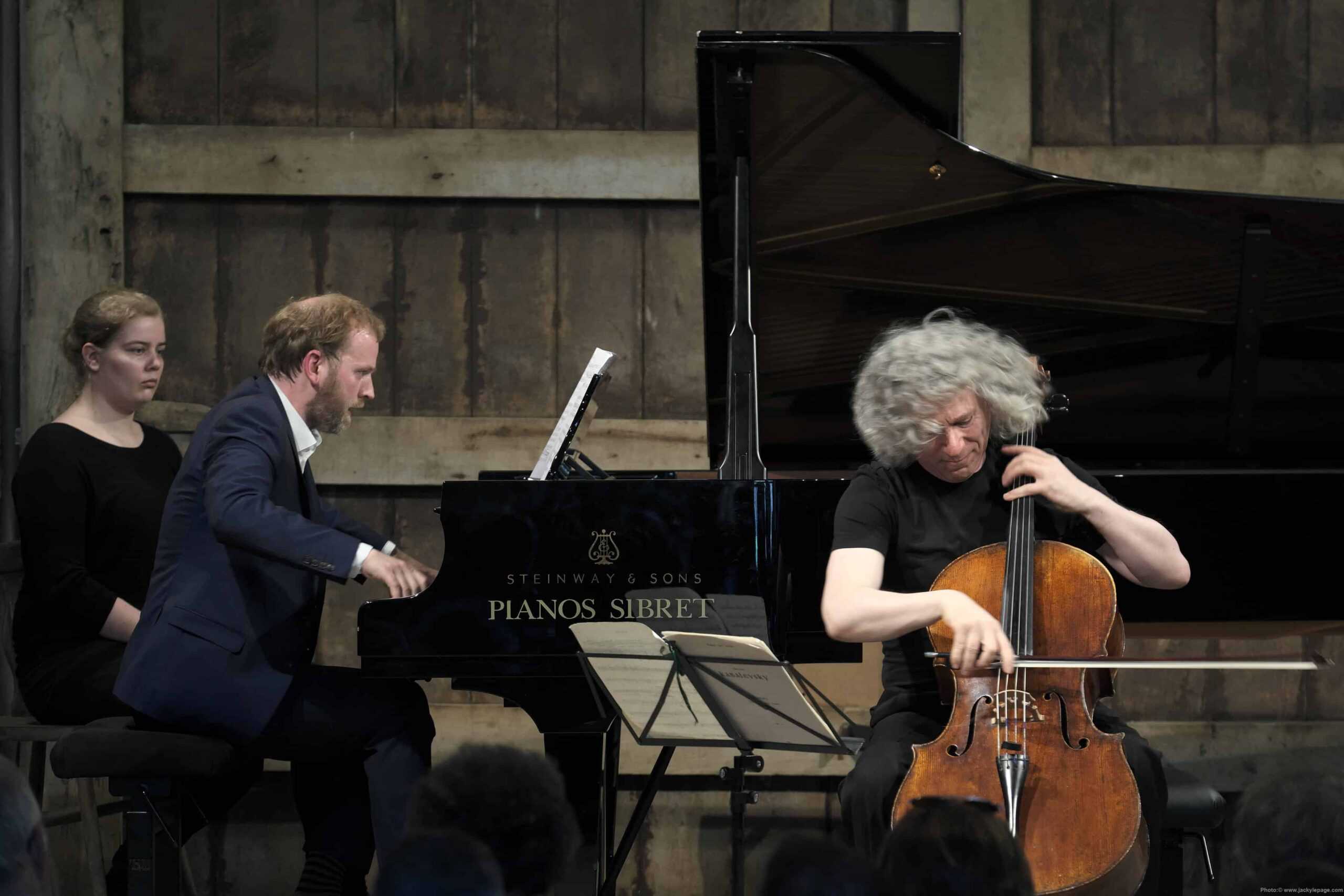
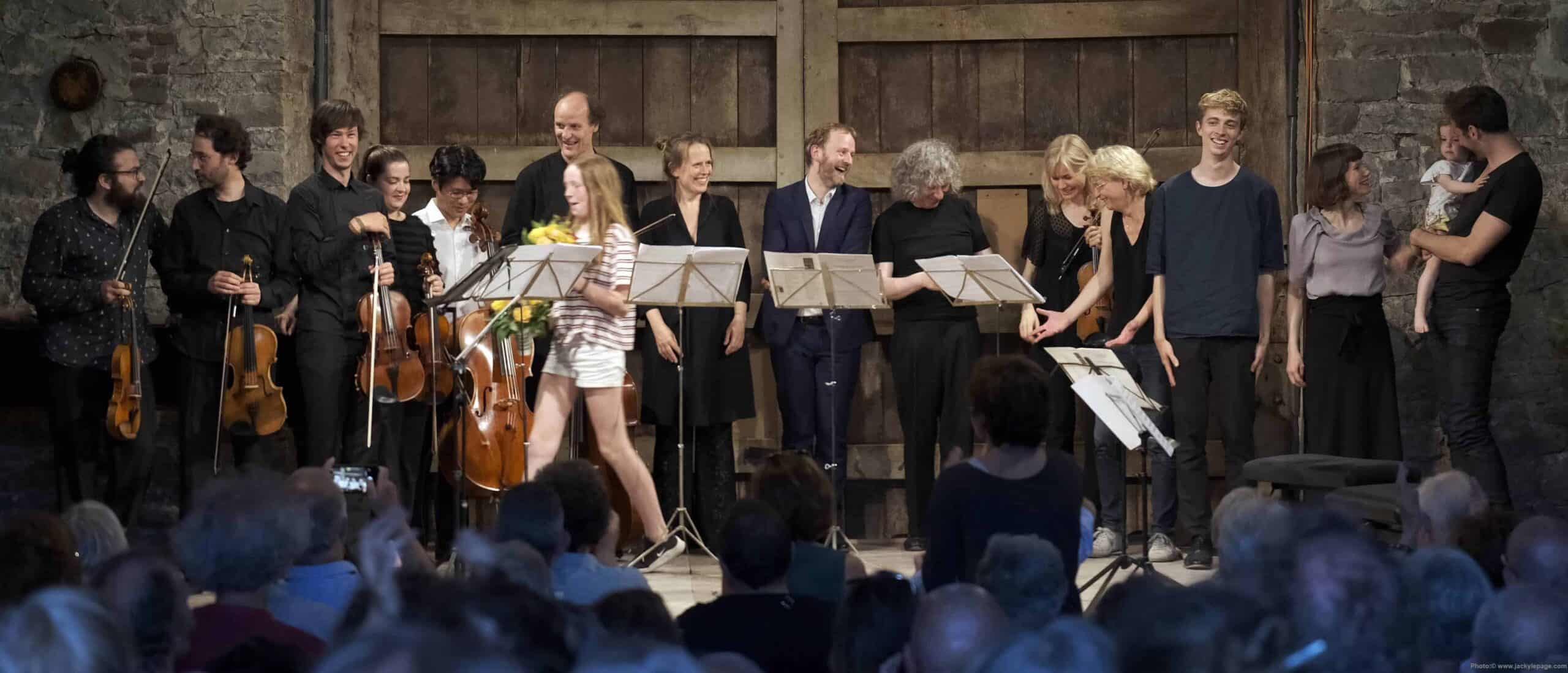
With Dmitri Kabalevski, an lesser-known tone poet made his appearance immediately after the intermission. But Steven Isserlis is clearly a fan, and of course of his postwar cello sonata (1961) dedicated to his illustrious predecessor Mstislav Rostropovich (opus 71). That fans can be quite fanatical, you've likely experienced that yourselves. With the wildly expressive rollercoaster with which Isserlis and his companion Alasdair Beatson would set the barn ablaze, both gentlemen went even further. Their interpretation was a gripping story that at the most memorable moments bore a striking resemblance to Russian roulette: a struggle for life and death, of word and counterword, which was conducted with exceptional determination in all three movements. "Quite masterly and addictive", is how the British cellist describes this virtuosic work. And whether this mesmerizing music gets the adrenaline flowing, it also did for the pianist who stoked the fire in his 60-year-old partner. The jam session with which the sonata ended (Allegro molto), certainly didn't deserve a prize for articulation, but that wasn't the point. Everyone understood and felt the intensity that led to an unmistakable climax. In one word: stunning! The very last exploit during this fantastic Finale russe came from Shostakovich and his two pieces for string octet (opus 11). As befits a truly international festival, for these youthful works practically the whole world appeared on stage: twice South Korea, a Greek with Albanian roots, a Pole, a Brit, an Israeli, a Belgian and a Dutchman. Although not always harmonious, they understood each other wonderfully well in the universal language that is theirs.
Before the start of the last concert, Amy Norrington had addressed those present in French. Give, give and give again: that is what she, her husband, all the musicians and the many volunteers have been doing for a decade now. And it is done with heart, soul and enormous enthusiasm. What are we going to play next year? It was the question that was already circulating in Château de Halloy. Answer in 2020 from April 30 to May 3 …
- WHAT: 'Mendelssohn Morning' – Felix Mendelssohn (1809-1847) – String Quartet in f (opus 80) & Piano Trio in d (opus 49) || 'Finale russe' – Dmitri Shostakovich (1906-1975) – Two Pieces for String Octet (opus 11) | Dmitri Kabalevski (1904-1987) – Cello Sonata in B-flat (opus 71) | Sergei Prokofiev (1891-1953) – Sonata for Two Violins in C (opus 56) | Piotr Ilitch Tchaikovski (1840-1893) – String Quartet in E-flat (opus 30)
- WHO: 'Mendelssohn Morning' – Jonian Ilias Kadesha, Tim Crawford (violin), Lilli Maijala (viola), Amy Norrington (cello) || Katharine Gowers (violin), Steven Isserlis (cello), Dénes Várjon (piano) || 'Finale russe' – Katharine Gowers, Matthew Truscott (violin) || Antje Weithaas, Tim Crawford (violin), Yura Lee (viola), Amy Norrington (cello) || Steven Isserlis (cello), Alasdair Beatson (piano) || Yura Lee, Jonian Ilias Kadesha, Natalia Kotarba, Katharine Gowers (violin), Guy Ben-Ziony, Diede Verpoest (viola), Han Bin Yoon, Martijn Vink (cello)
- WHERE: Château de Halloy, Braibant (Ciney)
- WHEN: Sunday 2 June 2019
- PHOTOS: © Jacky Lepage
- ORGANISATION: Festival Resonances – http://www.festival-resonances.be/
https://www.facebook.com/121682664512497/videos/2041778779278418/