It's an annual tradition at De Bijloke in Ghent, Côté Jardin in and beside the Bijloke concert hall at the beginning of summer. In the large concert hall and outside under the tent, there were six concerts, ranging from classical to jazz and flamenco. All free admission, which explains the huge turnout. There were also plenty of activities for children, who always show up in droves at Côté Jardin.
Many young families flock to it. It's called Ghent's biggest musical picnic. People come together and bring food and drink. No wonder, when you look at the bar's price list (€3.50 for a bottle of water...).
Bach's Mysteries
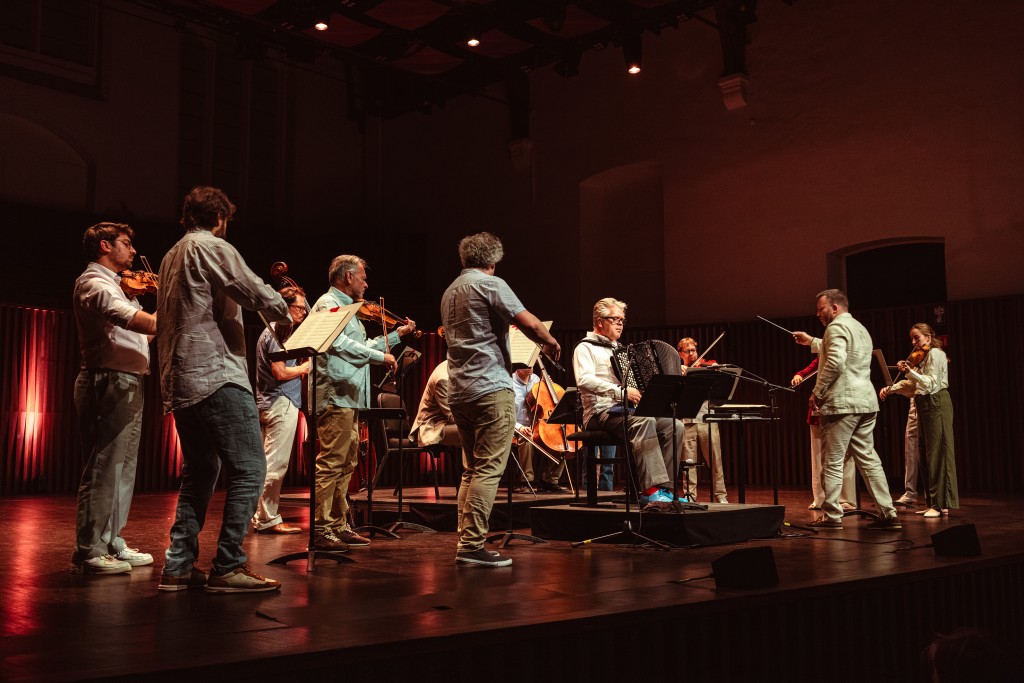
The families bring their kids to listen to the concerts in the large concert hall too. Things are different there than usual. Of course, these little ones can't sit still for an hour, so children's voices ring out between Bach's concertos. On stage are the Boho Strings with soloist Gwen Cresens on accordion. A surprising combination. Cresens isn't the first virtuoso to bring classical music to the accordion. The accordion as a small organ—you can play anything on it.
The Boho Strings from Borgerhout are a string ensemble that wants to break down barriers. Not an orchestra that performs concerts people come to hear, no—they go out to the audience themselves. Sometimes that's at companies, or for audiences that wouldn't otherwise venture to the concert hall. They have a wonderful project for people with dementia. Today they're performing part of their project "Bach Works in Mysterious Ways." Between the two Bach concertos, they also play one of Villa-Lobos's Bachianas Brasileiras.
Listening Practice
After Bach and Villa-Lobos, they continue with a world premiere: "Betsubara" by Gwen Cresens herself, a concert for accordion and strings, based on Japanese food culture. No difficult music, easy on the ear, with a hint of waltz and tango here and there.
Sitting and listening for an hour and a half is too much for small children. But it's precisely the spontaneity of the kids that makes Côté Jardin so much fun. Next to me sat a father with his toddler on his lap. He summed it up nicely: "When's it going to be over, Dad?"
So there's a different atmosphere in the concert hall than usual, but there are also listeners who stay focused and expect the same from others. During the concert, I was reading on my smartphone. When leaving, a stern gentleman accosted me and scolded me. "Was it interesting on your phone?" "Yes, thank you," I replied. He probably didn't realize I was practicing authentic concert listening. In Bach's time, there were no concerts where you sat in silence. People talked, played cards, drank, read the newspaper, and smoked during performances.
Little Stories, Big and Small
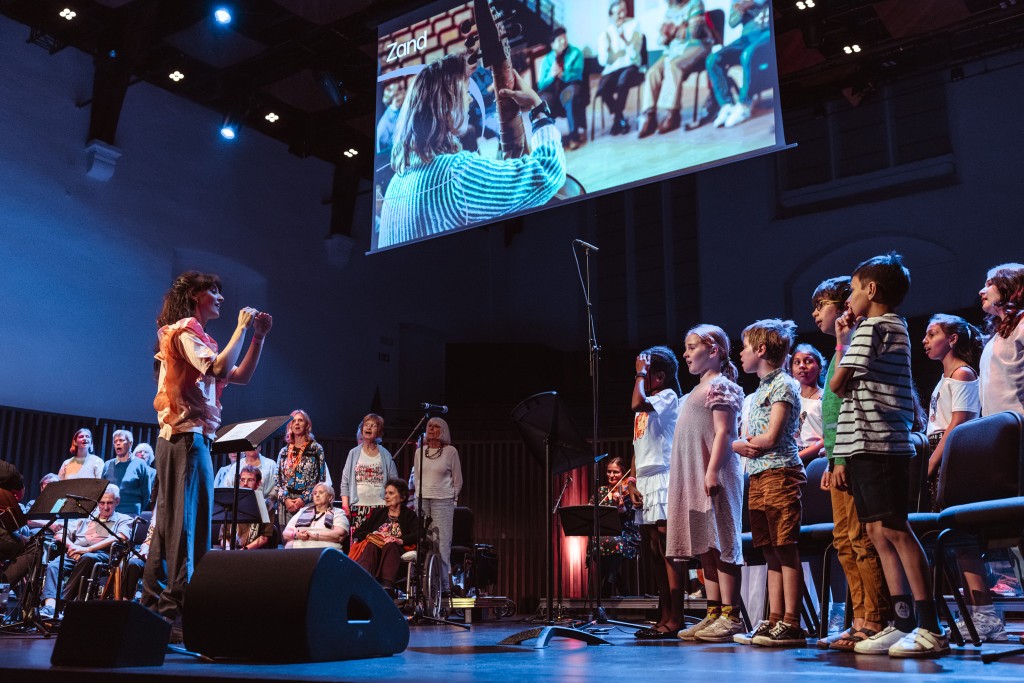
Outside, the sun has broken through, and under the tent, Myrddin & Helena Casella deliver gripping poems by Lorca, with singing and flamenco guitar. In the afternoon, Petites Histoires takes the stage in the large hall. Like last year, De Bijloke has organized an original project with B'Rock and Paul Griffiths to bring people to the stage who would never otherwise be there. Last year it was about people with low incomes; this year it's about a dialogue between children and the elderly.
Children from Toverberg, an elementary school in Ghent, spent months writing letters to elderly residents of a nursing home. They wrote back, and a whole correspondence developed. From there, they wrote all the texts and music themselves. They created an idealistic story, with songs about sand, clouds, the sky, Utopia, love, and friendship. It feels like an ecumenical service. Everyone sings along; an elderly woman does a little dance. Nice, but tame. Where's the social edge it had last year? Last year it had much more punch. You heard the uprising of the poor in their songs.
What was special about this performance was the bond between child and elder. For both generations, it's enriching. In our society, children fortunately receive plenty of attention and care. Elderly people, on the other hand, often fall through the cracks, are coddled, and face discrimination. Where are the gray wolves in these Petites Histoires? However original, it was rather a tame affair.
Packed house for the carnival
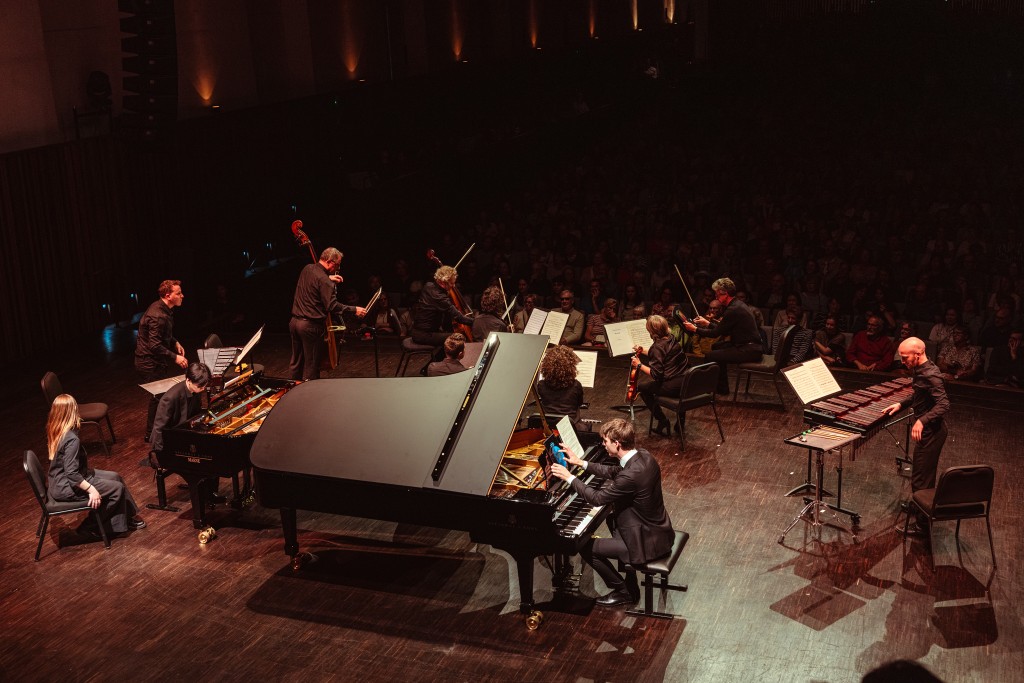
Later in the afternoon comes the main act of this Côté Jardin: Carnival of the Animals performed by soloists of the Flanders Symphony Orchestra, conducted by concertmaster Jan Orawiec. How popular the piece is today—Saint-Saëns never allowed it to be published during his lifetime; he thought it too satirical and whimsical compared to his major works.
With the hall packed to the rafters, even the choir benches were opened for the massive crowd. Beforehand, pianists Shuhei Aoshima and Abel Hox played Schubert, then they joined in for Carnival of the Animals. Masterfully performed by the soloists of the Flanders Symphony Orchestra, but it could have used more staging for this audience. When the double bass started its solo, you could sense the elephant. The swan, everyone knows that. A chicken, a tortoise, a kangaroo... fun if you know the piece and can picture the animals. But this audience would have enjoyed it more if they'd been given the order of the animals beforehand or during the piece.
Back outside for a chat with friends, I notice a few familiar faces. Côté Jardin isn't just for young families or dedicated music lovers. My eye falls on the legendary professor Walter Prevenier, a historian who mentored thousands of students at Ghent University. He's ninety years old. Music keeps him young. Long live De Bijloke!