Opera Ballet Vlaanderen scored a resounding triumph with Giuseppe Verdi's Nabucco. The audience brought down the house from the orchestra pit to the upper balcony for this production directed by Christiane Jatahy. Absolutely justified. The production breathes both Verdi's political disdain for oppression and his sense of genuine patriotic love and contempt for power-hunger.
No nineteenth-century composer succeeds better than Giuseppe Verdi at weaving political-social aspects inextricably together with personal conflicts. In the story of Nabucco, the oppression of the Jews by the Babylonian ruler is central. Combined with a love story, the political opposition becomes even sharper: the lovers Ismaele – a Hebrew – and Fenena – a Babylonian and daughter of the ruler Nabucco – belong to enemy camps. Their love is further thwarted by the jealousy of Abigaille, a slave who poses as another daughter of Nabucco and claims power for herself. Plenty of material, then, for a piece in which the political and personal aspects can be woven into a gripping narrative and in which Verdi's psychological approach to people and individual reaches a first musical high point in this early opera.
Verdi composed
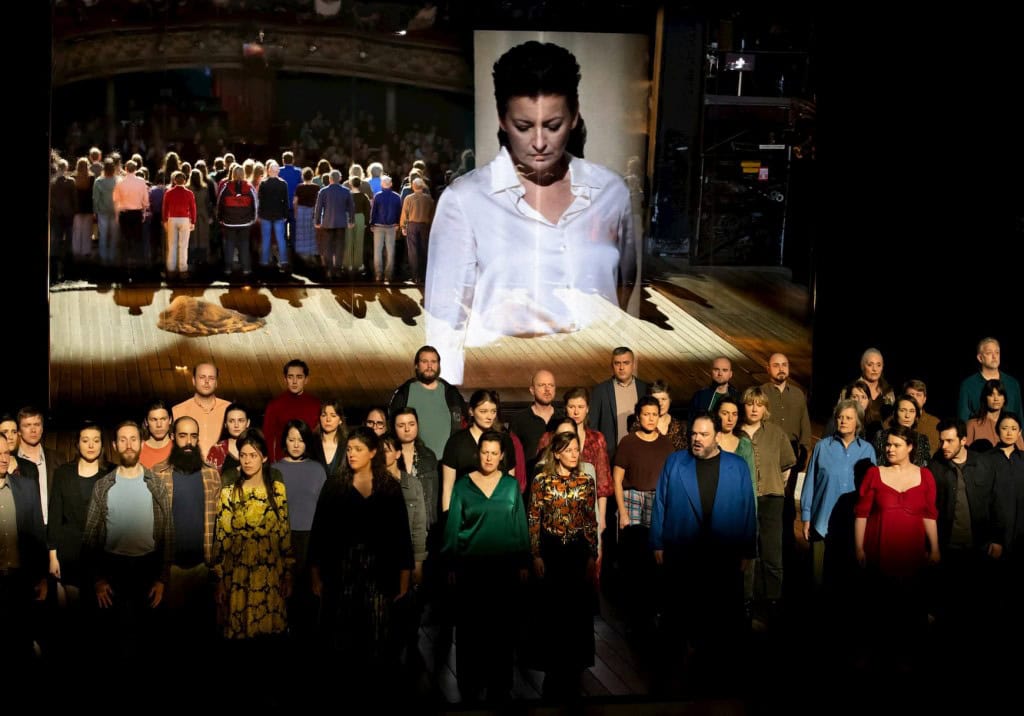
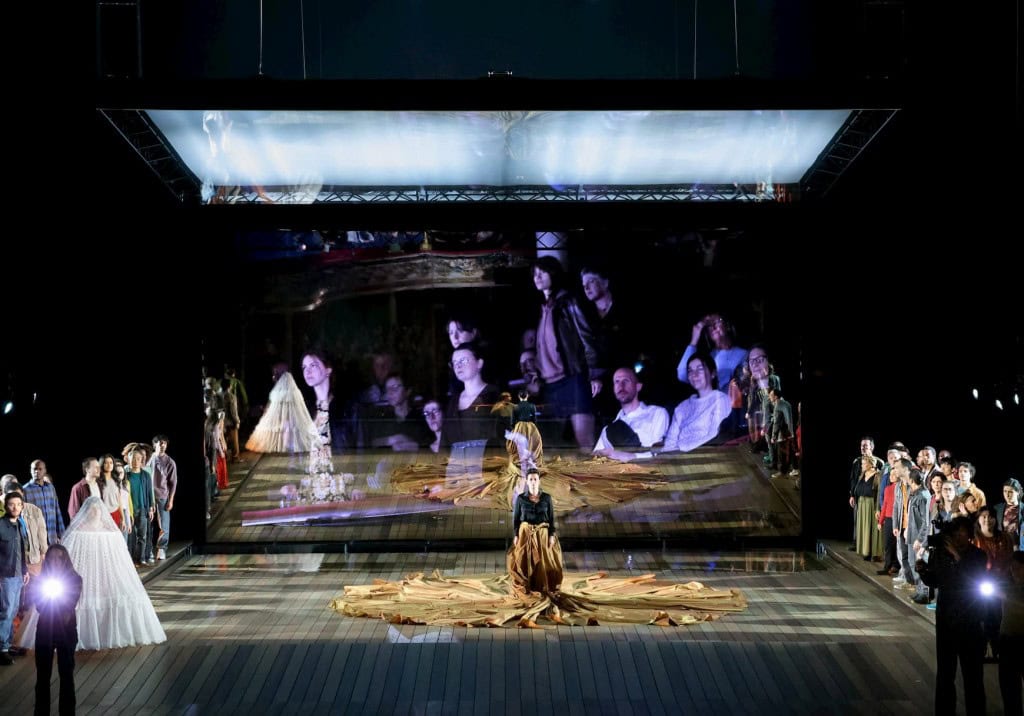
We can hardly overestimate the significance of the choral fragment Va pensiero. Verdi composed Nabucco in a burst of enthusiasm after a period of depression. The text of this choral fragment literally gave him wings to continue composing. It signifies his liberation from the depression that prevented him from being creative. At the same time, it fits into his Risorgimento commitment, the liberation of oppressed Italy from Austrian occupation. Immediately it becomes clear that the chorus in this opera is actually the most important character. Director Christiane Jatahy understood this perfectly. In a unique way, she places the chorus among the audience members in the hall. The surprise is great when at the first choral fragment – immediately after the overture – the choir members suddenly rise from their seats in the hall and sing. It is not only surprising but it immediately grabs you by the throat. The tone for the performance is set! In later choral fragments, the chorus is also regularly placed in the hall, and let us immediately add that the chorus is magnificent.
Contemporary direction with mirror effect
What makes this director's contemporary approach so powerful compared to so many other "updating" productions? Christiane Jatahy stays true to the spirit of the composer. No forced references to regimes or periods, no flags or banners. Central is the tragedy of the oppressed people and the tragedy of father and daughter. Sobriety that gives Verdi's music every opportunity to work powerfully.
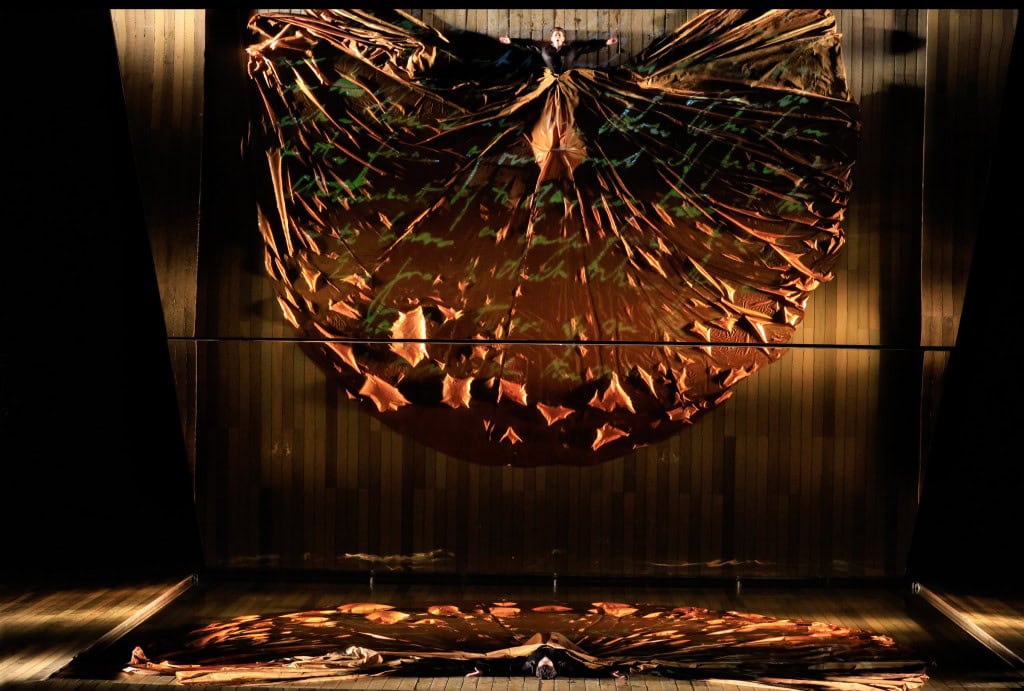
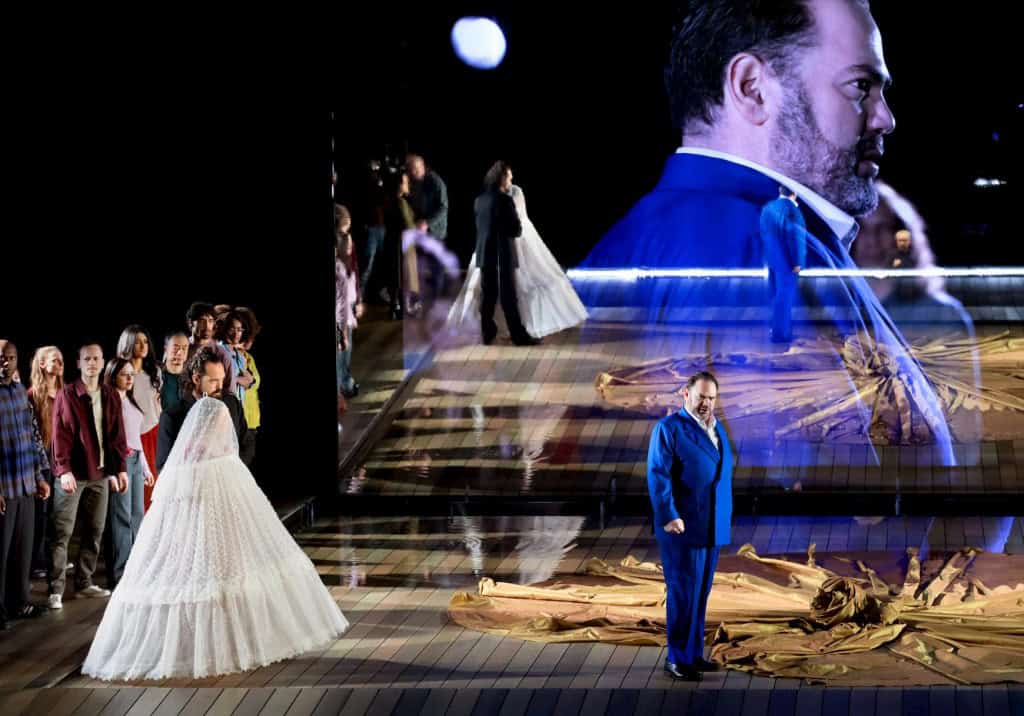
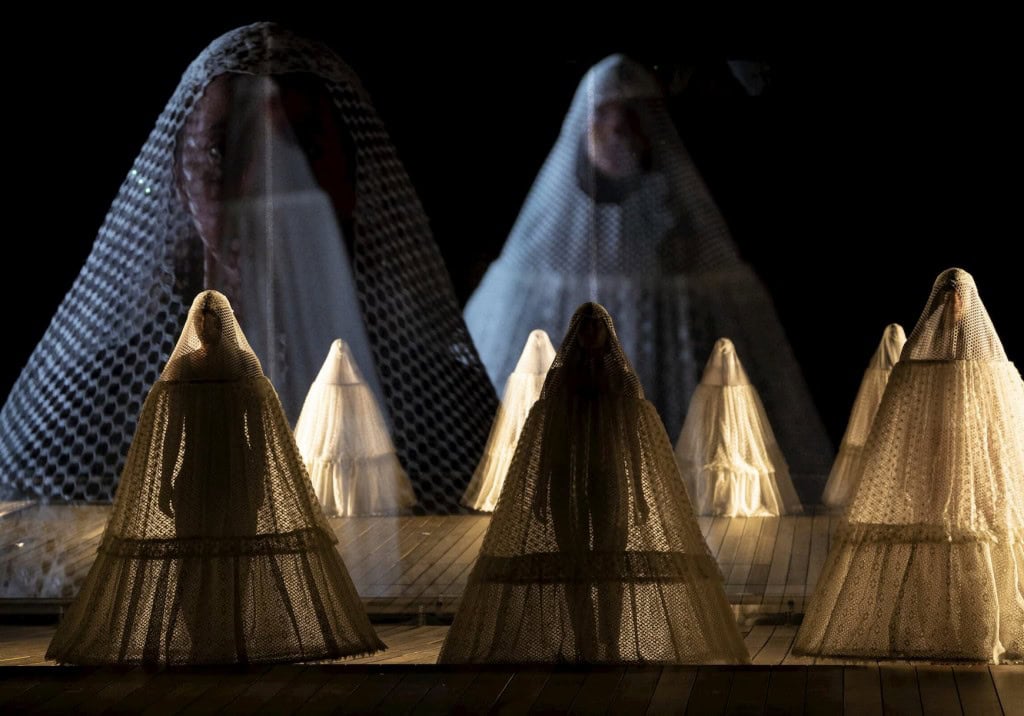
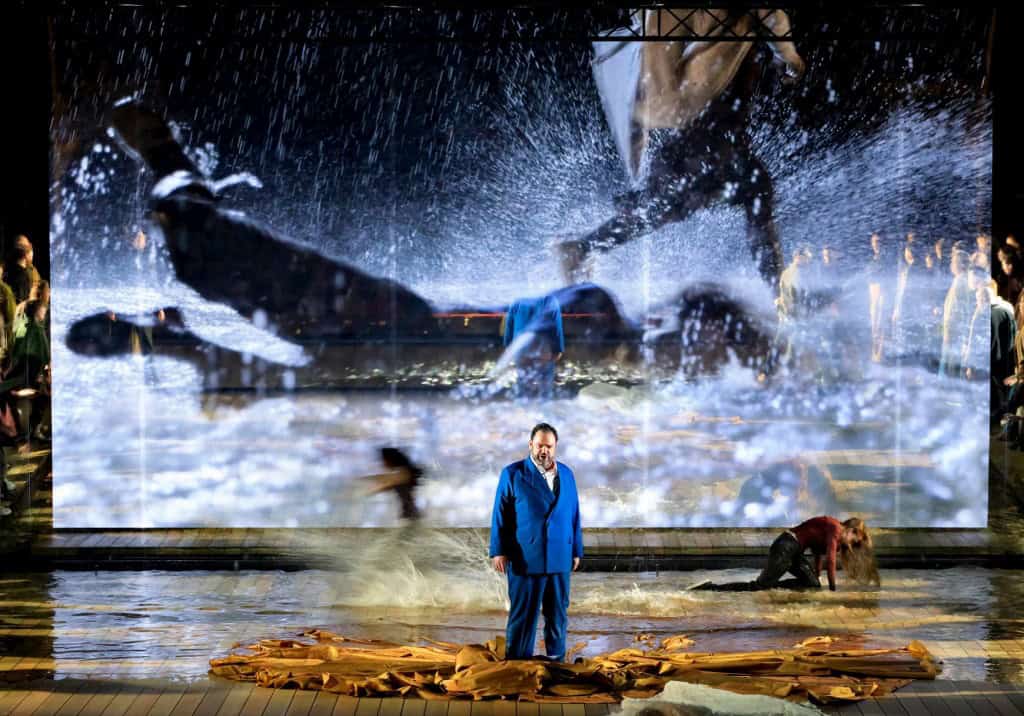
The direction is characterized by several specific technical effects. The entire stage of the opera is used, right into the wings. There is no scenery, except for a water feature in the middle of the stage. The splashing water works in parallel with the boundlessness of emotions. Striking props include a huge golden ornamental cloth that serves various functions, for instance the covering with which Abigaille displays her imagined royal status, and an Eastern-looking white lace cloth that wraps from head to toe and in which Fenena appears as a bride and through its multiplication creates an effect of unreality and magic. In her commentary in the program booklet, the director gives it a function of captivity.
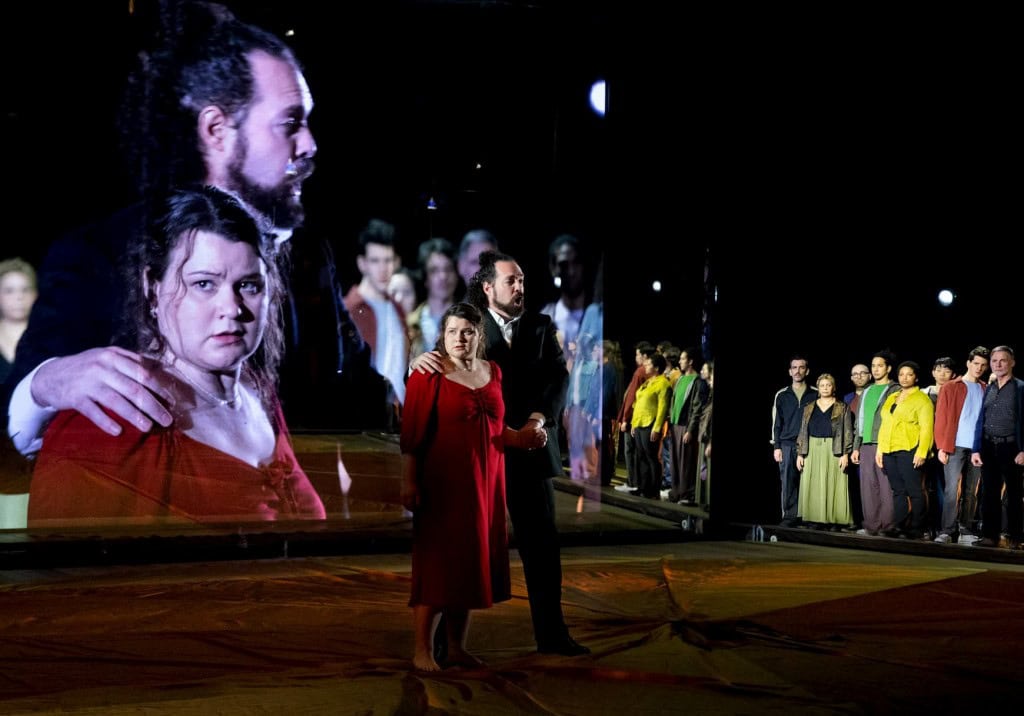
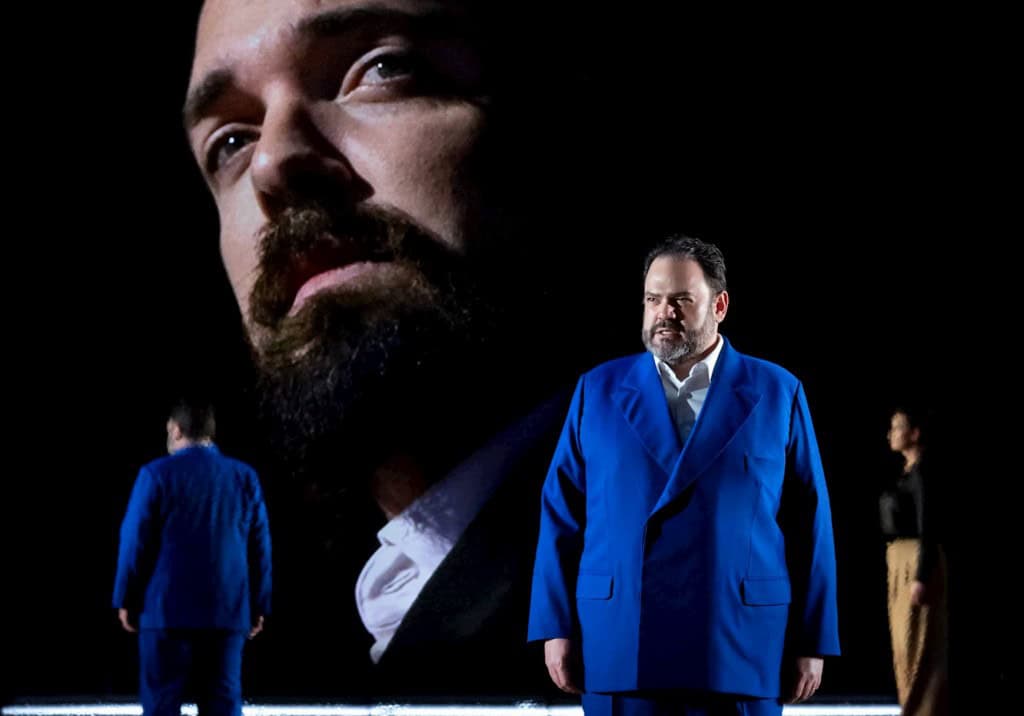
A massive mirror dominates the stage. It reflects both the hall (and occasionally the audience members) as well as the facial expressions of the characters. The use of cameras in this production is not distracting because the close-ups accentuate the psychological effects: the authority of the high priest Zaccaria, the despair and madness of Nabucco, the jealousy and fury of Abigaille, the fear and tenderness of Fenena.
Musical commitment
The performance also testifies musically to a deep respect for Giuseppe Verdi. Young conductor Gaetano Lo Coco demonstrates a profound understanding of Verdi's libretto. With great dedication, he inspires not only the orchestra but also the soloists and especially the chorus. He accentuates the numerous motifs that Verdi assigns to solo instruments and lets lovely passages be heard from clarinet, flute and piccolo, trombones and trumpets. The final passage, which in this production contains a small instrumental addition and a repetition of the Va pensiero chorus, he conducts toward the audience. A highlight and spine-tingling moment of the performance.
With the soloists, we heard an impressive bass voice of Vittorio de Campo as the high priest Zaccaria, who performed his role with authority and yet involvement. Daniel Luis de Vicente sang with great feeling and flexible baritone in his role as a sorrowful father driven to madness in his despair. Ewa Vesin had a dark mezzo as Abigaille that could sound threatening and somber, but had an uncomfortable high register, and in the dramatic moments (and there were quite a few!) resulted in an ugly vocal effect. Matteo Roma brought a sensitive tenor as Ismaele. Flemish soprano Lotte Verstaen was a touching Fenena with clear and when needed also fragile soprano voice. Beautiful!
A fine production that nicely fulfilled the director's goal: communicating with today's audience.