Queen of Spades, alongside Evgeny Onegin, is one of Pyotr Ilyich Tchaikovsky's most celebrated and popular operas. The passionate love of aristocratic Liza, thwarted by Herman's gambling obsession—a man of lower social standing. Tchaikovsky based his opera on Pushkin's novella of the same name and co-wrote the libretto with his brother Modest. The opera premiered at the Mariinsky Theatre in 1899.
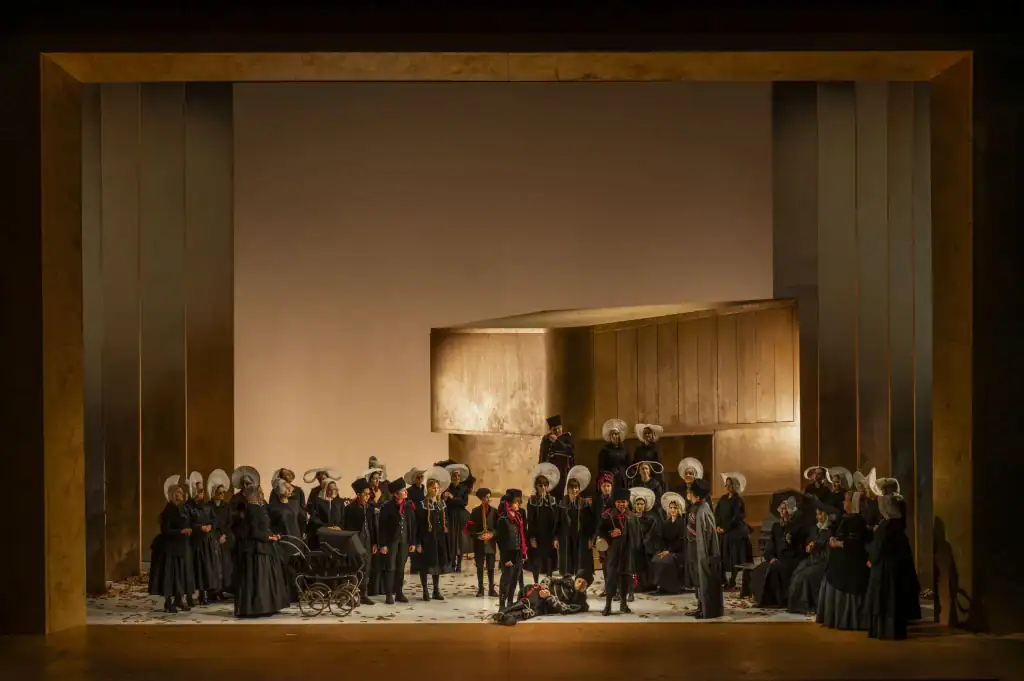
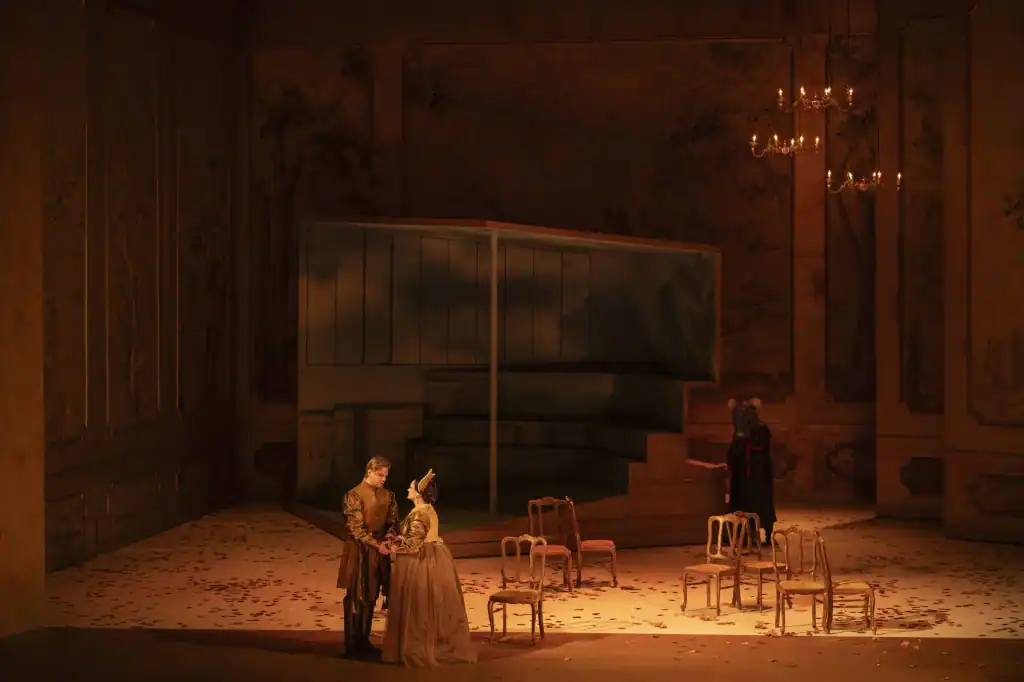
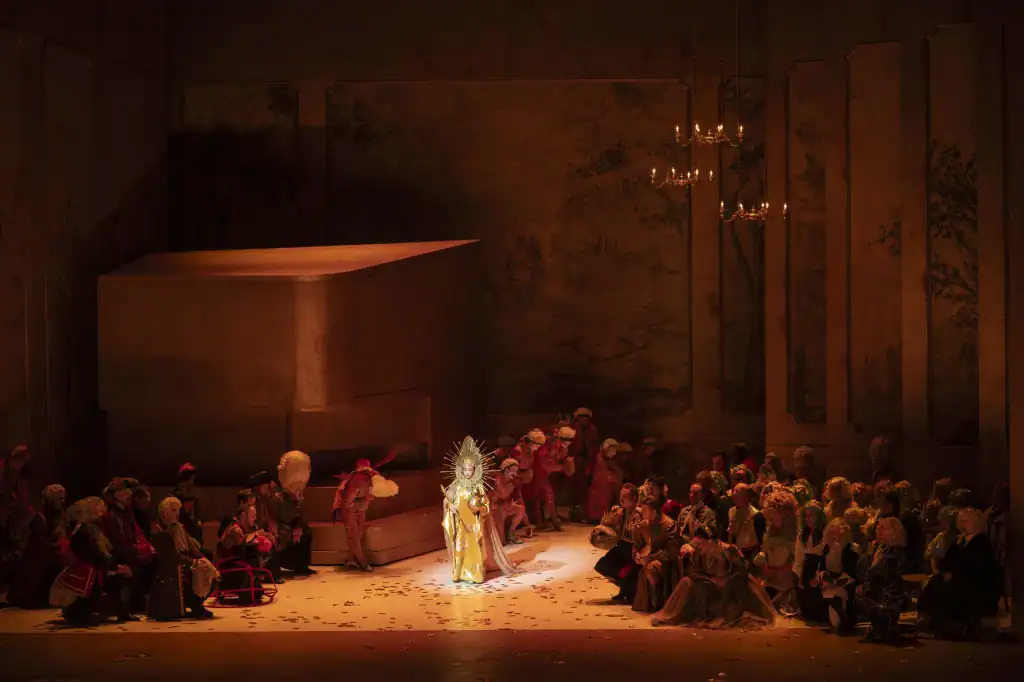
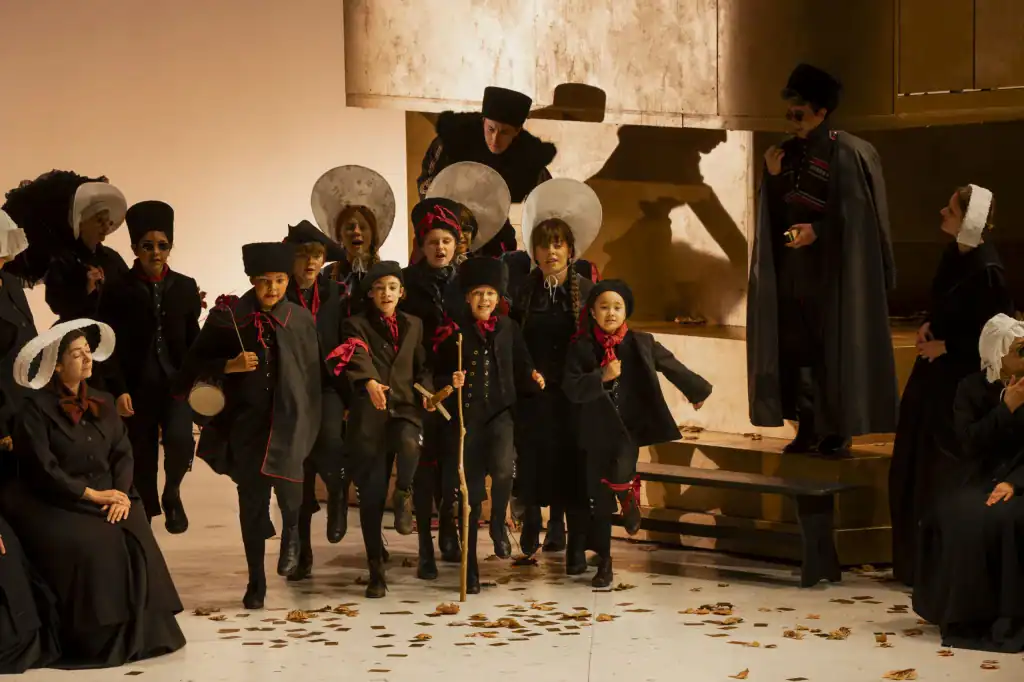
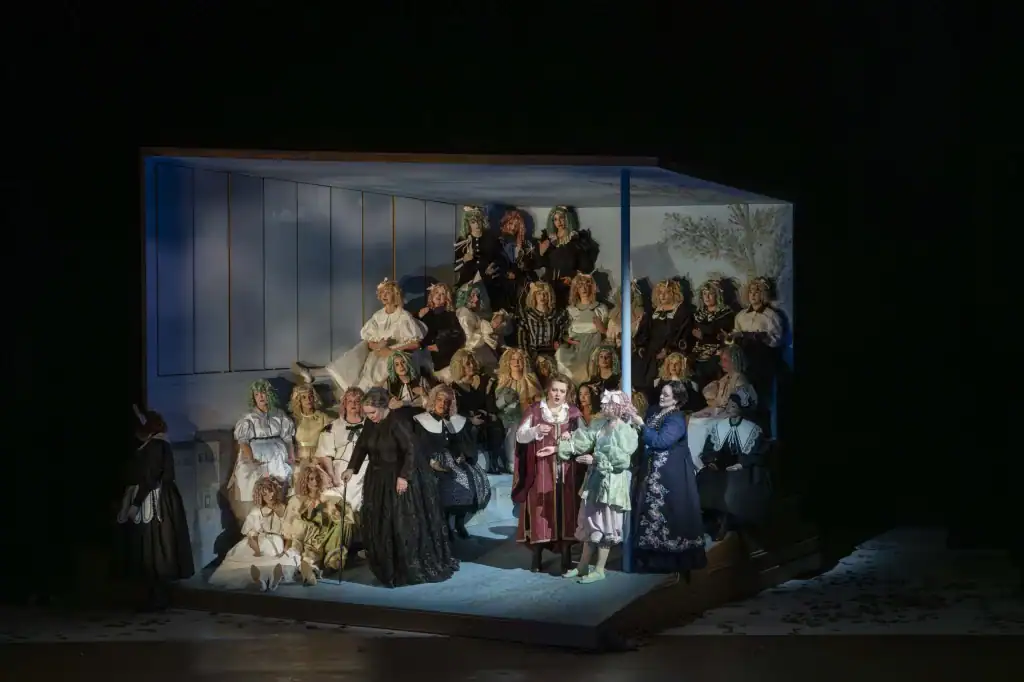
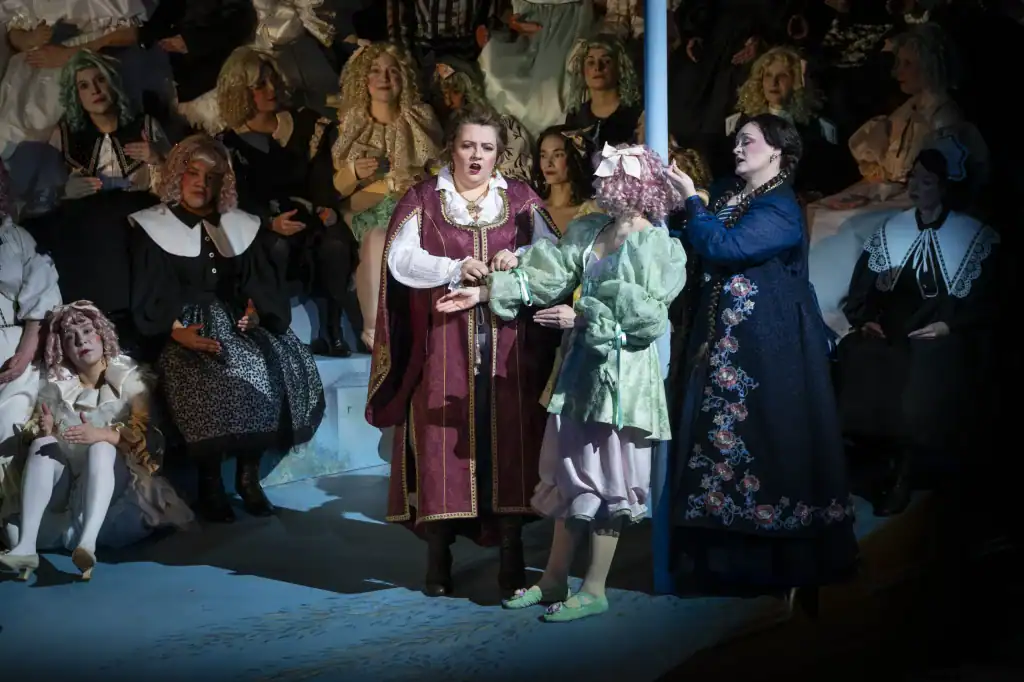
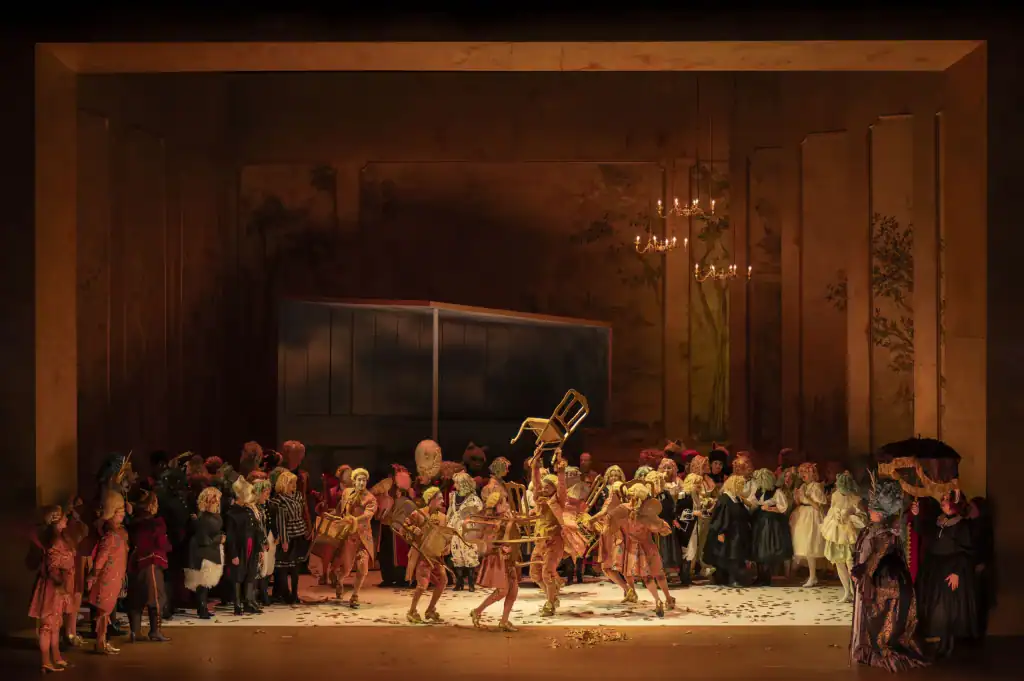
Director Maria-Lambert-Le Bihan rightly emphasizes the aristocratic setting in which this tragic love story unfolds. Unfortunately, this setting demands so much attention that the essence of the tragedy between the protagonists gets lost in anecdotal details. The performance opens with the evocation of a garden party, complete with charming vignettes, where the children's chorus playing soldiers naturally makes an immediate impact (inevitably recalling the children's choir in Bizet's Carmen). Regrettably, from this opening scene onward, the focus falls too little on the characters who drive the plot: Liza, Herman, and Yeletski. Herman is passionately in love with Liza, but because he's not of the same social rank, he feels compelled to amass wealth to have any chance. His rival is Yeletski, Liza's official betrothed. In the first two acts, the character direction is particularly weak. Herman's first grand announcement that he's betting on the cards happens simply in the foreground of the stage. Similarly, the love duet between Liza and Herman at the end of the first act is staged in a very conventional manner.
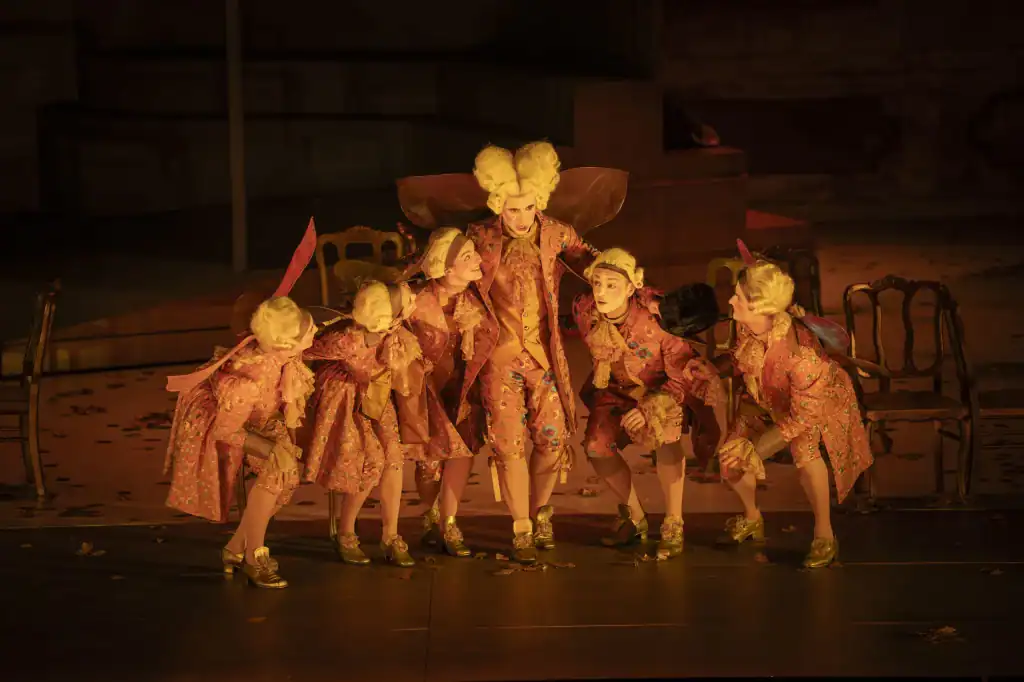
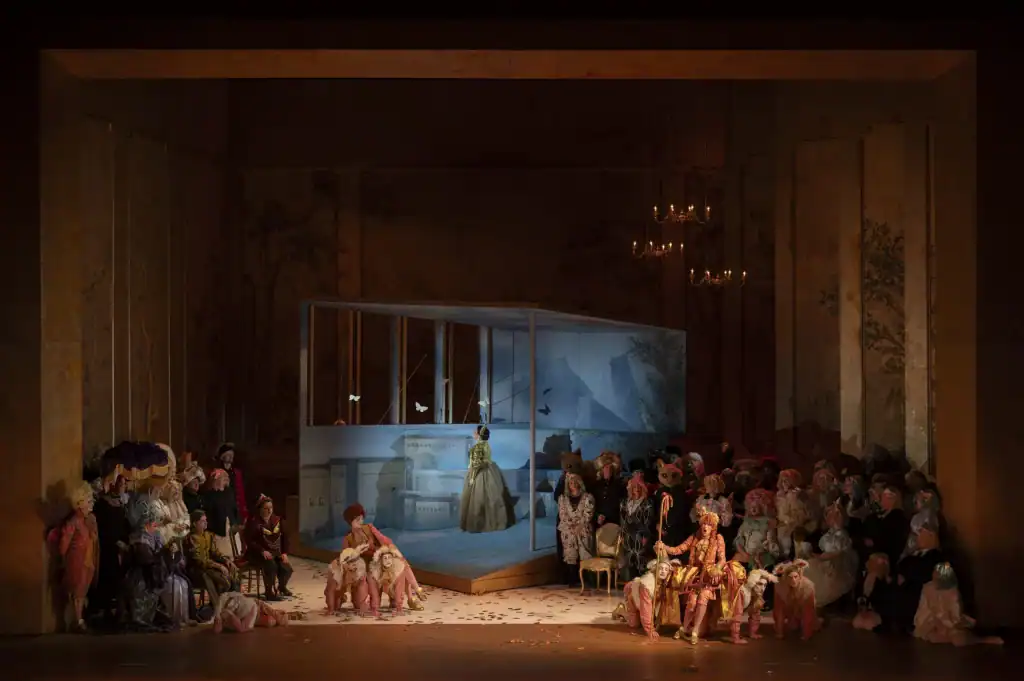
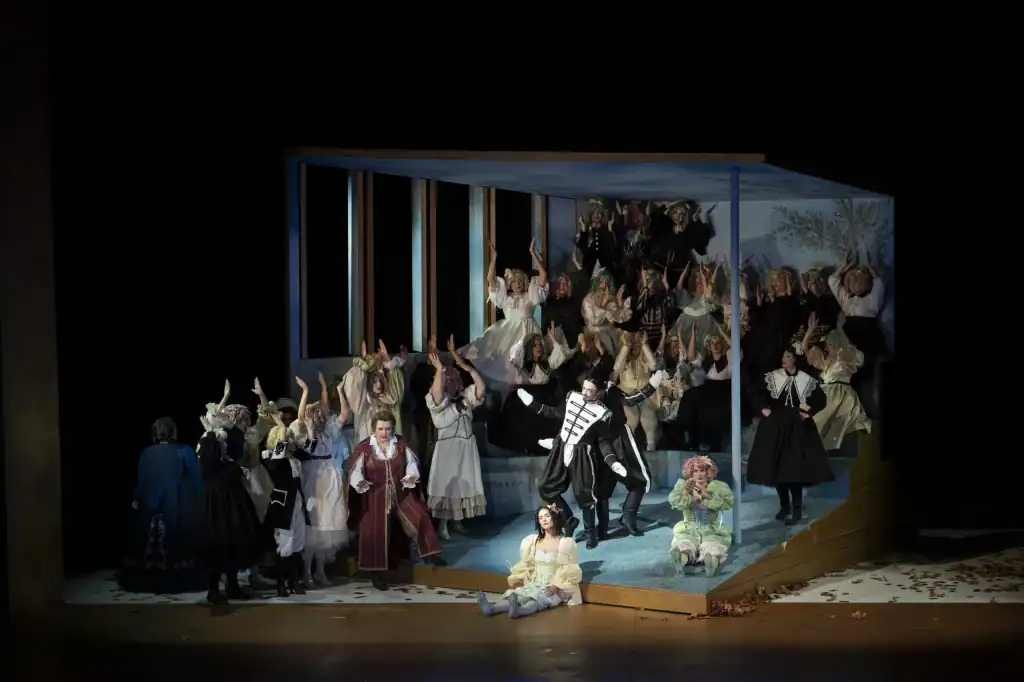
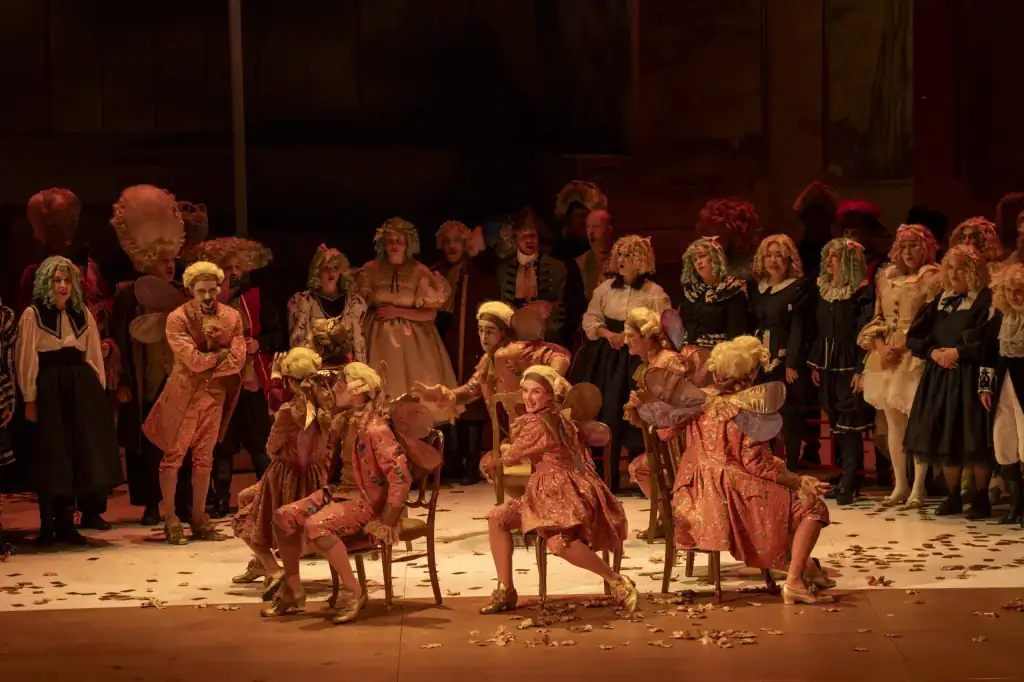
In the second act, the masquerade ball is presented playfully, with the ballet of Daphnis and Chloe staged as a play within the play, complete with costumed sheep that look so ridiculous that interpreting it as a parody of eighteenth-century ballet seems intended.
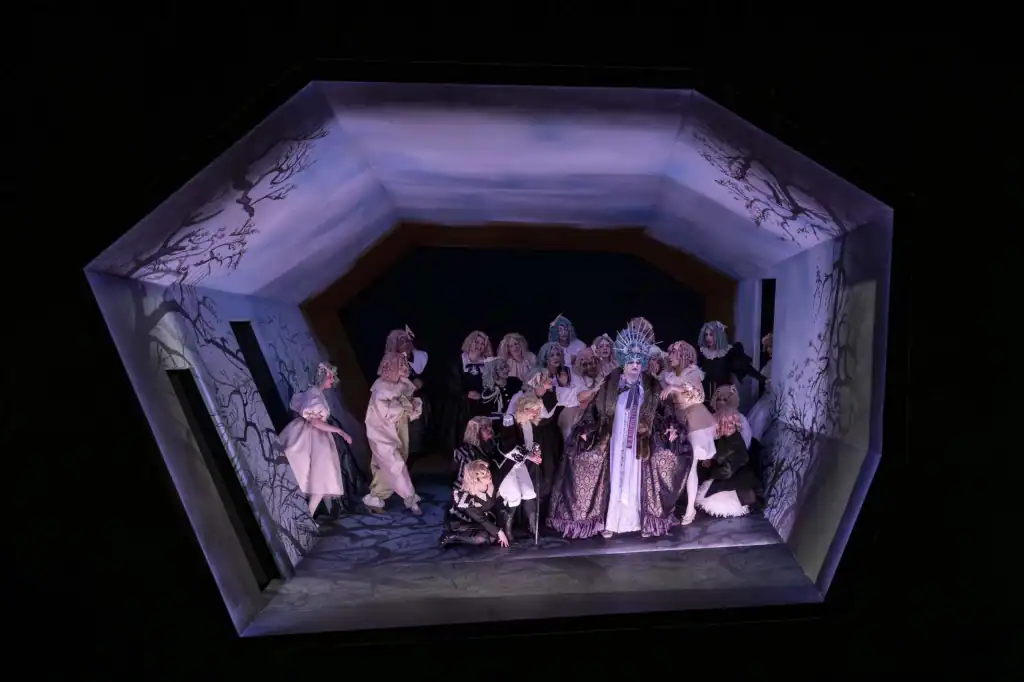
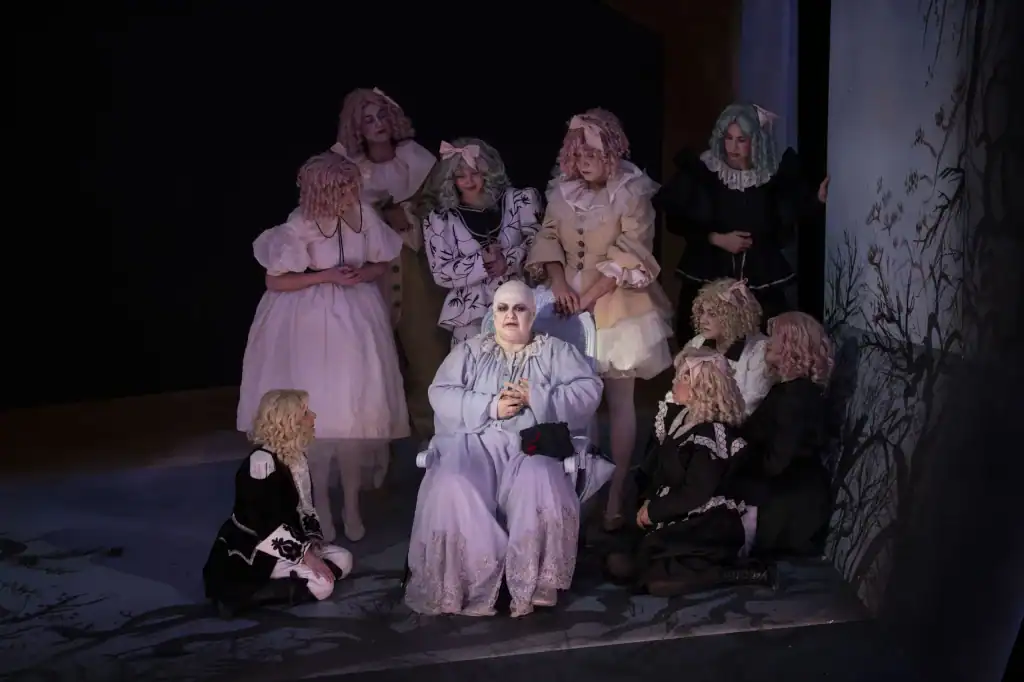
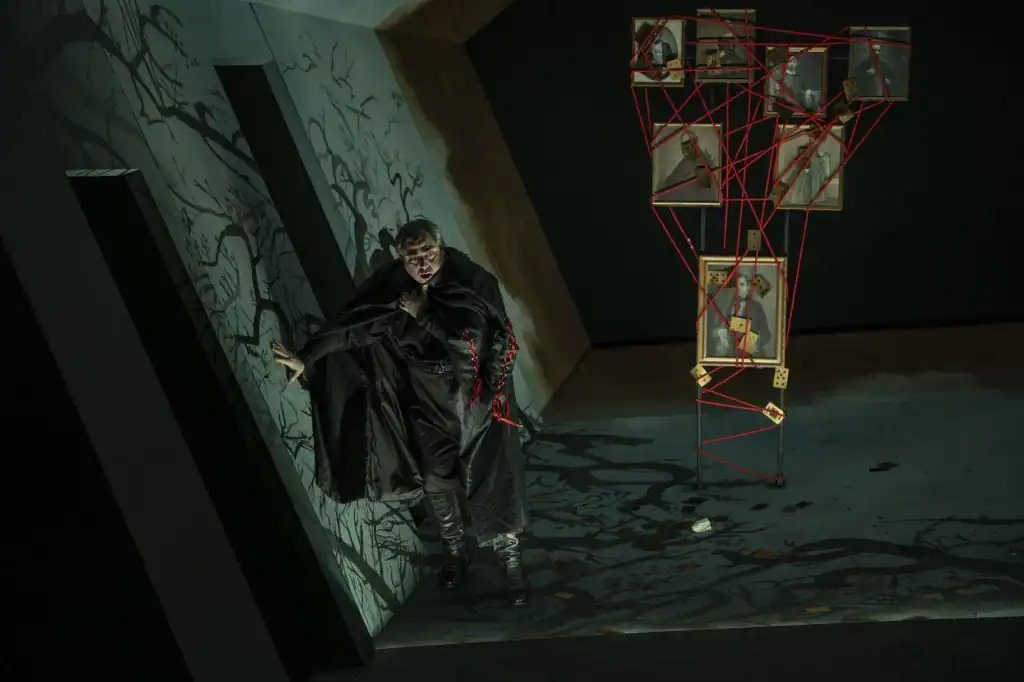
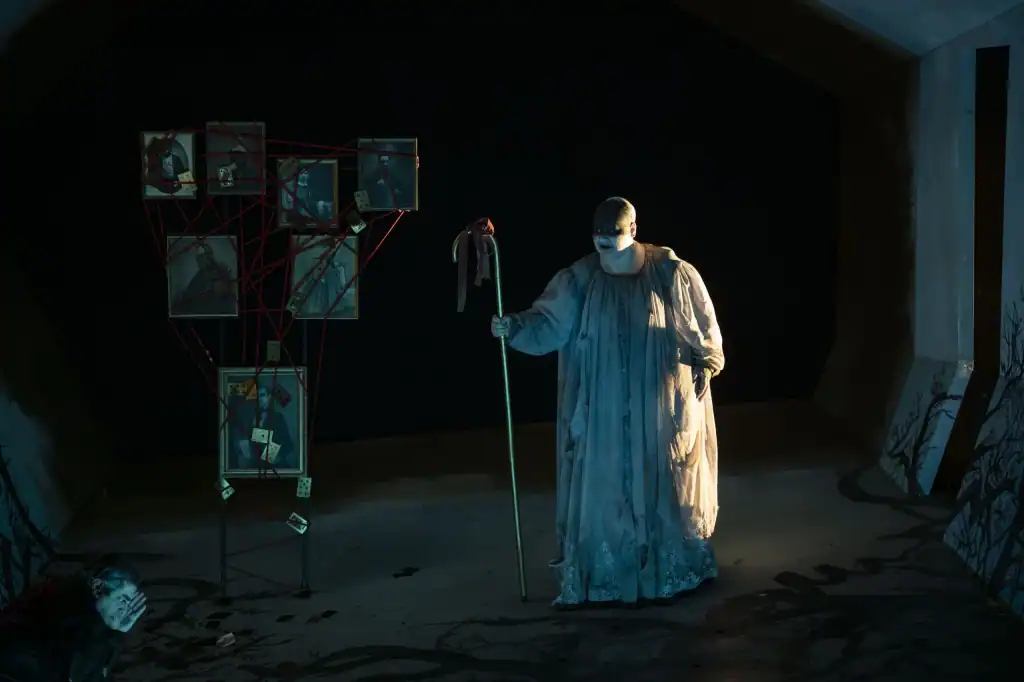
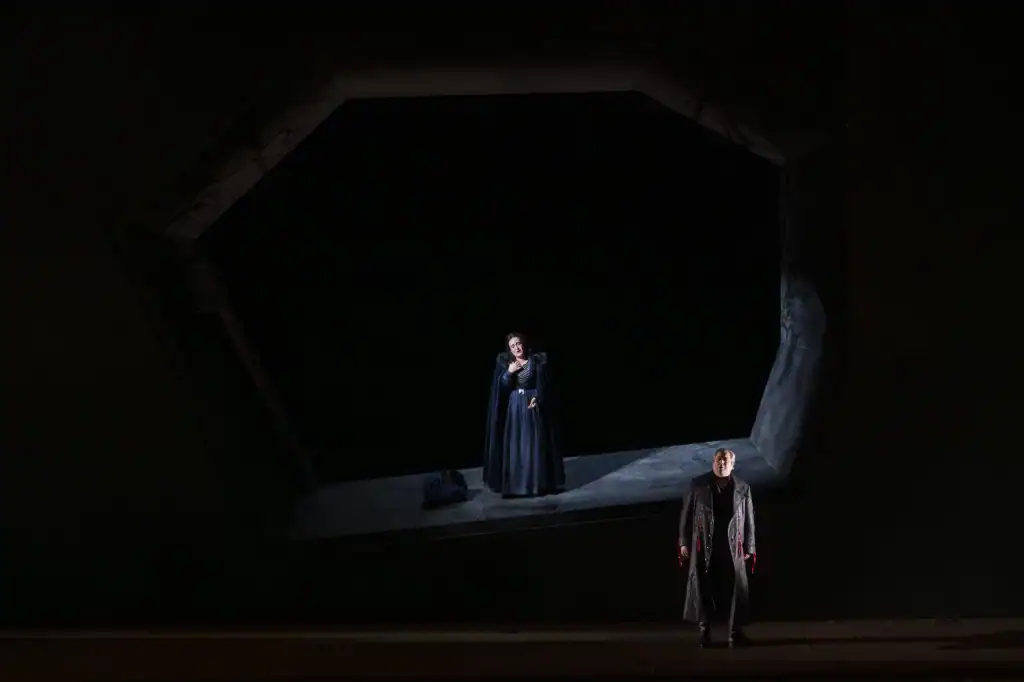
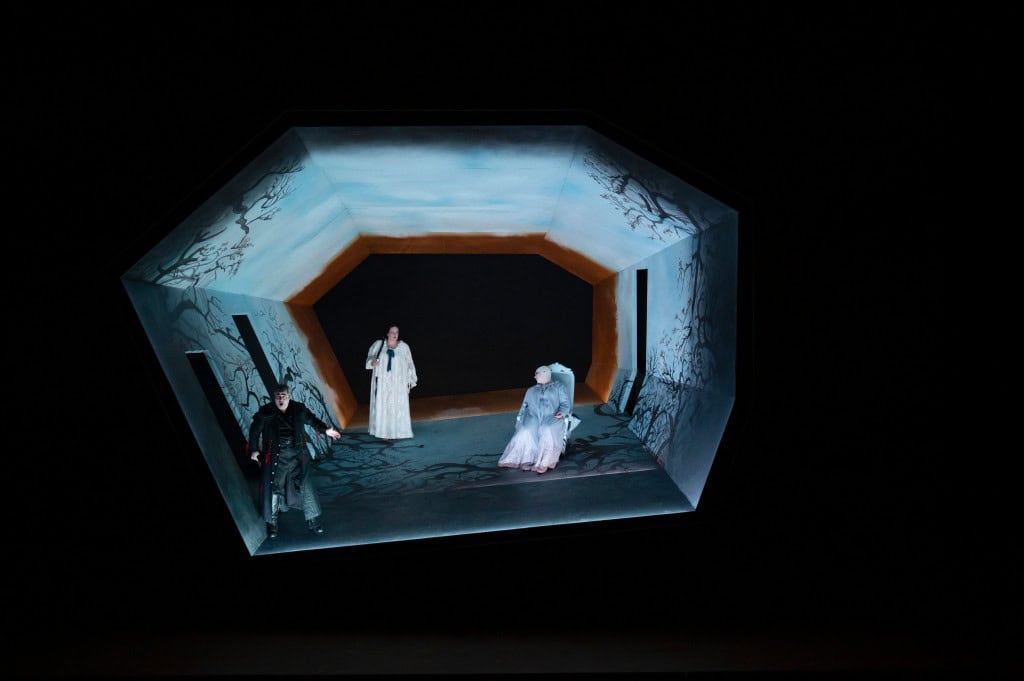
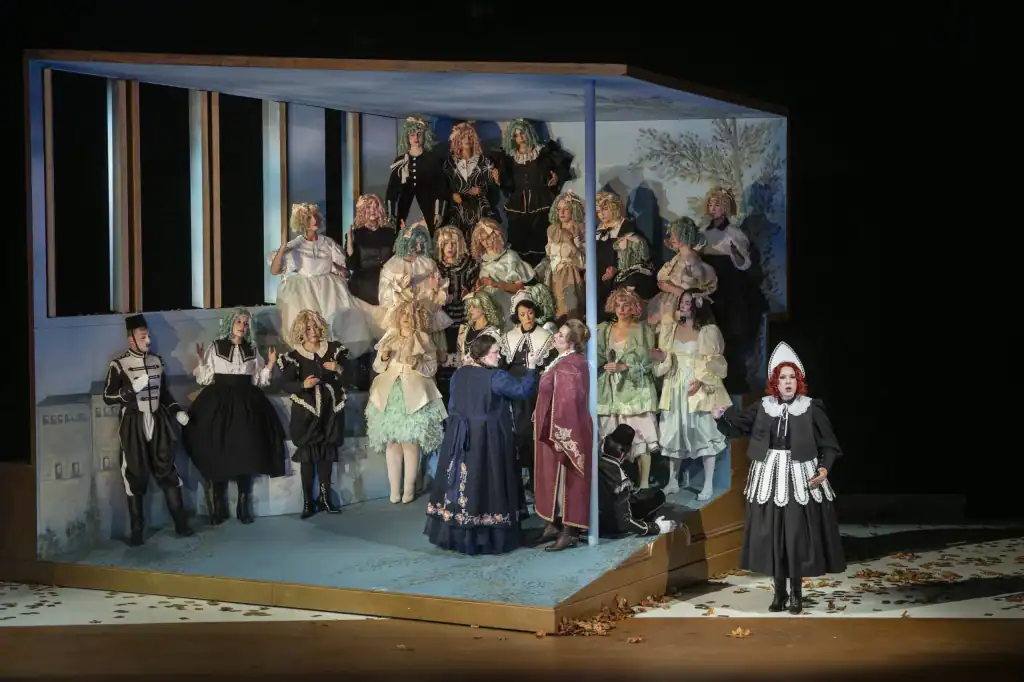
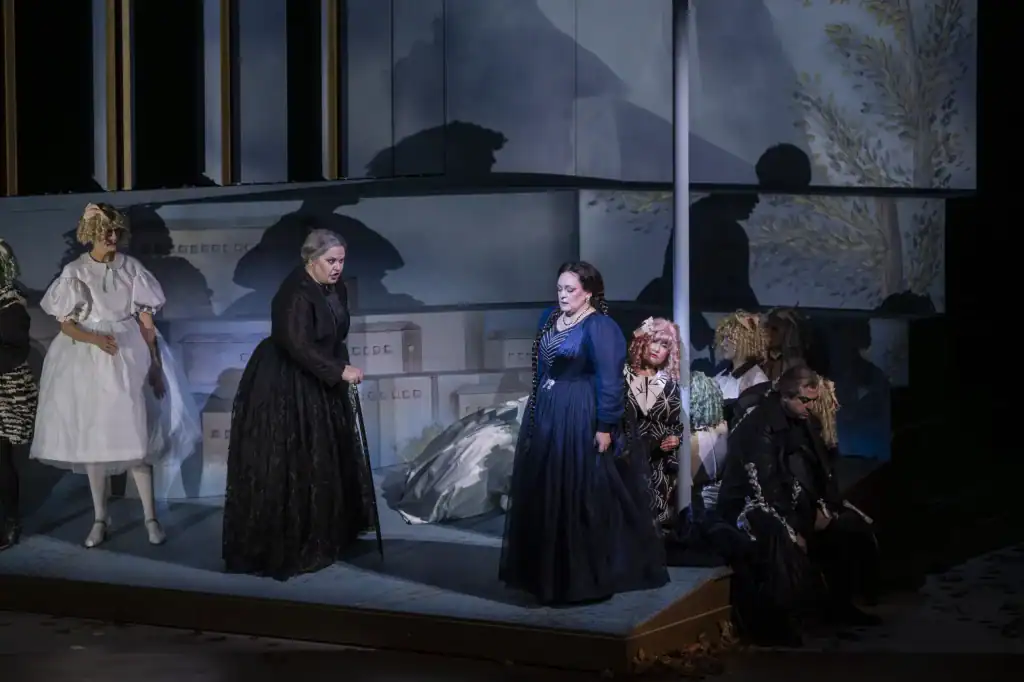
From the second scene of the second act, there's a genuine directorial shift. Suddenly, instead of playing the full scene, a heptagonal structure is placed on stage. Within it, the core of the opera unfolds. The walls of the structure are painted with a desolate, bare tree motif, a symbolic reference to ruin and death. In this room, Herman meets the old Countess, Liza's grandmother, who holds the secret of three winning cards. In this confined scene, it's only about Herman and the Countess. But as Herman tries to wring the secret from her, the Countess dies. Herman only learns the secret of the three cards when the Countess returns to him as a ghost. The directorial device of the enclosed frame makes this confrontation particularly sharp and moving. Liza's rejection due to his obsession is now bitterly tragic.
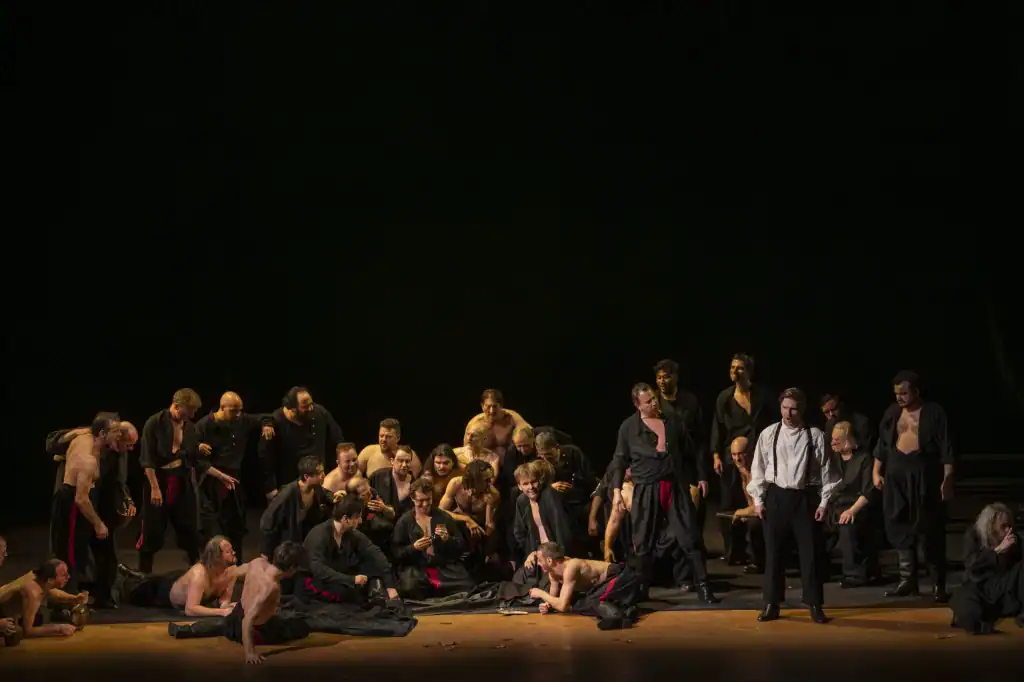
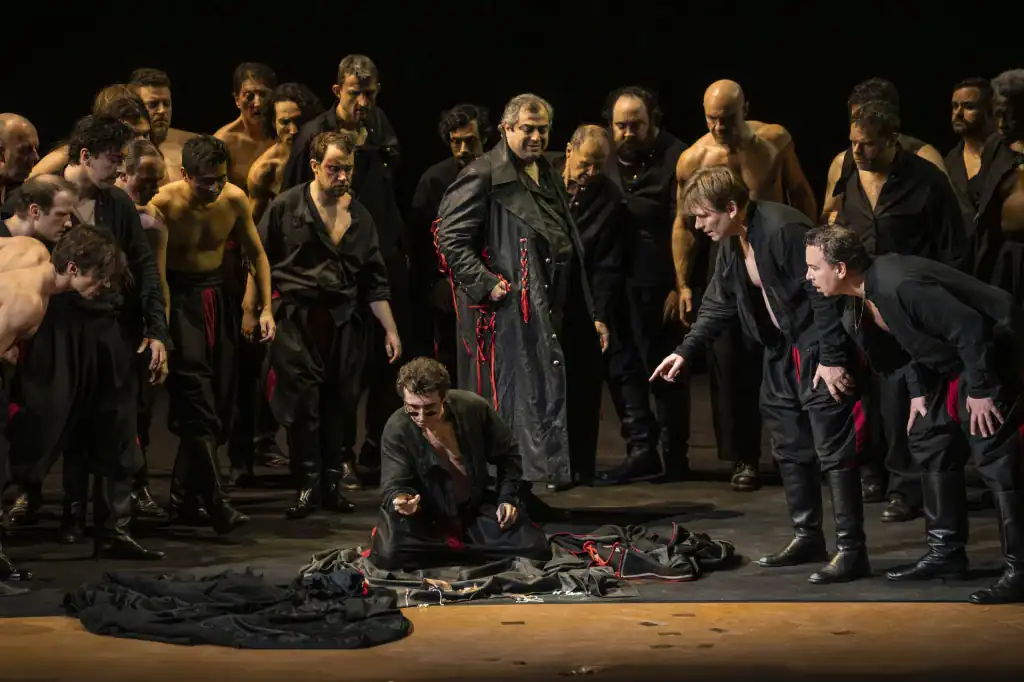
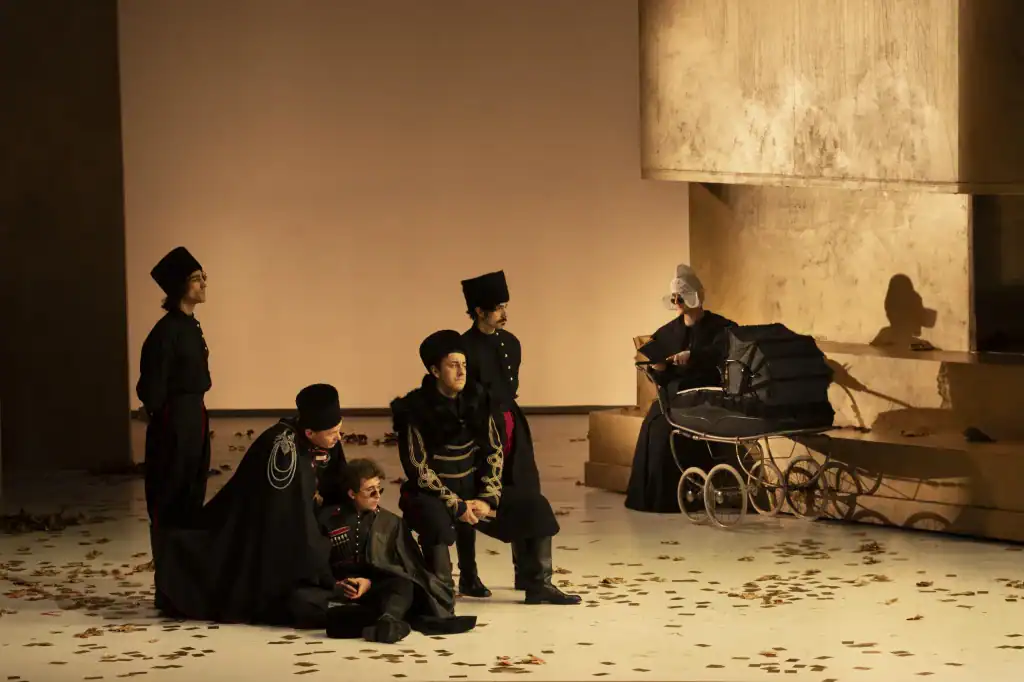
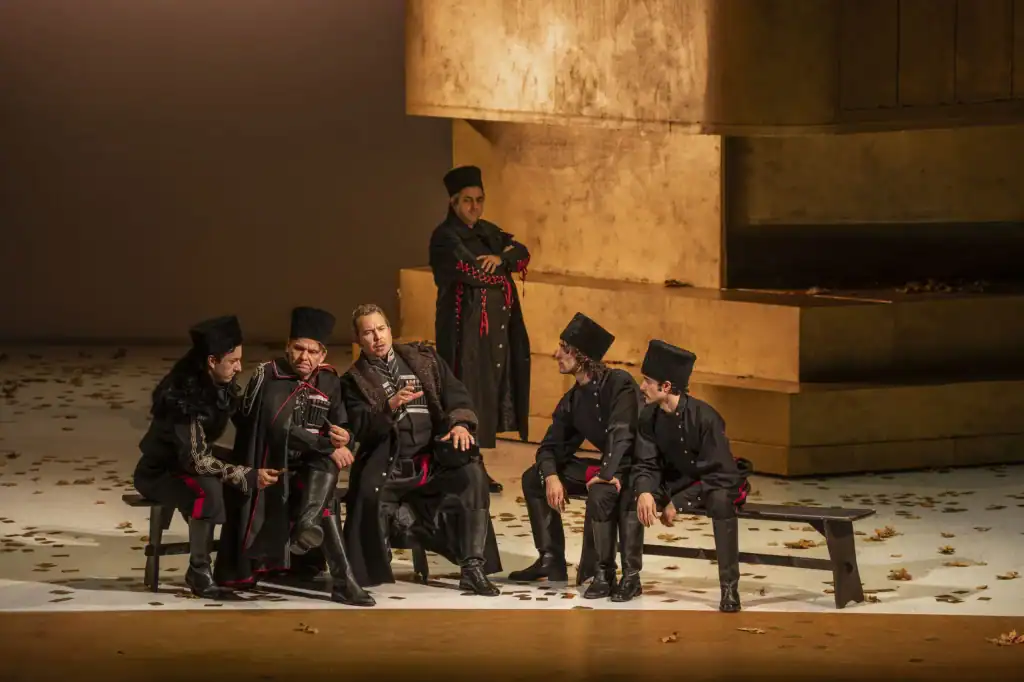
It's a shame that the direction then reverts to the anecdotal nature of drunken soldier life for the final gambling scene, where Herman squanders his chances and loses his beloved, who takes her own life. The tension of the wrong card is unfortunately underplayed in this context, and even when Herman takes his own life, the scene hardly moves us.
Giampaolo Bisanti unites aristocracy and fate
In Queen of Spades, we recognize on the one hand Tchaikovsky's talent for depicting the social context in which the story unfolds. There's the aristocratic atmosphere, the rural charm of the opening scenes, and the exuberance of drunk gamblers in the final scene. On the other hand, his great art lies in portraying the psychology of the protagonists. The arias of Liza and Herman are exemplary for this, particularly the passage with the ominous appearance of the Countess. Bisanti's top priority to perform this opera at the ORW has been brilliantly realized here. He conducts and drives the orchestra to the most poignant passages, as well as moments of emotional intimacy. The motif of "tri karti" takes on an ominous quality from its first sounding in the opening scene. The soloists succeed in fully immersing themselves vocally in their roles. Olga Maslova has a clear and particularly powerful voice as Liza, though we might have wished for more nuance at times. The same applies to Arsen Soghomonyan as Herman. The loudness of his voice sometimes makes it monotonous and prevents the richness of emotion from coming through. Olesya Petrova was a good Countess, though not the most impressive. Nikolai Zemianskikh made a positive impression as the lyrical Yeletski. The choir, which plays an important role in this opera, was magnificent in every passage.
Despite the somewhat odd nature of the "broken" staging, this performance of Tchaikovsky's grand work made an impact.