Renaissance artist Sidi Larbi Cherkaoui is a jack of all trades: dancer, choreographer, singer, artistic director, philosopher, music video maker for international stars, lip-sync specialist for films, bridge-builder extraordinaire. You name it, he's done it. Showered with five-star reviews and prestigious awards both at home and abroad.
What I find most compelling personally are his theatrical productions. Equally impressive is how he takes what seems like obvious next steps in his career and life. He has zero tolerance for repetition and constantly reinvents himself. A charismatic natural talent with a brilliant mind. He observes the world around him and decodes reality itself.
With a Flemish mother and Moroccan father, he was born into a dual identity. Many young people in that situation feel lost, at home in neither culture. For him, it became an inexhaustible wellspring: Bible or Quran, Moses or Buddha, paradise or hell, West or East, Belgium or Morocco, you or me, family or freedom, the village or the world—he explores these contradictions. He's a purebred artist who knows no boundaries: not in his work, not geographically. With open eyes, genuine candor, and profound respect, he moves fluidly through all cultures. He became a nomad and cosmopolitan.
His name, Sidi Larbi Cherkaoui, can be translated as 'the Arab nobleman from the East.' He lives up to it entirely. A few years ago he created 'Vlaamsch (chez moi),' a tribute to his mother. In this second installment, 'Ihsane,' he focuses on the father-son relationship—a bond that wasn't always smooth sailing. His father, shaped by his culture, was a fairly dominant figure. They clashed. 'Ihsane' is a dance performance rich with resonance. Within its many layers there's so much to read and interpret: memory and loss, origin and difference, sexuality, the taken-for-granted and the mysterious. As a grown man, he shines his analytical-philosophical light on his love for his father, how it fractured under the weight of his own broader worldview as a sensitive and intelligent son, but also his grief over that loss—a razor-sharp dissection of the father-son dynamic. Ihsane pushes back against all forms of division and compartmentalization that endlessly tear our society apart.
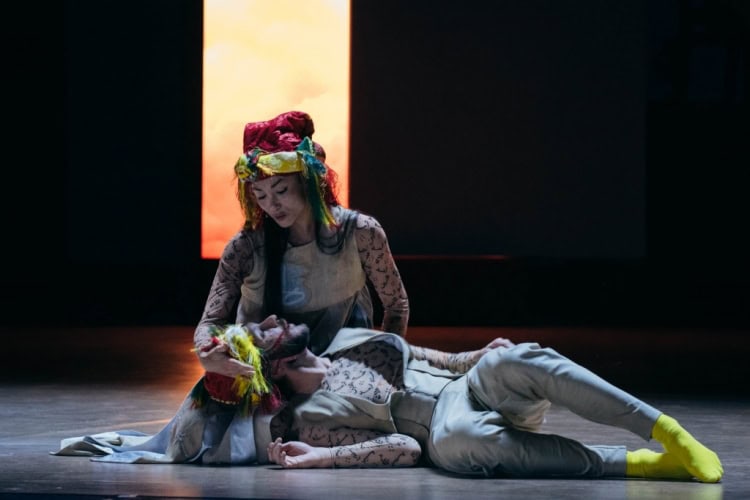
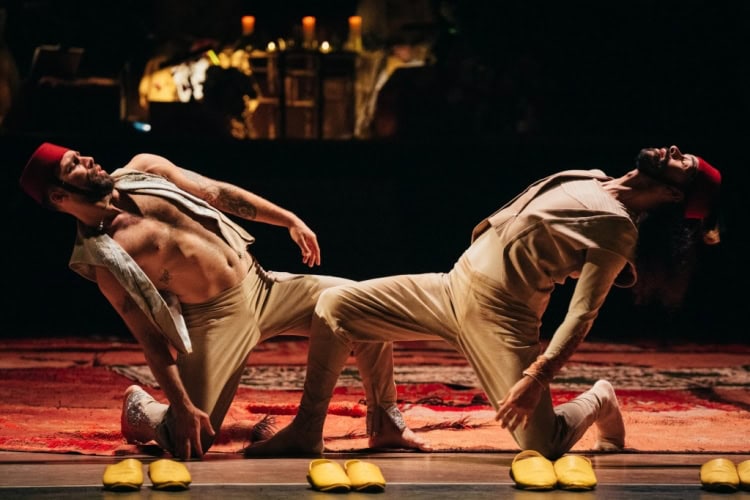
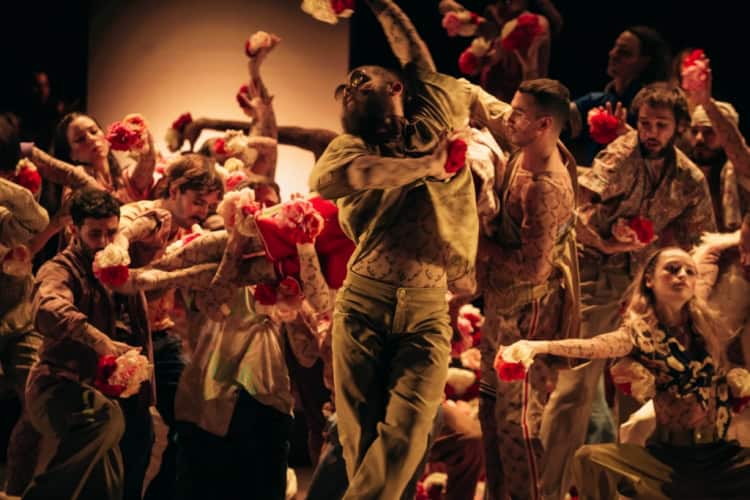
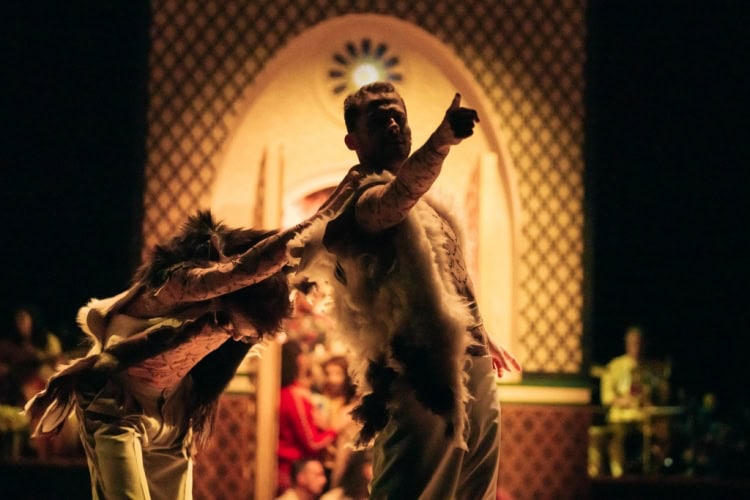
The Arabic word 'Ihsane' also carries broader meaning, referring to goodness and harmony with the universe—but it's also the name of the first known victim of homophobic violence in Belgium. Cherkaoui honors that victim with a striking scene and, alongside his dancers and musicians, reflects on the endless cycle of destruction and rebirth. The result is yet another brilliant and deeply engaged production. Sidi Larbi Cherkaoui surrounded himself with an outstanding artistic team: eighteen dancers from around the globe, five magnificent musicians. Traditional instruments provide the instrumental accompaniment. Tunisian viola d'amore virtuoso Jasser Haj Youssef composed the music and performs it alongside Lebanese superstar singer Fadia Tomb el-Hage and Moroccan singer Mohammed El Arabi-Serghini. Iranian musician Yasamin Shahhasseini plays the oud, and Gabrielle Miracle Bragantini handles percussion. They breathe fresh life into the traditional repertoire. The songs blend energy and melody—two complementary elements that strengthen each other. The universal connection rooted in the sacred nature of Eastern music creates a return to the wellspring of inspiration.
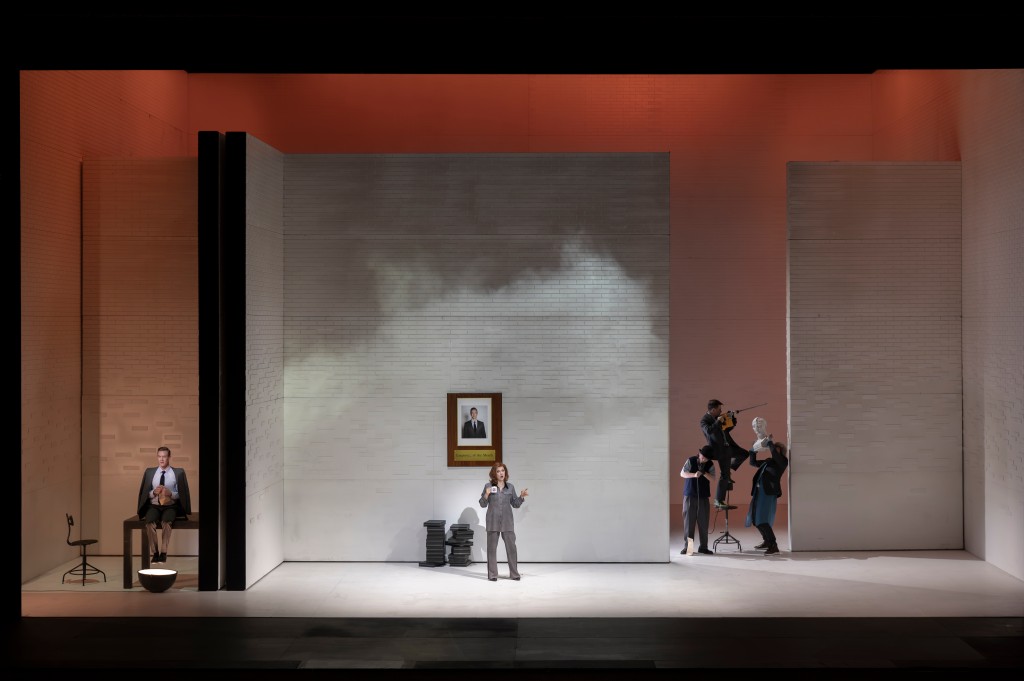
The performance opens in a refined Arabic setting with a group of young people receiving instruction. A teacher writes a word on the board, pronounces it, and they repeat it. Cherkaoui immediately brings the audience into the action—we too must repeat the Arabic word. Two words still work fine, but when it becomes a full sentence, it becomes hilarious. The students disappear through the golden gate. Then comes the scene where young Ihsane is beaten to death by a homophobe. A performance brimming with diverse dance forms and scenic detail. The way Cherkaoui transforms music into movement remains unique. The dancer tames the music, conjures it, possesses the gift of creating beauty.
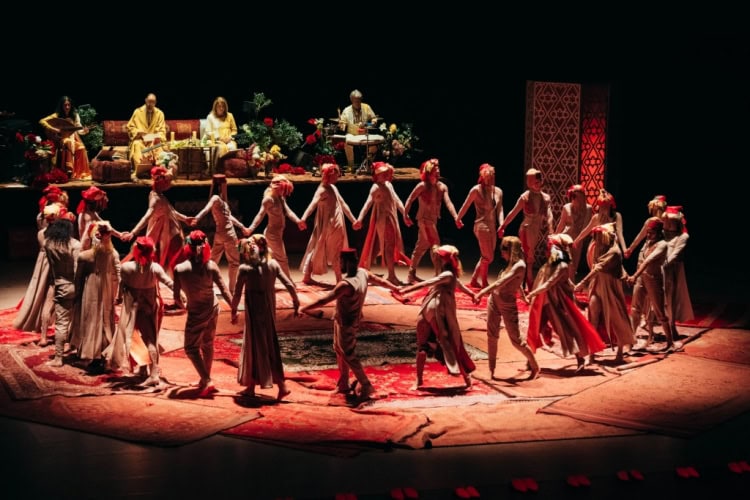
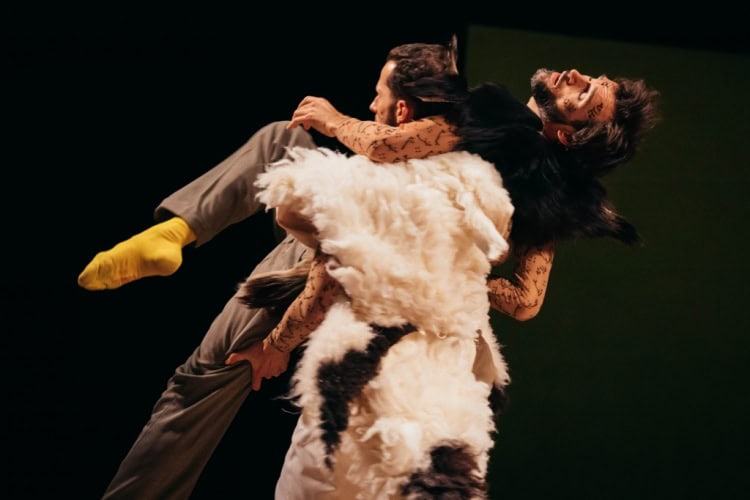
There's a stunning group scene bearing Cherkaoui's hallmark: movements using only hands and arms. A simple gesture, a hand rotation, but then he adds another, and another, until a complex phrase emerges. It speaks to extraordinary suppleness and precision. They remind me of depictions of ancient Egyptian dancers in the pyramids. Cherkaoui's dance career began as a teenager with breakdancing—a branch of street dance requiring immense strength and technique to spin on a vertical axis. The performance features some impressive displays of that skill. Dance that's both athletic and aesthetic, drawing from classical ballet and contemporary forms with solos, partnerships, group dances, and culturally rooted styles like circle dances. Following a delicate pas de deux between two men comes an ensemble piece. Where the first group tableau emphasized arm movements, now the feet and legs take center stage. Nothing flashy: a series of simple footwork sequences, but through uniformity and synchronization, it becomes intriguing and refined.
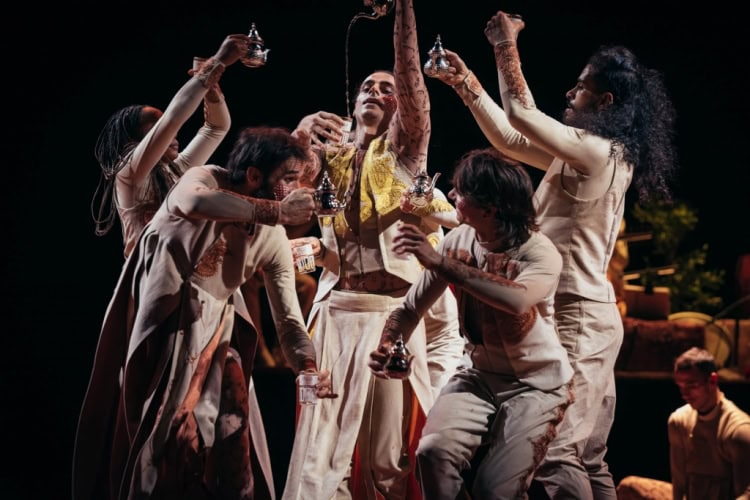
From his heritage, he presents a tea ceremony with rich resonance. A dancer's head is placed on golden serving trays. On LED screens, images appear: sheep, a lamb, a sacrificial offering. Hands stained with blood. Moments later, footage of villages destroyed by war. The music and singing enchant. A vocal technique unfamiliar to Western ears. It requires a highly developed range and extensive technical mastery.
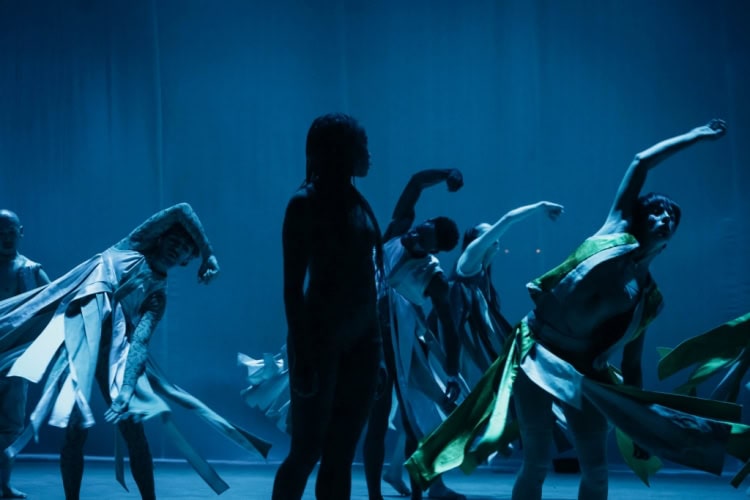
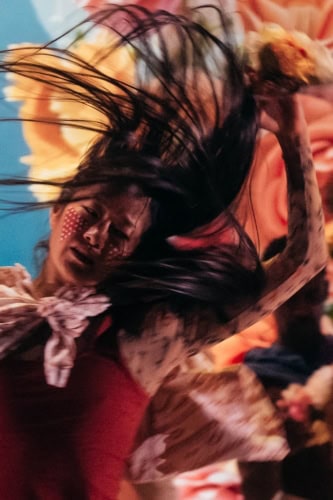
For Ihsane's costume design, Cherkaoui collaborated with Amine Bendriouich, a young Moroccan designer and iconoclast in a land of forms and structures. He chose, among other things, dresses with long loose panels that fan out like a flower bud when spun. Word and music maintain a delicate balance in the performance. There's use of Arabic, Dutch, and English. In his productions, Cherkaoui also mines the potential of objects. Here, it's carpets and rugs spread across the floor in polygonal patterns. Initially serving as décor, they later become part of the action. Dancers crawl beneath them and form monoliths.
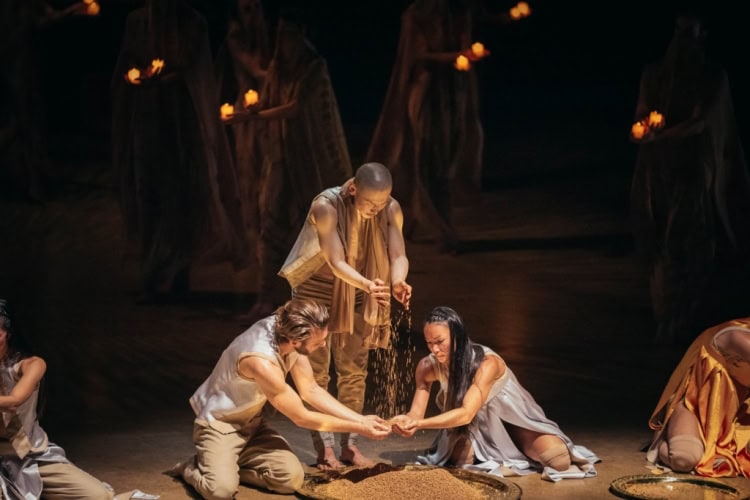
Around the midpoint of the performance, a finely decorated enormous cube descends, evoking the tomb of Muhammad, hovering above the stage. The entire performance is saturated with symbolism. Toward the end, several dancers take center stage. The one in the middle has a mound of sand on a golden serving dish. He scoops it up and passes it left and right. Life slips through our fingers like sand. The cube descends to the ground. A lifeless body is wrapped in a carpet and respectfully placed in the stone tomb. He receives one final farewell. The cube rises heavenward. As it ascends, sand trickles down. A body returning to dust. It couldn't be more visually eloquent. A powerful final image that grabs you by the throat.
The fantastically cohesive cast was rewarded with minutes of standing ovation. When Sidi Larbi Cherkaoui briefly joined his dancers and performers on stage, the audience went wild. A fellow countryman and artist they've taken to heart, and they're bursting with pride in him.