Churches, concert halls and auditoriums in Leuven will soon open their doors for Festival 20.21. This year doesn't revolve around a central theme, but those who flip through the brochure will spot several clear threads running through the program. For starters, there are plenty of concerts that connect new and old music with each other. There's also a focus on specific themes such as Christ's crucifixion and the mystery of the night. During an entire Hungarian week, the enormous musical wealth of 20th-century Hungary is shared with the audience. Reason enough for Klassiek-Centraal to seek out artistic director Pieter Bergé.
CDW: Since you've been collaborating with Maarten Beirens for the festival, you present a themed day every year. It started with a Gershwin day in 2015, and I remember a long Sunday with the Sequenzas by Berio, alternating with Bach's cello suites. What is the importance of a themed day during the festival?
PB: The annual themed day offers tremendous opportunities to really dive deep into a particular repertoire. That day always presents a challenge for the audience, but it also changes the way many people listen to music. When people prepare themselves for a whole day like this, it's as if they sharpen their minds and ears. That creates a very special atmosphere. That's why it's wonderful that we can hold this event every year at the Schouwburg, in collaboration with 30CC. It's a space that invites concentration and intensity. This year we've chosen to perform all of Bartók's string quartets. Of course, the music is central, but we're also using the opportunity to shed light on the mysterious man that Bartók was through short documentaries. For this, we had a few ZKFs made again by video artist Lise Bruyneel. These are "Very Short Films" that create a framework and atmosphere around the works being performed. Lise already made a beautiful series of short films last year about the friendship between Shostakovich and Britten. The impact on the audience was enormous. You could hear a pin drop, not only during the films, but especially during the performances that followed. It was as if abstract music suddenly gained a theatrical dimension.
The 'Hungarian week' consists of three concert days, each focusing on one of the great Hungarian composers. In As the night it's Ligeti, in the Kafka Fragments (Lost Words) it's about Kurtág, and Bartók is the central figure on the themed day.
I. As the night, October 3, 2022
PB: This concert is essentially built around two great quartets that have the night as their theme. On the one hand, there is Metamorphoses Nocturnes, a relatively early work by Ligeti that still adheres quite closely to Bartók. That's also why the piece is preceded by one of the so-called 'Nachtmusik' movements from Bartók's Fifth String Quartet. On the other hand, there is Thus the Night by French composer Henri Dutilleux. Here too there is a kind of prelude, specifically the solo piece At the Edges of Night by Italian composer Salvatore Sciarrino. The entire concert thus becomes a sort of exploration of the night, across different nationalities, in all its mystery and fragility.
II. Lost WordsOctober 6, 2022
Kafka Fragments by György Kurtág (±1926) to present to the audience is for artistic director Pieter Bergé a long-held dream come true. This four-part cycle from 1985-87 was written for the unusual combination of soprano and violin, and the form itself is exceptional. The composer has essentially created a collage of forty text fragments from Franz Kafka (1883-1924), who, like himself, was of Jewish and Austro-Hungarian descent. The successive pieces, of greatly varying length (between 15 seconds and 7 minutes), show no obvious thematic connection but as a whole they have something hypnotic about them and generate highly concentrated, often very introverted music. Sometimes the fragments Kurtág selected are so brief that the performers must shift mood in mere seconds. That's an extraordinarily difficult task that the festival has entrusted to soprano Katrien Baerts and violinist Wibert Aerts.
You know, I was once a great draftsman, but then I took drawing lessons from a mediocre painter and squandered all my talent
CDW: If we're to believe the author of The Trial himself, the world lost a great draftsman in Kafka. A total of 163 drawings by his hand remained largely unpublished until 2021 but have now finally been released. Using this 'new' material, video artist Lise Bruyneel will build a video staging around Kurtág's sometimes austere, sometimes extravagant work. So are there actually three performers at work here?
PB: Yes, in a sense there are. For this project too we're working with Lise Bruyneel. She's become something of our house artist, because together with Muriel Waerenburgh she's been responsible for shaping our communications for years. For Kurtág the approach is completely different than with Bartók. The video is truly part of the production itself. The image runs parallel to the music. On one hand, it visualizes the sung texts, on the other hand Lise also works with drawings or fragments of drawings by Kafka. Sometimes she simply shows them, at other moments she enters into a kind of creative dialogue with that material. That's really very delicate. Kurtág's music is extremely fragile; there's literally not a single superfluous note in the score and Lise tries to give that same fragility a visual counterpart. That's an enormous balancing act and an ongoing process of paring down, refining, refining further, and so on…
CDW: Listening seems to be a taxing activity that few people master; we live in a highly visual culture. Is the festival going along with this trend somewhat by serving up video alongside the music?
PB: That 'visual presentation' is a very topical and tricky issue. We need to handle it very carefully. The music must never be overshadowed by the image the way it often is today. I also deplore the trend of letting concerts increasingly degrade into mere experiential moments, where the music becomes a kind of handmaiden. With Festival 20/21 we of course also want to focus on experience, but an experience that leads as much as possible toward the music. For some, such a visual component can be clarifying, and others can always close their eyes. The goal in any case is to sharpen the musical concentration of the audience, not to stimulate an alternative experience..III.

Bartók. A Life in Six String Quartets. Theme Day on October 9, 2022 (**)
CDW: Most concertgoers probably know that Bartók's music is permeated with folk music, but how and where do they hear that?
CDW: Most concert-goers probably know that Bartók's music is steeped in folk music, but how and where do they hear that?
PB: Let me first say where and how they will especially not hear that in the string quartets: in the form of charming folk tunes with lightly dissonant accompaniment underneath. With Bartók, the integration of folk music runs much deeper. That's why it's so important to understand that the study of folk music was an absolute priority for him. He meticulously documented vast amounts of Hungarian, Romanian, Slovak, Turkish, North African, and other folk music in order to preserve it, convinced that you could recognize the soul of a people in it. Over time, he adopted countless typical turns of phrase, scale figures, melodic and rhythmic patterns from that folk music and began using them as small particles in his compositional process. You could say that Bartók's musical DNA is partly made up of folk music, that he was steeped in it, and that from there he realized a true symbiosis of folk and art music. There are few composers in whom that symbiosis is so homogeneous, and the string quartets represent an absolute high point. You realize this even more when, for example, at the end of the Fifth String Quartet a folk melody is quite explicitly paraphrased. That sounds, deliberately of course, banal and in this case even ironic. CDW: Would Herman Roelstraete here or Ralph Vaughan Williams in England, who did more or less the same work, have discovered similarly interesting material now? PB: I think so. An ethnomusicologist is a musical archaeologist who digs without knowing for certain what they'll find. What they find is heritage. With that, they can make a reconstruction. But what's so unique about Bartók is that he gave that material an unparalleled artistic dimension, in which a West and East European tradition also converge. That's in a completely different league than a simple classical setting of traditional folk songs.
CDW: The festival once convinced Olli Mustonen to play Prokofiev's complete piano sonatas, a marathon-like experience. Aren't Bartók's six string quartets in their own way also a bit much of a good thing?
PB: Not at all. In total, it's less than three hours of music, spread across two concerts. Moreover, the ZKF's provide mental rest points and build the atmosphere further. I rather think people will regret at the end that Bartók never completed his Seventh Quartet.
© Pavel Ovsík
© Arkadiusz Berbecki
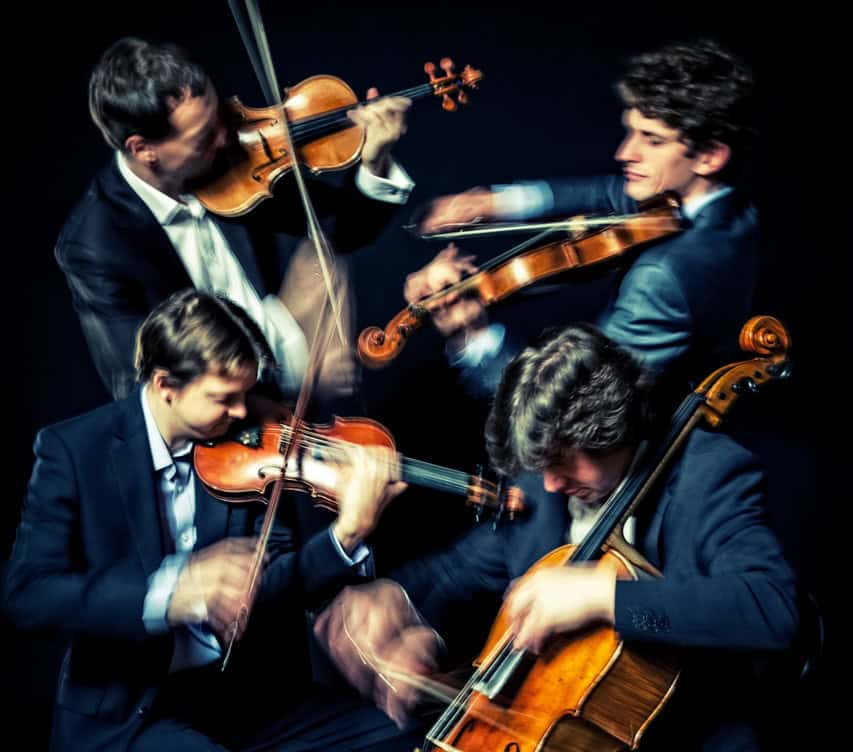
3 October 2022.
Quatuor Van Kuijk at 20:30 in Grote Aula Maria Theresia College
6 October 2022.
As the night
Katrien Baerts, Wibert Aerts, Lise Bruyneel at 20:30 in 30CC/Schouwburg.
9 October 2022.
Lost Words
Theme Day Bartók. A Life in Six String Quartets
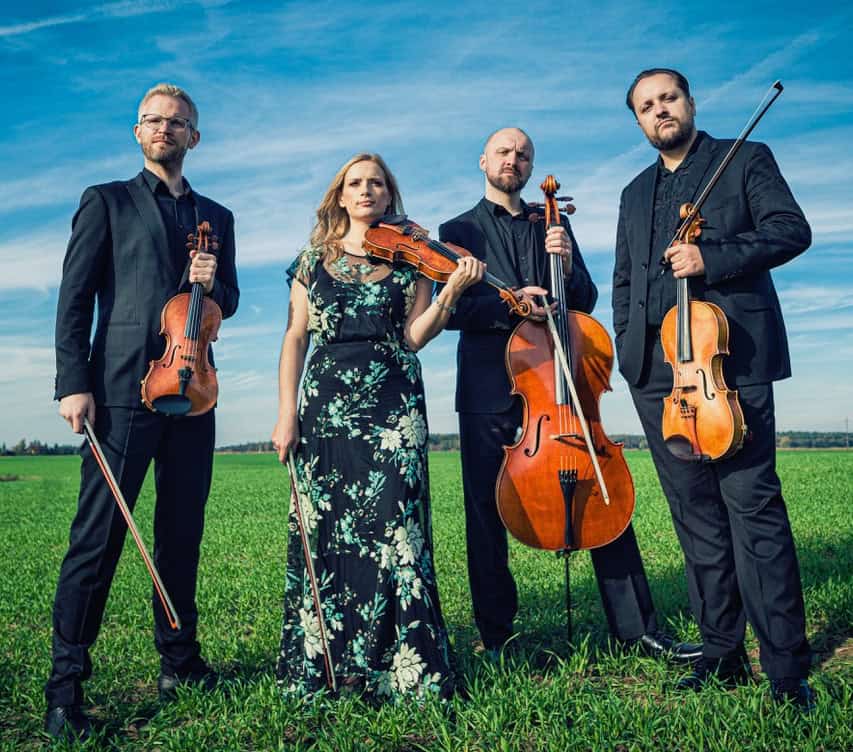
Bennewitz Quartet and Meccore String Quartet at 11:00 and 14:30 in 30CC/Schouwburg.
Info & Tickets
Soon, churches, halls and auditoriums in Leuven will open their doors for Festival 20.21. This year it doesn't revolve around a central theme, but if you browse through the programme you'll see some clear threads running through the programming. To start with, there are quite a few concerts where new and old music...