
Opinion piece on the 2019 Queen Elisabeth Violin Competition by Marlies De Munck
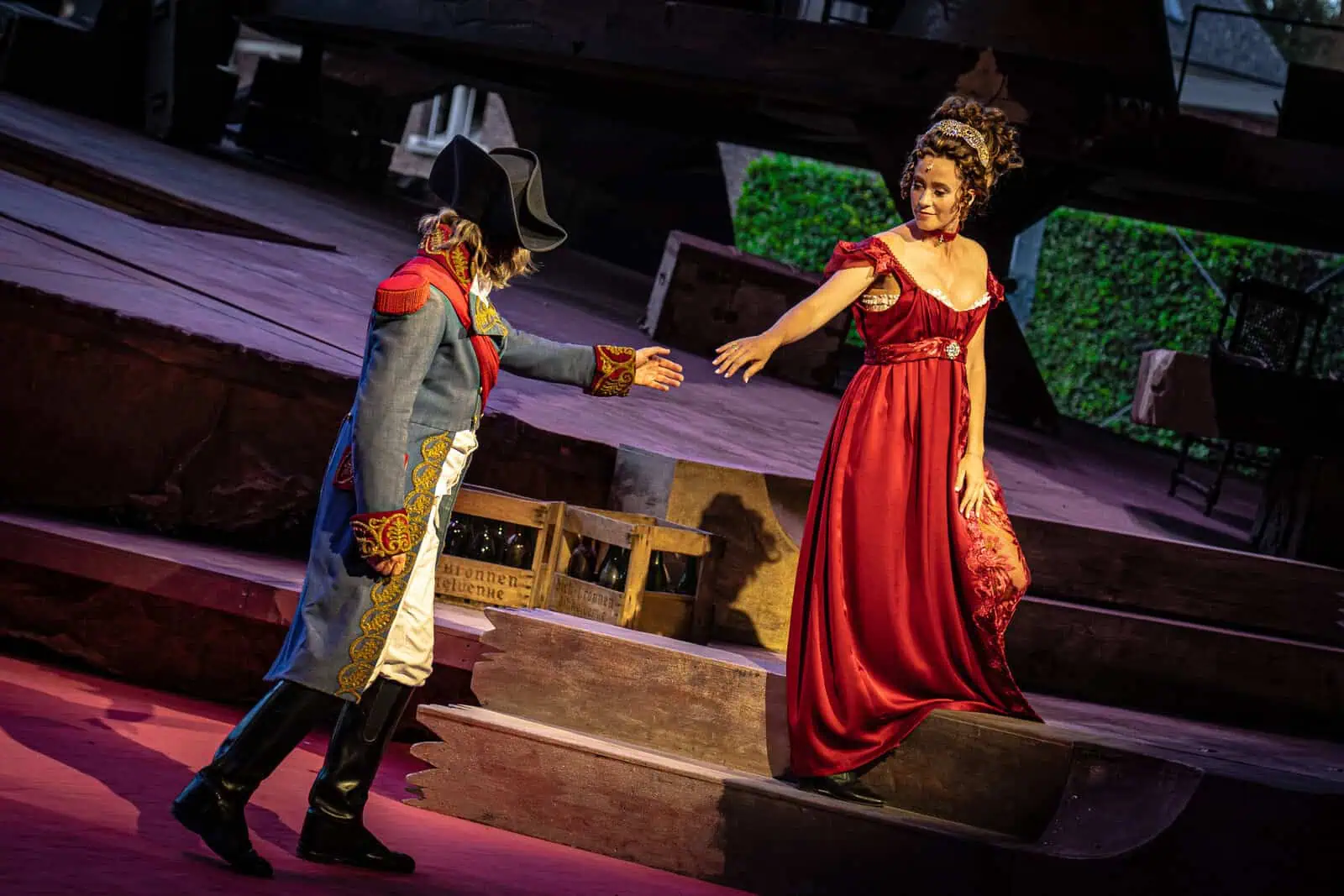
In {{NOTRANSLATE_1}}, there is always a mix of reality and illusion that are intertwined. Hoffmann the poet (tenor Arturo Chacón-Cruz) is the central player. His object of affection? The soprano Stella (soprano Jessica Pratt) in all her forms: Olympia, Antonia and Giulietta. Her opponent? Art in living form: La Muse (mezzo-soprano Julie Bulianne), disguised as Nicklausse. The antagonist is Lindorf (bass-baritone Erwin Schrott), translated into various figures (Spalanzani/Miracle/Dapertutto), but always in the same role. These four form the core that sets the game in motion and ultimately concludes it. The Standard on May 20 published Marlies De Munck, among other things author of the book Why Chopin Didn't Want to Hear the Rain, about the final of the 2019 Queen Elisabeth Violin Competition that started Monday. On Monday, it was compatriot Sylvia Huang who had the honor of defending Belgian pride in the final of the still prestigious Queen Elisabeth Competition. The violinist, who has a Chinese father and a Belgian mother, performed second, after American Luke Hsu. On Tuesday you heard another American, Stephen Kim, followed by Korean Ji Won Song.
In the evenings to come, you'll also see Asian names parade by. Three brilliant women have also been selected from the former Eastern Bloc: a Hungarian, a Romanian, and a Ukrainian. Indeed, they all come from the East (or at least one of their parents does).
Does that matter? Should we dwell on the nationality of musicians? Isn't music the last bastion where we can hope identity politics won't take root? Of course: nationality and geography are absolutely irrelevant for judging musical talent. But curiously, that's precisely why we see so few Germans, Dutch, French, English, Italians, or Scandinavians in the final, to name just a few European nationalities. This rightful impartiality has inevitably led in recent years to a ranking with fewer and fewer Western names.
Explanations for this have circulated for a long time. They usually boil down to the idea that we don't impose enough discipline on our children. The almost military drill in many Eastern cultures supposedly contributes to one prodigy after another emerging there. This kind of explanation also serves as a justification for the Western approach: that we produce fewer exceptional talents is actually a good thing. It suggests we're a child-friendly culture that won't be driven by competitive ambition.
I don't know how much truth there is to that explanation, but in any case it doesn't do justice to what we can hear with our own ears. The finalists are not mechanical, soulless competition machines. They're not producing Made in Chinaknockoffs. What they do is genuine, and it moves us. It's both bizarre and wonderful to experience how a young Japanese man makes Belgian hearts sing with a sonata by Czech composer Leos Janacek. Here sounds the universal language of music.
More interesting, therefore, is the question of what this geographic imbalance says about classical music culture in the West. The great works in the canon were created entirely in a climate of emancipation. More than any other art form, music in the 19th century was the medium through which social barriers were broken. The liberation of the middle class happened to the strains of Beethoven, Brahms, and Berlioz. Through artistic cultivation, the bourgeoisie broke through the glass ceilings of the aristocracy. Revolutions were fueled by the sounds of the most autonomous art form: absolute music.
That meaning of emancipation, of liberation through self-fulfillment, which went hand in hand with the classical music tradition for so long, we no longer recognize here. Music has gradually become a symbol of old-fashioned tradition itself. Or worse still: of a worldly detached, Eurocentric elite. This association has triggered a backlash in many European countries. Who dares say anymore, without irony, that the Elisabeth Competition is more valuable than the Eurovision Song Contest? Which parent dares insist that their child would be better off investing in learning to read music than in doing parkour?
While self-criticism and self-deprecation have their merits, this kind of reasoning undermines our own musical literacy. Without familiarity with the language, sound, and grammar of classical music, one has little chance of finding their way through it. Those who aren't encouraged to listen carefully and patiently risk remaining deaf to the meaning and depth embedded in that musical tradition. If we leave classical music to so-called neutral market forces, where violin concertos have to compete with catchy pop songs, it's clear who will survive. We should count ourselves lucky that this immense musical heritage continues to thrive in the East.
- WHATQueen Elisabeth Competition Violin 2019
- AUTHORMarlies De Munck
- PHOTOS© Queen Elisabeth Competition 2019: violin