The anticipation was building for Tristan and Isolde at the Dutch National Opera and Ballet, the revival of the production that the late Pierre Audi (1957-2025) directed in 2018. The revival was restaged with respect and precision by Lisenka Heijboer Castañón, who was his assistant director in Amsterdam at the time.
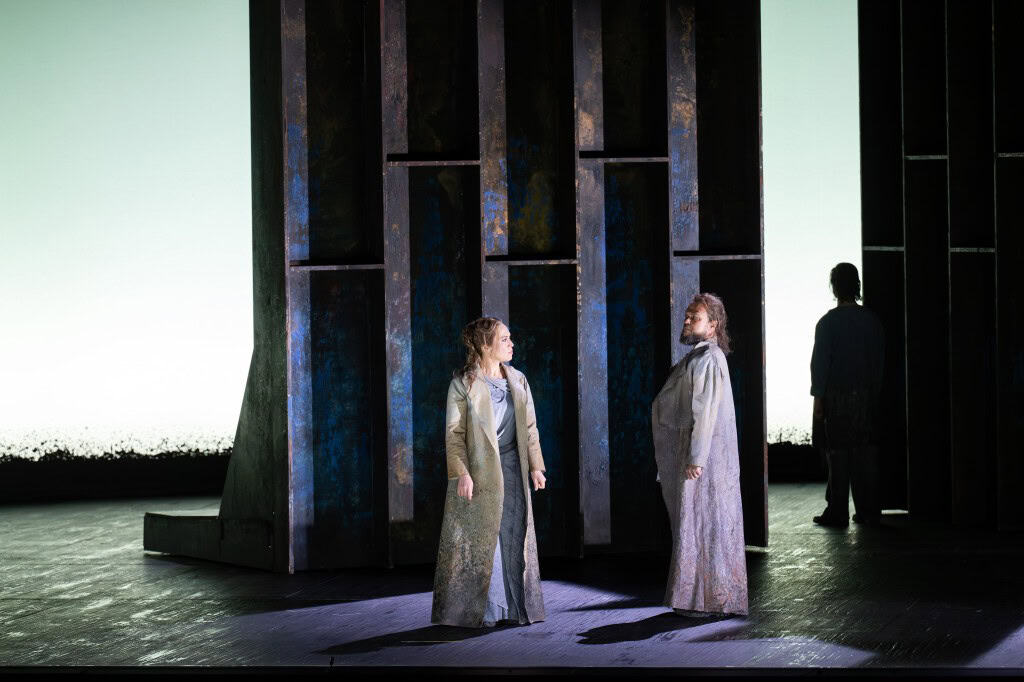
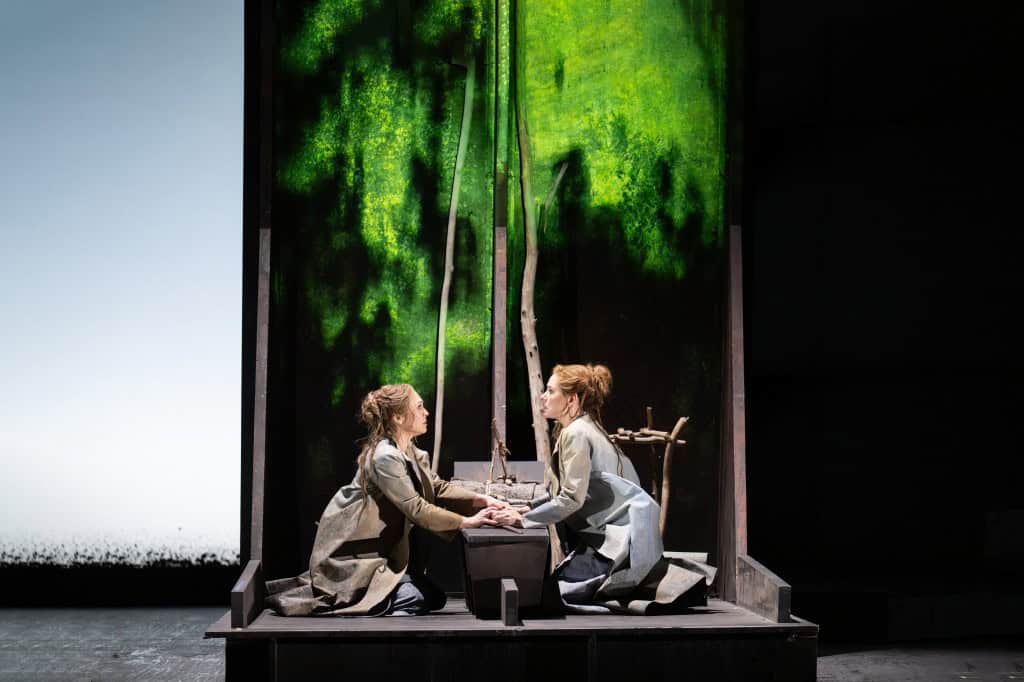
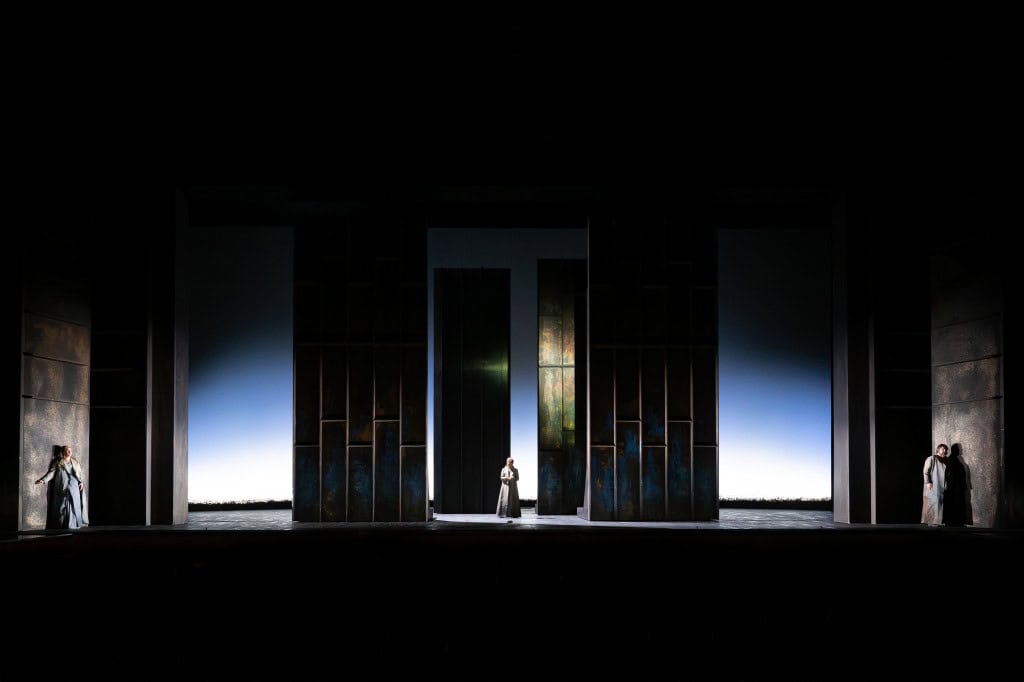
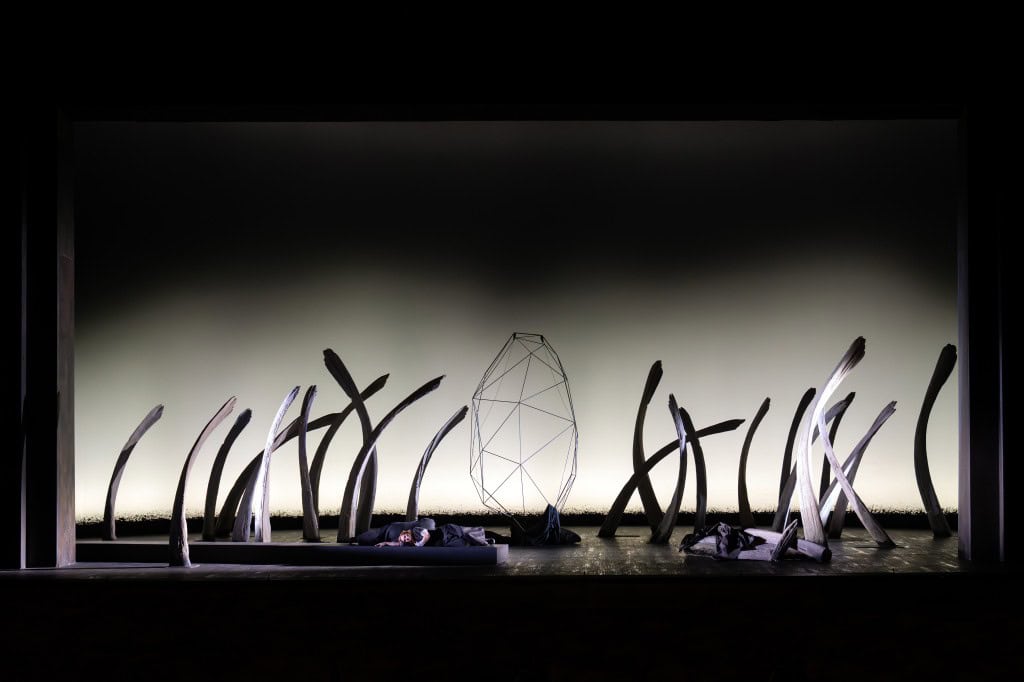
The production is stylized and suggestive, a hallmark of most of Pierre Audi's work. The set has several recurring elements throughout the three acts: a grey-tinted back wall that shifts in tone as the story unfolds and can represent a horizon, the sea, a forest... at the back, a ground edge suggesting a natural setting, wall panels with rusty drawings—sometimes glossy, sometimes matte—that evoke a harsh, sometimes martial, sometimes mysterious world. In the first act, black panels slide across the stage, like walls or the hull of a ship, but it remains suggestive, though a suggestion that works very effectively.
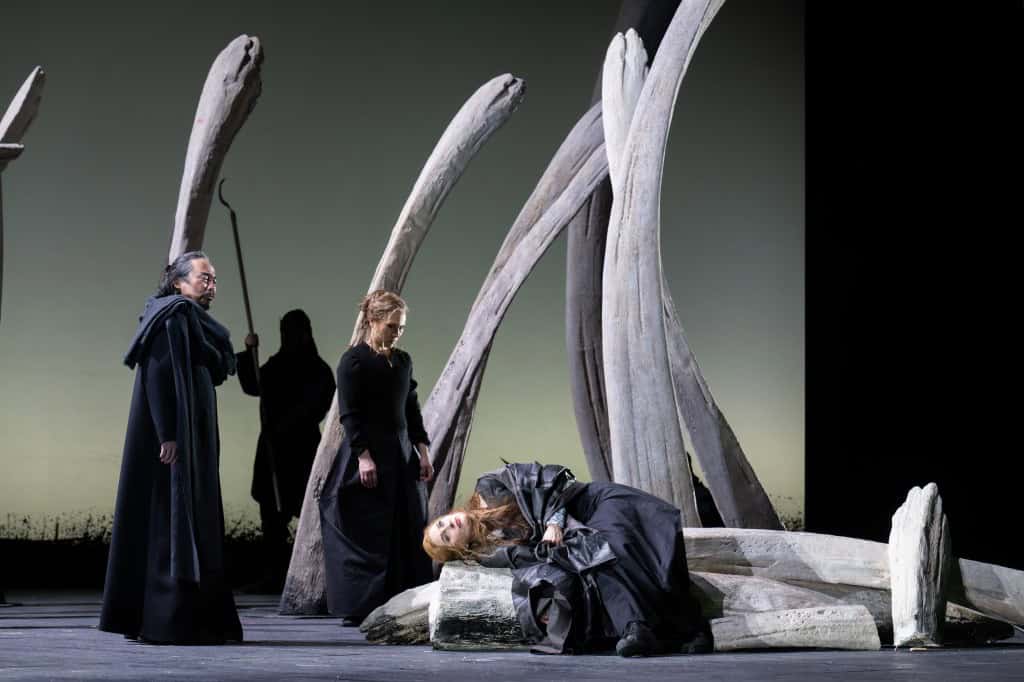
There are also elements evoking an archaic or perhaps medieval past, where the original story of King Mark, Tristan, and Isolde unfolds. In the second act, the ribs of a ship's bow (or bare whale ribs—as the dramaturg Willem Bruls explains in the program notes) suggest a world in decay, a perception that permeates the entire opera and naturally culminates in the death of Tristan and Isolde. A rectangular panel regularly forms the back of the stage and alternates between obscuring and accentuating.
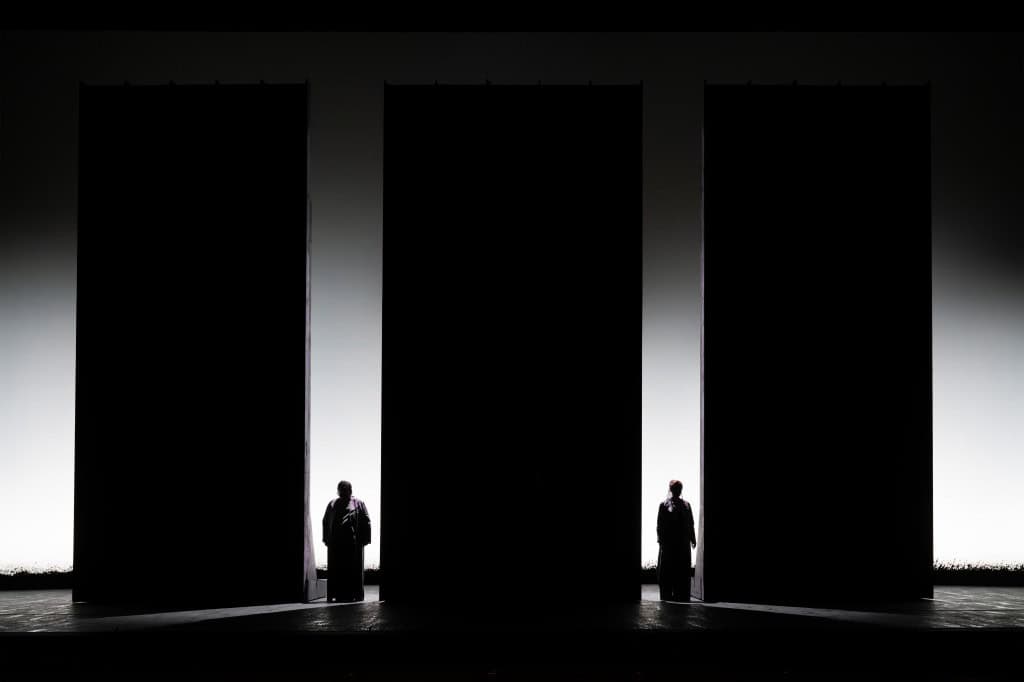
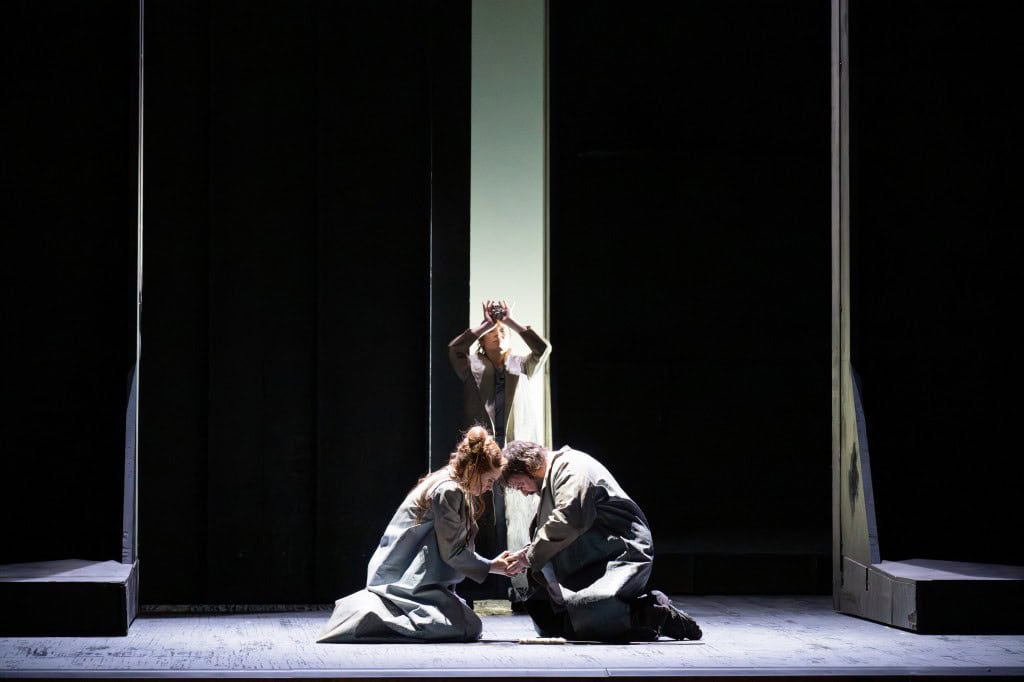
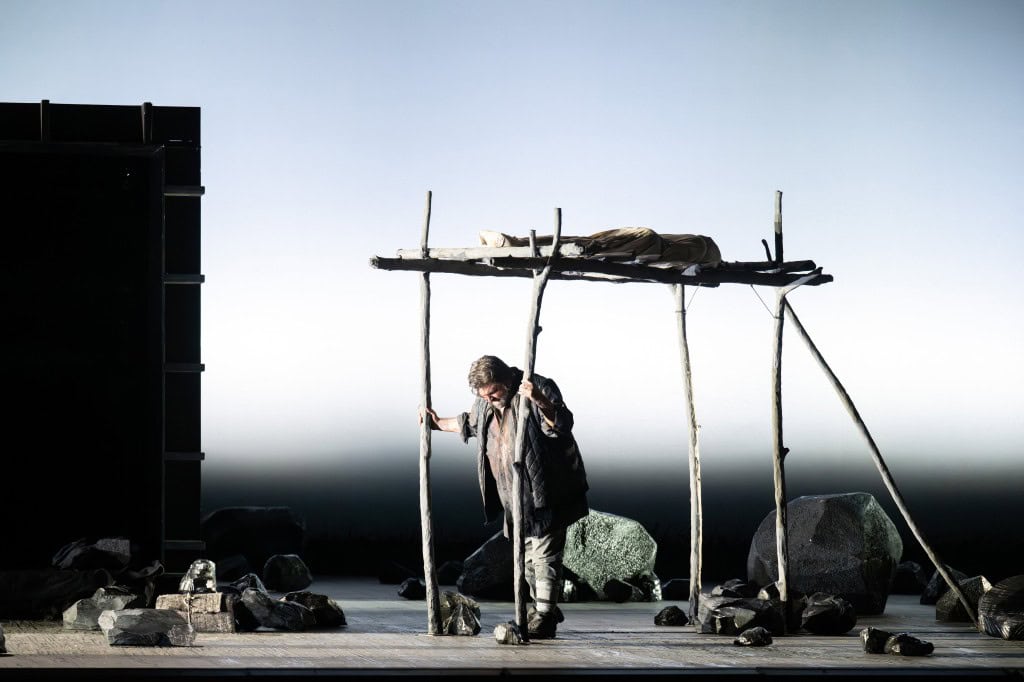
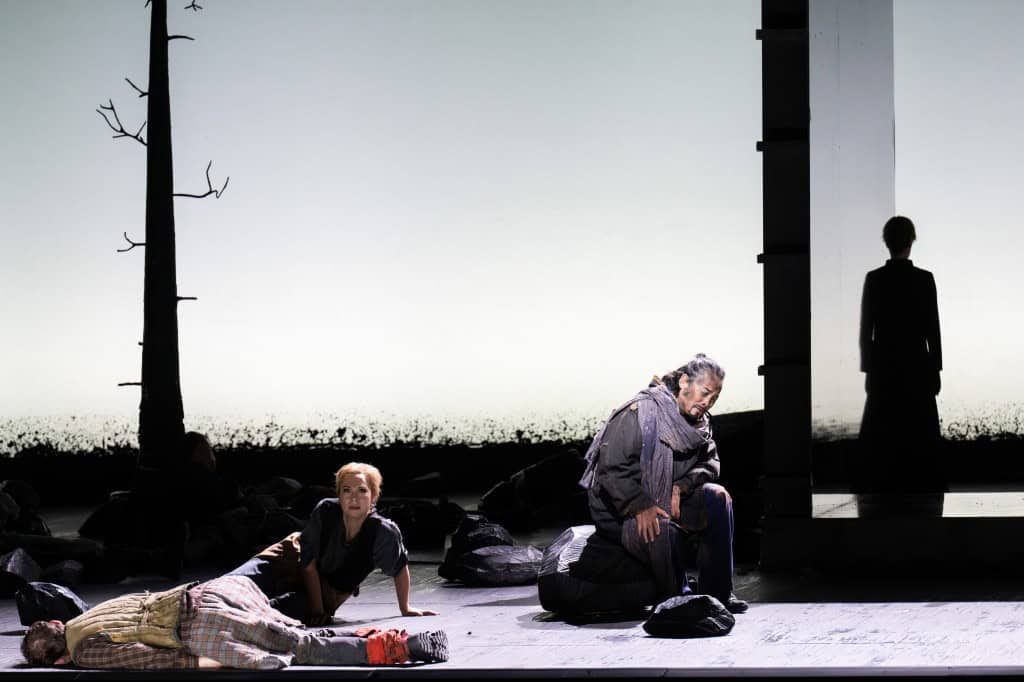
What's particularly striking is the great love duet scene between Tristan and Isolde, where the square gradually—from the beginning of Sink hernieder Night of Love shifts upward, transforming the black rock formation standing before it into a transparent metal grill. A beautiful image that emphasizes the enchanting love duet. The irregular rock formations scattered across the stage in the third act are the fractured solid rock that formed the back wall in the love scene. The lighting plays an essential role, accentuating the metaphysical quality of the love story.
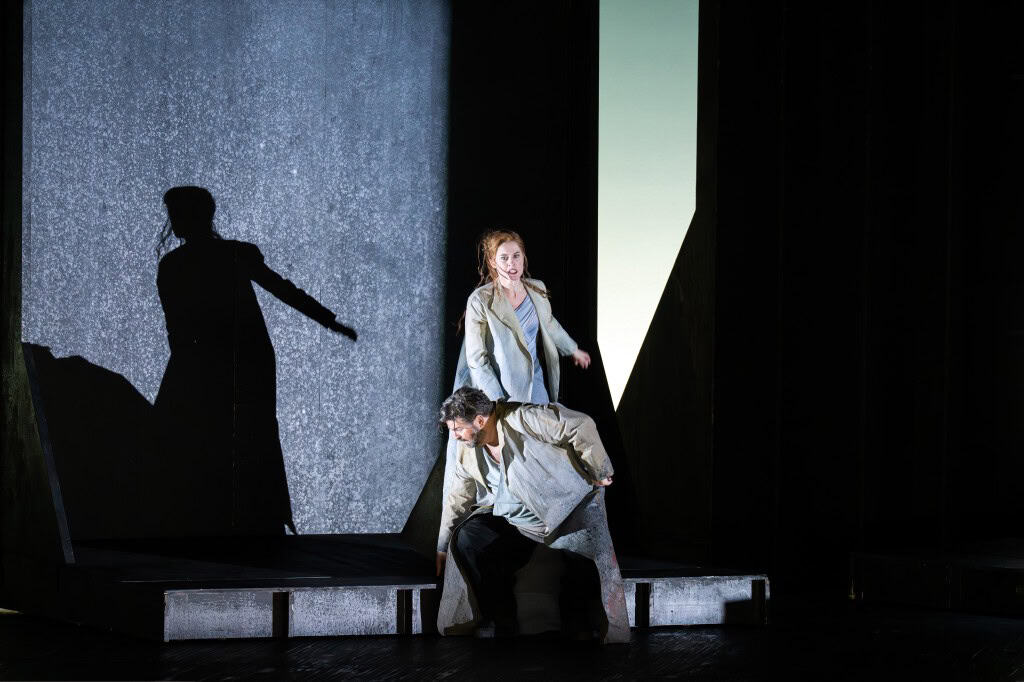
The interplay between light and darkness is thoughtfully crafted, culminating in the sublime final scene with the unforgettable shadow image of Isolde in her aria Soft and gentleThe costumes also fit brilliantly into the time concept: lavish satin cloaks for Isolde and Brangäne in the first act, somber black in the second, and 'casual' attire in the third.
The most beautiful work of art in the world
A quote from Tarmo Peltokoski, the just 26-year-old conductor of this grand Wagner opera. Phenomenal how the man achieves the right balance between orchestra and voices and how he makes the various orchestral passages with the beautiful woodwinds sound absolutely wonderful.
His utmost precision makes the performance with the Rotterdam Philharmonic Orchestra a unique experience. And when this is coupled with the magnificent soprano-tenor pairing of Malin Byström (who, notably, is performing her first Isolde on stage!) and Michael Weinius, the result is extraordinary. Byström appears to have a natural talent for both the lyrical and regularly intensely dramatic aspects of the Isolde role.
The clear and powerful voice of Michael Weinius as Tristan never forces. He performs his part with moving expressivity and sustains his vocal intensity until the very end. The other roles are very well cast, including the Brangäne of Irene Roberts and Jordan Shanahan as Kurwenal. Liang Li is an impressive King Marke, emphasizing the character's harsh nature rather than its charisma. Thus, the production reaches great heights musically as well.
Deeply moving is the final image in which the black frame is projected with a beautiful photograph of Pierre Audi and the text: "Thank you Pierre Audi (9-5-1957/3-5-2025)". In this way, the production becomes an immense tribute to the director and his surrealist world.