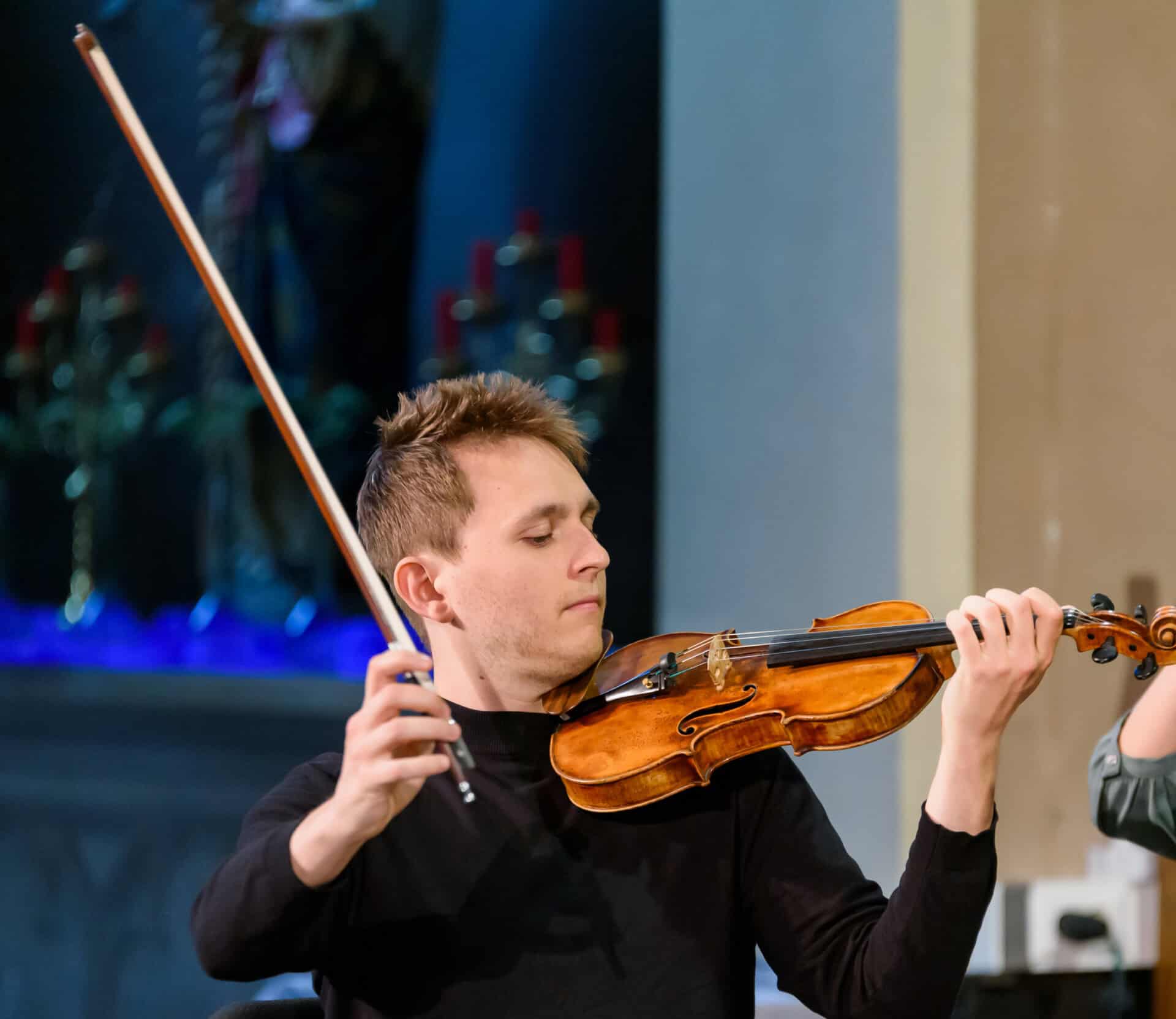
Ludovic Bataillie (b. 1995) is a violist. He is particularly active in the chamber music world, specifically as a member of the Desguin Quartet , a string quartet that he describes as his most time-consuming commitment, and the Firgun Ensemble, a clarinet quintet. With his brother, pianist Florestan Bataillie, Ludovic forms the Duo Adelfoi and shares artistic and business leadership of the Meander Festival, a chamber music festival in the Leie-Schelde cultural region, which has just completed its fifth edition.
What did you want to be as a child?
I knew very early on that I wanted to be a musician. I come from a musical family: my brother is a pianist, my father is a musician, and my mother is also very involved with music, not professionally, but with real passion. And then there was my grandfather on my mother's side. He was an accordionist and also played saxophone. He was a great source of support for my brother and me. For me, it was a given that I would do something with music. I started playing violin at age four and I also sang in the children's choir of the Flemish Opera. That's where I first came into contact with professional musicians. When I got the role of shepherd boy in the opera Tosca, I had to rehearse with the full cast quite often on Wednesday afternoons. I enjoyed it so much that afterward I said my mind was made up: I was going to be a musician too!
Who passed on your passion for classical music to you?
At a very young age, I was already playing music together with my brother. The joy of being able to make music together was there from the start. At home, we also heard much more than just classical music. Especially my mom listened to all possible genres, and I too listen to all kinds of music. My grandparents were our most enthusiastic supporters in everything we did. To make them proud, I always wanted to do my best.
Have you ever considered pursuing your music career abroad?
Over the past season, my quartet and I got to really experience playing abroad for the first time. We went to Hungary in September to perform a recital there. In October we had a tour in China. A few weeks ago we {{NOTRANSLATE_1}} went to perform concerts in Italy and Serbia. That was obviously a lot of fun. I also thought it was important to take time each time to explore the surroundings, so it wouldn't just be a quick in-and-out trip. In that sense too, it was a wonderful experience. But Belgium will always be my base. I really enjoy living here. But doing something abroad sporadically, I'd find that pretty cool in the future as well. What do you prefer: entering the stage alone and with full confidence, or trusting in a good outcome together with one or more fellow musicians? Preferably taking the stage with fellow musicians and the necessary self-confidence ({{NOTRANSLATE_2}} big smile {{NOTRANSLATE_2}}). For me, making music is truly a social affair. I want to be able to share music with people I get along with both musically and personally. Something like that helps me immensely to rise above myself. I'm also very grateful that I find myself in that situation, because finding such a good match is not a given.
Which late musician do you admire the most, and would you thus like to {{NOTRANSLATE_3}} bring back to life?
I think the answer to this question fluctuates greatly depending on what you're working on. In my case, at this moment I would say Ginette Neveu (1919-1949) {{NOTRANSLATE_4}} because Linde Verjans recently wrote a book about this violinist {{NOTRANSLATE_4}}. That book came to me and I'm reading it now. She is an incredibly intriguing figure and a fantastic violinist who unfortunately died far too young in a plane crash. There are quite a few recordings of her, but I've only found one short video of her myself. Seeing Neveu play with my own eyes, that's something I would have liked to experience.Do you actually have a musical {{NOTRANSLATE_5}} guilty pleasure {{NOTRANSLATE_5}} that you like to share?Because I sang a lot as a child, I still really enjoy sitting down at the piano here at home and accompanying myself with simple pop songs; and then singing them at the top of my lungs. I find that very relaxing. It's a nice counterbalance to violin playing, where everything has to be just right down to the finest details.
What's the first thing you do before learning a new piece of music?It's a cliché, but listening to the music is the first thing I do. Especially if I don't know the music. But even in the other case, I pull out the score and just listen to the music without my instrument. You only get that first listen once. That way I know which aspects of the music strike me first, and I assume that this will normally be the case with the audience as well. This way I try to always remember what the musical essence is of a piece of music. After that, the work becomes very technical, with fingerings and bow strokes. Then comes what I think is the most fun phase, where you have the music in your fingers, but you're putting the finishing touches on that last five percent. Because that's a process that requires a lot of musical creativity.
What do you consider to be your greatest achievement to date? 90 percent of my artistic activities consists of initiatives that nobody asked me to start. The fact that I've put all the things I do with my colleagues and friends on the map myself is something I'm quite proud of. It requires a lot of dedication, but I get a lot back from it too. If I could continue in this way, I would be a very happy person.Would you ever want to participate in competitions; and if so, why?
I have already participated in competitions. Those were always chamber music competitions. Both with the Desguin Quartet and the Firgun Ensemble we {{NOTRANSLATE_6}} guilty pleasure that you like to share?
Because I sang a lot as a child, I still really enjoy sitting down at the piano at home and accompanying myself in simple pop songs, belting them out at the top of my lungs. I find it very relaxing. It's a great counterbalance to playing the violin, where everything has to be absolutely perfect down to the finest details.
What's the first thing you do before learning a new piece of music?
It's a cliché, but listening to the music is the first thing I do. Especially if I don't know the piece. But even if I do, I'll get the score and just listen to the music without my instrument. You only get that first listen once. That way I know which aspects of the music strike me immediately, and I assume that's usually how the audience will experience it too. This helps me always remember what the musical essence of a piece is. After that, it becomes very technical, with fingerings and bow strokes. Then comes what I think is the most fun phase—when you have the music in your fingers, but you're putting that final five percent together. Because that's a process where a lot of musical creativity comes into play.
What do you consider your greatest achievement to date?
Ninety percent of my artistic activities consist of initiatives that nobody asked me to start. The fact that I've put all these things on the map myself with my colleagues and friends is something I'm quite proud of. It requires a lot of dedication, but I also get a lot back from it. If I could continue doing things this way, I'd be a very happy person.
Would you ever want to compete in competitions; and if so, why?
I've already competed in competitions. They were always chamber music competitions. Both with the Desguin Quartet and the Firgun Ensemble, we Supernova won. With the Desguin Quartet we also won the audience award at the time. And with the Firgun Ensemble we also won the Storioni Competition in the Netherlands. I certainly wouldn't describe competing in a competition as the most enjoyable thing, but it is something that has pushed me and the ensembles I play in to a higher level. It's a way to put your ensemble on the map and create performance opportunities for yourself. I don't think I'd be doing what I do now without participating in those competitions. Storioni Competition won. With the Desguin Quartet we also won the audience award at the time. And with the Firgun Ensemble we also won the Storioni Competition in the Netherlands. I certainly wouldn't describe competing in a competition as the most enjoyable thing, but it is something that has pushed me and the ensembles I play in to a higher level. It's a way to put your ensemble on the map and create performance opportunities for yourself. I don't think I'd be doing what I do now without participating in those competitions.
How do you find peace of mind?
By taking walks. I've been living in Gentbrugge for a year now, and it's very close to the Gentbrugse Meersen, a large nature reserve. Even when I have little or no time, I try to clear my head by taking walks. I find a lot of peace in that.
What keeps you up at night?
World news, the uncertain times we're living in, and the injustice that exists in so many places. We don't know how geopolitics will evolve or in which direction, and we often feel powerless in the face of it. We live in uncertain times with many serious conflicts. The aggression and hate that some world leaders communicate and act on every day—that's something I worry about a lot.
What's the most important lesson life has taught you so far?
Count your blessings. I'm very grateful for the circumstances in which I grew up. I've always been given every opportunity and been enormously supported. That's made it possible for me to go for it myself. I have ideal conditions to dedicate myself to my passion, and I'm aware that this is not something to take for granted.
Where can we see and hear you perform soon, and in what ensemble configuration?
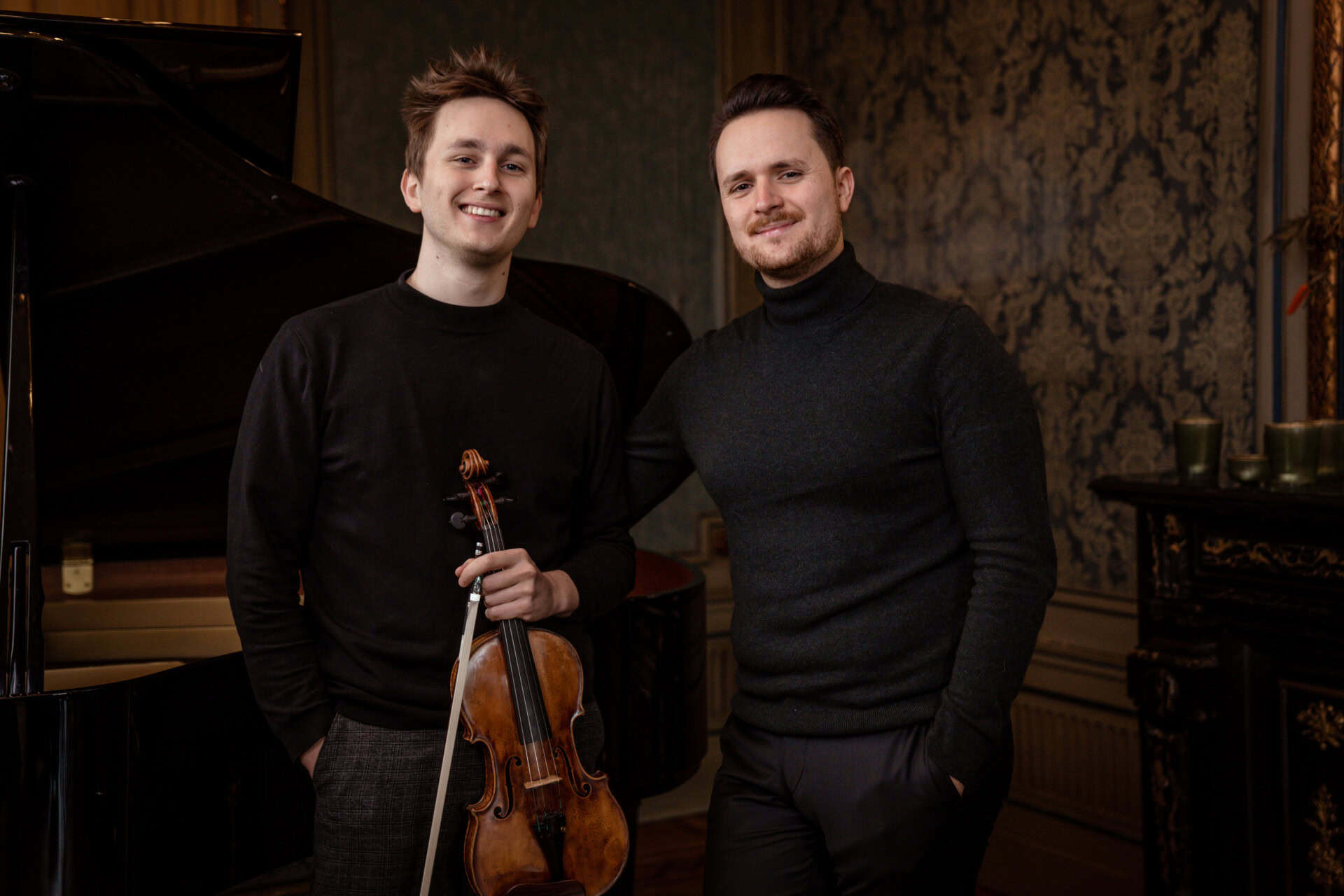
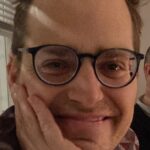
Photo caption: Ludovic and his brother, pianist Florestan Bataillie.
On June 29, I'm playing a recital with my quartet at the Frieda Belinfante. On that same day and the next, we're also performing with the Desguin Quartet in the theater production Den Blok in Nieuwpoort, where we provide the musical accompaniment. Besides giving recitals, we really enjoy collaborating with our ensemble on this kind of music theater. On July 13 we're performing in Amsterdam at the Singelkerk our MERITA project around Dvořák's American Quartet. Something we've also performed in Trento (IT) and in Serbia. In the fall we're participating in a production by Mien Bogaert and Benjamien Lycke in Bruges and Leuven : CRASH FLIGHT. And one more thing to mention – though that's not until spring 2026 – is the major tour around an Edvard Grieg composer portrait. That's a production with Lucas Van den Eynde and my brother that we'll be performing about fifteen times.
With my brother I have a project with clarinetist Andrea Onnis, titled "Between Heaven and Hell". We're starting from L'Histoire du soldat by Stravinsky and we complement that with (1977) by Pärt has this mystical and exciting beginning which also makes a powerful and compelling opening for the album. The beginning is very much like our life. Everything is too much but it keeps building. Towards the end, it comes to an explosion and then it quiets down and we return to ourselves. We find ourselves again. by Arvo Pärt, in an arrangement for clarinet, violin and piano, plus a number of other pieces. We perform that in the Netherlands, once in Ghent and probably also in Cagliari (IT).
Are you a young musician and would you like to be featured in 'the upbeat'? You can! This section works on the basis of a questionnaire with forty-four questions. The musician chooses which questions they would like to answer. We then conduct a short interview and before you know it, you'll appear on these pages too. Interested? Then send an email to redactie@klassiek-centraal.be.