De Muntschouwburg has some bombproof masterpieces from the opera repertoire on the program this season. It started with Verdi's and in September (see KC 30-9-25), now it's Bellini's turn with ). A conductor with a perfect feeling for Verdi. Here he once again proves himself as a lyricist par excellence. He does indeed coax softness and melancholy from the Munich Radio Orchestra, and his precise rhythm contributes to the tension he creates in the arias, sometimes also through the right pause and moment of silence, for example in the aria from and at the end of the season there's Puccini's Tosca.
). A conductor with a perfect feeling for Verdi. Here he once again proves himself as a lyricist par excellence. He does indeed coax softness and melancholy from the Munich Radio Orchestra, and his precise rhythm contributes to the tension he creates in the arias, sometimes also through the right pause and moment of silence, for example in the aria from is pretty much the only Bellini opera that's truly popular. Of course, that has a lot – if not everything – to do with the ultimate belcanto vehicle, the aria Casta Diva, which, especially thanks to the legendary performance by Maria Callas, has become the icon of belcanto. But the opera certainly has more to offer than just this sublime aria: there's the sweeping orchestral introduction, the dramatic trio that concludes the first act, and the intense duet between Norma and Adalgisa in the second act.
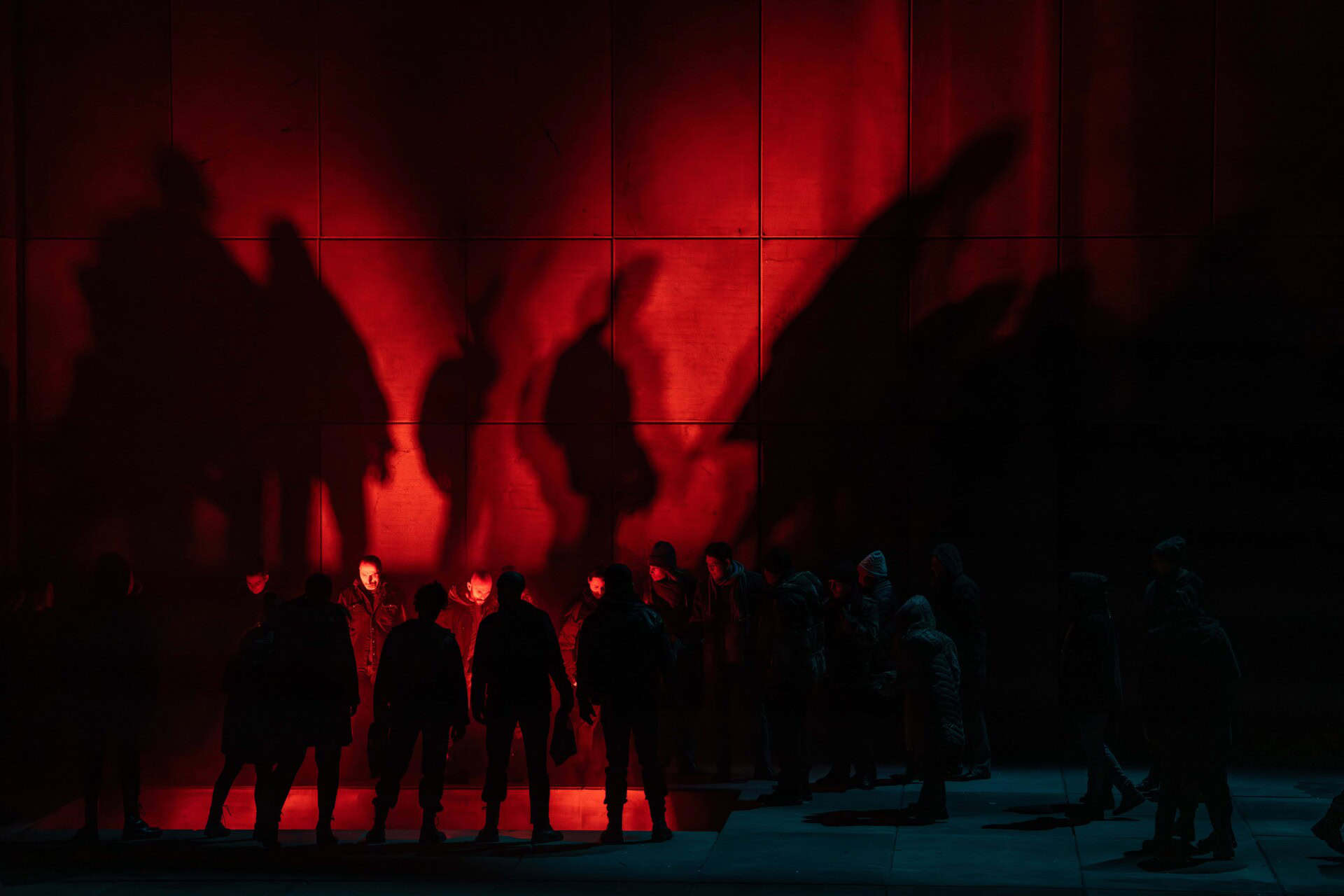
Unfortunately, not all these strengths came across equally well in the production that de Munt presents. The sweeping orchestral introduction immediately reveals that conductor George Petrou shows little subtlety in the instrumentation. This unfortunately remains the case throughout the entire performance. The orchestra sounds mainly too loud and offers hardly any refinement. The intense melancholic moments don't get their due, so the conductor, for example, gives the lovely clarinet passage in the moving duet between Norma and Adalgisa in the second act too little room to breathe. The emphasis lies mainly on the militant and fierce passages. Of course, those are there too, with the showstopper being the Guerra, guerra passage in the second act, where the choir shows its best side, but the more intimate confrontations lose out when it comes to orchestral finesse.
Car graveyard visited by singers
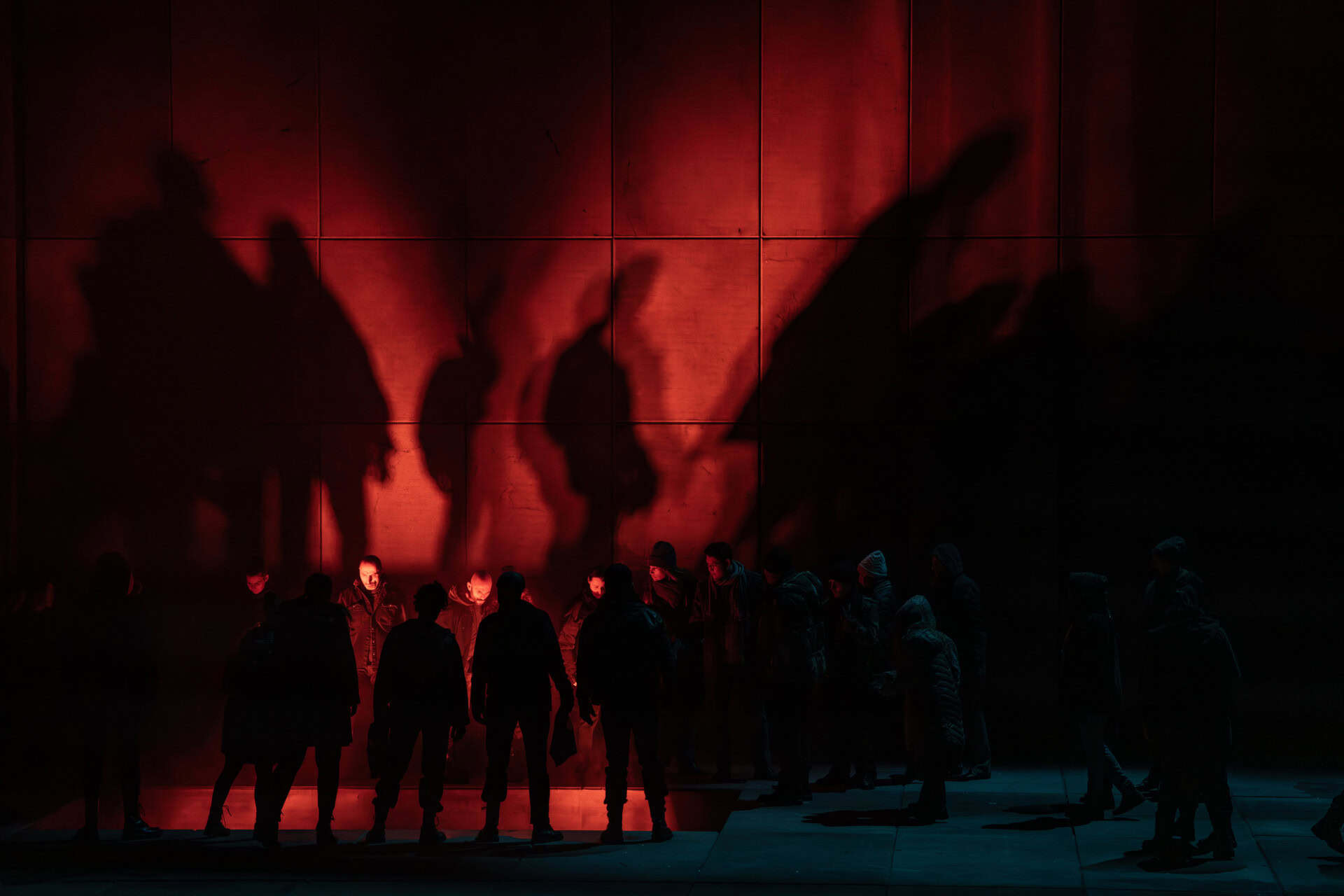
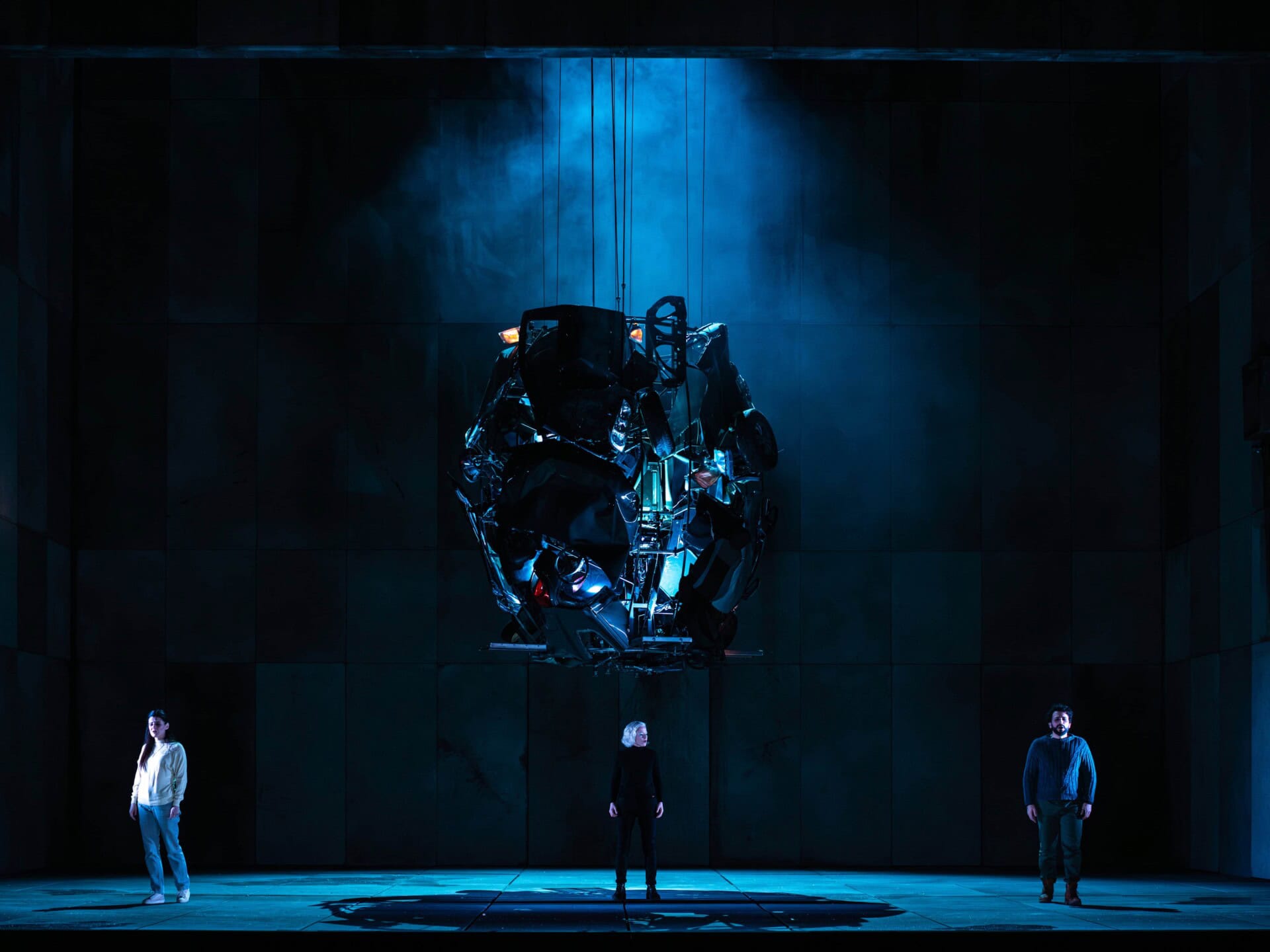
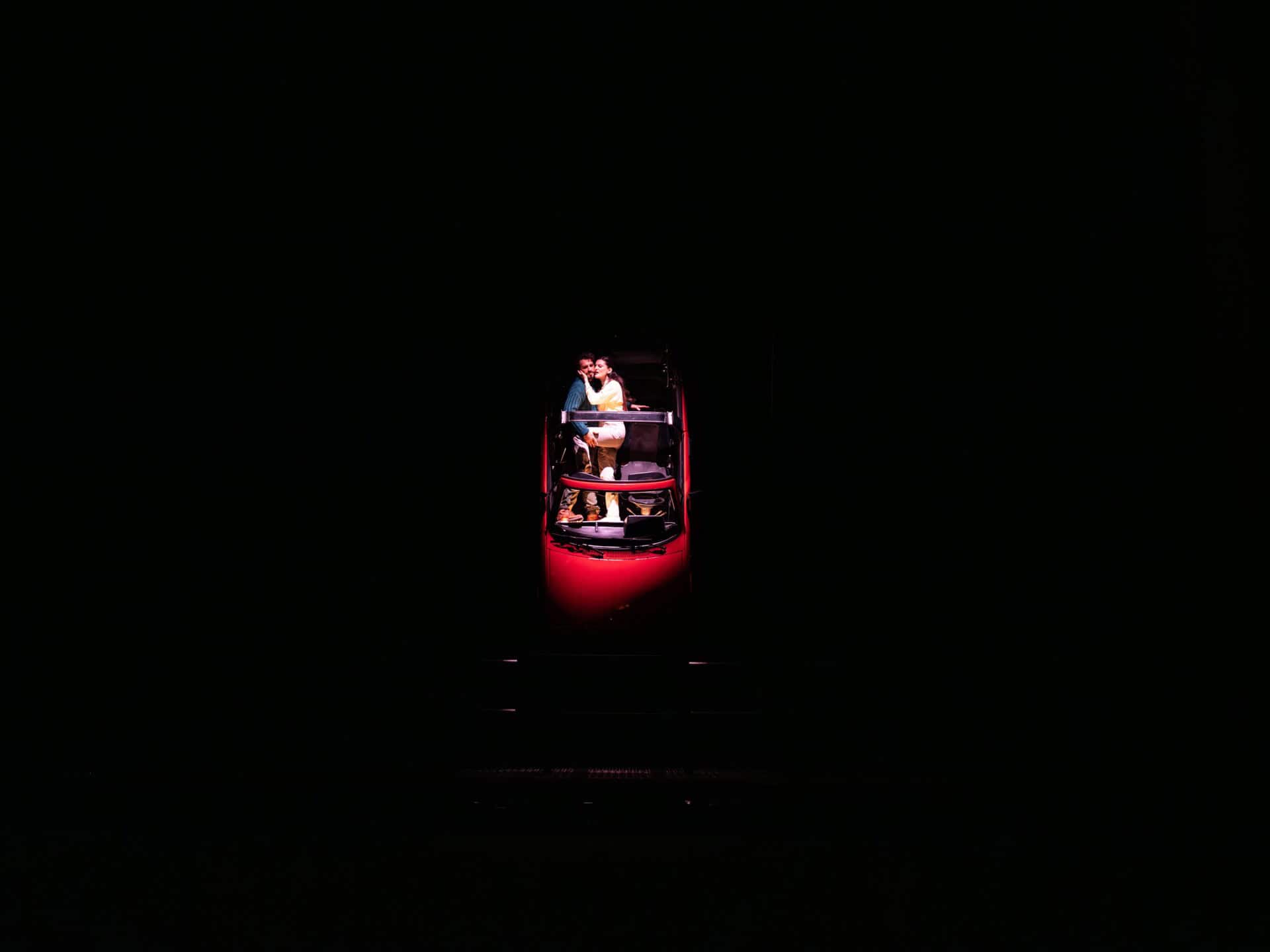
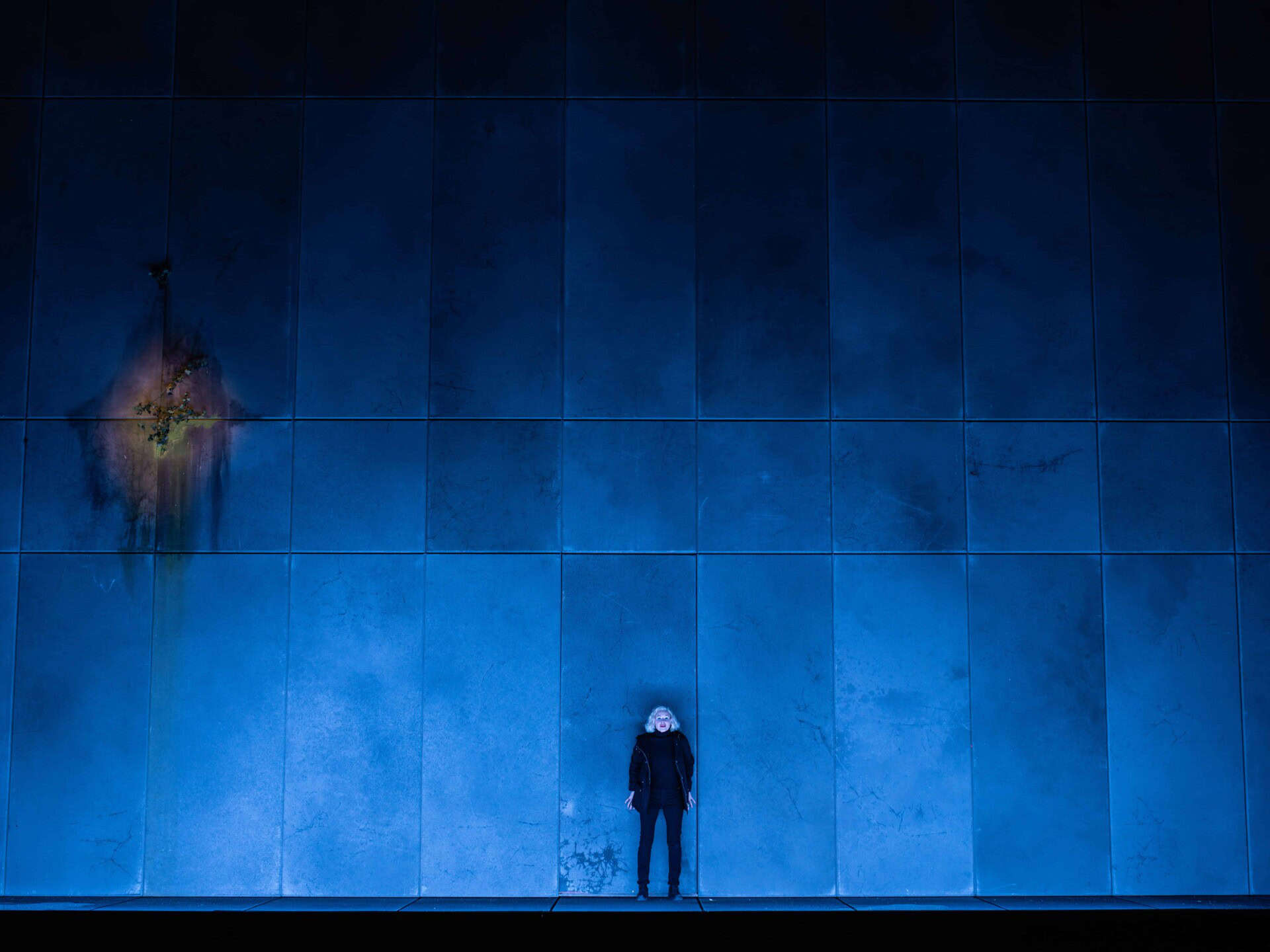
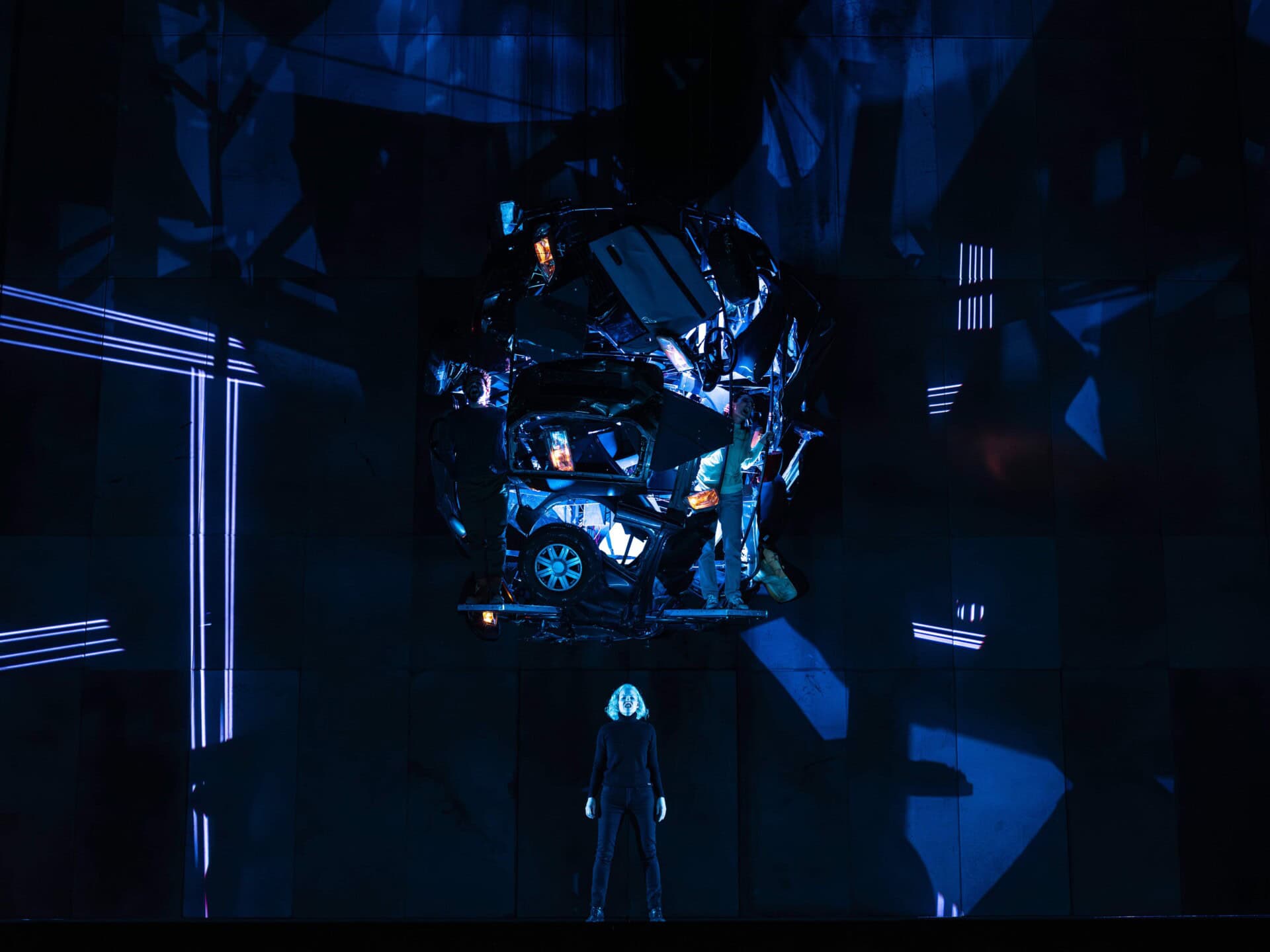
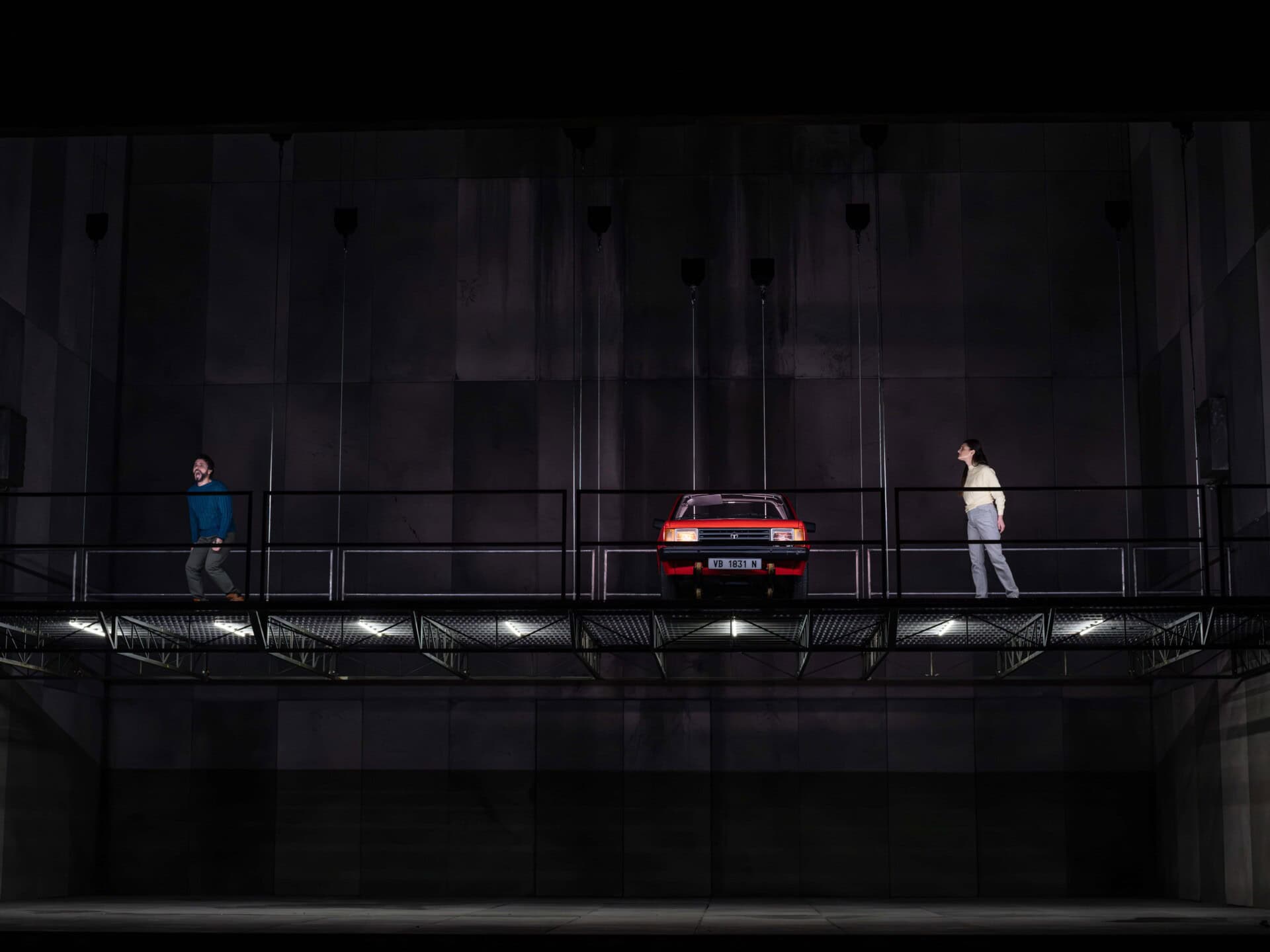
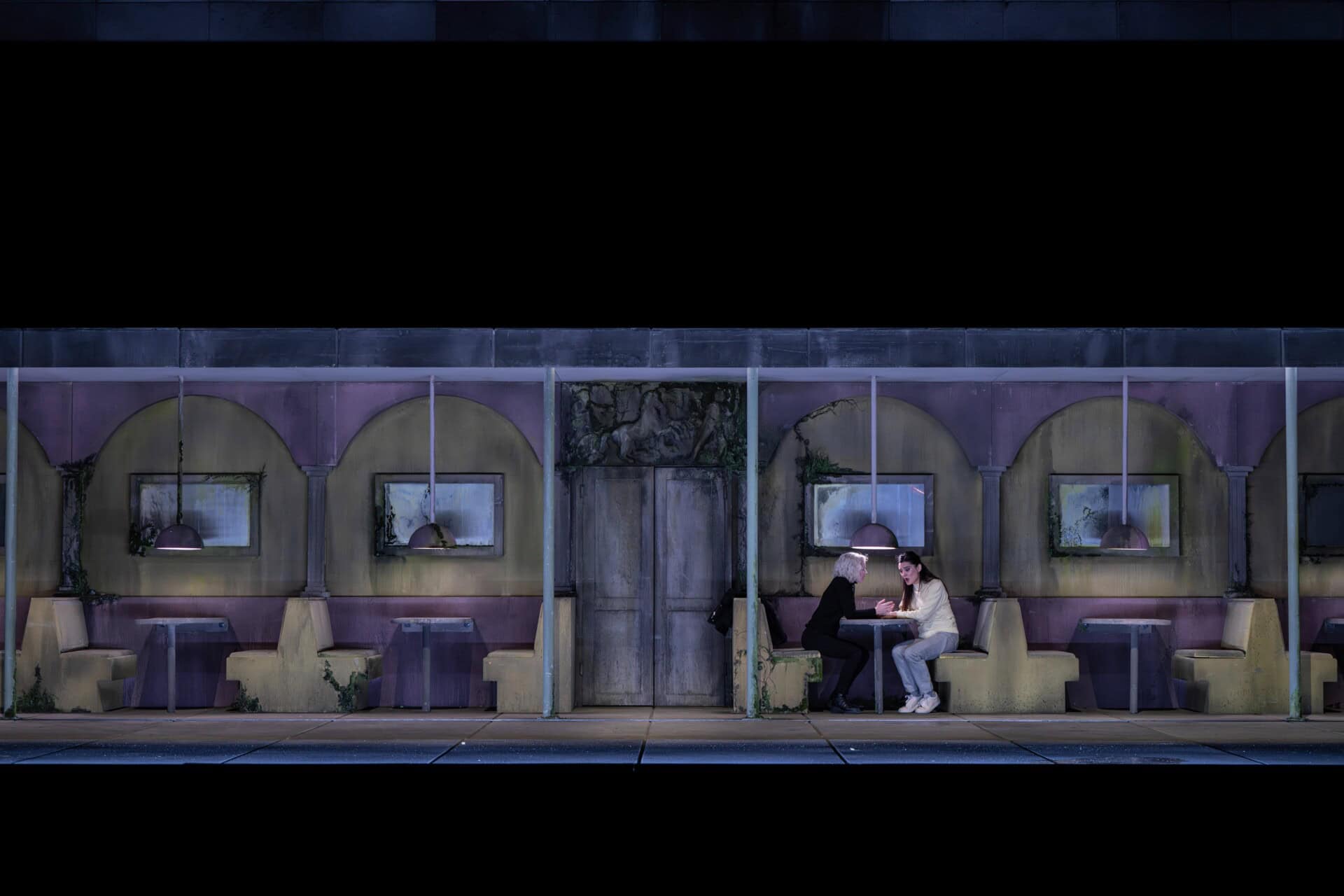
The set is kept austere with a uniformly blue-tinted background with one "scar"-like relief (that's how I interpret it). The stage is regularly divided into different levels. Otherwise, the effects come mainly from the lighting and from the cars, which are pushed or hung on stage. That Bellini's opera no longer needs to take place in the forest of the druids is obvious, but the direction by Christophe Coppens, who makes dilapidated old cars the main set and prop ingredient, comes across as pointless and offers mainly no compelling images. Moreover, the singers regularly hit their limits and miss the chance to experience their emotional complexity. The seduction, for example, between Pollione and Adalgisa in the second scene of the first act, comes across as a conversation between teenagers in a remote parking lot, in a car on a level with no exit… which, with some goodwill, could be interpreted as a conversation that indeed offers no way out. Just as the tangle of wrecked cars can be a symbol of Norma's destroyed passion when she learns from Adalgisa about her relationship with Pollione. But the emotional entanglements that plague the two female lead characters sink into nothingness in this set, unfortunately. The empty village pub is a sterile environment in which Adalgisa's confession doesn't have nearly the impact of what is nonetheless an essential friendship crisis. That set is incidentally repeated with some adjustment in the first scene of the second act as a train car (with an annoying background of passing landscape images), in which the children supposedly travel to Rome after Norma realizes she cannot kill her children. That Adalgisa deliberately renounces her love for Pollione ultimately leads to the denouement where Norma confesses herself as guilty and wants to resume her role as priestess. Out of magnanimity, Pollione dies with her on the pyre, here then in a car doused with gasoline and set ablaze.
Prize horse of lyric sopranos
Fortunately, the voices provide solace. Raffaella Lupinacci proved herself just last week in a lovely recital with Enea Scala performing bel canto songs.She is a delightful Adalgisa, stylistically impeccable, with a supple, not overly dark mezzo that matches beautifully with Sally Matthews' soprano. Vocally they play off each other wonderfully, but it's a shame the staging doesn't work in their favor, so you can't experience them more powerfully as characters caught in the emotional turmoil of grief and tenderness.Casta DivaSally Matthews sings with great care and fluid coloraturas, though the extreme pianissimi could have come across better—perhaps also something the conductor should have managed. Or maybe she was holding back a bit for the demanding arias and duets still to come. The grand duet with Adalgisa, where they stand not as rivals but as women bound in deep friendship, is a pinnacle of intimacy and connection. And right there the staging undermines it all by letting snow suddenly swirl down, breaking the magic! A nod to the Christmas season in which the opera is scheduled?
Enea Scala delivers a convincing Pollione. In his portrayal of the heroic consul, he deploys his voice firmly and sounds decidedly like the passionate lover. He can confidently be counted among singers with impressive bel canto brilliance.
Bellini's Norma is indeed an opera that's practically indestructible, though we would have liked to experience the intense melancholy and passion of the conflict between love and duty in a more convincing performance.