How does the leadership of the Leuven Festival 20-21experience that motto themselves?
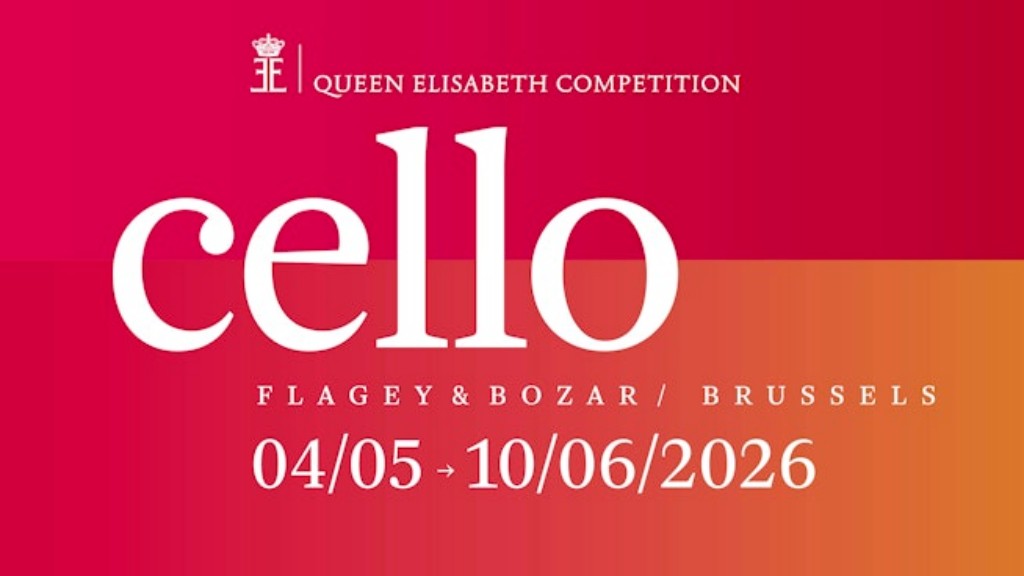
When concertgoers ventured into the concert hall last spring expecting to enjoy a classic repertoire piece or have a pleasant chat with fellow music lovers during intermission, they sometimes got more than they bargained for. Take Bozar or Flagey during the recent Elisabeth piano competition. You're guaranteed to see and hear young talent performing magnificent virtuosic works from the standard repertoire. But there's always a surprise tucked in: that famous obligatory piece by a contemporary composer. For the semi-final, there was a stunning work by Canadian composer Ana Sokolovic, two studies for solo piano, and for the final there was Music for the Heart by 'our' Kris Defoort.
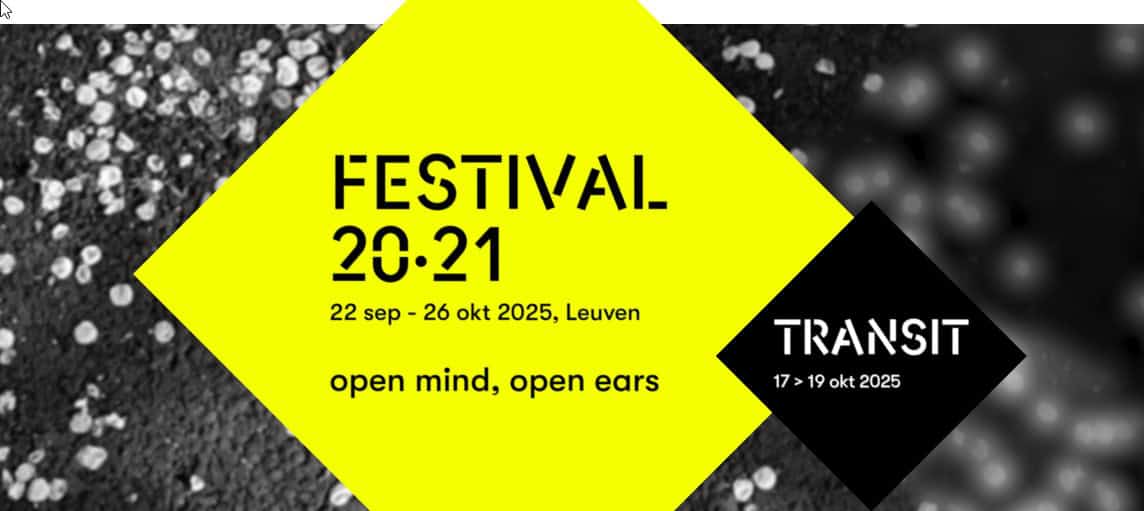
Well, the musical autumn in Leuven will sound thoroughly contemporary. And that's thanks to two musicologists who have been championing this for years. It's the duo Bergé-Beirens. Pieter Bergé as programmer of Festival 20-21 and Maarten Beirens with his truly contemporary Transit weekend, nestled within those weeks of modern musical enjoyment. We asked them both point-blank what actually drove them to grab hold of that music and say, that's the path for me. It turned out to be their personal interpretation of the festival motto: open your mind, open your ears.
Maarten Beirens had to dig deep into his memory for an answer: "Because, as far as I can remember, I've always been curious about new music, about music that went beyond the great 18th and 19th-century repertoire. As a teenager I listened to everything I could get my hands on in the record store. I was a sort of musical omnivore back then (and still am). Ever since, I've always followed with great interest what's happening in music. I had that curiosity then and I have it now—it's always been there. So for me, it doesn't feel like something I stumbled into by accident or had to go out of my way to pursue. No, it seems to have come naturally and it's just kept going. So yes, it keeps going and can only keep going because composers keep writing new things. That's what's wonderful about the Transit festival. We bring so much genuinely new work by composers who are active now. Those composers always surprise you, and it can go either way. But it's in any case an exciting ride to a destination that's never entirely clear."e But are there any names among these new composers that you can say will become the new classics of the 21st century? Beirens doesn't want to venture beyond personal, subjective preference. He finds that difficult to answer. Yet there are a number who gain a certain status through consistently producing high-quality work. Hard to predict whether that work will stand the test of time, but he can't help but mention one name that appears again on the program for that Transit three-day festival from October 17-19: Swedish composer Lisa Streich.e -century repertoire. As a teenager, I listened to everything I could get my hands on in the disco. I was then (and still am) something of a musical omnivore. Ever since, I've always watched with great interest what's happening in music. I had that then and now, always. So for me it doesn't feel like something I stumbled into in some weird way or had to focus on specifically. No, it seems to have come naturally and it has continued. So yes, it continues and can only keep going because new things keep being written. That's what's wonderful about the Transit festival. We bring so much genuinely new work by composers who are active now. Those composers always surprise you and that can go either way. But it's in any case a kind of thrilling ride with a destination that's never entirely clear.
But are there names among those new composers you can say will become the new classics of the 21st century? Beirens doesn't want to go further than a personal subjective preference. He finds that difficult to answer. Yet there are some who gain a certain status by continuously delivering high-quality work. Hard to predict whether that work will stand the test of time, but he can't help but launch a name that's back on the program at this Transit three-day festival from October 17-19, Swedish composer Lisa Streich.
“In my view, they could certainly develop into someone who can become a benchmark in that new music. But there are other factors at play that have nothing to do with the quality of your work. You need a major publisher behind you, major festivals need to program your work, orchestras need to be willing to commission a piece from you—in short, you need to be embedded in that specific niche of the music sector that looks toward innovation.
At Transit, then, which as always has a very diverse character in terms of both composers and performers, though this time it brings not only a broad international lineup but also a striking number of Flemish names.
And how did musicologist Pieter Bergé get into this, what sparked his interest in that time period? Bergé: "I think that has to do with the fact that I'm happiest when I can combine a lived experience with intellectual work. And that intellectual work satisfies me most when it concerns a period I can understand from within. That's what I really missed when I was working with 18th and 19th century music. I find the music of Mozart and company fantastic and I enjoyed studying that music, but I couldn't get inside the context of those 18th and 19th century composers. I can't imagine the life of Mozart, Haydn, Beethoven, or Wagner. But the lives of Schoenberg, Stravinsky, and all those great 20th-century figures—I can imagine those, I know them, because they're people from my grandfather's generation. It's that proximity in time that gives me much more of a sense of being involved. The distance to them is much smaller than it is to people who lived in a much more distant past."e Yet many of those composers are overlooked in concert halls, they don't make it into the concert circuit. And yes, there needs to be a minimum level of accessibility, a sense of recognition, and that progresses slowly.
Bergé: "
Perhaps Ligeti is one of the clearest certainties from that 20th century who really gets played a lot. And of course the American minimalists too, for example. And then you're stuck with that balancing act between easy and difficult music, where appreciation gets tied to how accessible the music is. And there's definitely a minimum of accessibility needed to survive. You could say: Schoenberg survives, but you don't hear him that much in concert halls—he survives in universities, among musicologists, but in programming...? And I'm not talking about 'Verklärte Nacht'. There remains a discrepancy between what survives from a music-historical perspective and what happens in the concert hall."To form your own opinion, you'd do best to come listen to several of the concerts this excellent festival has to offer. Still, the festival pairs old with new for its opening on September 22: Bach and Shostakovich. Anyone who knows Bergé knows that 'his' festival can't do without his beloved Russian composer. And pianist Hannes Minnaar, third laureate of the Queen Elisabeth Competition in 2010, made brilliant recordings of Bach's Goldberg Variations—now he's bringing 'The Well-Tempered Clavier', a work that inspired Shostakovich to create his own series of '24 Preludes and Fugues', which will also be on the opening concert. Old and new aren't that far apart after all...e How does the leadership of the Leuven Festival 20-21 themselves experience that motto? When you innocently head to the concert hall in spring to enjoy a classical repertoire piece or to have a pleasant chat during intermission with fellow music lovers, you sometimes come away disappointed. Take Bozar or Flagey during...
To form your own judgment, you should definitely come listen to several of the concerts this excellent festival has to offer. Still, the festival pairs old with new to open on September 22: Bach and Shostakovich. Those who know Bergé know that 'his' festival can't do without his beloved Russian. And pianist Hannes Minnaar, third laureate of the Queen Elisabeth Competition in 2010, made brilliant recordings of Bach's Goldberg Variations, and now brings 'The Well-Tempered Clavier', the work that inspired Shostakovich to create his own series of '24 Preludes and Fugues' which are also on the opening concert. Old and new aren't that far apart after all...