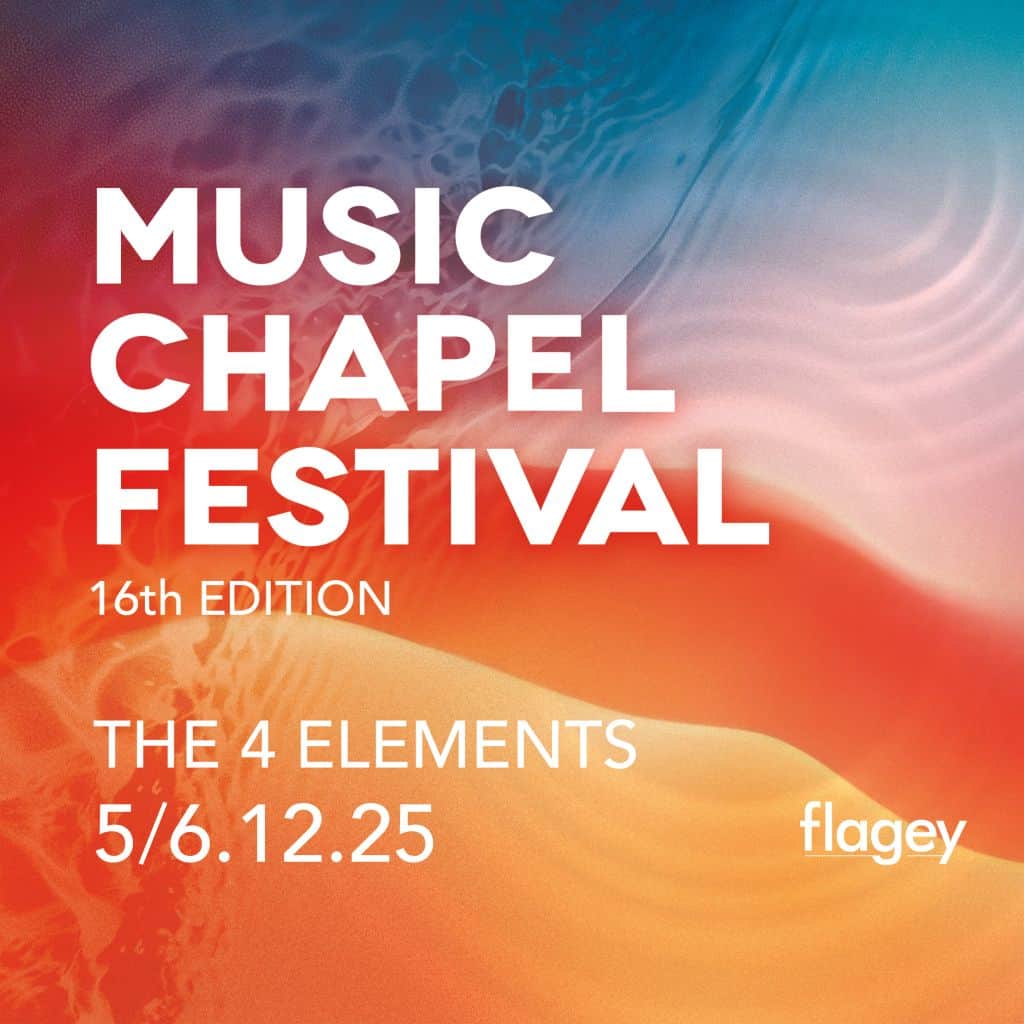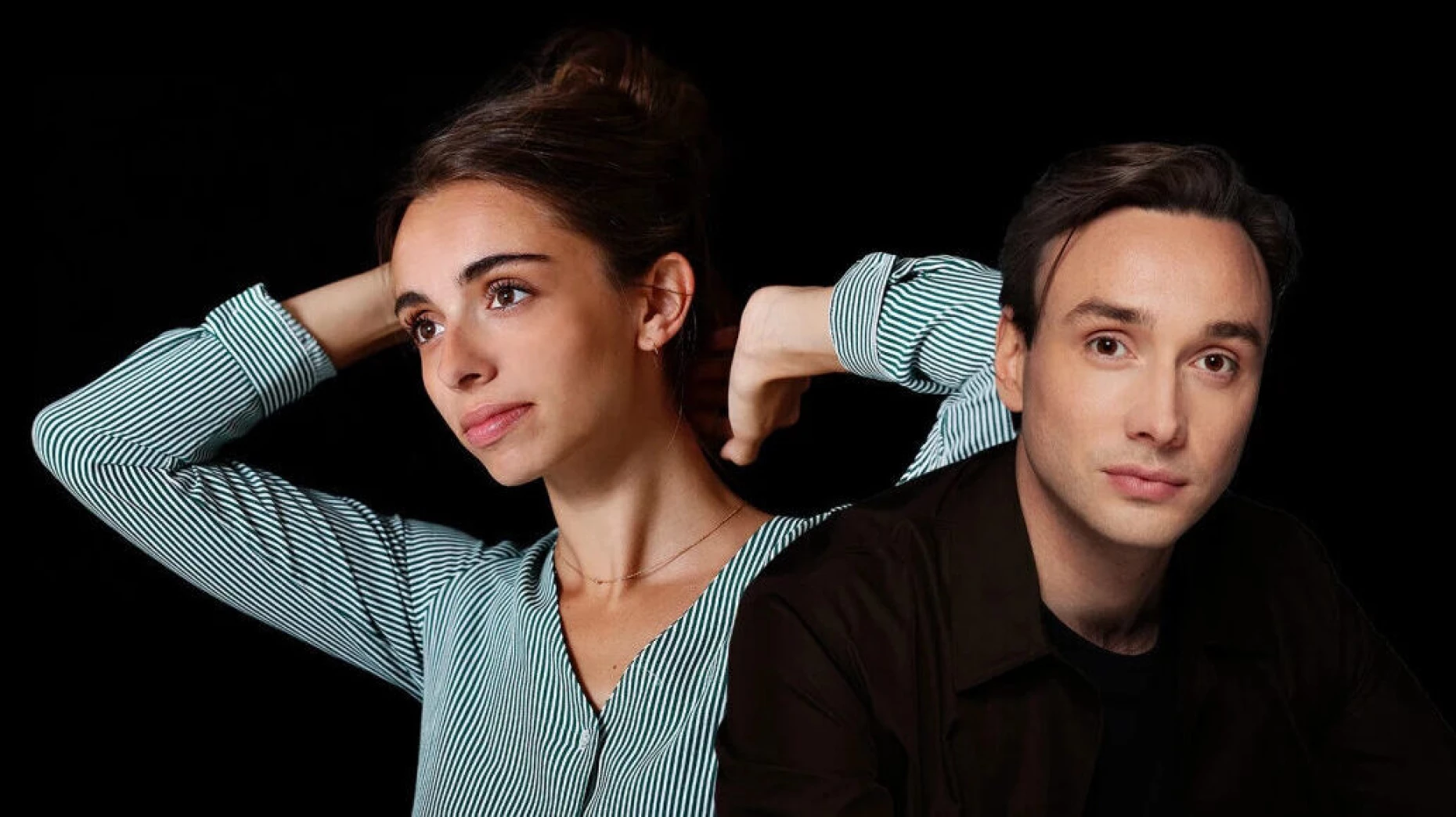
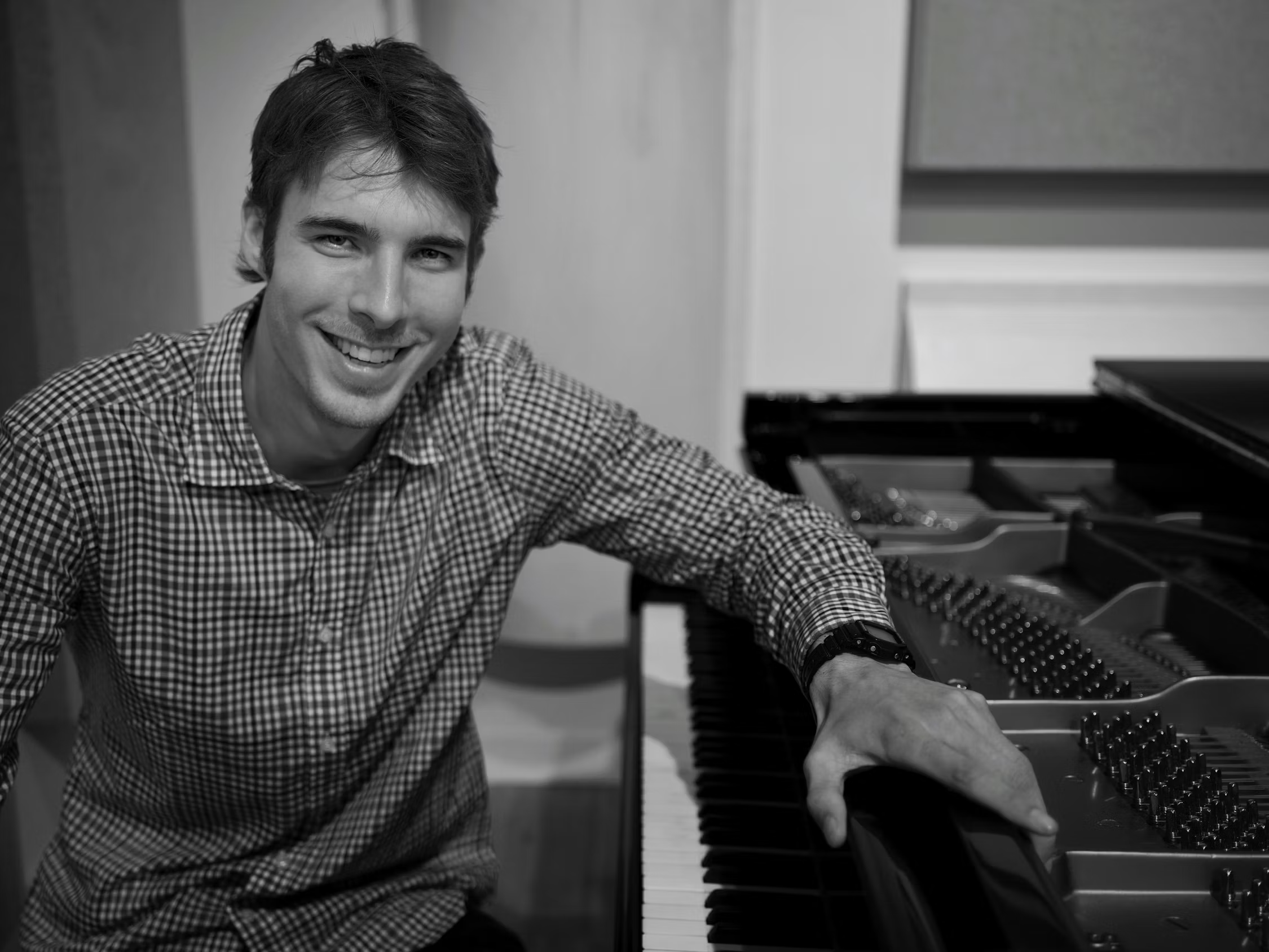
The Dutch pianist Abel Hox (b. 1998) belongs to a generation of musicians who explore the boundaries of piano playing with deliberate precision. On the occasion of his performance on Friday, December 5th at the Music Chapel Festival in Flagey, he speaks with Klassiek Centraal about his artistic development and the ideas that shape his playing today.
The piano that found him
His journey began at home, in the living room, where the piano found him before he found the instrument. Under his father's guidance, he discovered it playfully: "There was never any seriousness," he says. "We mostly just listened to a lot of music. That's how my love for it began." At thirteen, Hox entered the Royal Conservatoire of The Hague. For many, a leap toward professionalization, but for him it felt natural: "I never saw the move to conservatory as a turning point. I was always involved with music and simply wanted to get better." During that period, his fascination also grew for the tension between structure and emotion, discipline and freedom—a theme that continues to shape his playing.
Later, he studied at the Accademia Pianistica di Imola under Enrico Pace and André Gallo, and today he has found a new artistic home at the Music Chapel Queen Elisabeth. There he works not only under the guidance of Frank Braley, but also Avedis Kouyoumdjian. "At the Conservatory, the focus was more on lessons. At the Music Chapel, it's about studying and performing yourself. It's incredibly inspiring to be surrounded by fantastic artists from all over the world here."
Repertoire and sound
Hox chooses his repertoire intuitively. Contrast intrigues him, but he leaves room for spontaneity: "It's hard to know what you want to play on concert day. It depends on my mood, the hall, the audience, the instrument… even the weather. Sometimes I only decide on the day itself." His repertoire spans from Beethoven to Ligeti, and from the lyricism of Debussy to the clarity of contemporary sound structures—a broad field in which he continually seeks meaning and cohesion. He sums up his sound ideal in two words: nobility and song. "Music must be noble and sing. That requires a certain honesty. Our own feelings or ideas must never stand in the way of what the composer intended." Composers like Bach and Beethoven continue to challenge him. "That music grows with you. Each time you discover them anew, because you yourself have changed. It's never 'finished'."
Collaboration and stage practice
An important figure in his musical journey is Frank Braley, with whom he will perform a concert in Flagey on Friday, December 5th. About this, he says: "It's an honor to play this concert with Frank. The rehearsals are enormously inspiring. It's interesting to see how Frank himself approaches a piece. Normally in lessons we focus on my approach, but now we're really doing it together. Nobody takes the lead, and because of that, something emerges that belongs to both of us." About the effect on the audience, Hox says with disarming simplicity: "Mainly a nice evening."
Cross-pollination and future plans
Hox is open to dialogue with other art forms. "In February I'll play the Sacre again, but this time with dancers. Originally it's a ballet, of course. It's the first time I've done something like this, but I think it's fantastic to perform the piece that way." If all limitations were to disappear, one wish remains unchanged: "I would love to record Bach's Goldberg Variations." Beyond that, he harbors the ambition to explore and record other composers—both contemporary and historical—more deeply in the future.
His musical signature
Whoever hears Hox play notices how his musical thinking is rooted in attentiveness: to sound, to the composer, and to the moment itself. In his collaboration with Braley, a conversation emerges that says as much about listening as about playing, and in the Music Chapel he finds an environment that continually stimulates that attitude. Hox is not merely a virtuoso, but also a thinker at the piano—a musician who listens to the silence between the notes and gives that silence meaning. He regards sound as language, as poetry, sometimes even as a moral stance. What he brings to the stage is not a quest for effect, but for clarity: music distilled to its essence with concentration and honesty.
His willingness to step outside the familiar—whether through dance, theater, or other artistic cross-pollination—shows a musician who uses curiosity as a compass. What he brings to the stage is not a quest for effect, but for clarity: music distilled to its essence with concentration and honesty. In that approach lies the strength of Hox: a pianist who doesn't fill the silence between the notes, but gives it meaning, and thus creates a space in which music is allowed to emerge anew.
Friday 5 December, 6:30 PM, featuring among others "Barcarolle" by Frédéric Chopin (1810-1849) and "The Rite of Spring" (arranged for four hands) by Igor Stravinsky (1882-1971) with Frank Braley, piano.
See also https://klassiek-centraal.be/music-chapel-festival-2025-de-vier-elementen-in-klank-en-geest/