The new intendant of the Royal Mint Theater, Christina Scheppelmann, has hit the ground running at the Royal Mint Theater! She has already built an impressive career in the opera world, including on the international stage. Benvenuto Cellini by Hector Berlioz, the first production with which she presents herself following Peter de Caluwe's tenure, is at the very least a strong opener.
The work is a rarity on opera stages and therefore all the more interesting to discover. The closest production of it to be seen was probably the one in May 2015 at the Amsterdam National Opera, directed by Terry Gilliam. Benvenuto Cellini is a somewhat dusty French opera from the first half of the nineteenth century with a pseudo-historical subject about a frustrated artist. Through the version of an opéra comique, Berlioz ultimately develops his opera into a Grand Opéra with a major role for the chorus and with sung recitatives.
Berlioz and Benvenuto Cellini
Hector Berlioz wins the Prix de Rome in 1830. During his stay in Italy, he sees in Florence Cellini's sculpture depicting Perseus with the head of Medusa. He delves into the biography of the Renaissance artist and recognizes in him a kindred spirit and soulmate on both an artistic and personal level: a man full of zest for life and self-confidence who can manipulate his surroundings to achieve his goals and who as an artist insists on absolute freedom. His Perseus statue was meant to prove Cellini's mastery. The casting of the statue—the climax of the opera—is the ultimate battle against misunderstanding and rejection. The story of Cellini's Perseus is at the same time a metaphor for Berlioz's own struggle against artistic incomprehension.
With his librettists Léon de Wally and Auguste Barbier, Berlioz creates his own version of the Renaissance man and rebellious outcast Cellini. A love story is woven in, and in it the artists Fieramosca and Cellini are double rivals, in art and in love. Teresa is the daughter of Balducci, the papal treasurer.
A carnival scene, a conspiracy, an abduction, and a murder provide the other elements of the story. When at the end Cellini casts the Perseus statue, even his rival Fieramosca is reconciled in the face of such a masterpiece, and the Pope gives his blessing.
Artistic madness and ecclesiastical hypocrisy
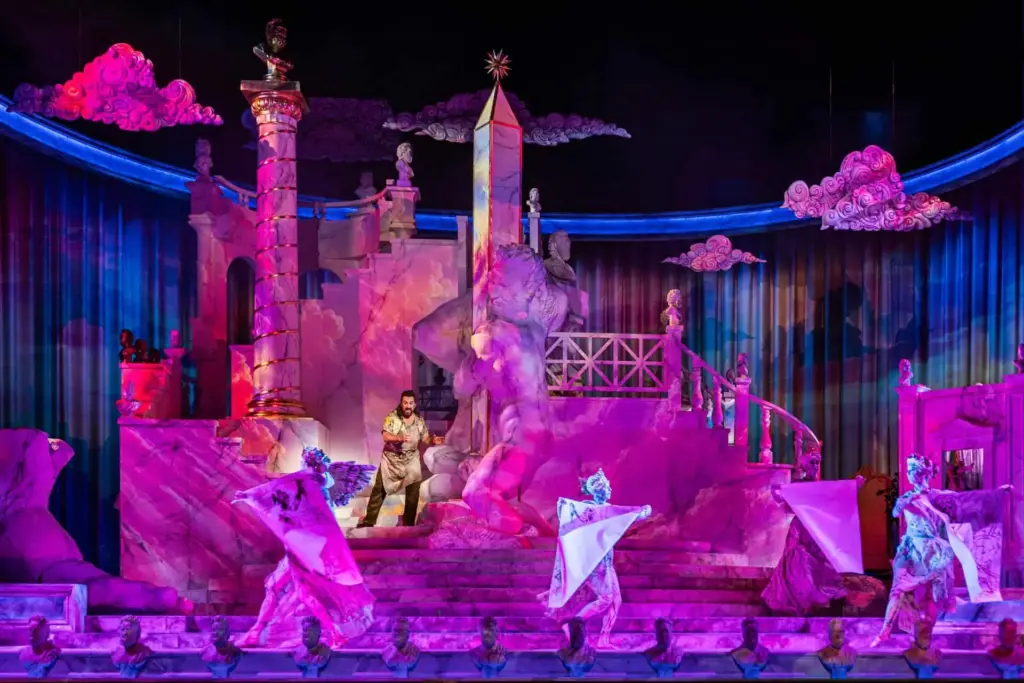
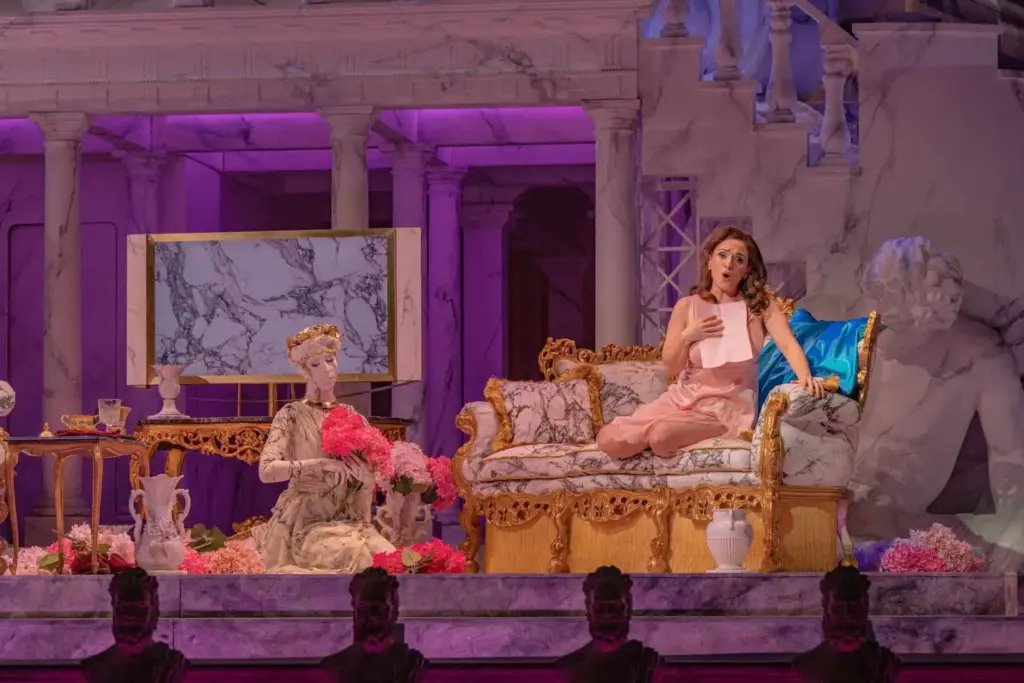
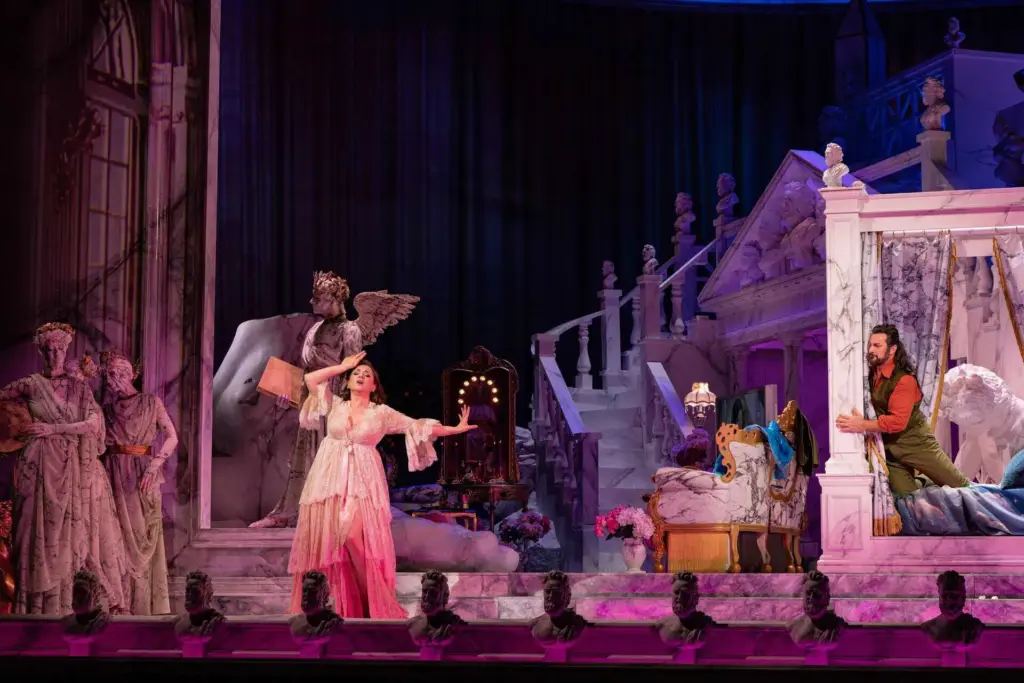
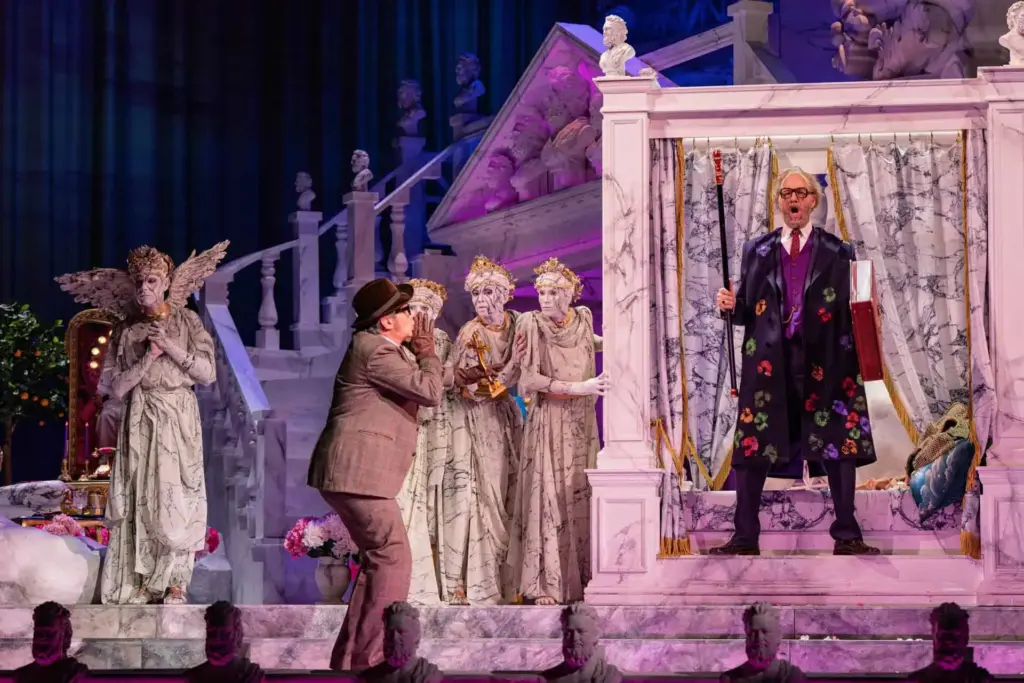
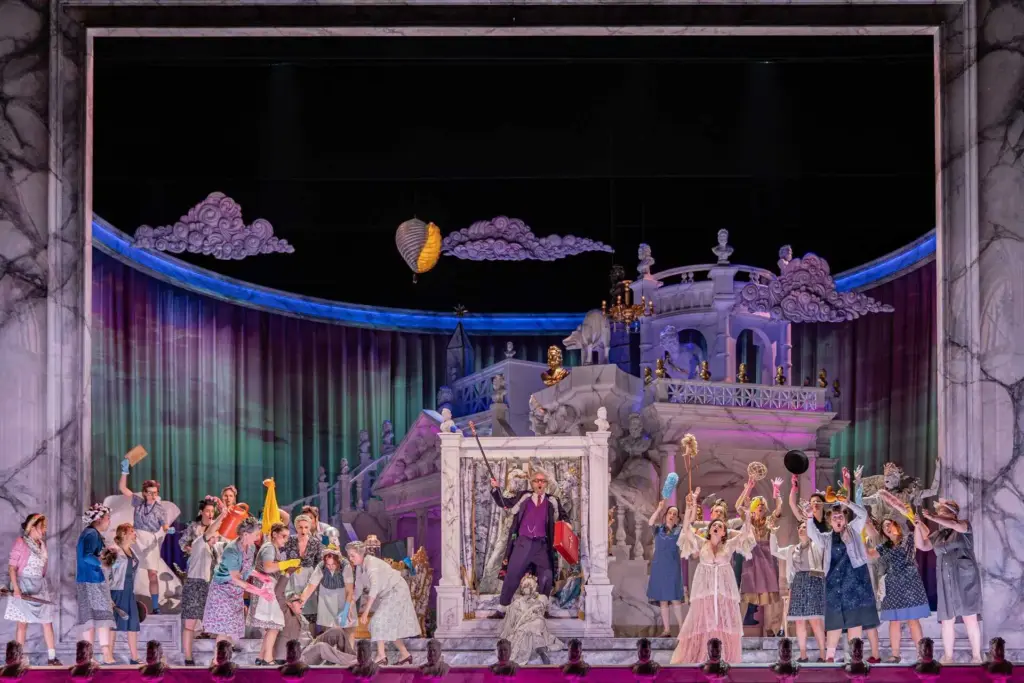
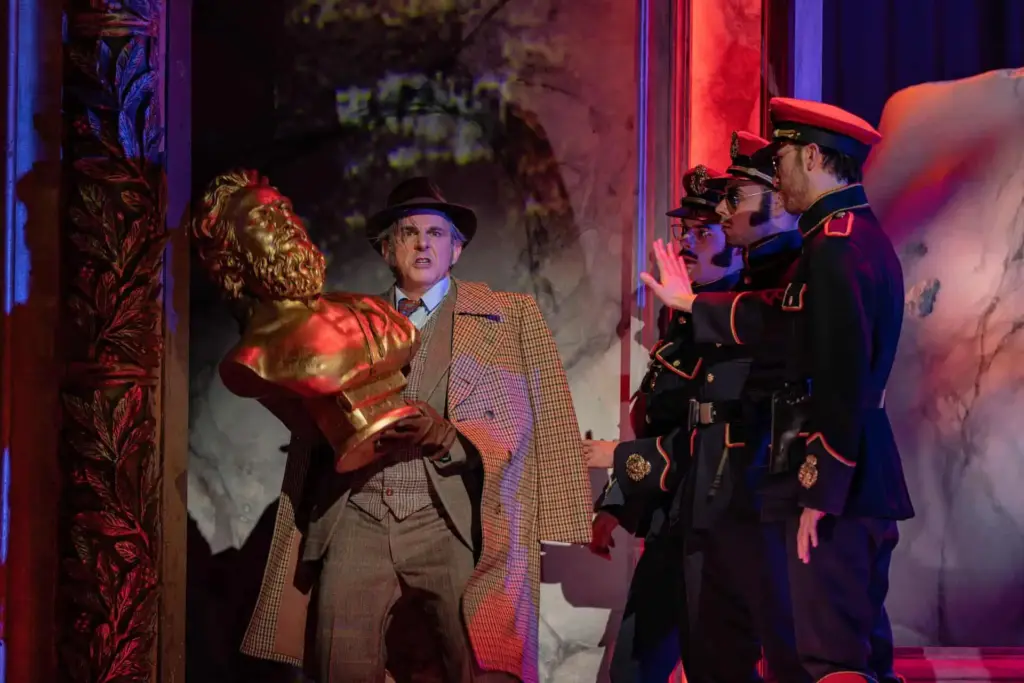
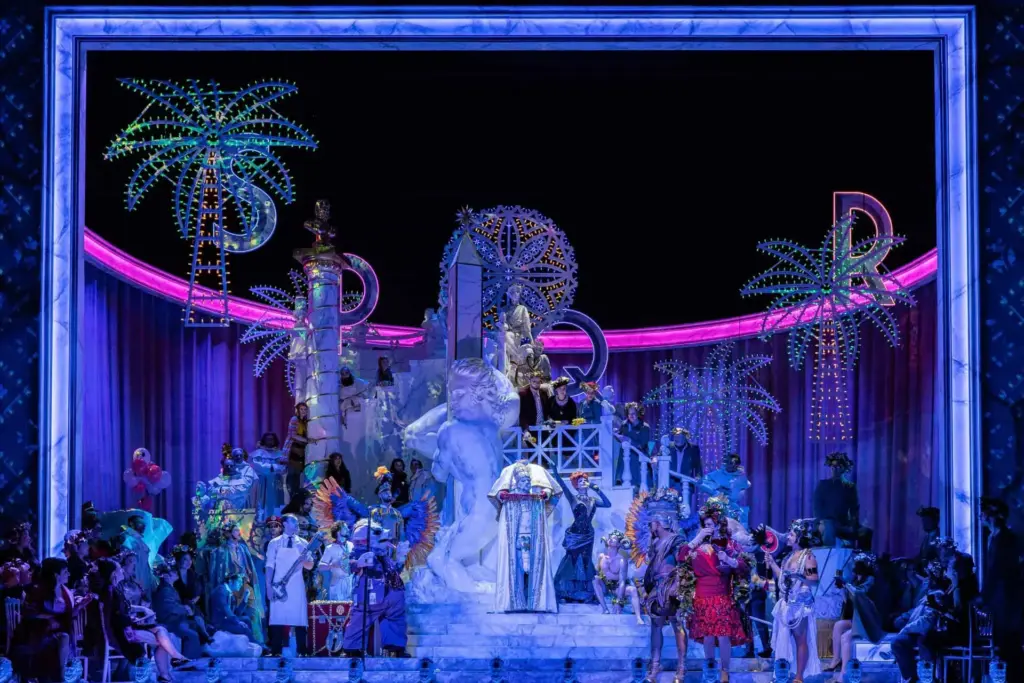
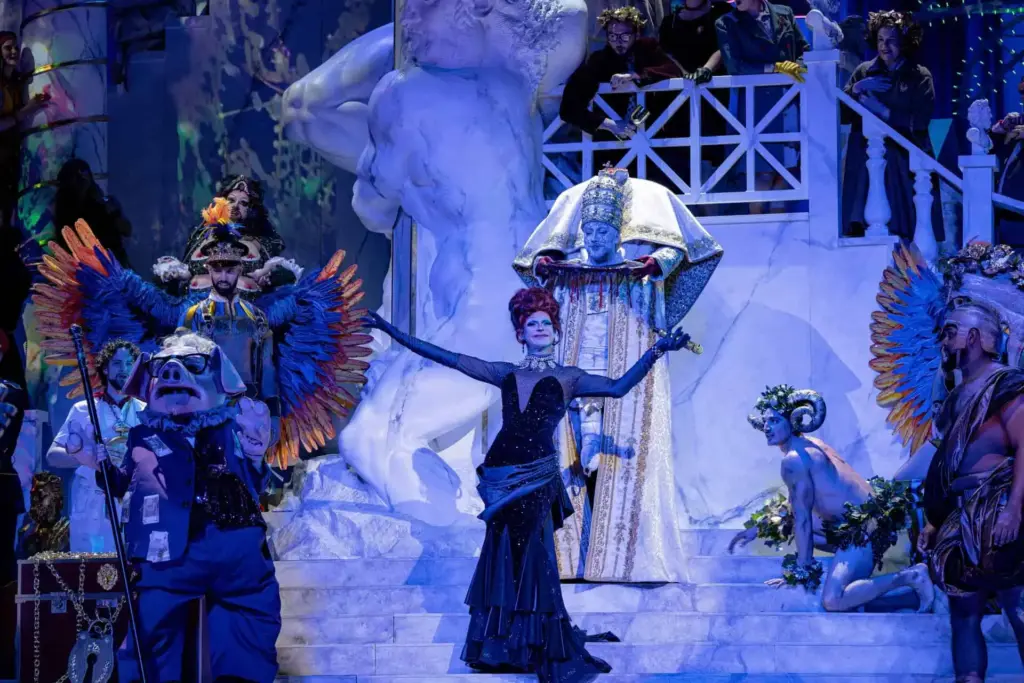
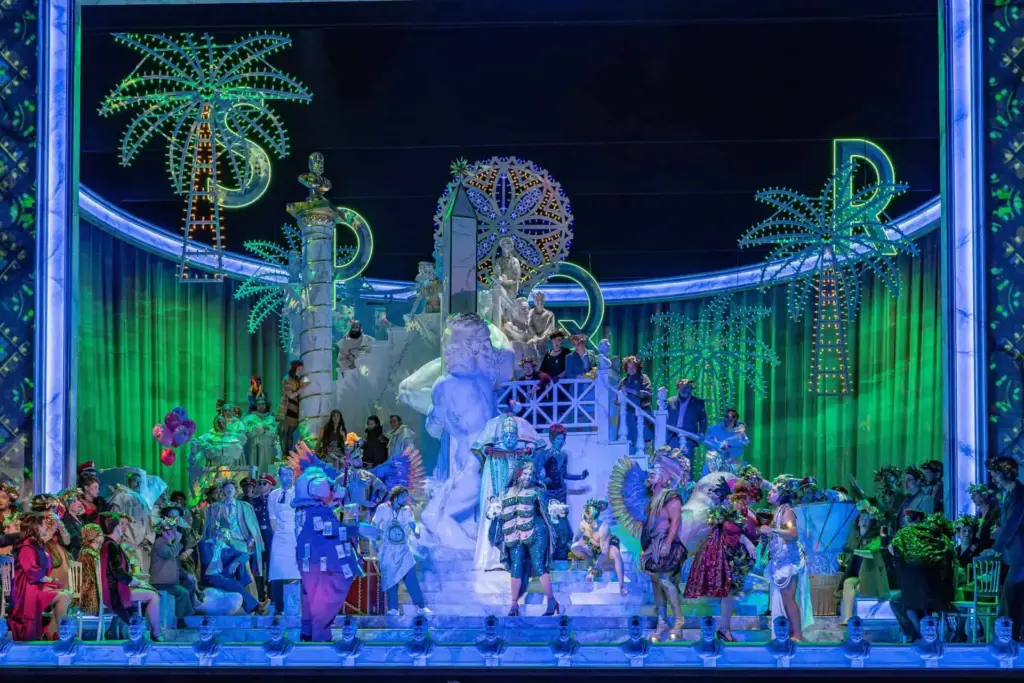
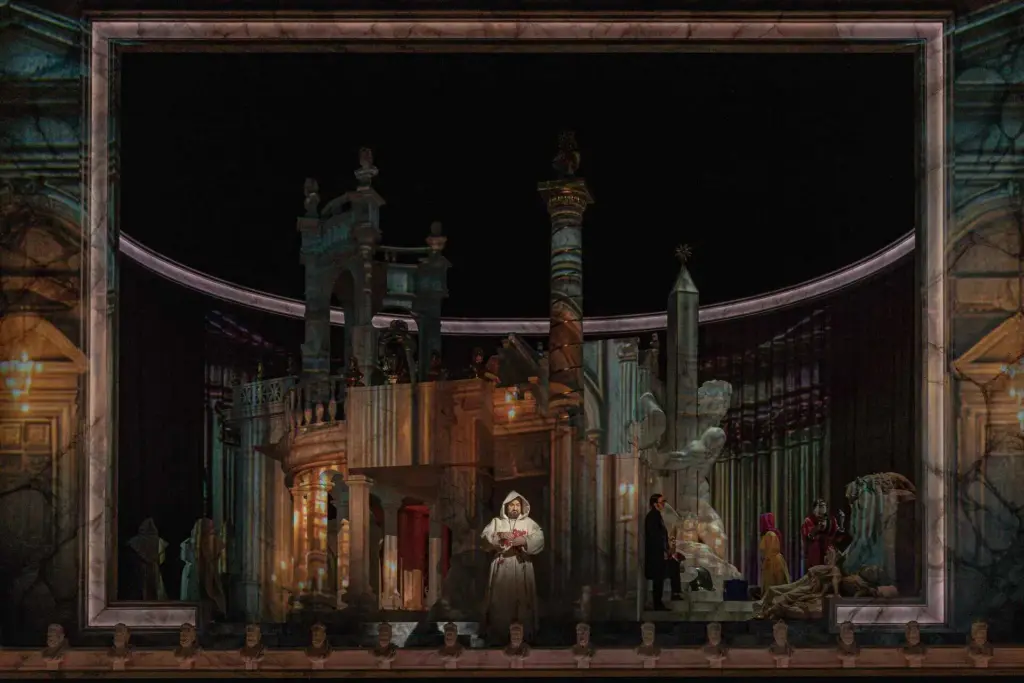
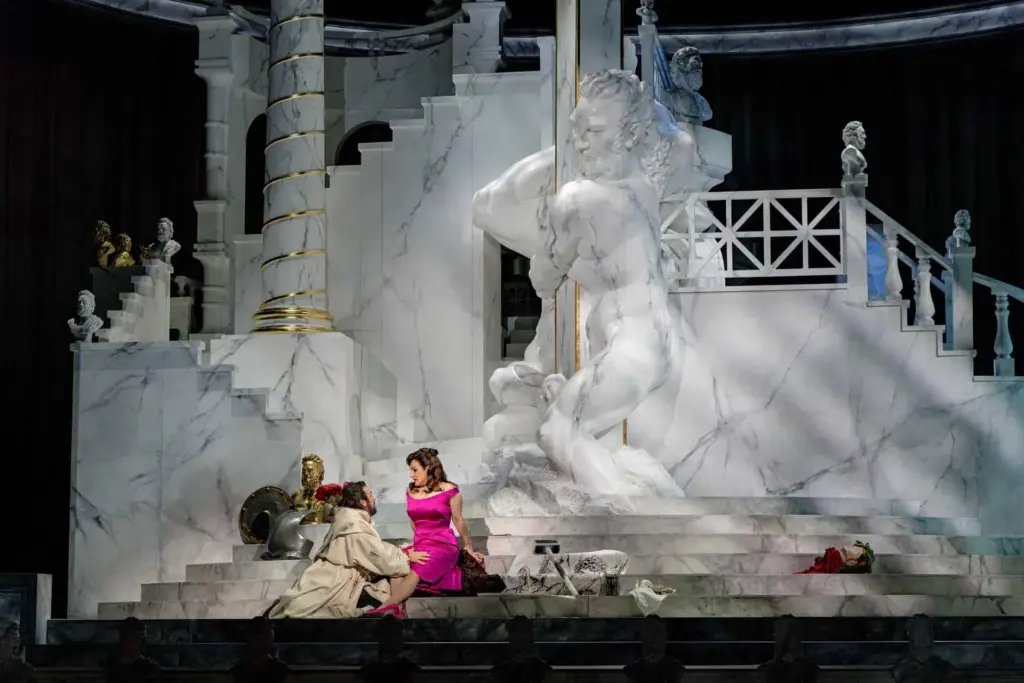
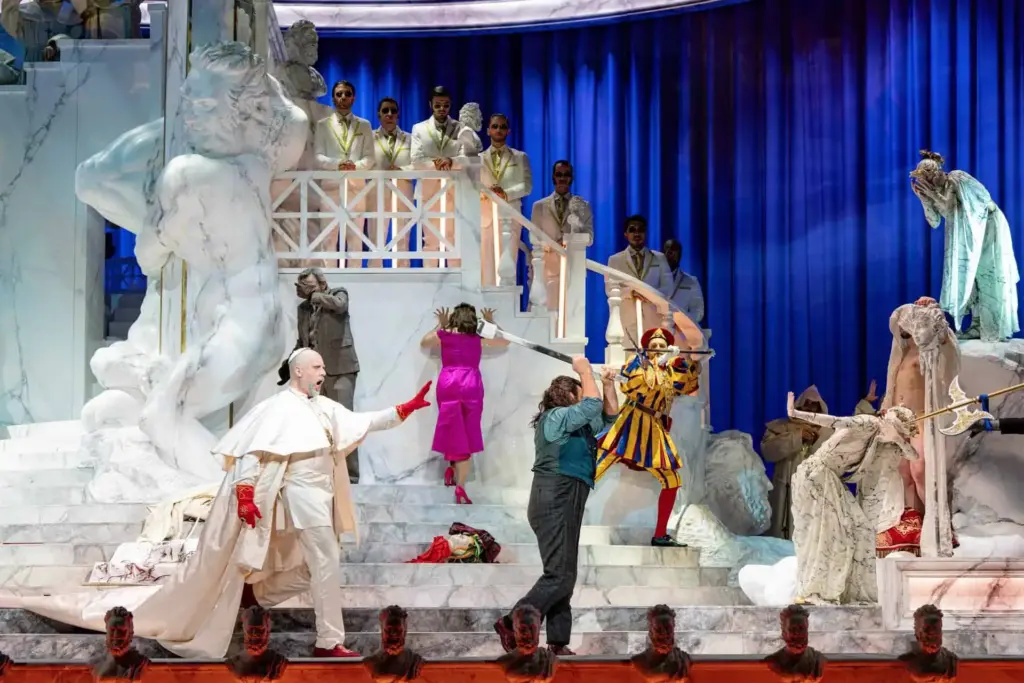
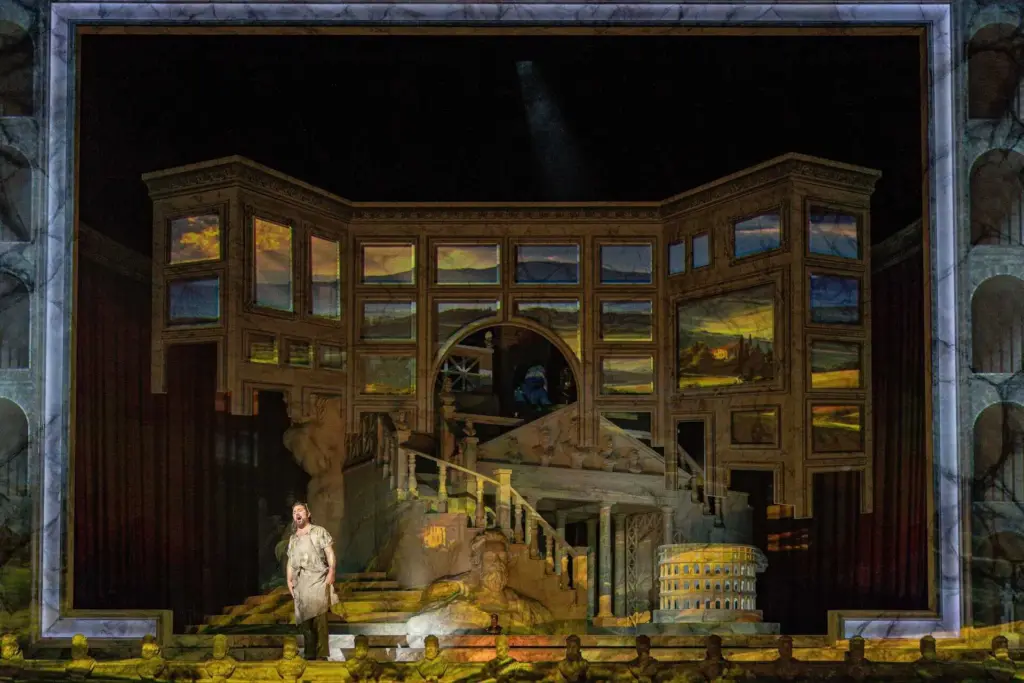
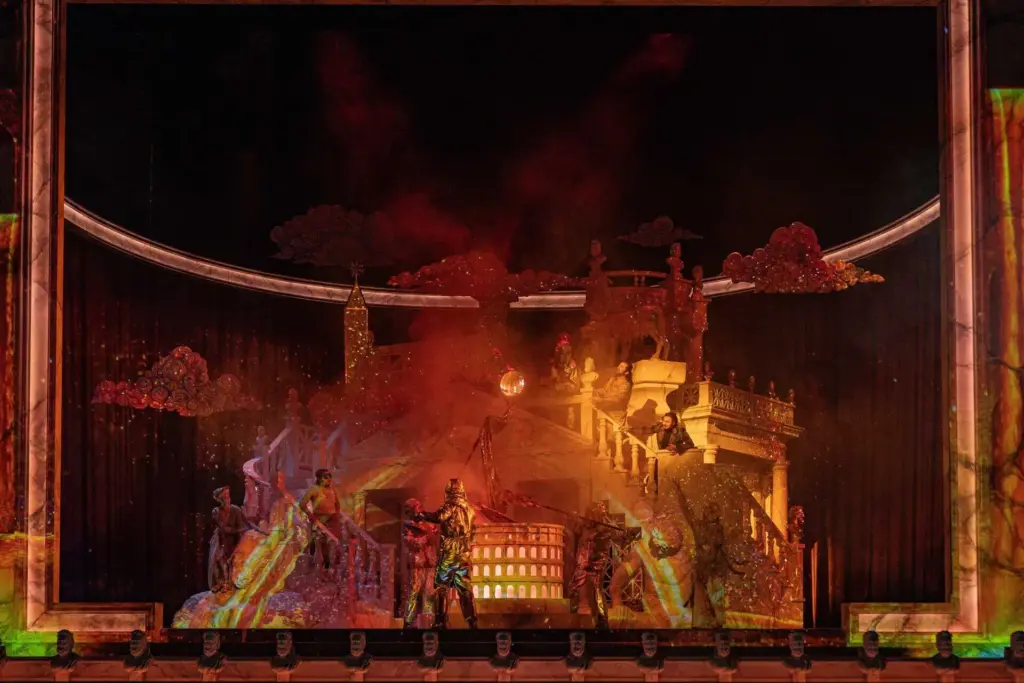
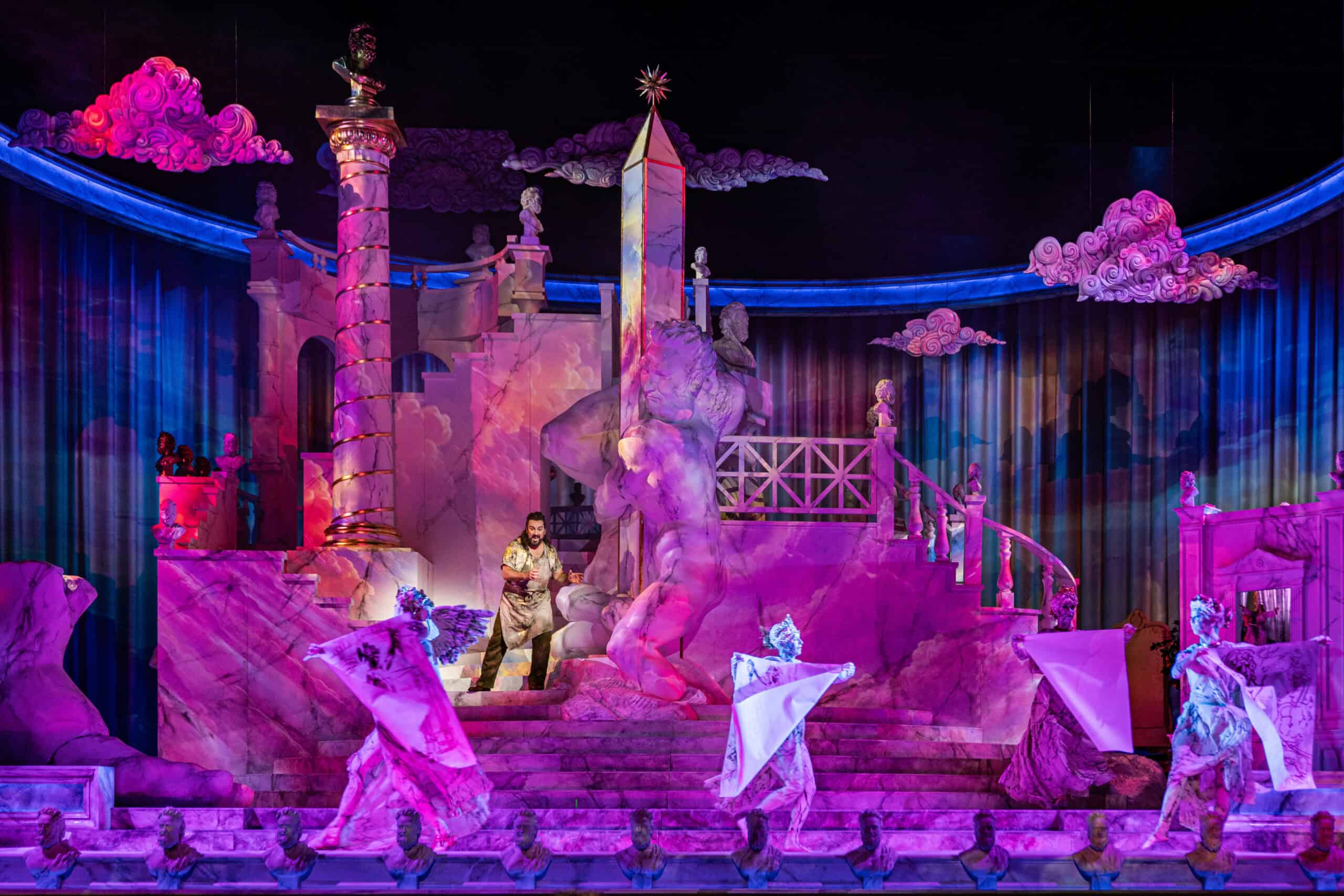
In the program notes, director Thaddeus Strassberger states that Benvenuto Cellini deals with the madness of the creative process. His staging is a superlative confirmation of that. His inspiration seems boundless, yet remains true to the opera's timeframe and narrative. Nineteen sculpted Perseus heads border the stage, the backdrop like a vibrant Renaissance painting. Mythological figures from paintings are paraded by Strassberger through an ingenious projection of the theatre's dome onto the stage, complete with the ornate chandeliers. Throughout the production, Rome and the sculptor's world are ever-present. Sections of the Roman Forum, the Trojan Column, the Capitol, even a little trattoria terrace. The exuberant imagery continuously filling the set gives the passionate story of the artist pursuing his ideal a relativizing and satirical undertone. A pious Madonna adorning a chapel turns out to be the flip side of a four-poster bed. The idealized extras drifting across the stage throughout as creative yet contrived characters are eroticized muses. They never bore and constantly captivate through their elegance. The entire production breathes an atmosphere of satire and critique of ecclesiastical hypocrisy. This aspect reaches its peak in the carnival scene, where the pope not only carries his severed head on a platter but is also adorned with an oversized jewel-encrusted phallus. Aalst's carnival could draw inspiration from the bizarre creatures—pig-like beings and women with six layers of breasts, to name just a few examples. But every other scene is likewise visually striking, culminating in the melting of metal for the final sculpture. A stunning finale. The ending, with reconciliation between the pope and his rival Fieramosca, the dismissal of charges against Cellini for murdering Pompeo, and the wedding "in white," contrasts almost like a weak domestic closing scene.
Musically brilliant
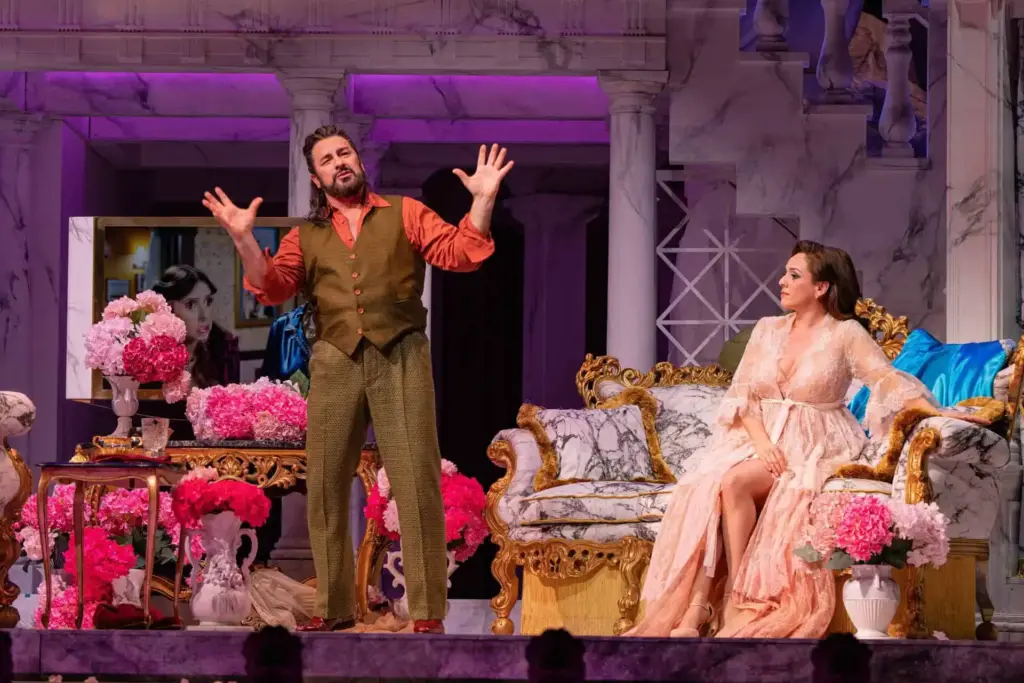
In the video interviews the theatre posts on its website with conductor Alain Altinoglu, he makes no effort to hide his enthusiasm for collaborating with this hyperactive director. Their parallel thinking is evident in the performance, and he sweeps his orchestra along in his dynamism. Already in the overture, the lively carnival theme is executed sharply and melodiously. The orchestra keeps pace with the many surprising orchestral colors and theatrical effects. But the intimate passages are also irresistible. For example, the tête-à-tête between Teresa and Cellini in the second scene of the second act, where the couple fears their relationship is doomed, is wonderfully supported with nuance and emotion. John Osborn is a singer with the right timbre and lightness for this French role and performs it with full dedication. (He also sang Cellini in Amsterdam, by the way). Ruth Iniesta was a flamboyant Teresa with considerable vocal style and controlled coloraturas, a talent she clearly carries over from her bel canto period. A remarkable performance was certainly Tijl Faveyts as Balducci. His sonorous bass voice was paired with his fluid acting talent, where the tongue-in-cheek exaggeration was brilliantly calibrated. The rest of the cast was also perfectly suited.
Thus this Benvenuto Cellini at the theatre became a production that testifies to boundless inspiration. It expresses operatic tragedy in an ambiguous way: you can empathize with it to a certain extent but also laugh at it from a distance—probably the ideal way (if done artfully) to present such a—admittedly—wild tale in modern times. That may be one of the reasons why Christina Scheppelmann chose precisely this work to open her mandate as the new artistic and general director of the theatre. Moreover, the central theme of {{NOTRANSLATE_1}}, namely the artist's ambition and position in the social fabric, is close to her heart. Benvenuto CelliniAlain Altinoglu, conductor Thaddeus Strassberger, director Symphony Orchestra and Chorus of the theatre With: John Osborn, Ruth Iniesta, Tijl Faveyts, Jean-Sébastien Bou, Gabriele Nani, Florence Losseau, Ante Jerkunica, Yves Saelens