
Mozart's Requiem and, in a sense, also that of his student Franz Xaver Süssmayr has captivated music lovers for centuries. However great the reputation of this work may be, equally great is the confusion about exactly what Süssmayr's contribution was and to what extent he followed Mozart's original ideas. One thing is certain: with its emotional intensity, ingenious polyphony, beautiful melodies, and dramatic contrasts, it remains one of the great pillars of 18th-century classicism.
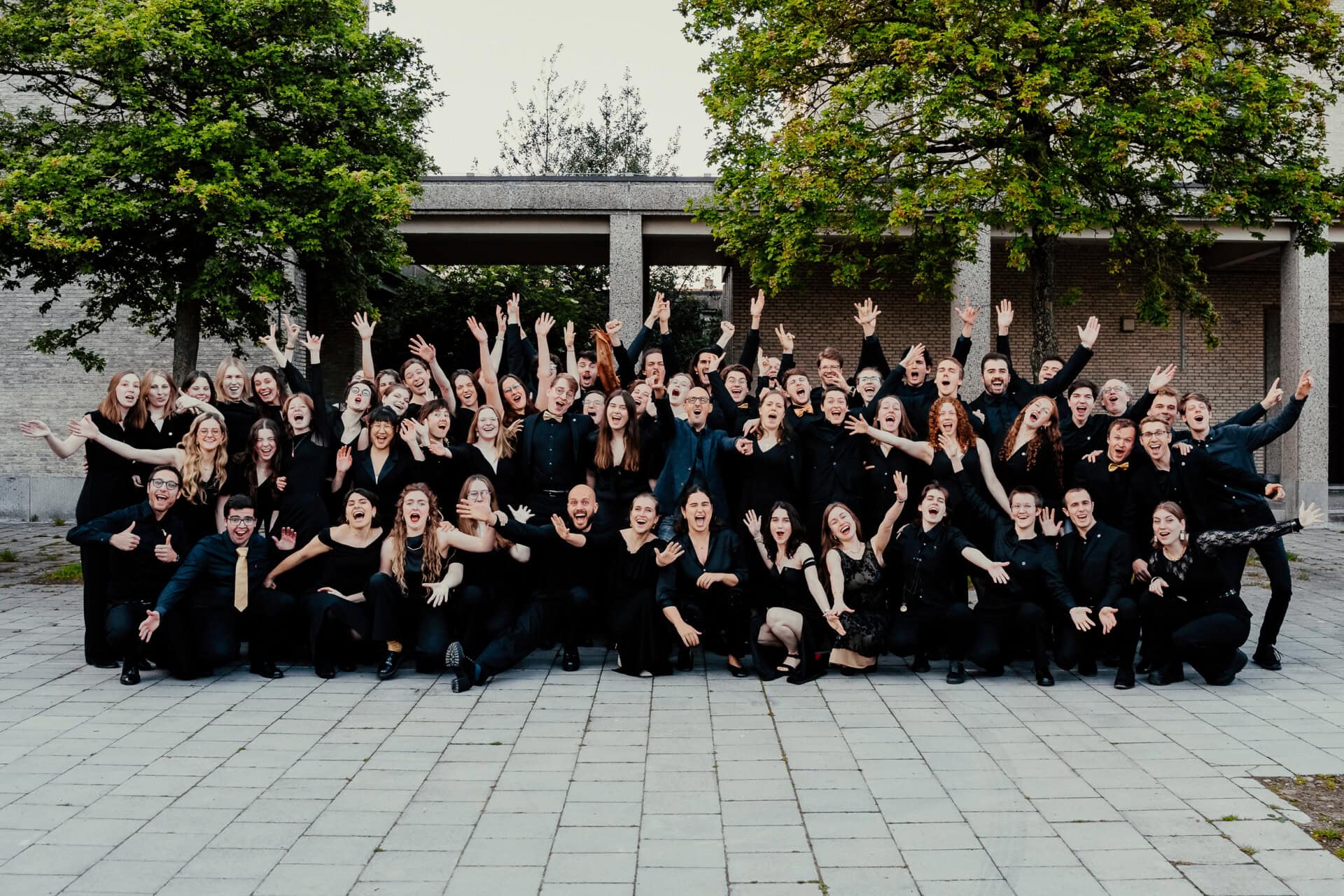
The enthusiasm must have been considerable for both the Ghent University Choir (GUK) and the Ghent Symphony Orchestra (GSO) under the direction of conductors Joris Derder and Siewald Degraeve. Over three consecutive evenings in the Christus Koningkerk in Ghent, they presented this magical work in a program that also featured three other compositions.
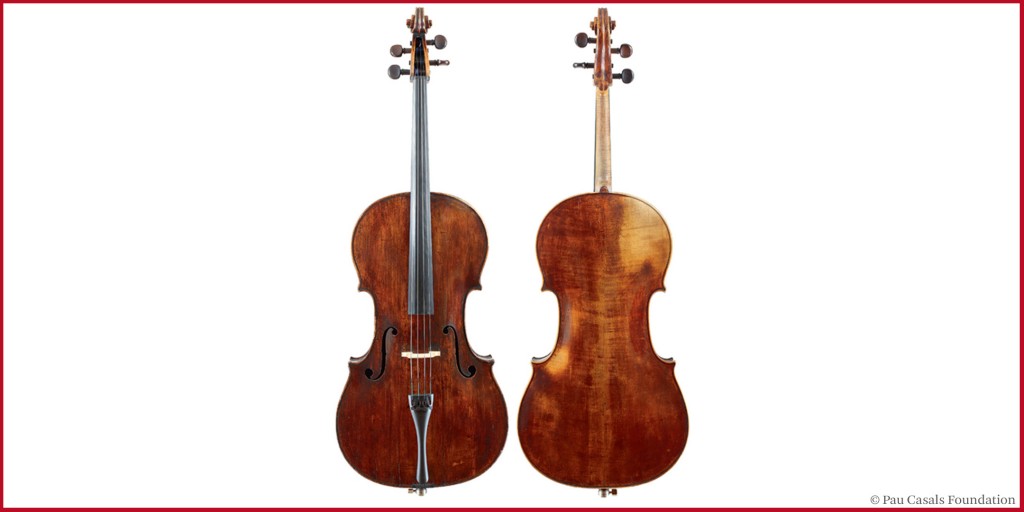
The first work of the evening was the beautiful and well-known motet "Abendlied", also known as "Bleib bei uns", by Josef Gabriel Rheinberger, a 19th-century Liechtensteinian-Bavarian composer who focused on liturgical music. The work, in all its simplicity and essence, cuts right to the heart; it was so quiet in the hall after the final chord that you could hear a pin drop. After the audience had gotten a taste of the choir's beautiful vocal colors, it was time for something purely instrumental. 📷 Mirco Photo – www.mircophoto.com"Cyparissus" is a work for solo cello and orchestra, composed and conducted by Siewald Degraeve. In this gripping passacaglia, Wouter D'Haese performs the cello solo, enveloped by the brilliant harmonies of the GSO. Originally written for string quintet, this piece portrays the Greco-Roman myth of Cyparissus, a young hunter who accidentally kills his beloved stag and subsequently begs Apollo to shroud him in eternal mourning. The atmosphere of this masterful composition gradually becomes more intense—more pathetic, somber, and increasingly urgent—as the music approaches its dramatic climax. The cello's lament ultimately flows into an endless stream of sorrow, symbolized by the repeating patterns of the passacaglia. In this performance, Degraeve, D'Haese, and the GSO pour their hearts and souls into the work, resulting in an interpretation of pure musical maturity and refined sensitivity to the art of music. Naturally, the next work of the evening was a joint performance by the GUK and GSO. With "When Music Sounds", a composition by Nicolas De Cock to a text by Walter de la Mare, they brought forth a festive and enchanting ode to music. This work, composed for the occasion of the GUK's twentieth anniversary, also has the honor of being the official GUK anthem.And then the supreme moment of the evening: the Requiem, in all its glory. 📷 Mirco Photo – www.mircophoto.com Under the direction of Joris Derder, the orchestra and choir make their entrance with the timeless
📷 Mirco Photo – www.mircophoto.com
"Cyparissus" is a work for cello solo and orchestra, composed and conducted by Siewald Degraeve. In this captivating passacaglia, Wouter D'Haese performs the cello solo, enveloped by the magnificent harmonies of the GSO. Originally written for string quintet, this piece brings to life the Greco-Roman myth of Cyparissus, a young hunter who accidentally kills his beloved deer and subsequently begs Apollo to shroud him in eternal mourning. The atmosphere of this masterful composition grows progressively more intense—more pathetic, darker, and increasingly urgent—as the music approaches its dramatic climax. The cello's lament ultimately flows into an endless stream of sorrow, symbolized by the repeating patterns of the passacaglia. Degraeve, D'Haese, and the GSO pour their hearts and souls into this performance, resulting in an interpretation of pure musical maturity and refined artistic sensitivity.
Logically, the next work of the evening was a joint performance by the GUK and GSO. With "When Music Sounds," a composition by Nicolas De Cock to a text by Walter de la Mare, they brought forth a festive and enchanting ode to music. This work, composed on the occasion of the GUK's twentieth anniversary, carries the honor of being the official GUK anthem.
And then the supreme moment of the evening: the Requiem, in all its glory. Under the direction of Joris Derder, the orchestra and choir make their entrance with the timeless IntroitusThis section, of which Mozart incidentally borrowed the introduction partially from Michael Haydn, sets the tone for the rest of the work. The contrasts are pronounced, the roles are distributed, yet everything merges into one clear and harmonious whole, as we've come to expect from the composer.
This was followed by the Kyriewith its distinctive double fugue—a demanding piece, especially for the voices in the high register, and that was noticeable. Nevertheless, the GUK delivered an impressive performance here, though it should be said that the choir sometimes stood out a bit too prominently above the orchestra in terms of volume.
Pure drama resonated in the Day of Wrathwith the menacing brass and fiery dialogues between orchestra and choir. What a powerful piece it is. The other parts of the Sequence are the Tuba Mirum, Rex Tremanddae, Recordare, Confutatis and the Lacrimosa. In the Tuba Mirum and Recordare the soloists Noa Vanden Broucke (soprano), Ano Machavariani (mezzo-soprano), Vahe Harutyunyan (tenor), and Alexander Van Goethem (baritone) offered an excellently balanced ensemble.
The most contrasting part of the Requiem is undoubtedly the ConfutatisWhoever has seen the film Amadeus (1984) may recall the historically inaccurate yet poignant scene in which Salieri—Mozart's colleague—writes down the first measures of this section on his deathbed. Especially the entry of the sopranos and altos on the text Voca me cum benedictis gives you goosebumps, no different on this evening. The Lacrimosaan moving piece in twelve-eighth time with breathtaking harmonies, also sounded familiar to many ears. This section ends with a grand plagal cadence and a hopeful Picardy third on the final chord—epic work, delivered epically by the GUK and GSO!
Also in the remaining parts, Domine Jesu, Hosannas, Holy, Blessed, Lamb of God and Eternal Light the soloists, the GUK and the GSO shine brightly. It remains to be seen what they will bring in their next concert series.
Below you can listen to a separate recording of S. Degraeve's Cyparissus with Wouter D'Haese on cello supported by the GSO: