The news that Giampaolo Bisanti's mandate as music director of the Opéra Royal de Wallonie has been extended until 2031 can only be welcomed after the performance of Gounod's Faust, which opens the new ORW season. This masterpiece from the French repertoire received a magnificent interpretation under his leadership.
Charles Gounod was captivated early on by Goethe's Faust story. The figure of Faust, the man who rebels against the mundanity of existence and, through a pact with the devil, sees the door open to a world where imagination, adventure, and unbridled pleasure hold sway, appeals to him. After winning the Prix de Rome in 1839, he saw Michel Carré's play "Faust et Marguerite." Michel Carré and Jules Barbier create the libretto for him, in which Faust no longer appears as the eternally seeking and never satisfied man, but in which the Faust-Marguerite episode takes center stage. The opera focuses on the story of innocent, deceived Marguerite's simple fall, her moral conflict, downfall, and ultimate salvation, received into heaven. The premiere takes place in Paris in March 1859. Gounod succeeds in translating the dramatic action into music in a fascinating way, and each scene has a strong emotional impact. The score offers refined orchestral music with gripping arias and thrilling choral passages. A demanding whole that requires top quality.
Hallucinatory imagination
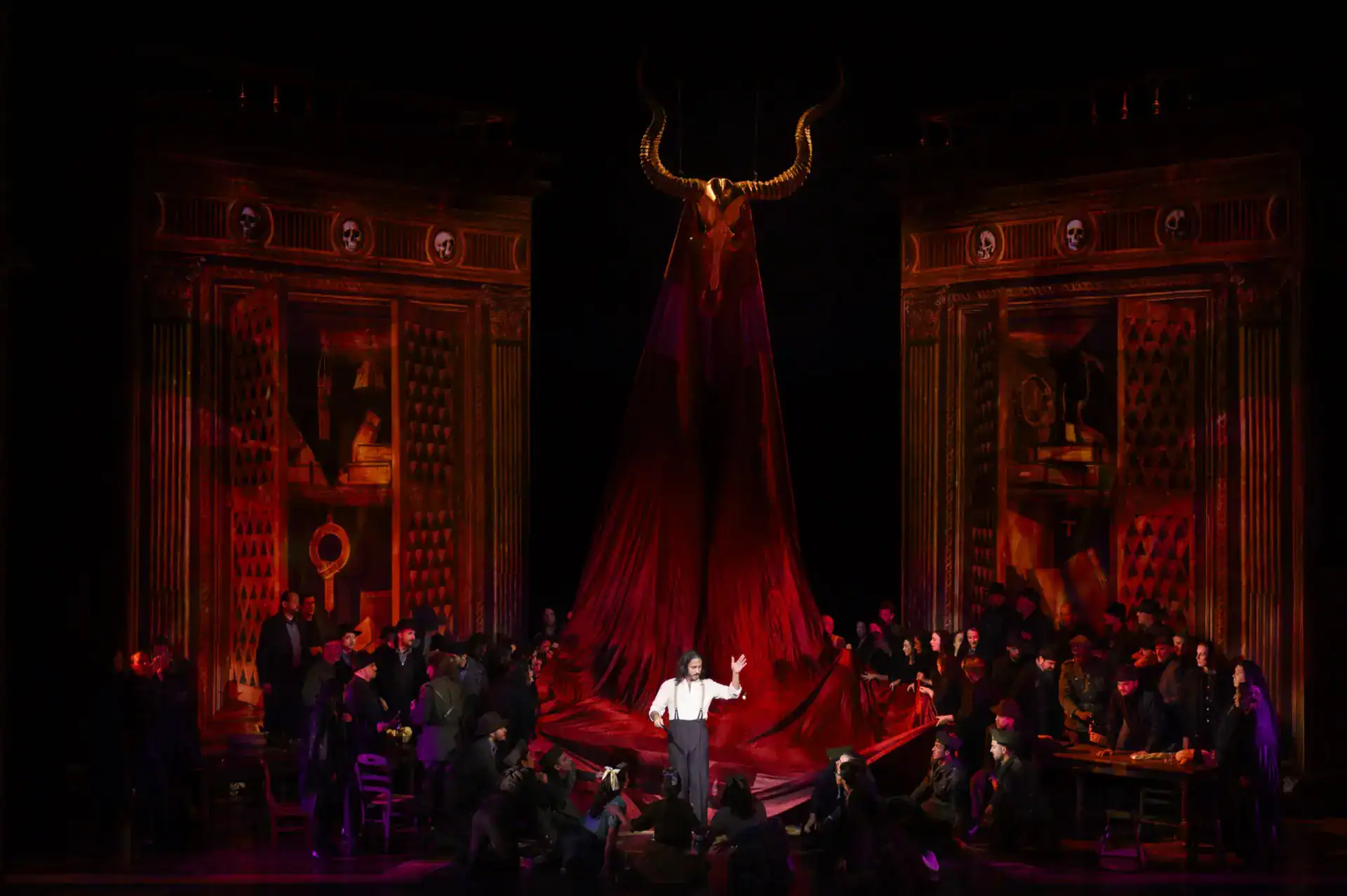
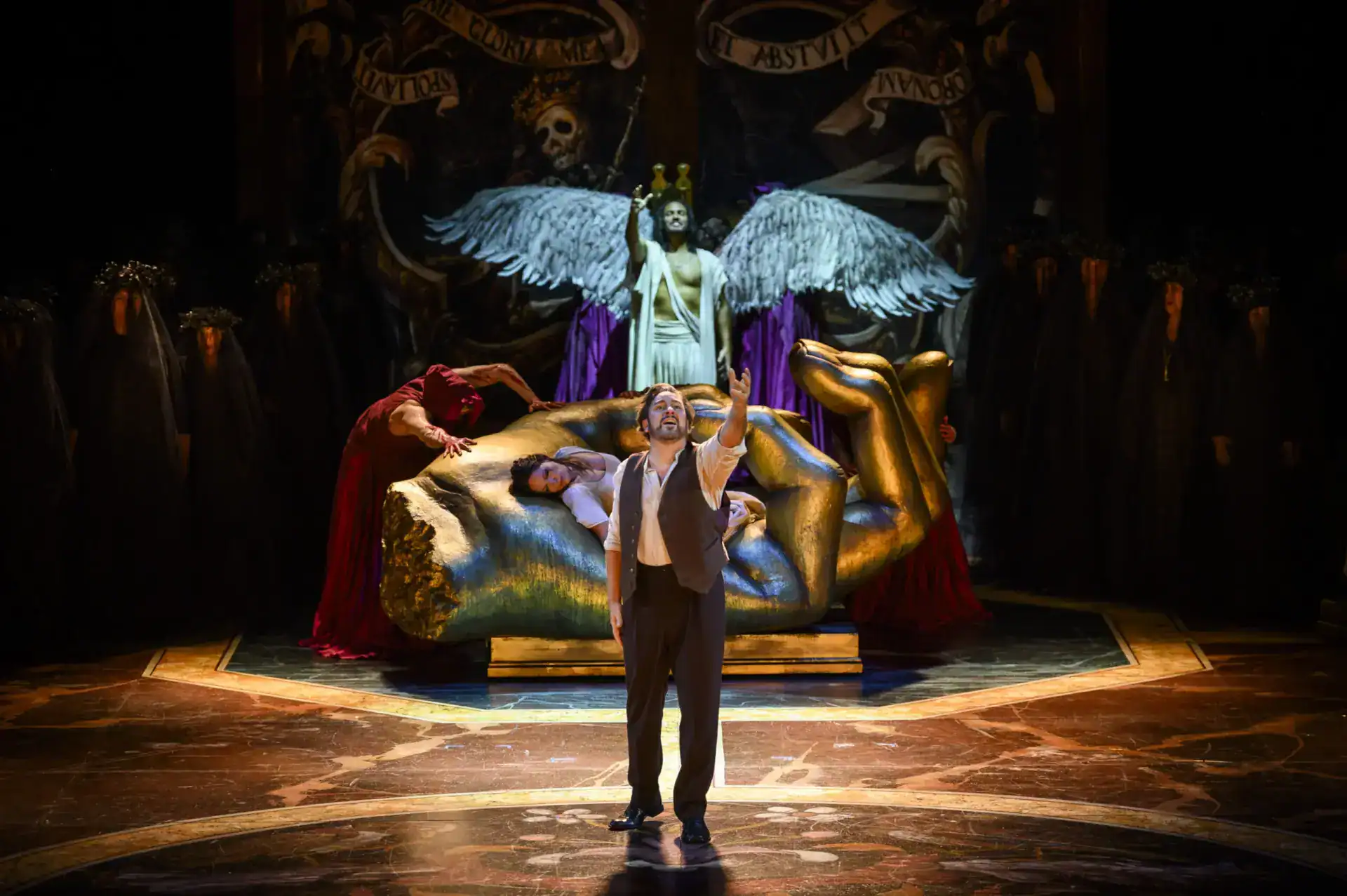
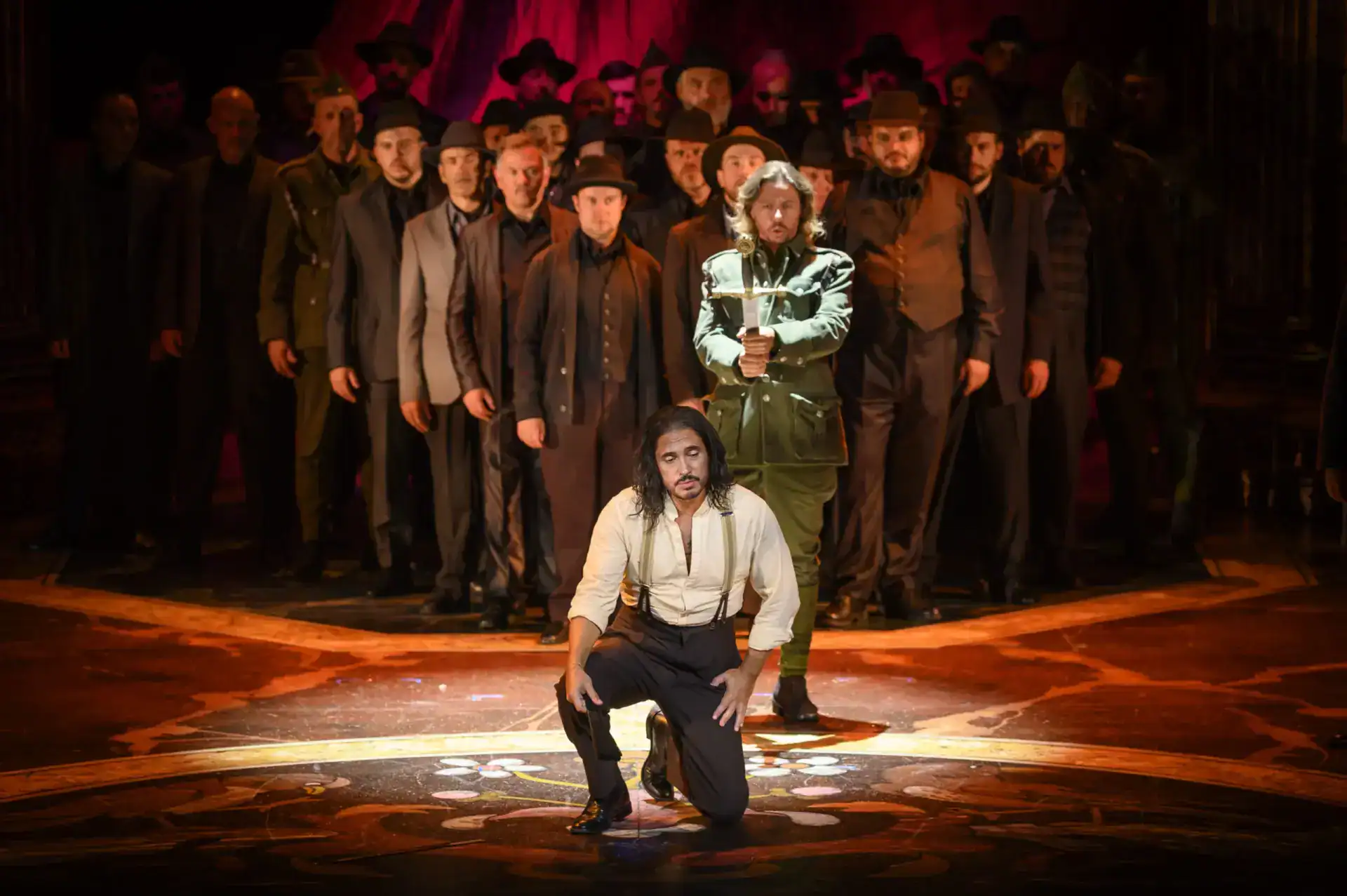
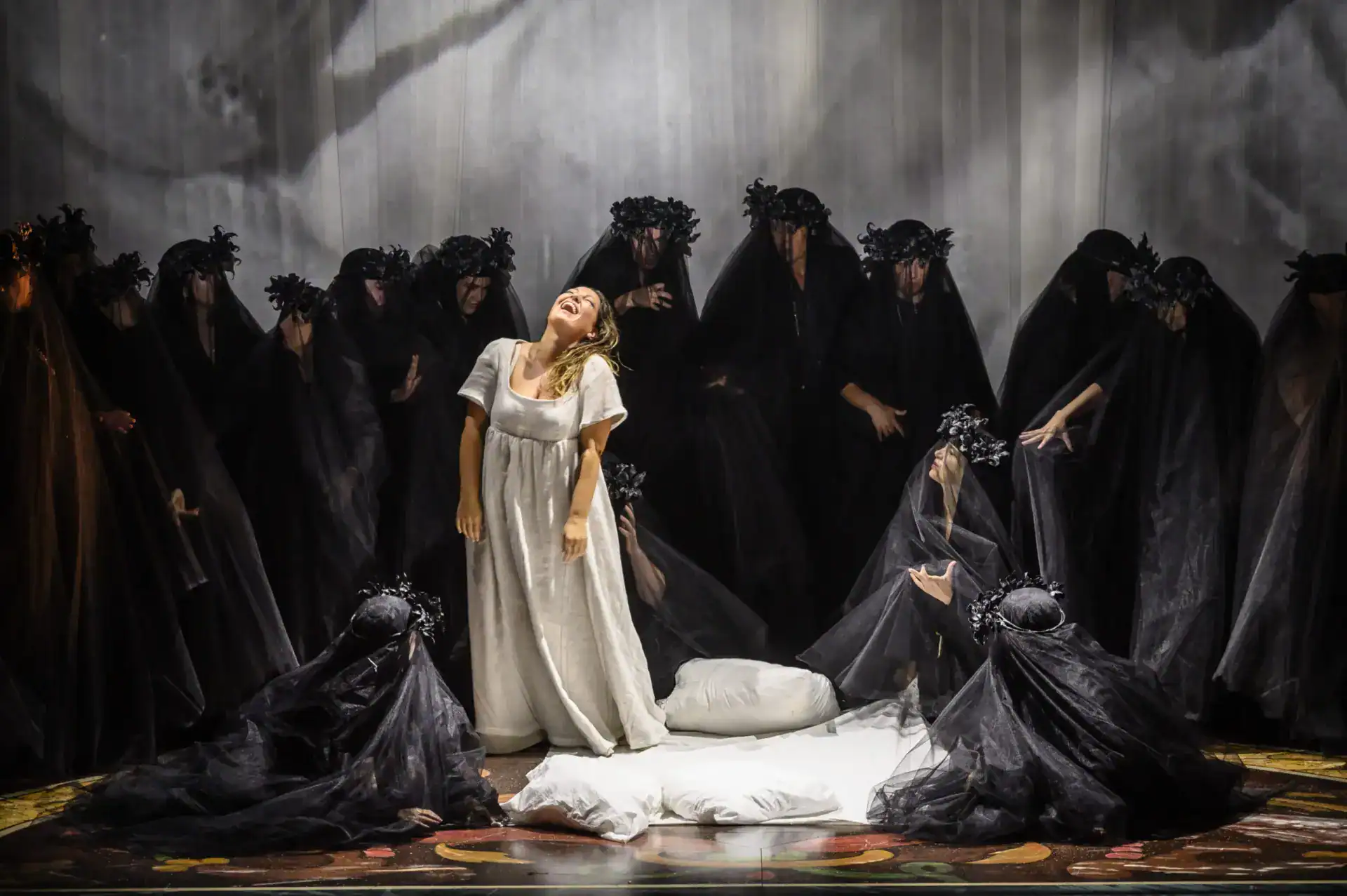
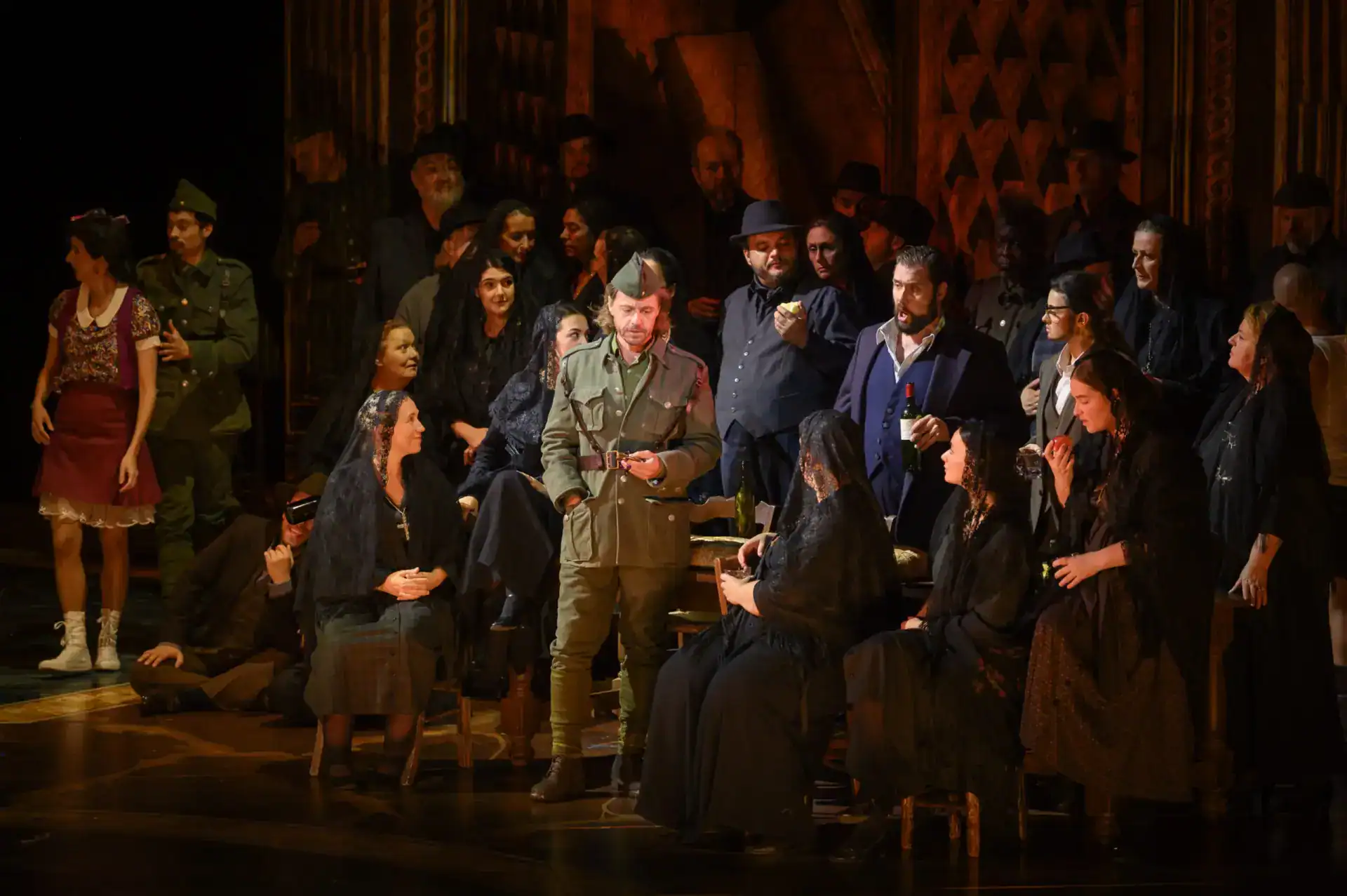
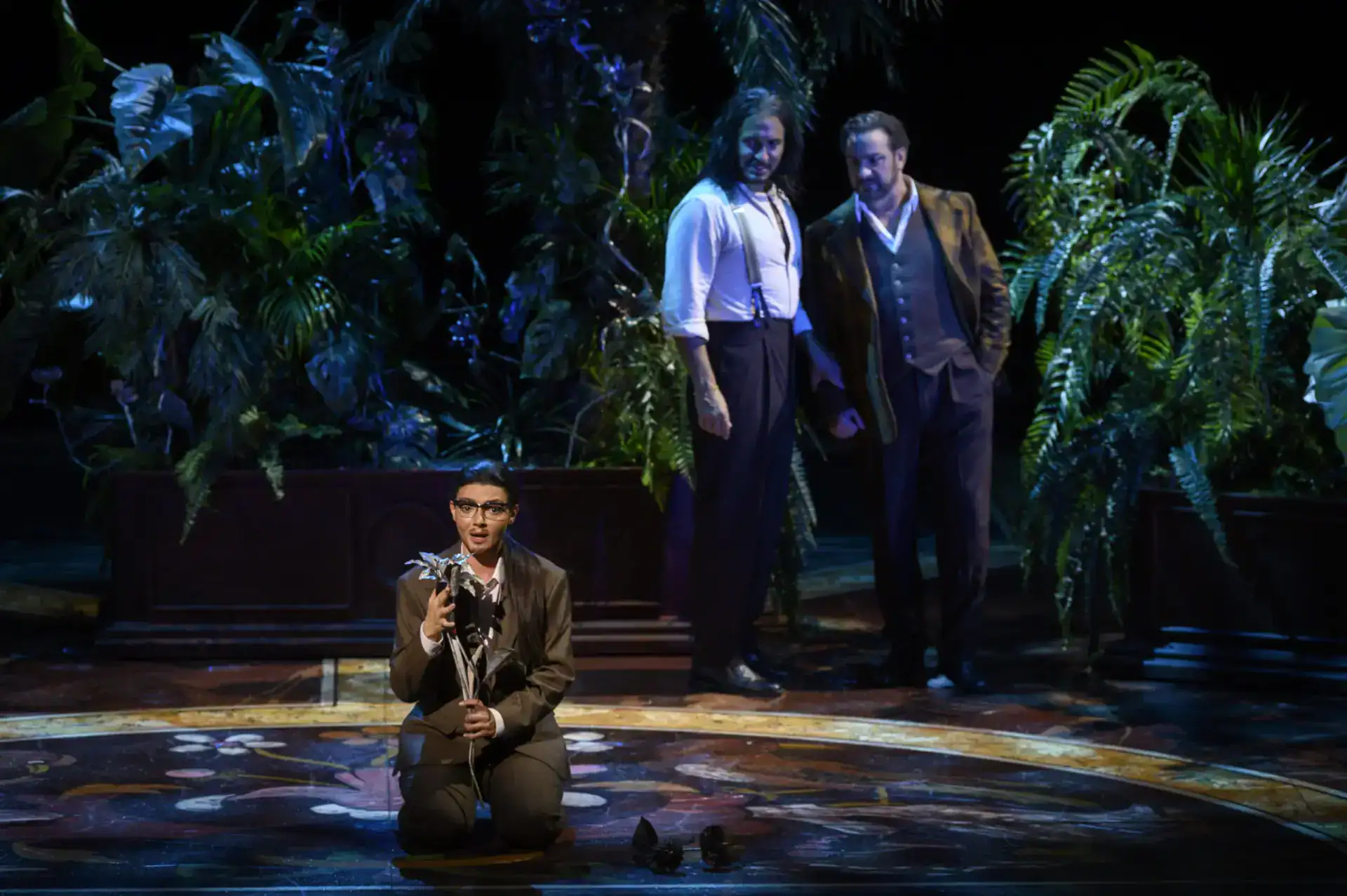
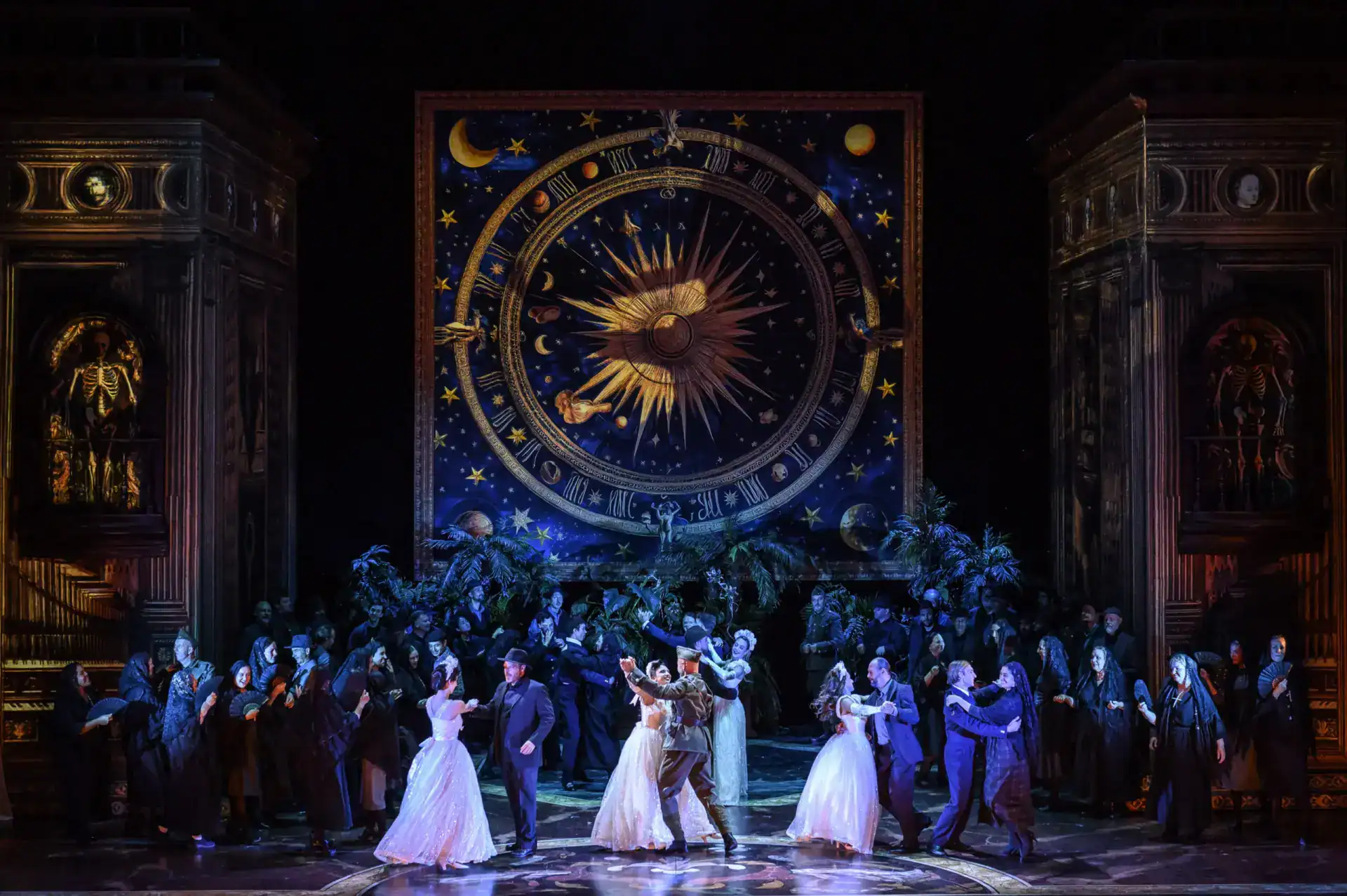
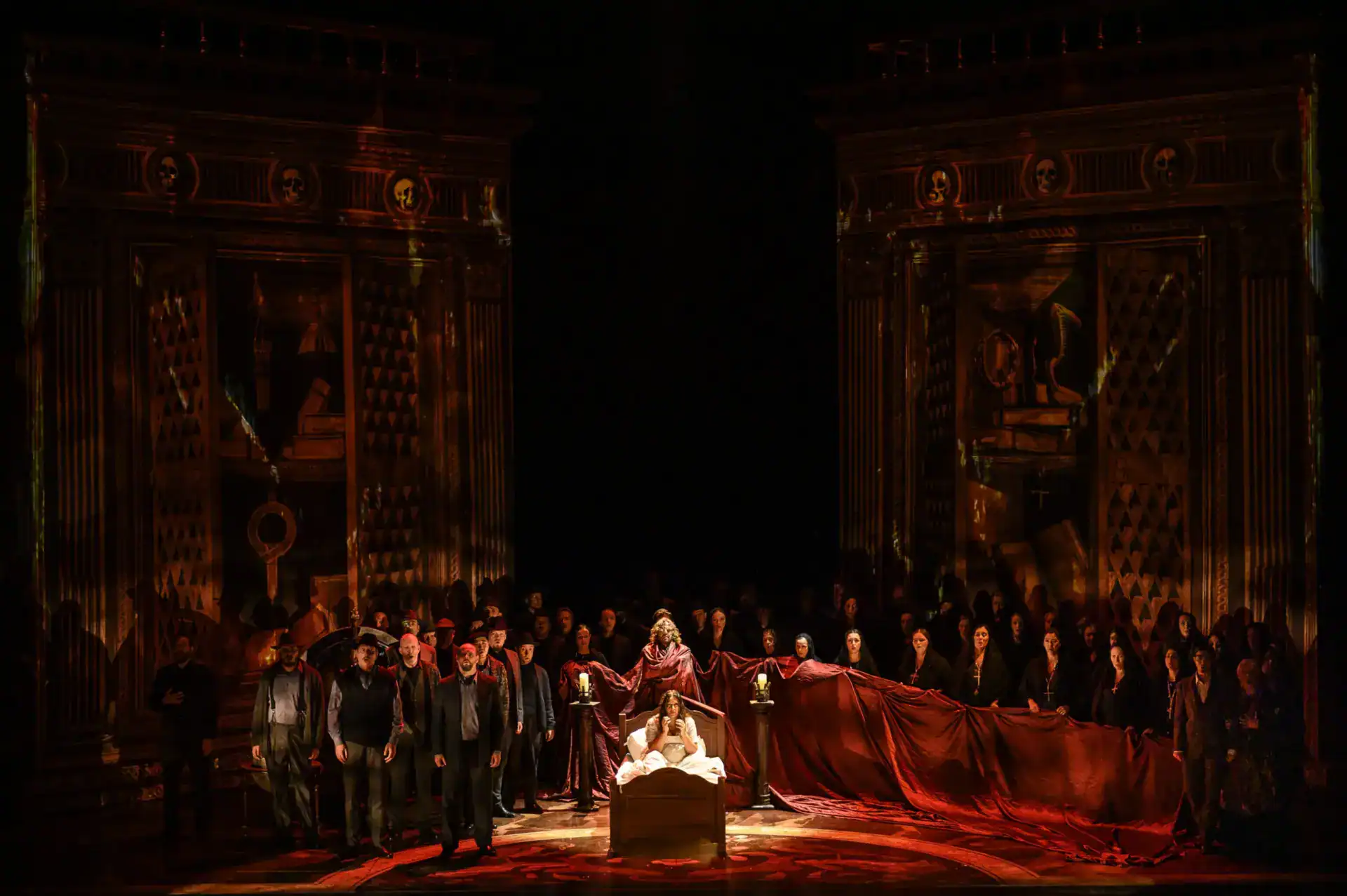
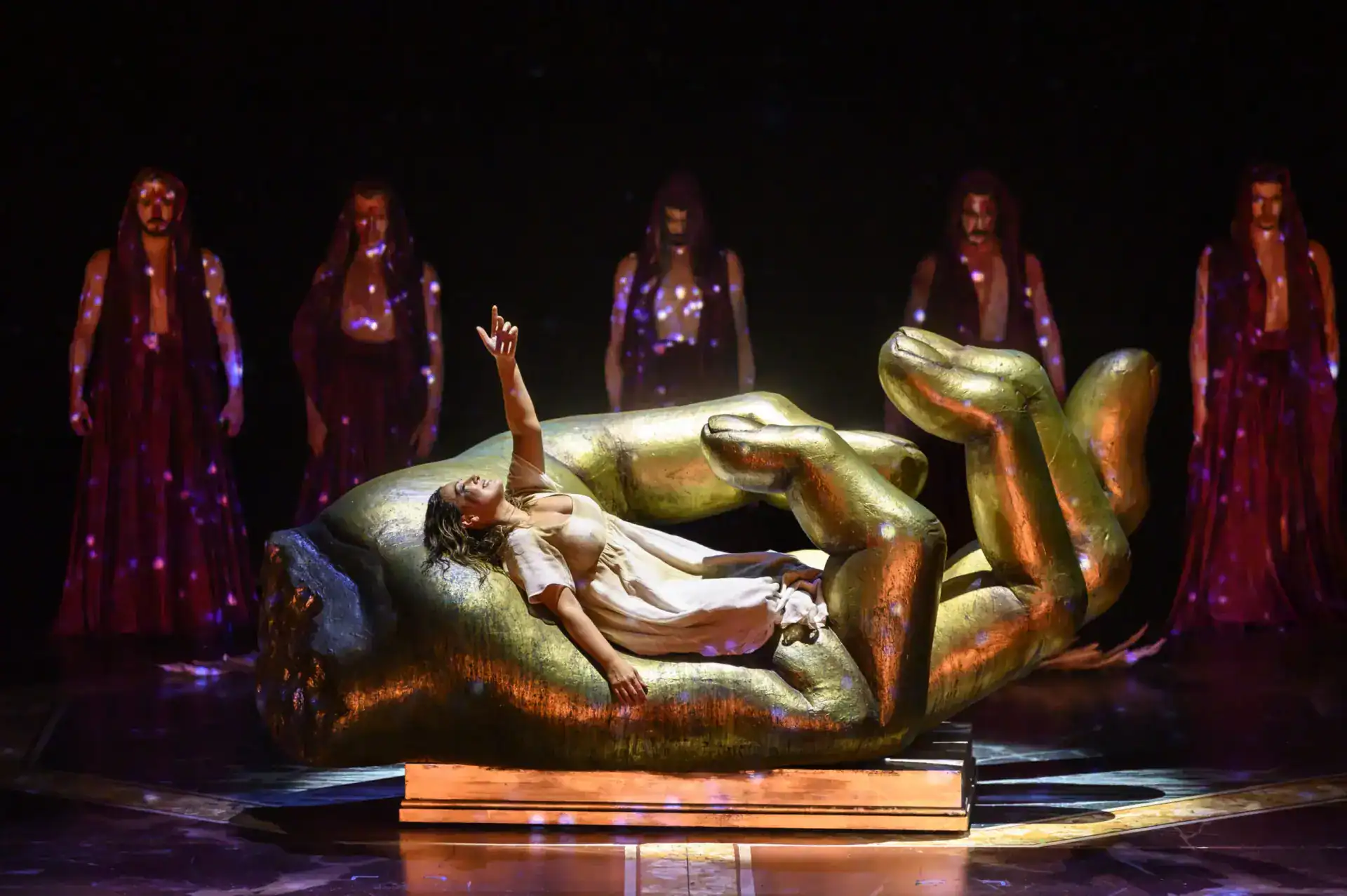
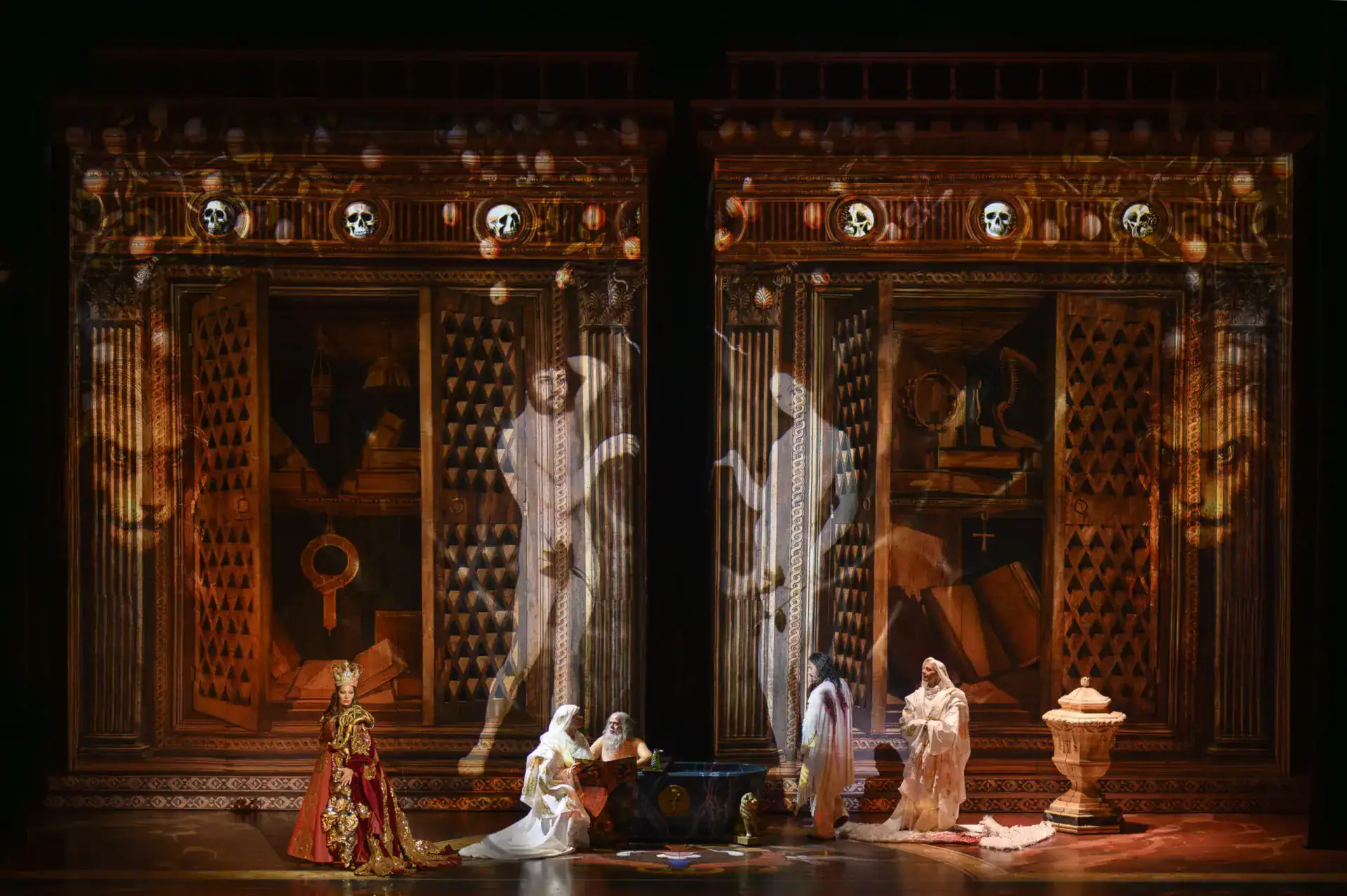
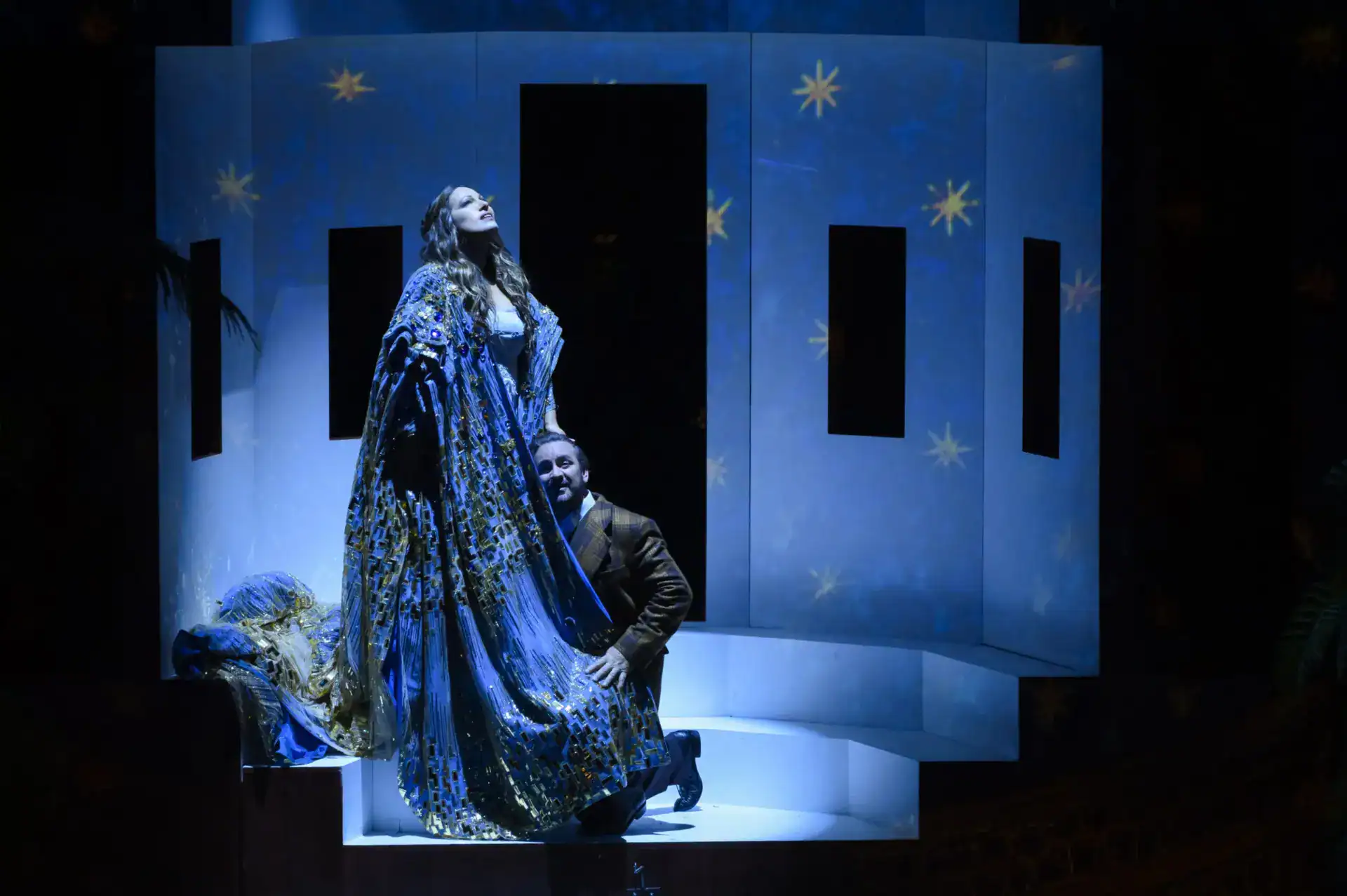
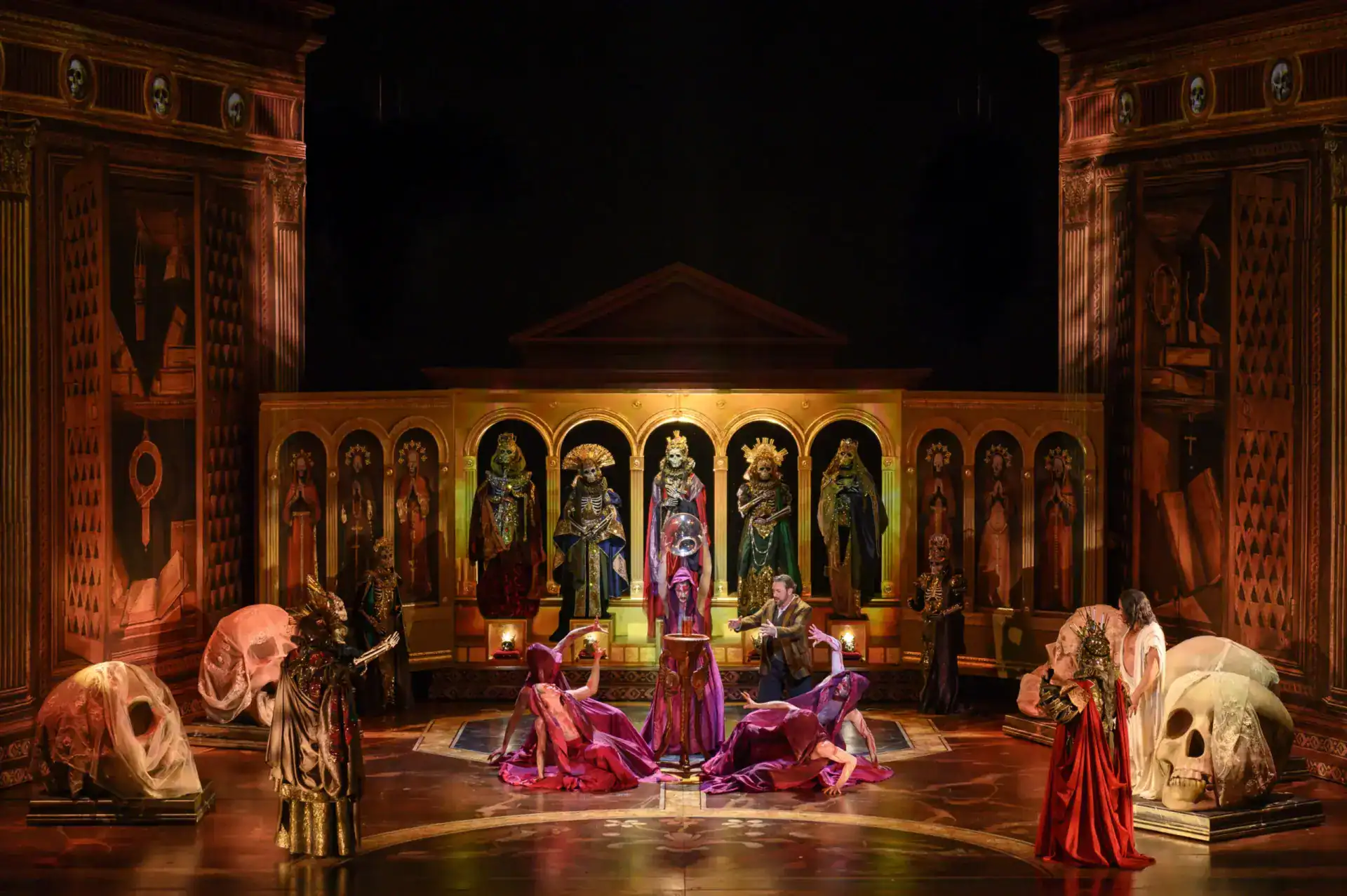
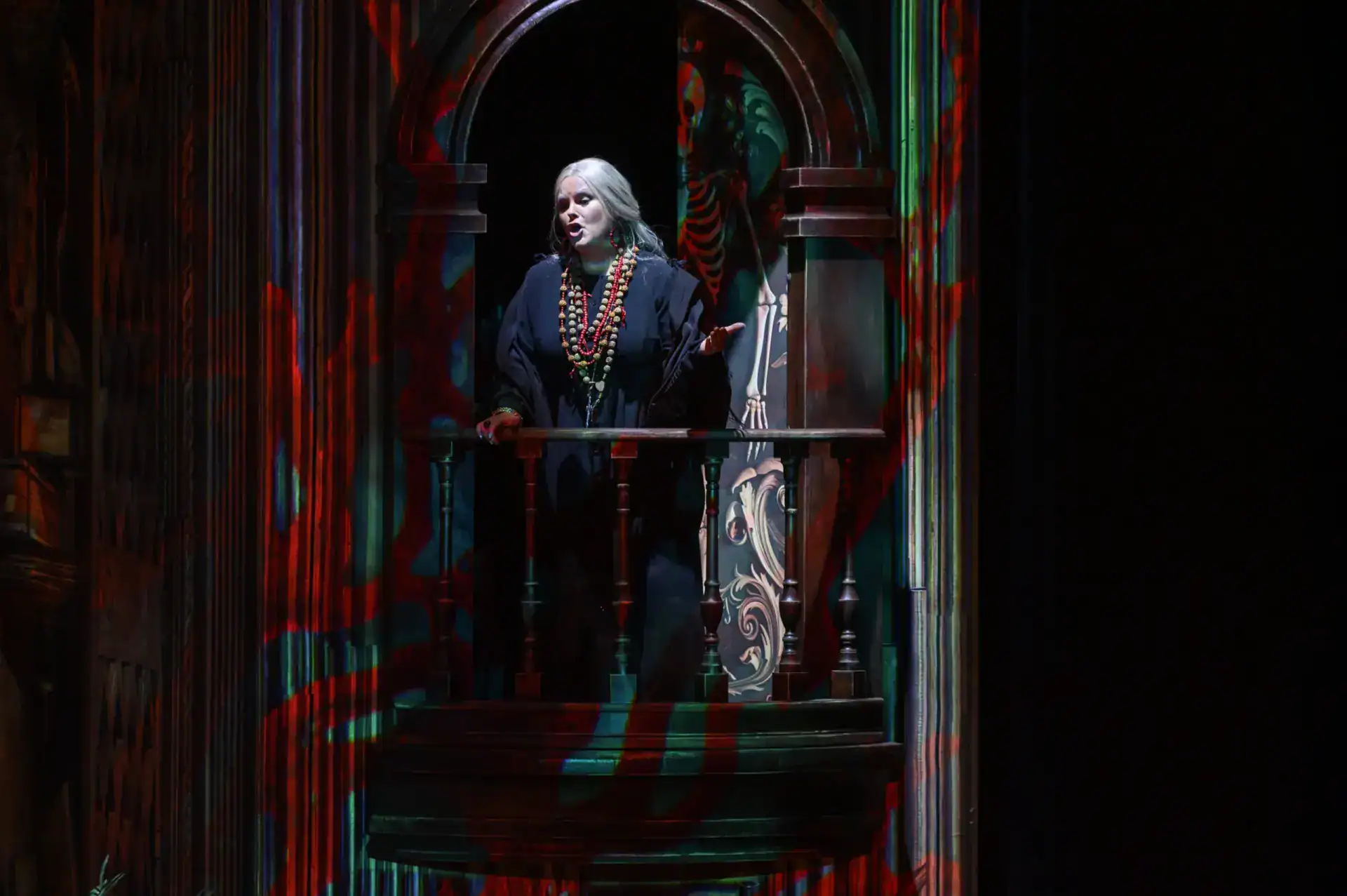
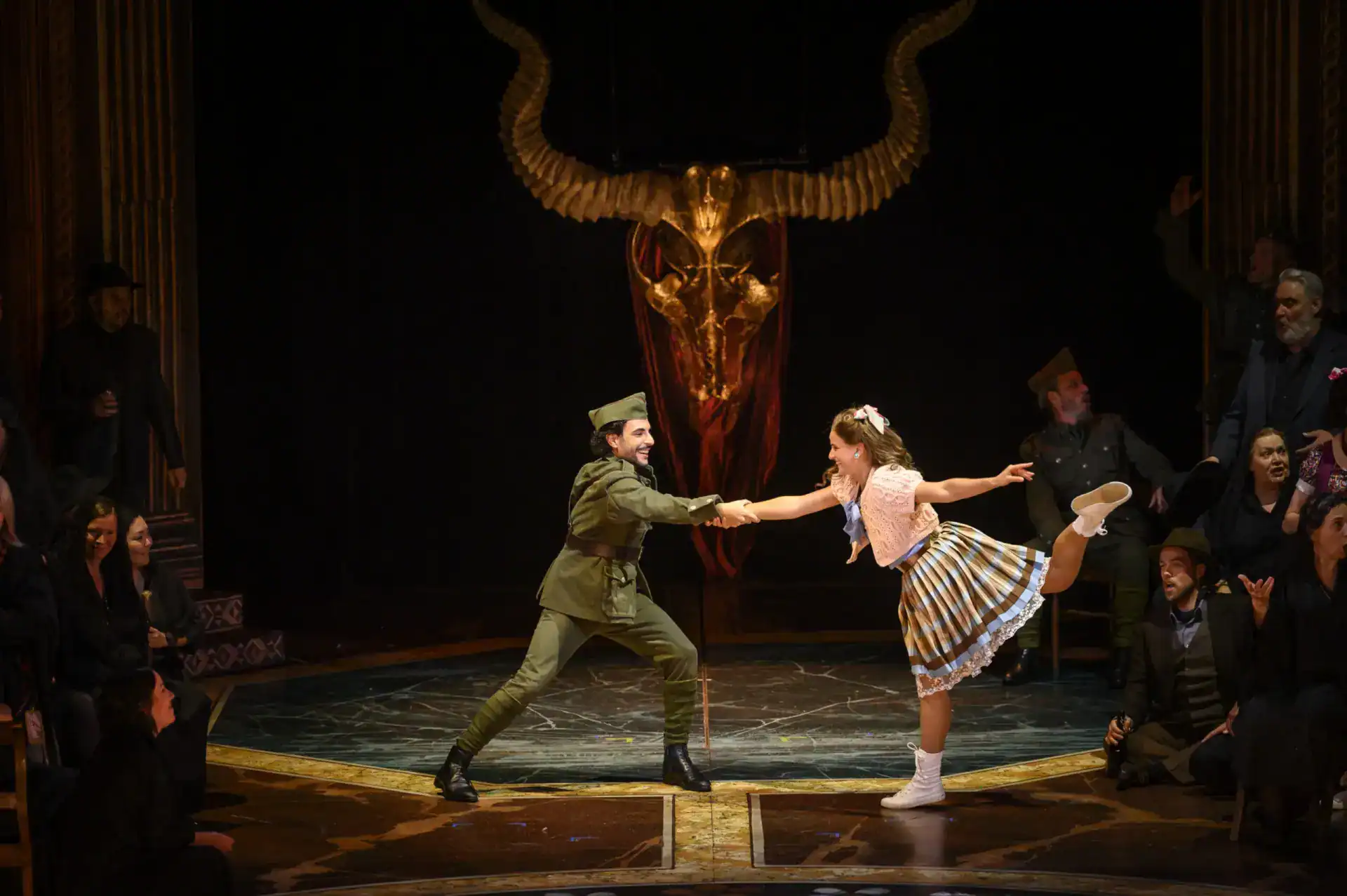
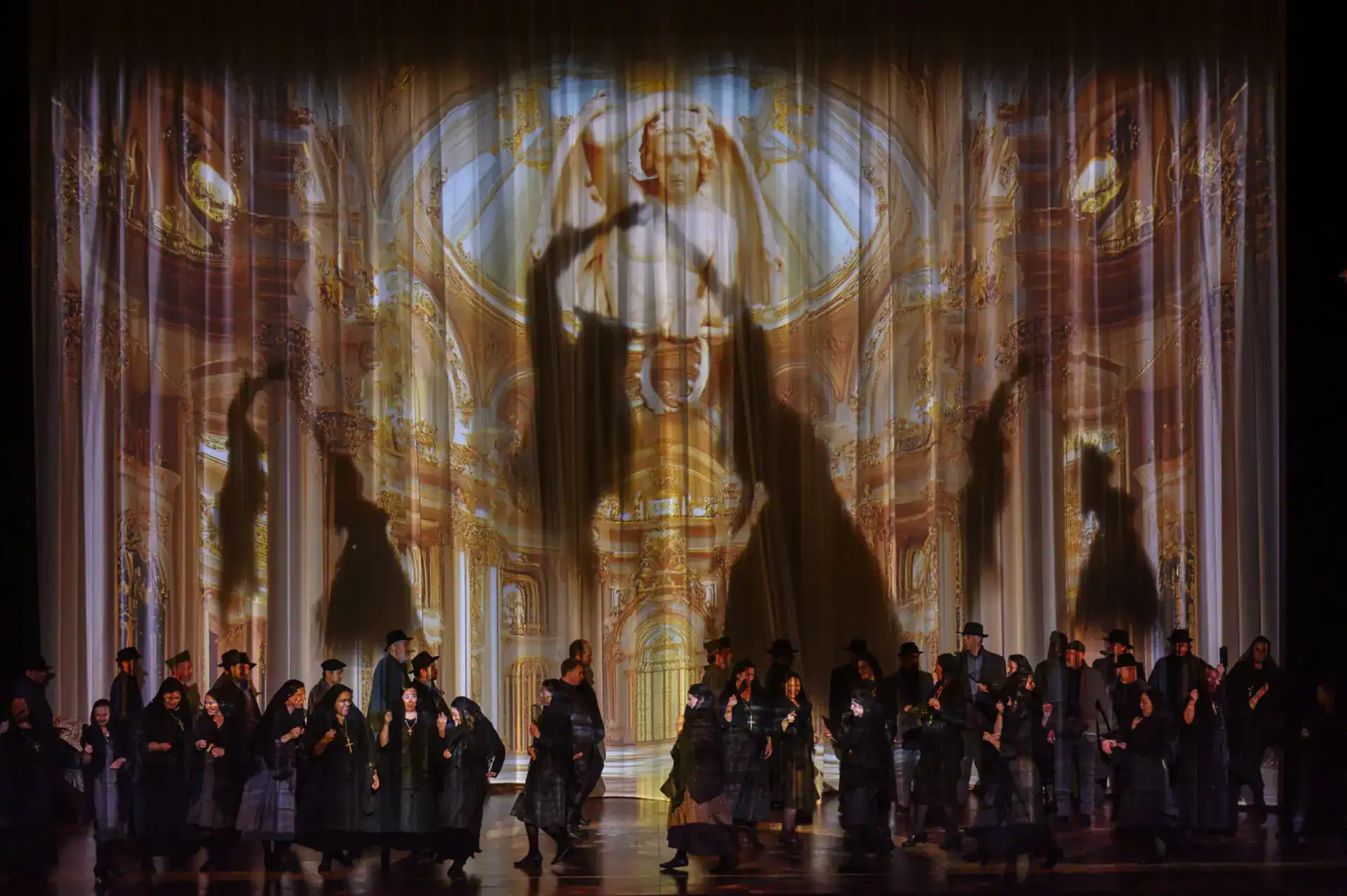
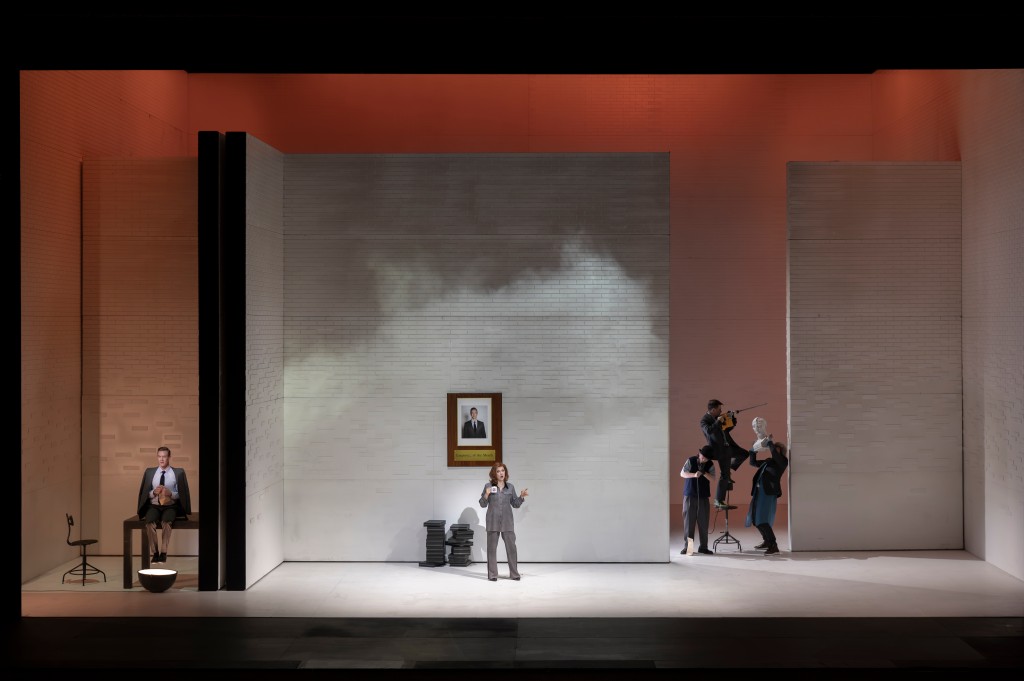
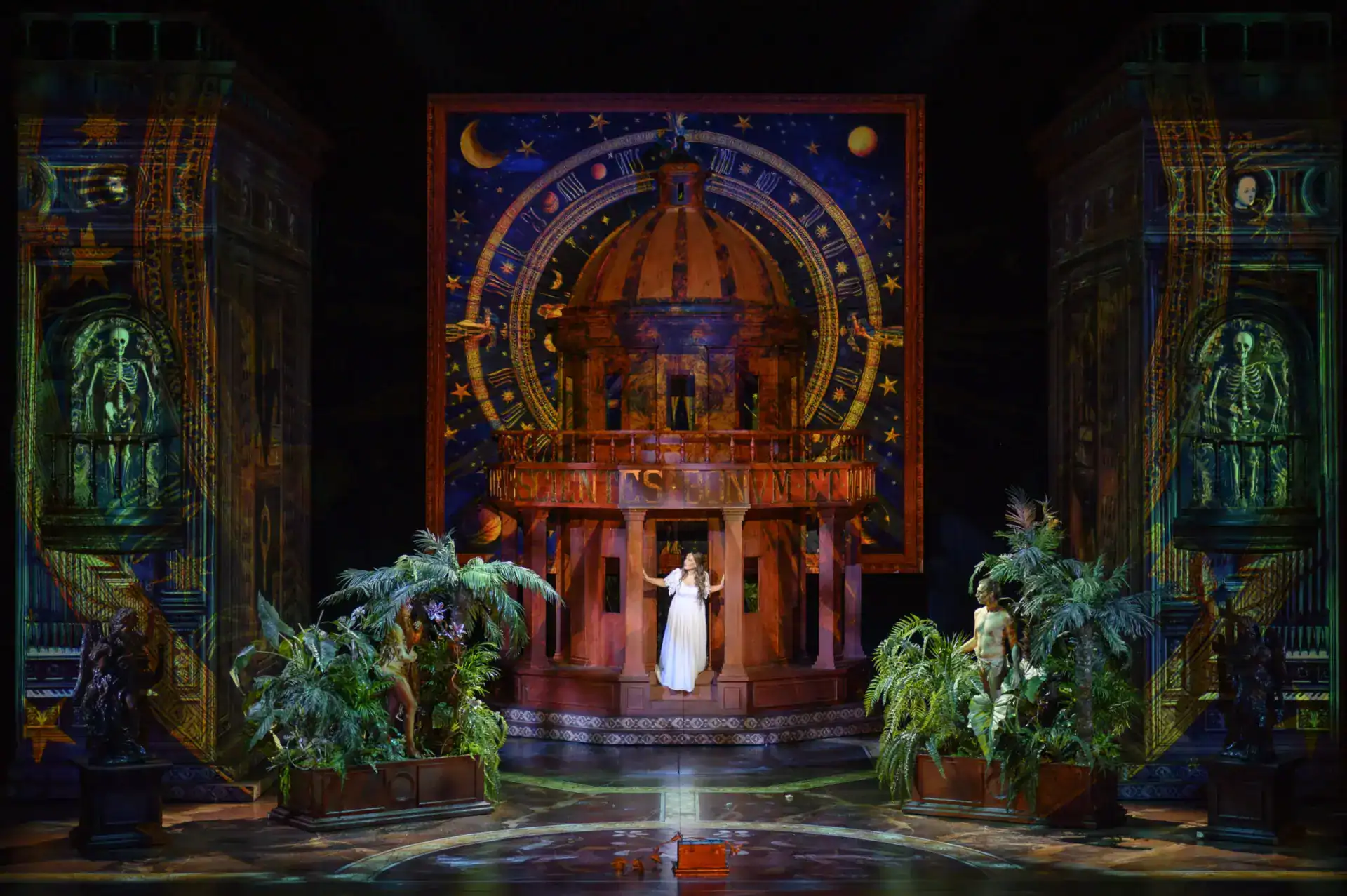
From the very beginning of the first act, director Thaddeus Strassberger makes it clear that he chooses a world in which the surreal plays a leading role. The old Faust – who summons demonic forces – finds himself behind a curtain of hair-thin bars, the boundary between reality and the magical world into which he becomes entangled. Once Méphistophélès appears, there are no limits to the world of imagination. Two doors like those of a library in a Renaissance palace dominate the set. Perhaps a reference to the world of knowledge and science in which Faust immersed himself. To make clear that the opera is also about the struggle between good and evil, the doors open like a diptych onto a painting of Adam and Eve with the serpent. A notable detail is the row of skulls in the upper frame of the doors. Skulls play a role throughout the performance, as a macabre reference to life's fatality; skeletons are never far away. A fatality that reaches a climax in the final act, where the skulls take on a bizarre, grotesque magnification. Besides the library doors, an astronomical clock with constellations and planets forms a striking backdrop in the set; bizarre shrubs grow luxuriantly in Marguerite's garden. In the first scene of Walpurgis Night, carnivalesque characters are arranged who remind one of macabre crypts with corpses. The director and set designer have let themselves go to conjure up as much as possible a grotesque and fantastical world, which sometimes goes a bit too far. Even the – eventual – sobriety of Marguerite's kind of lying-in room – which reminds one of film images from The Handmaid's Tale – barely touches us (despite its cruelty). The angel wings that lead Marguerite to heaven at the end are just one step too far and unfortunately border on the ridiculous.
Moving musical interpretation
What does remain moving is the musical approach of both conductor, orchestra, and soloists. Top quality is achieved here, which elevates the ORW production to a high level. The orchestra follows its conductor Giampaolo Bisanti flawlessly. It allows itself to be willingly swept up in the dramatic and fierce passages, but plays delicately and poetically in the passages of love and innocence, such as in the lovely song of Marguerite, "La chanson de Thulé" or in the closing duet of the third act, in which the lovers give expression to their confused emotions in fluid phrases and rapid modulations. Bisanti delightfully emphasizes the fluid vocal line and musical sensitivity of Gounod's opera; the more intimate and lyrical passages are sublime.
The vocal trio of the lead roles is hardly to be surpassed. Erwin Schrott is absolutely in his element as Méphistophélès, as expected. With his powerful yet also flexible bass-baritone, he masters the role effortlessly but, above all, as an actor he completely embodies the malicious devilish role. As much as he seems to enjoy it, you as the audience enjoy his performance. Grandiose too is Nino Machaidze as Marguerite. She colors her bright soprano from exuberantly joyful to anxious and dejected, depending on the scene. Of course, the jewel aria is a highlight, but certainly also her exhausting final "Anges purs, anges radieux" in which she sings every high note flawlessly. Faust was excellently performed by John Osborne, with his pleasant tenor voice and convincing and authentic portrayal of Faust.
The smaller roles were also perfectly cast, with Markus Werba (Valentin), Elmina Hasan (Siebel), Ivan Thirion (Wagner), Julie Bailly (Marthe)
The enchanting beauty of the music allowed us to accept the sometimes overly exuberant visual splendor and, above all, to enjoy the magnificent opera by Gounod.