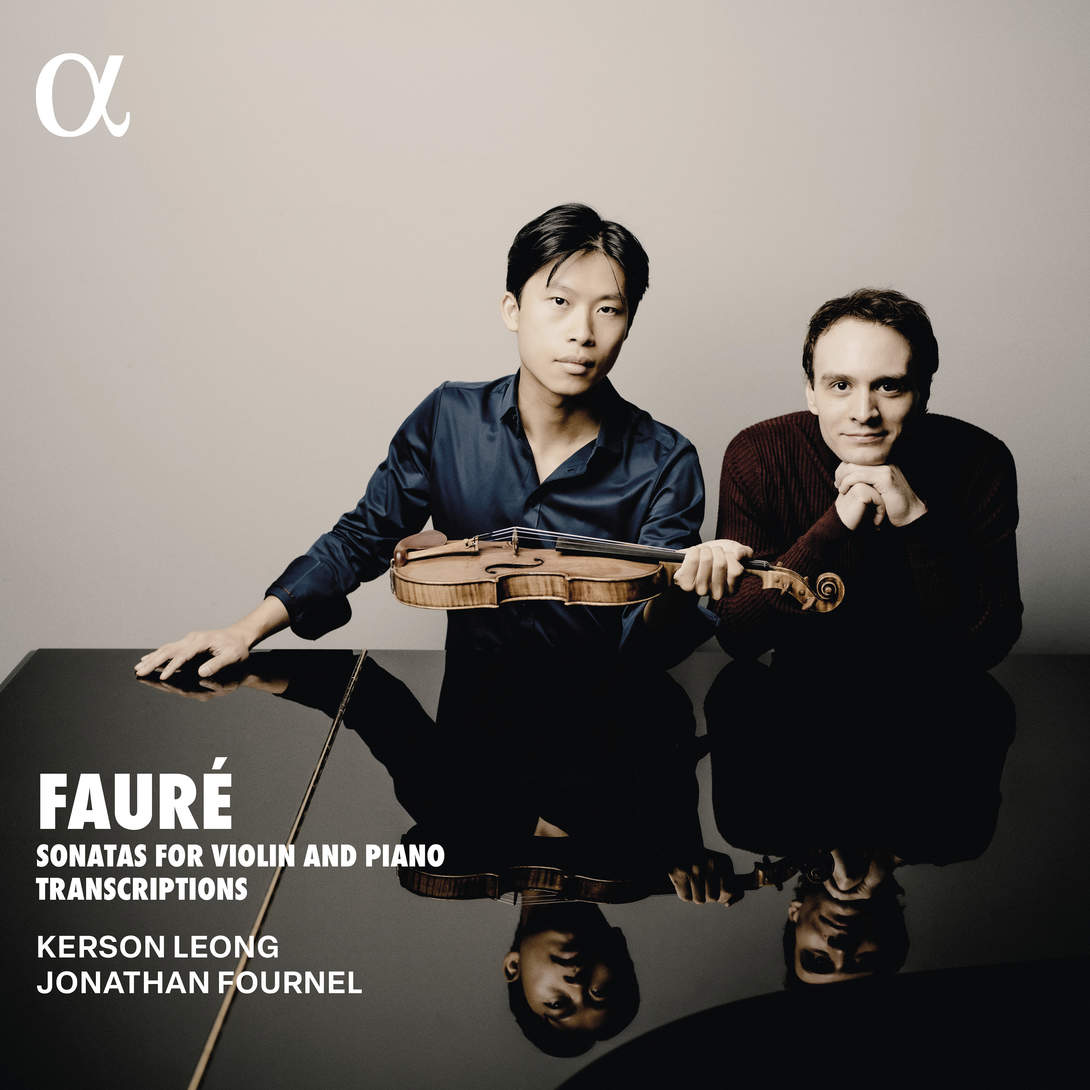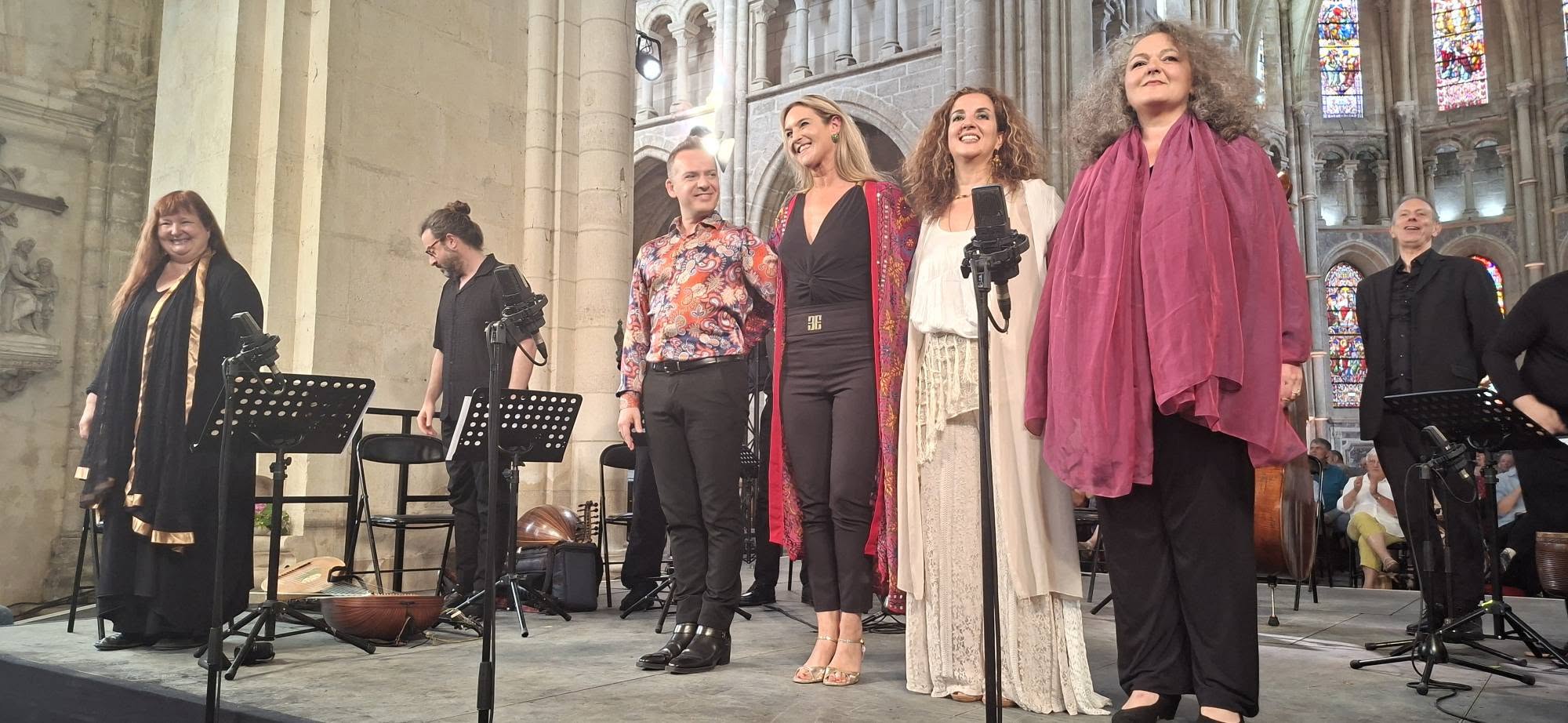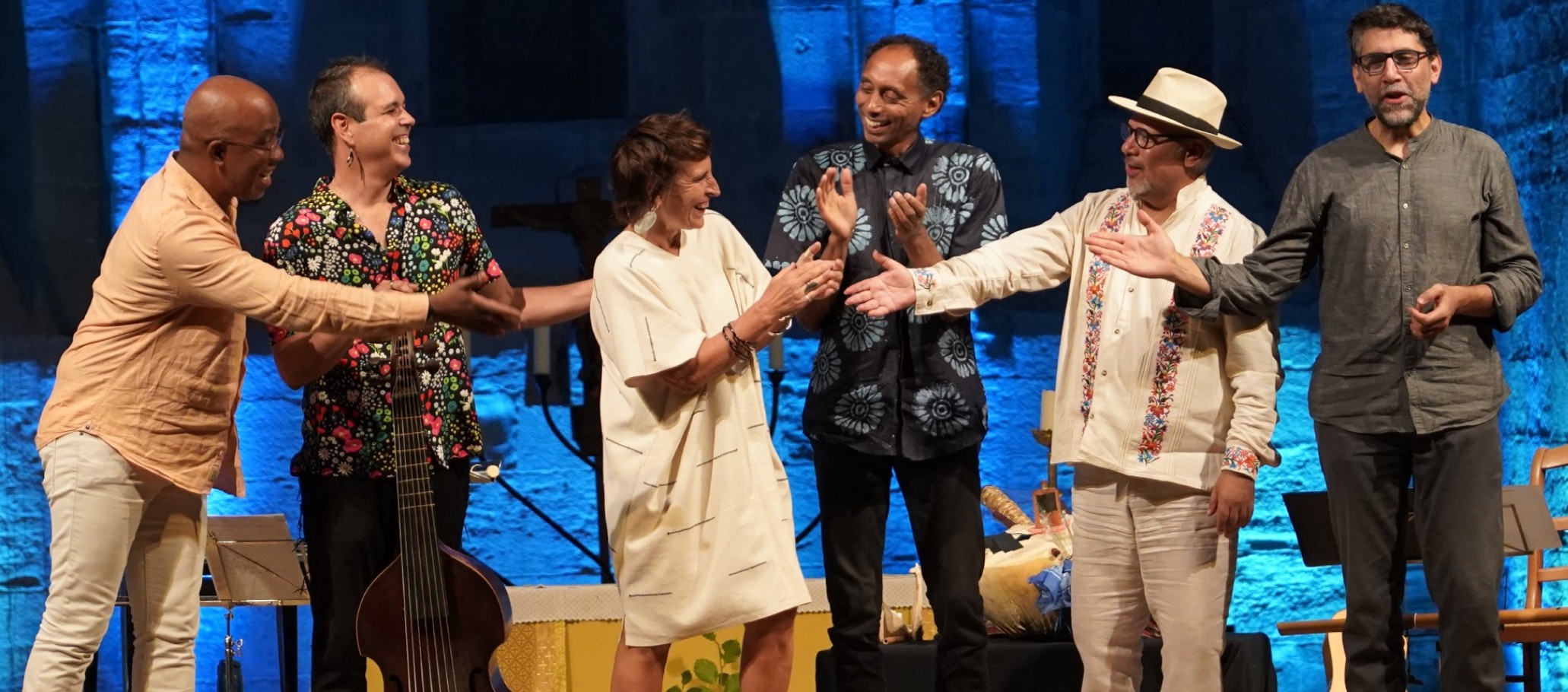

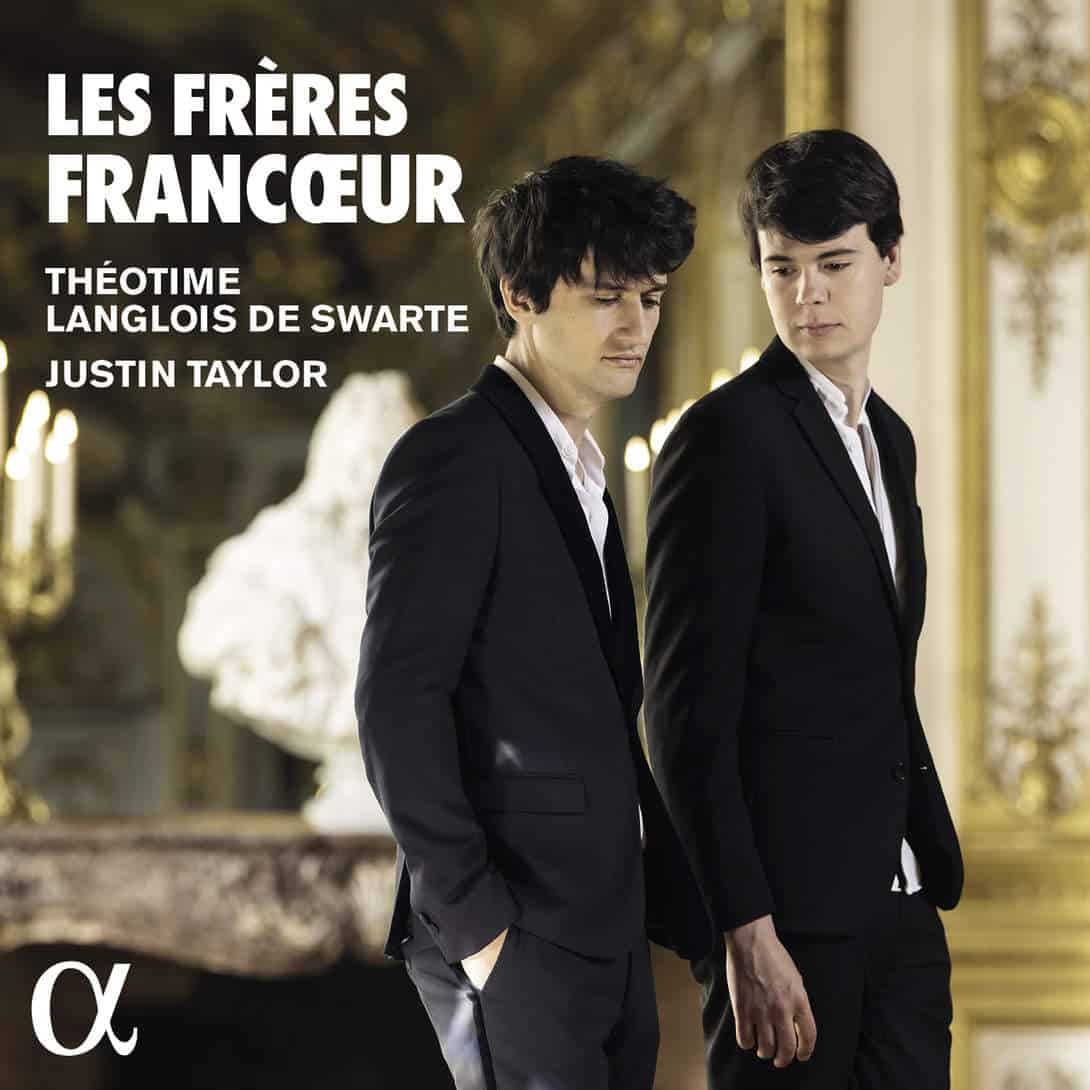
Nothing beats surrounding yourself with family and friends. And so, thanks to The Francoeur Brothers, the baroque bonds between Théotime Langlois de Swarte and Justin Taylor were once so intense, inspiring and intimate. Only in this way does this French duo, recorded with a Jacob Stainer and a harpsichord "set on the grand keyboard by Joseph Colesse" bring heavenly tribute to both a musical dynasty and that one, 'rebellious' companion of Francoeur the Younger.
They already shared the same first name, but more than that, they became two sides of the same coin. And four hands at the keyboard? Not quite. For François Francoeur (1698-1787) and François Rebel (1701-1775) got to know each other as violinists in the opera orchestra, and would subsequently engage together, well into the 18th th century, in compositional co-authorship avant la lettre. With their vivid little airs they adorned the theater together: a tender and finely crafted Gavotte “for the Muses and Pleasures" a bewitching Musette – unfortunately not "for the warriors" – or fortunately still much other heartwarming entertainment. "It is impossible to know the share of one and the other in the development of these scores. They had tragedies, ballets and several one-act miniatures performed, both at court and in Paris, with considerable success" writes Benoît Dratwicki about it in the cd booklet of The Francoeur Brothers. Like for instance in the (absolutely) delightfully yearning hit that was set like the 2th nd trophy on this incomparable recording. Egad, with their Second Air enter those rebellious Frenchmen (pl.) straight away in droves:
Fleeting Seductions
Both the theatrical piece you just heard, as well as that tender Gavotte with which this brilliant disc opens the dance, were written back then, in 1745, for a vitally necessary distraction, titled The Trophymusic to forget the misery that the victory of the French army at Fontenoy and the conquest of Tournai had brought with them? Because that was roughly the spoils of war at the time. On CD, both musical triumphs get stuck in the throat almost immediately, as super-sensuous approaches that make you crave more. To be clear, not immediately toward the Air for the Warriors from the love tragedy Pyramus and Thisbe (1726), also called "The Children's Opera", or "The Opera of the Two Frenchmen". Rather toward a five-part sonata for violin and basso continuo by one Jean-Jacques Baptiste Anet (1676-1755). Thus, in particular, the melancholy Briskly from his eleventh sonata in C minor is surprisingly less cheerful than one might expect by definition, but above all phrased in a particularly moving way by Théotime Langlois de Swarte. In the following {{NOTRANSLATE_3}} Justin Taylor then reveals himself as the driving force – the power of ten fingers in action. Finally, all the ornamentations are driven to a head in order to enter into dialogue in a brotherhood as well as resolutely (Giga – {{NOTRANSLATE_3}}). That intoxicating Musette from a new prologue to Les Augustales (1744) later, an interim report is known. Two words, to characterize this album somewhat: (f)leeting seduction. With Justin and Théo:
Genuinely Forthright
A genuinely silly question: which of the Francoeur brothers was actually the more capable composer? Was it Louis Francoeur, "the Elder" (ca. 1692-1745). Or perhaps François "the Younger"? Well, they were clearly a match for one another, as it turns out. This becomes evident from both the concluding Ronthau from François' sonata in G minor (opus 2, no. 6, 1730) and from Louis' indescribable ) from the sonata in D (opus 2 no. 2) by one Michel Blavet (1700-1768), one of the many lesser-known composers who passed before us today. from the sonata in B minor (opus 1, no. 6, 1715). With these two pieces, the heart of The Francoeur Brothers is reached. When the registers are drawn open, and the soul of their music is beautifully laid bare and explained. These authentic performances also make us realize that today, potentially, we can experience the finest of musical times and appreciate it at its true worth. A time in which dichotomies all too often hold sway, even celebrated enthusiastically to the core, yet which in classical music—particularly between speaking and singing—are seemingly overcome without any effort. How to convey the tremendous openheartedness of Louis' ) from the sonata in D (opus 2 no. 2) by one Michel Blavet (1700-1768), one of the many lesser-known composers who passed before us today. the creators of this recording must have thought. As if the impression of a print that calls for eternal reprinting? Or by slipping as poignantly as movingly into a little excerpt from Les Augustales "The theater lights up" Spot on! These magnificent chief pieces, like balm for the heart, you simply must listen to. Hear, hear, and hear again:
Pleasure for the gallery
Two more genuinely rhetorical questions. Must there still be sand. And who on earth made all those arrangements for strings and keyboards, straight from the tragedies Tarcis and Zélie (1728) and Scanthrberg (1735). Are all those beautiful 'partitions réduites', as if they were tickets for the foyer, only to be credited to that François (fem.)? The fact is that there not only intimate confessions take place (""), but also the most fiery and stunning pleasure in playing comes along (""). Before diving once again into the sonatas of the Francoeurs. Where, alongside energetic and cleverly timed witticisms—Louis' Courantefor example—also thoughtful work continues to bubble up. Cases in point: the aptly intoned and thus consoling Tarcis and Zélie), but also the most fiery and stunning sheer pleasure of playing passes by (ScanthrbergCourante by Louis for example – also thoughtful work keeps bubbling up. Cases in point: the aptly intoned and therefore comforting Sicilienne ) from the always pleasant, lighthearted yet often quite interchangeable suites of a Philidor: someone who strove to imitate nature with his music. Written like that, it actually seems more lofty than lighthearted, but oh well. In contrast stood the 'degenerate' sounds of Telemann and Corelli, with their sonatas from distant regions that proved considerably more virtuosic, energetic and certainly also more colorful, exerting their influence on Rameau's compositions, as evidenced by his frivolous, more contrasting and Chaconne by François. Truly outstanding work, with a de Swarte piece that as a brief intermezzo offers a colorful improvisation on the older sonata in G major. The " That's why we make this friendly request: more singing from you please, with even a Pleiades of other notes on top. by Louis-Joseph Francoeur (1738-1804), "which he composed as a gift for his uncle" is not the crowning jewel of this musical family legacy, but rather a spirited and joyful tribute. For tears of joy, after all, remain—with verve and timpani flourish—among the most exquisite of emotions. No one today would believe that the premiere of Scanthrberg was once a resounding failure, quite the opposite:
Accepting Passion
It is a reflection with which The Francoeur Brothers concludes. "To please, art can only offer a weak deception"." A comic subtitle for the heroic balletLe Prince de Noisy (1749)? Or a subtle hint at everyone who keeps confusing culture with leisure time; or refuses to connect it with " the human condition"." In any case, what remains clear is thatwas conceived and performed by all involved as one compelling narrative. The fact that the tracks on the back of the cover have no numbers only underscores the makers' intention. Little to nothing was left to chance or doubt, and that comes through in the succession of passionate, urgent pleas. Where you can warm yourself again and again. Just as with passion, where ultimately one learns to accept it. "Passion is still what helps us live best"," or so the writer Émile Zola (1840-1902) apparently believed. Or as the duo Langlois de Swarte–Taylor paraphrases it: " The Francoeur Brothers Moreover,music is what helps us live best!"" Hence this friendly request: more singing from you please, with a whole host of other notes besides.There has to be passionA passion for living, surviving And that means detachmentThere has to be passion
A passion for living, surviving
And that means detachment
Théotime Langlois de Swarte
{{NOTRANSLATE_1}}{{NOTRANSLATE_1}}{{NOTRANSLATE_1}}{{NOTRANSLATE_1}}{{NOTRANSLATE_1}} 5/5
WHO: Justin Taylor (violin, Jacob Stainer, 1668) & Alpha Classics (anonymous harpsichord, from 17th-century Lyon, "set on the grand keyboard by Joseph Colesse" in 1747, restored in 2003 by Laurent Soumagnac):
WHAT: The Francoeur Brothers, with music by Louis and François Francoeur (ca. 1692-1745 / 1698-1787), Louis-Joseph Francoeur (1738-1804), Jean-Jacques Baptiste Anet (1676-1755), François Rebel (1701-1775) and Jean Durocher (18th century)
EDITION: Alpha Classics, ALPHA 895 (1 cd)
PHOTOS:: © Julien Benhamou & Robin Davies
DESERVES MORE THAN A DETOUR: Cité musicale-Metz, March 25, 2023
ORDER CD: Cypres CYP8614