Those who still associate Ghent's Whitsun weekend with folklore and crowds will discover in Cydonia Barocca one of Flanders' most idiosyncratic baroque initiatives. For years, Cydonia Barocca has charted a course at odds with classical concert practice: not a merry-go-round of familiar masterworks, but a thoughtful, almost stubborn exploration of rarely heard repertoire. In 2026, this approach remains steadfast, with the oboe as guide.
The principle is as simple as it is radical. Three composers – Johann Sebastian Bach (1685-1750), Georg Philipp Telemann (1681-1767), and Christoph Graupner (1683-1760) – form the fixed reference frame this year too, from Saturday May 23 through Monday May 25, but are each illuminated through a single instrument. This demands choices, and above all, breaking free from routine. Familiar works yield to rarely heard compositions, and performers are brought together in temporary constellations that spark curiosity rather than habit.
At the heart of it all stands Florian Heyerick, the driving force behind the festival. His role defies simple definition: he is simultaneously curator, conductor, storyteller, and – not least – igniter of musical curiosity. Heyerick's years of dedication to Graupner's oeuvre reverberates here too, but never becomes doctrinaire. On the contrary, he builds programs that pose questions rather than provide answers.
The 2026 edition puts the oboe front and center as a dramaturgical instrument. This proves to be no casual choice. In baroque repertoire, the oboe holds a special place: as soloist, as orchestral color, and as a rhetorical instrument that makes the doctrine of affects almost tangible. Its sound – simultaneously piercing and vulnerable – serves here as a guide through the program.
The program unfolds as a carefully constructed intellectual journey. The opening concert "De profundis aut de caelis?" immediately sets the tone by exploring the expressive extremes of the oboe in Bach, Telemann, and Graupner. Subsequent lectures such as "Bach and the oboe?", "Telemann and the oboe?", and "Graupner and the oboe?" deepen the historical and stylistic context without falling into academic dryness.
Chamber music takes a prominent place in concerts like "Petite musique de chambre?" and "All of Telemann?", where the oboe presents itself as a partner in dialogue rather than as a soloist's showcase. The closing concert "Also hat Gott die Welt geliebt?" brings the instrument in its most rhetorical guise, embedded in cantatas where vocal and instrumental lines interweave.
Remarkable too is the opening beyond strict baroque context. In the family concert "Double Trouble?", the world of the double reed expands to embrace other styles, with a nod to both Renaissance and jazz. Here the focus shifts from purely historically informed performance toward a broader musical practice, where improvisation and contemporary playing techniques also find their place. This typifies a festival unafraid to explore boundaries, as long as musical integrity remains intact.
As always, Cydonia Barocca is more than a series of concerts. Presentations, an open stage for baroque oboe players, and informal encounters form an integral part of the experience. The audience is not served but challenged – and therein lies the strength of the concept.
Cydonia Barocca 2026 confirms what the festival has long suggested: the baroque is not a closed past, but a living workshop. In that workshop, the oboe this time becomes the compass – less soloist than a direction-giving element in listening itself.
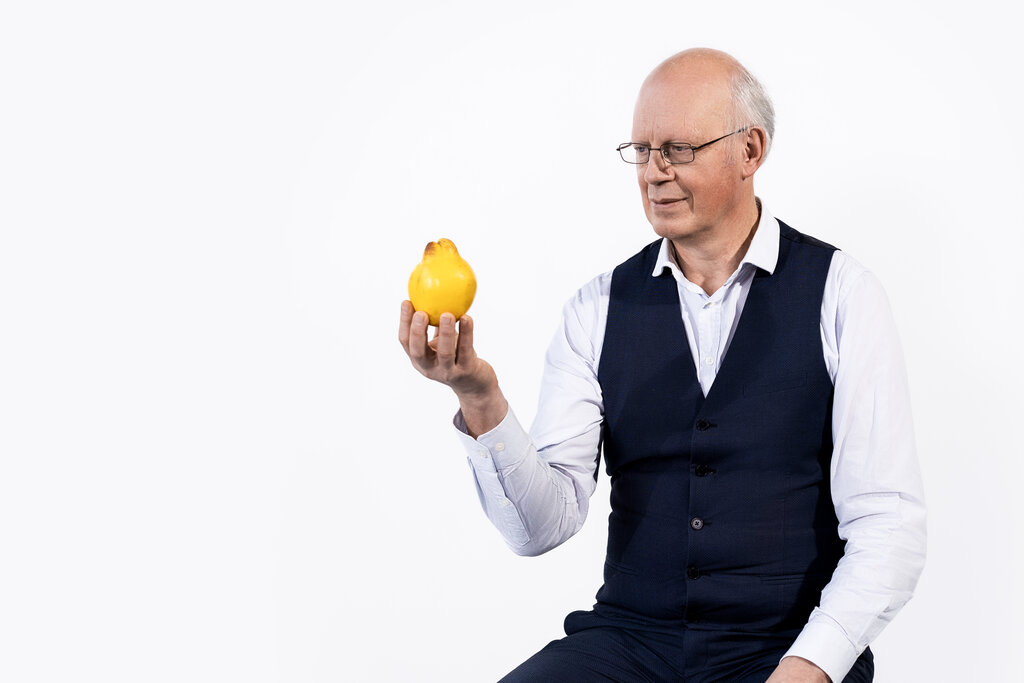
And then there is the quince, after which the festival is named: a quiet guide leading you from one refreshing and sometimes unexpected culinary discovery to another. In its roundness, fullness, and gentle intensity, it mirrors something of the tangible beauty of German baroque – an aesthetic that wishes not only to be heard but also tasted and experienced. Klassiek Centraal is already looking forward to this journey of discovery and will report on select concerts soon.