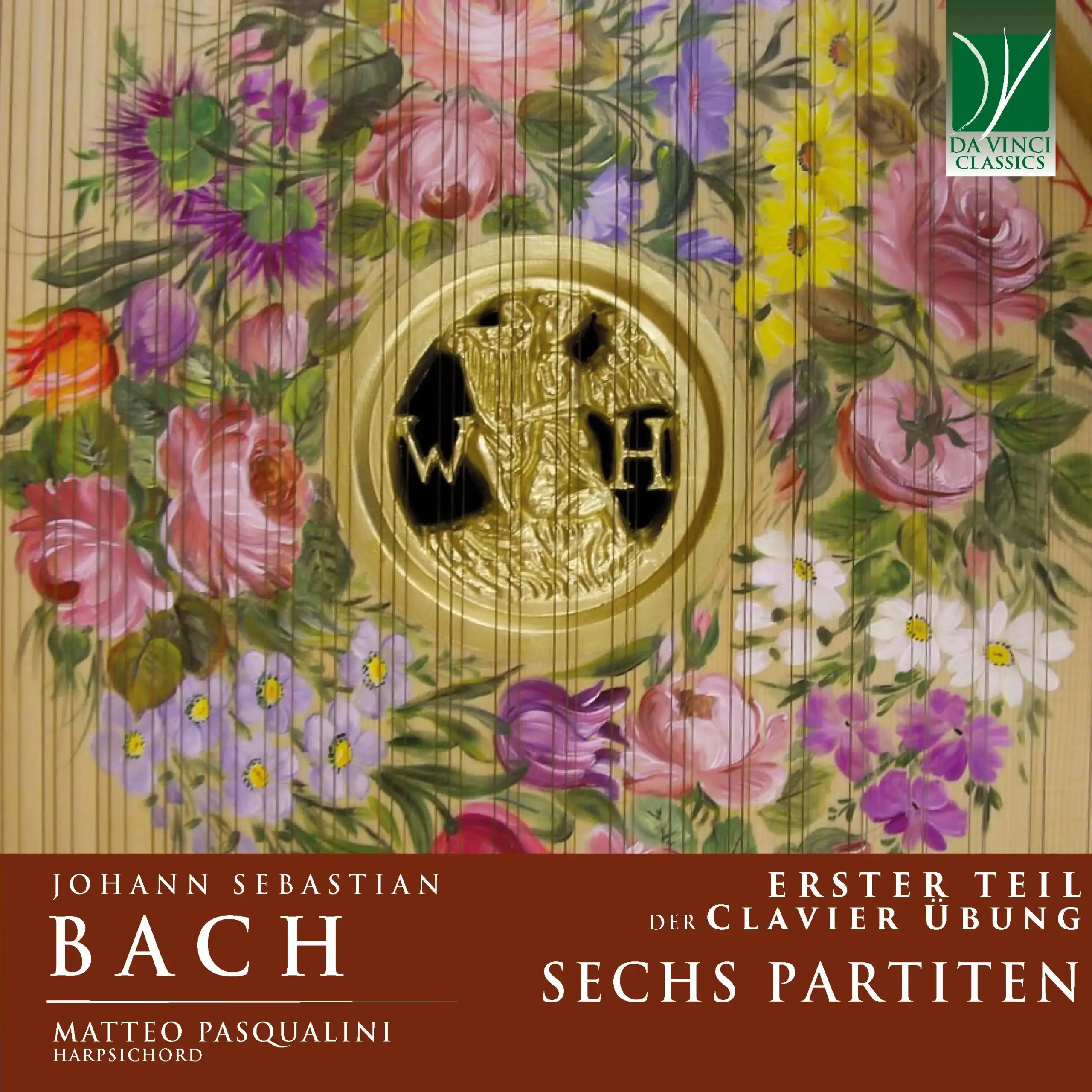
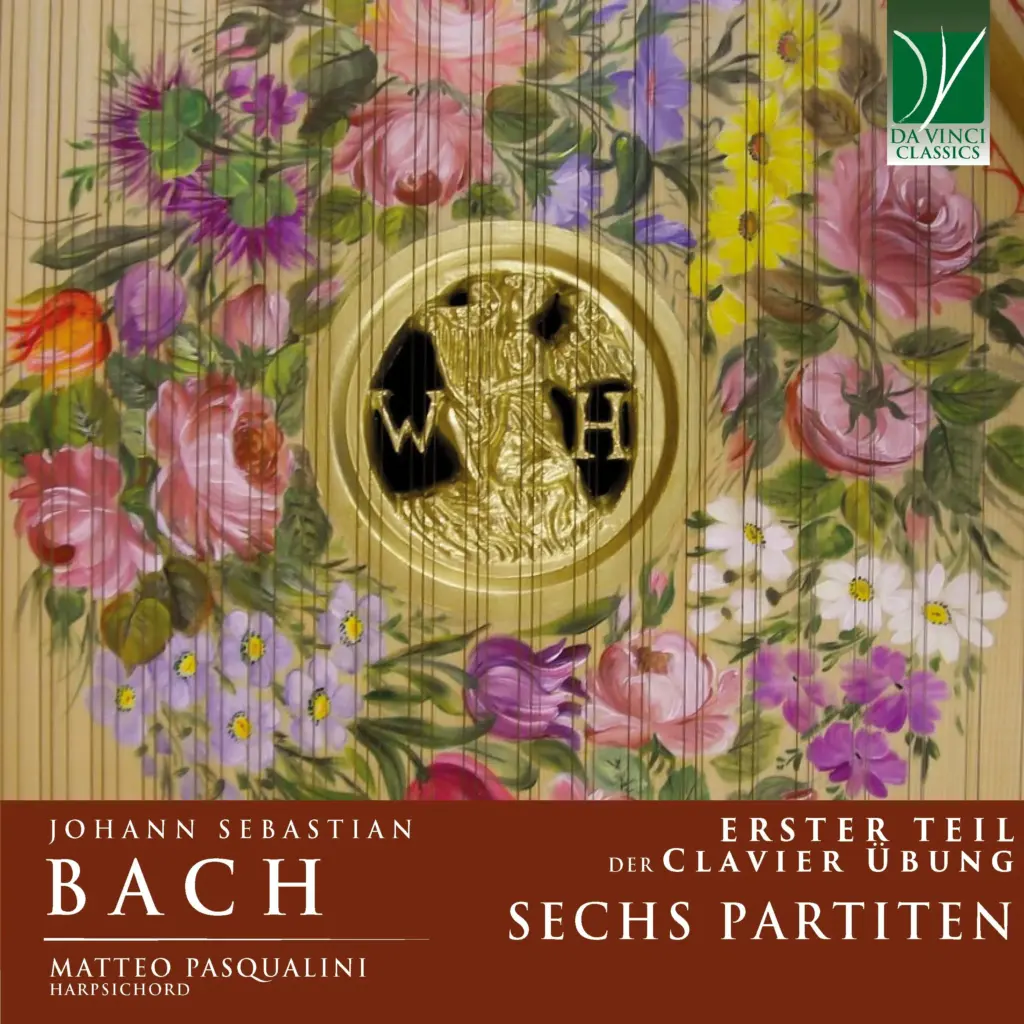
When Johann Sebastian Bach decided to have the six partitas, known as Clavier-Übung I, published in print, he entered a form of self-representation that was both rare and unmistakably programmatic. The keyboard instrument was transformed into a book that represented his reputation: on the title page stood the dedication to the Liebhaber alongside the formula In Verlegung des Autoris (at the author's expense), together with the motto Denen Liebhabern zur Gemüths Ergoetzung (for the edification of music lovers' spirits), which proclaimed a pleasure intended as the cultivation of taste, not as frivolous entertainment. In a Leipzig where the circulation of manuscripts was still the norm, printing became a deliberate partisan choice: the establishment of a personal canon and its promotion to the market under the author's seal.
The partitas appeared in Leipzig in separate bundles between 1726 and 1730; in 1731 they were brought together in one complete edition, printed with the same plates, in oblong format, with standardized pagination and titles (Partita 1, Partita 2, etc.). The first version of the title page mentions sales conducted under the town hall, in the premises of the widow Boëthius's daughter; that reference disappears in a later edition, and a third version is recognizable by its engraved alphabetical pagination. This detail suggests a succession of versions reflecting distribution, corrections, and the restoration of market equilibrium, as happens when music becomes part of a real economy. Engravings, in turn, sketch a geographical spread of expertise. According to Gregory C. Butler, Partitas 1 and 2 were engraved by Balthasar Schmid, then a student in Leipzig, while Partitas 3 and 4 were engraved by Johann Gotthilf Ziegler, organist in Halle and already a Bach pupil in Weimar. The completion of the 1731 edition, from the title page to the pagination, is attributed to Leipzig copper engraver Johann Gottfried Krügner, whose family proved to be involved in the sale of the first printing. An interweaving of workshop practice, city life, and personal connections, far removed from the abstract image of the isolated genius.
Within this practical modernity lies a strong sense of tradition. Bach based the external form of the publication on Johann Kuhnau's Neue Clavier-Übung, adopting both the general title and the designation Partita. The tonal arrangement, B-flat major, C minor, A minor, D major, G major, E minor, refers to a complete scale: an announcement of May 1, 1730 suggests that Bach intended to publish not only a sixth but also a seventh Partita at the Michaelmas Fair. Why the definitive Opus 1 contains six partitas remains unknown. Yet the idea of a higher order persists as a watermark, all the more eloquent for going unstated.
Not all the material originated for the first time with printing in mind. Traces of earlier versions appear in a family manuscript of Kleine Clavier-Stücke; Partitas 3 and 4 open the Clavierbüchlein of Anna Magdalena; and two movements of Partita 6, Corrente and Tempo di Gavotta, are derived from the original version of the Sonata BWV 1019a for violin and obligato harpsichord. At the time of the appearance of Partita 1, a copy was dedicated to Emanuel Ludwig, the newborn son of Prince Leopold of Anhalt-Köthen: the domestic suite becomes simultaneously a gift and a reminder of a court period that still resonates under the austere Leipzig circumstances. The year 1731 does not coincide with a final pronouncement, but rather with the beginning of a new phase of control. For the collected edition, Bach had the plates corrected and numerous performance directions, ornaments, legato slurs, and staccato markings engraved; yet the printing remains full of inaccuracies. With the help of collaborators, various surviving copies were subsequently hand-corrected: the critical editions describe a group of annotated copies with varying purposes, ranging from legibility to error correction, and further to the addition of articulations, tempi, and especially a rich ornamentation often concentrated in specific movements. The surviving and catalogued copies, now also digitally accessible, restore this work as an editorial artifact, as well as repertoire: title, scope, script, and layout become part of cultural meaning, as they show how Bach wanted it to be read, even before it was played.