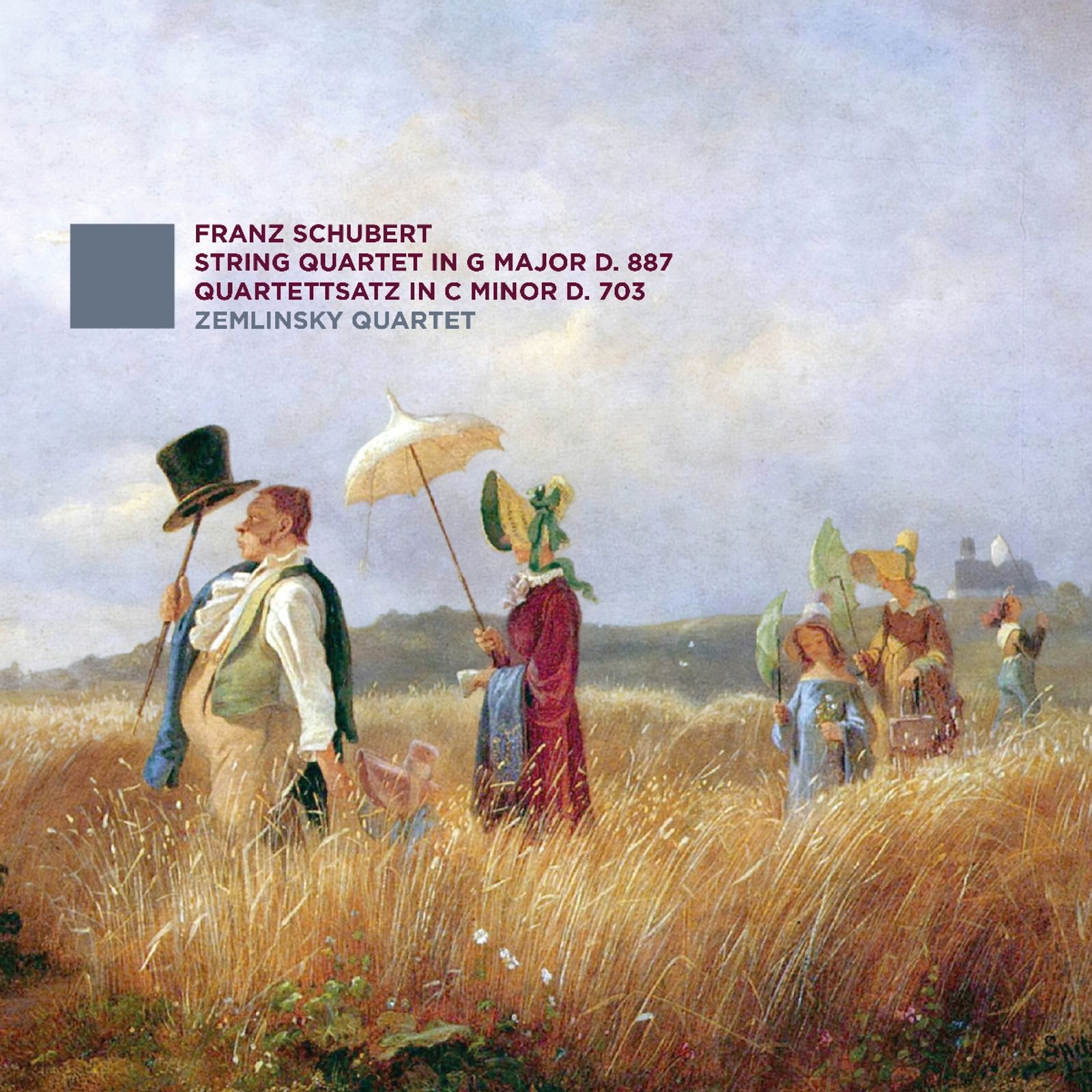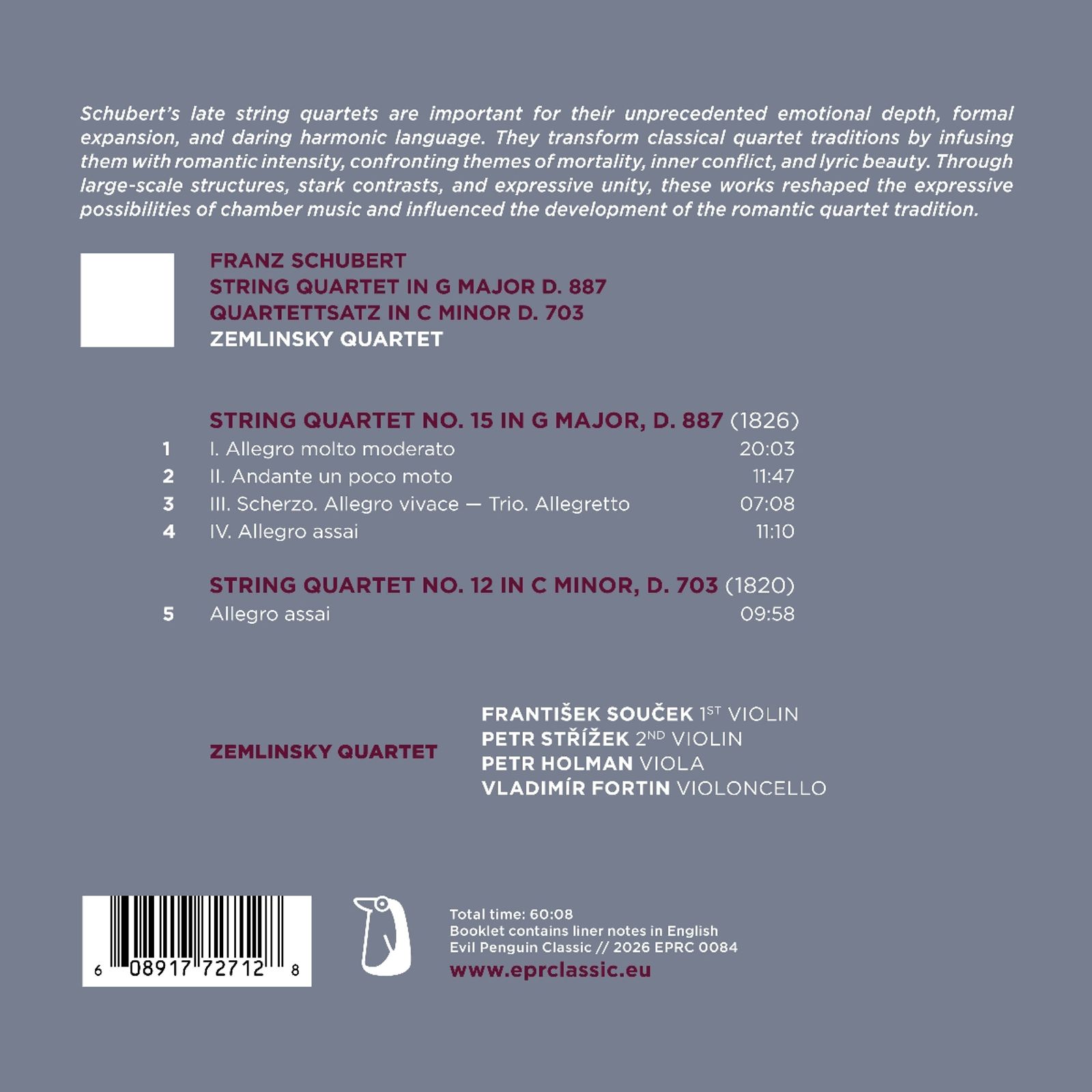
Franz Schubert's oeuvre stands at the crossroads of two eras: it emerges from the formal clarity of Classicism, yet unmistakably belongs to Romanticism through its expressive language, emotional depth, and deeply subjective worldview. Though he is nowadays one of the most performed composers of his time, he was never fully recognized during his lifetime. His circle of friends—poets, musicians, and intellectuals—played a decisive role in Schubert's life and regularly gathered at the so-called 'Schubertiades.' However, from the 1820s onward, Schubert's compositional style began to change noticeably. His deteriorating health and growing awareness of his own mortality led to a deepening of expression and a bolder approach to musical form. Schubert turned increasingly to the major genres—symphonies, sonatas, and string quartets—deliberately seeking comparison with the legacy of Ludwig van Beethoven. The String Quartet in G major, D. 887, completed in 1826, was written during this period. This work is his last completed string quartet and simultaneously one of the most expansive and complex contributions to the genre in the first half of the 19th century. Six years earlier, in 1820, Schubert composed the Quartettsatz in C minor, D. 703, a fragment of a planned string quartet, of which only one movement (and part of the slow movement) has survived. The Zemlinsky Quartet, founded in 1994 while still studying, has developed into a highly respected exemplar of the Czech string quartet tradition. The Zemlinsky Quartet won the Grand Prize in 2010 at the International String Quartet Competition in Bordeaux, and its extensive repertoire encompasses more than 200 works, ranging from Wolfgang Amadeus Mozart, Ludwig van Beethoven, Johannes Brahms, and Antonín Dvořák to works by contemporary composers. The ensemble members also perform as soloists and have won prizes at various competitions.