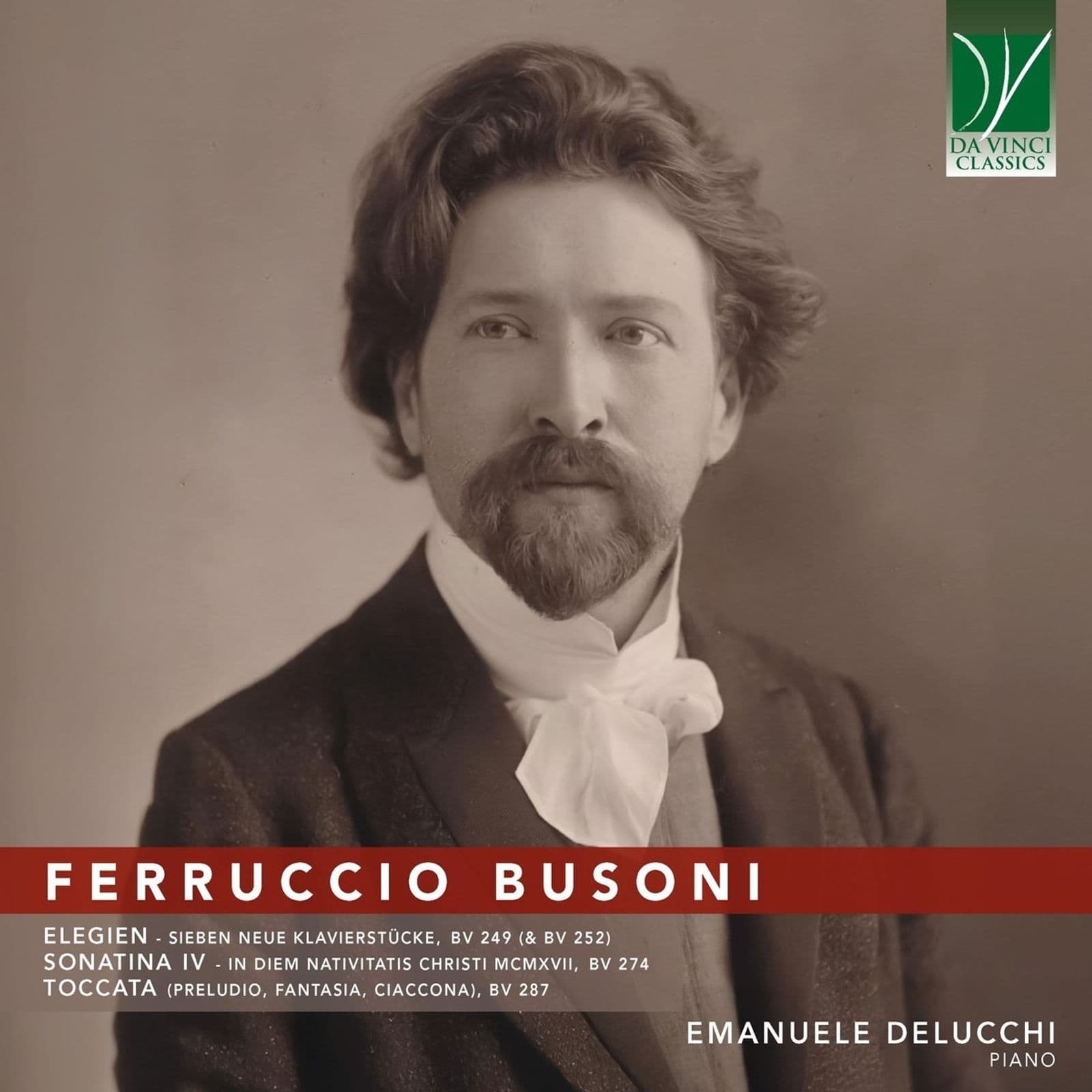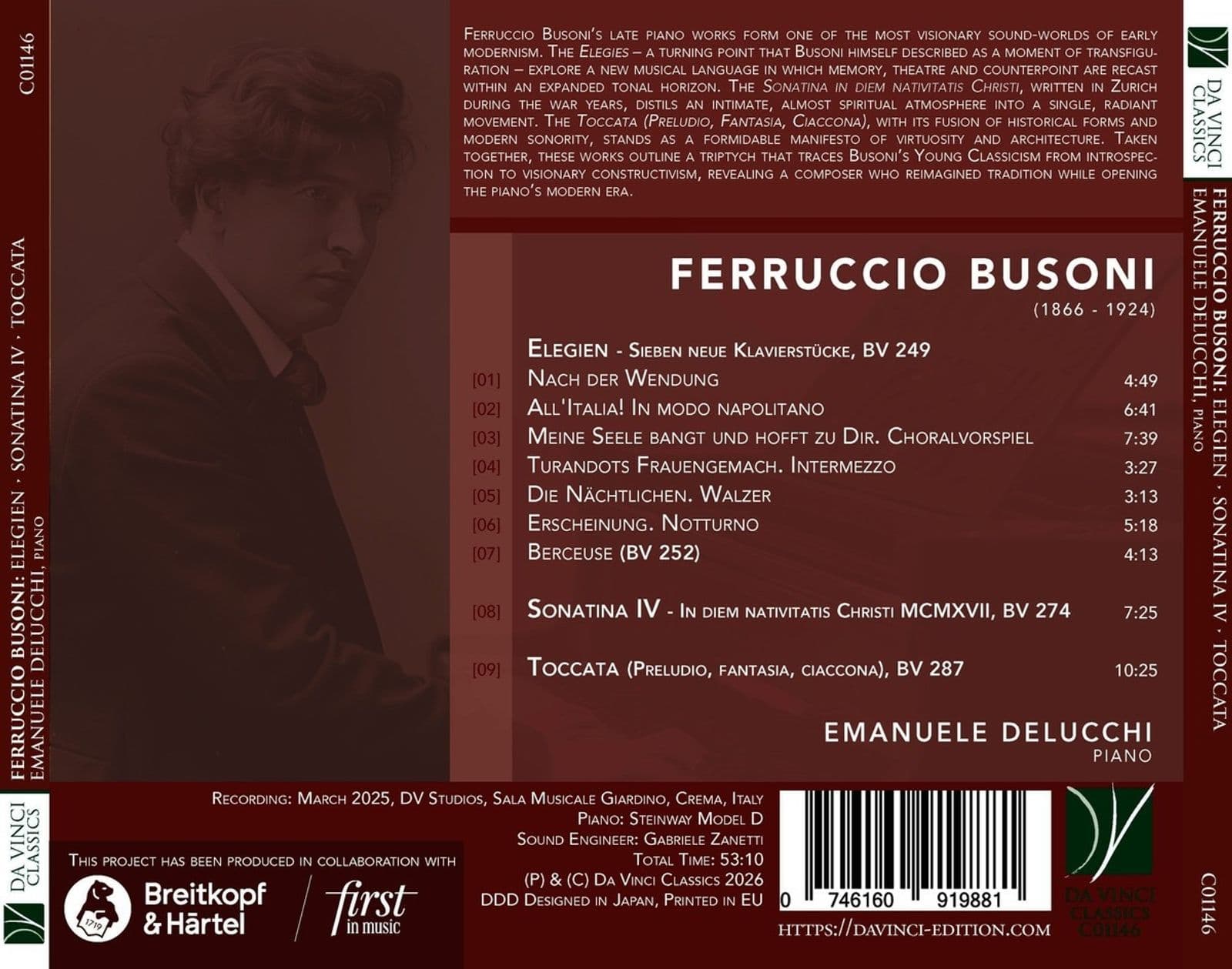
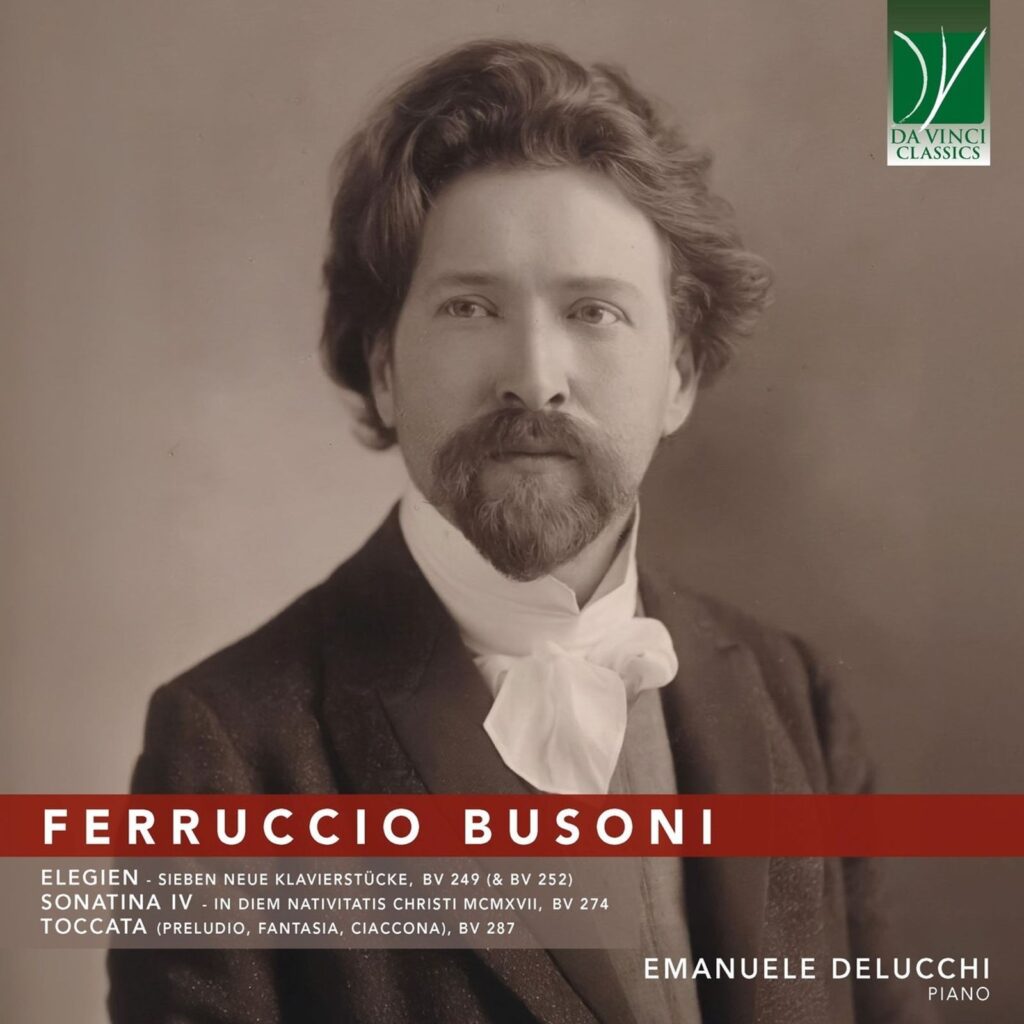
Ferruccio Busoni's late piano works represent one of the most visionary sonic worlds of early modernism. The elegies—a turning point that Busoni himself described as a moment of transformation—explore a new musical language in which memory, theater, and counterpoint are reshaped within an expanded tonal horizon. The sonatina "In diem nativitatis Christi," composed in Zurich during the war years, distills an intimate, almost spiritual atmosphere into a single radiant movement. The Toccata (Prelude, Fantasia, Chaconne), with its fusion of historical forms and modern soundscapes, stands as a striking manifesto of virtuosity and architecture. Together, these works form a triptych that traces Busoni's "young classicism" from introspection to visionary constructivism, revealing a composer who reinterpreted tradition while simultaneously ushering in the modern era of the piano.