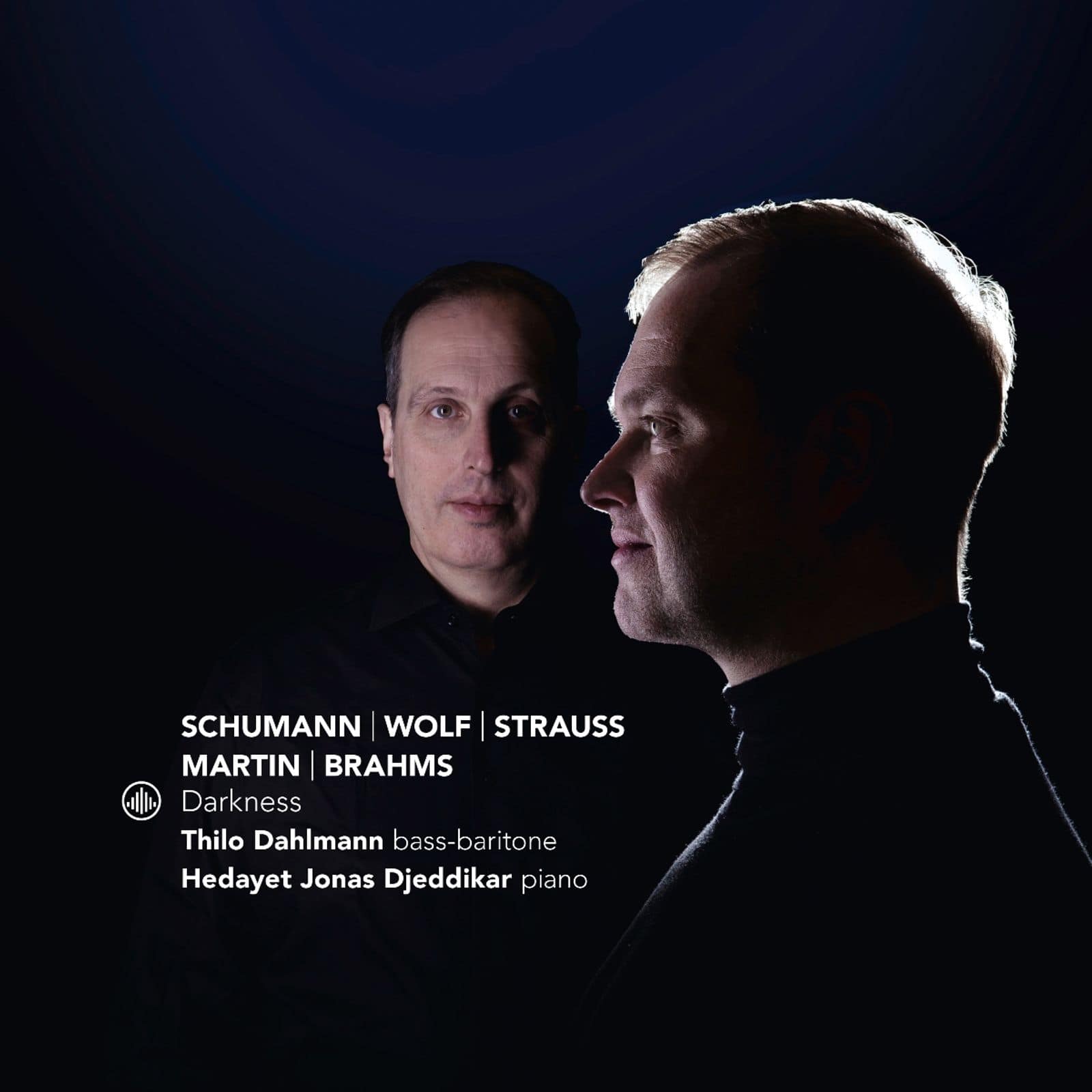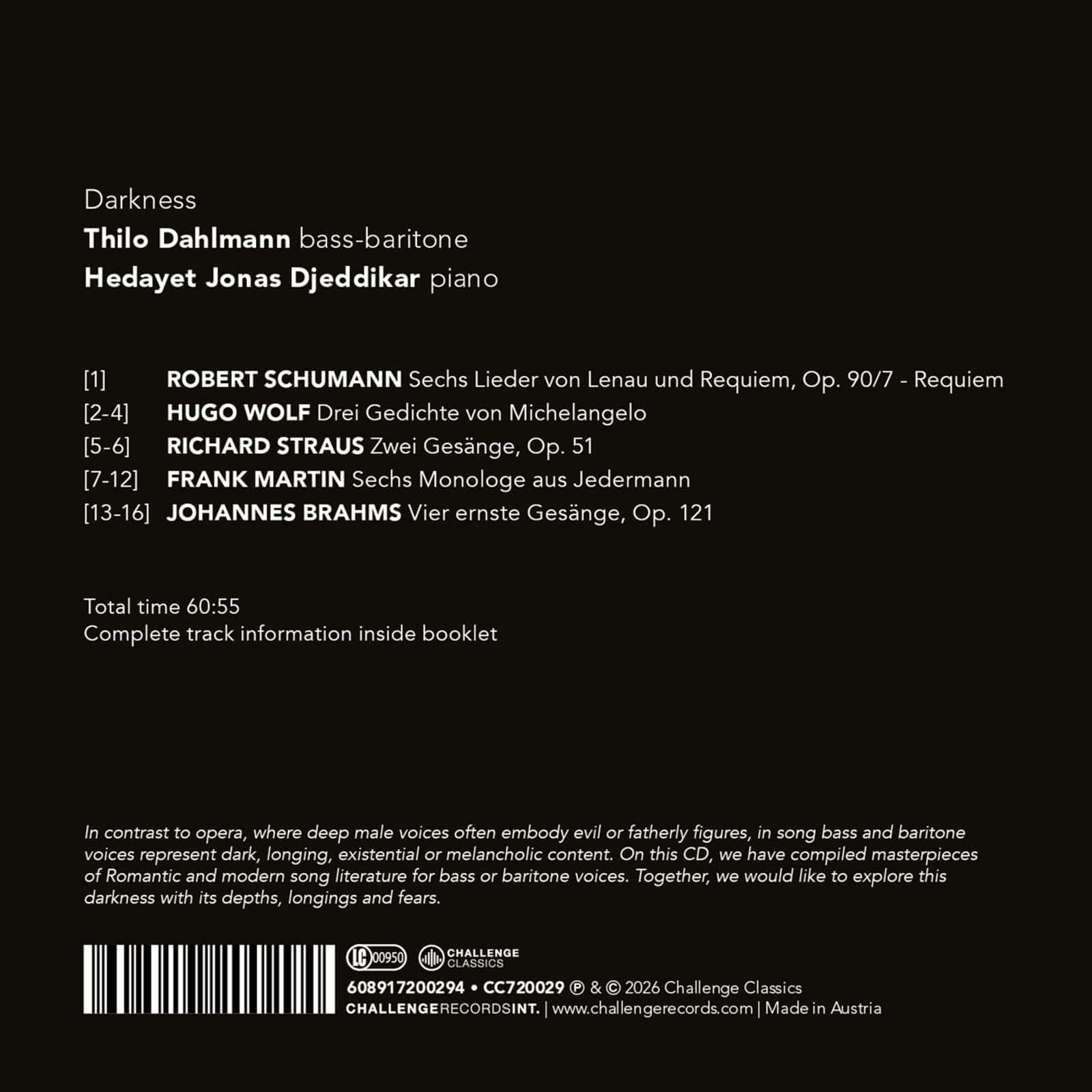
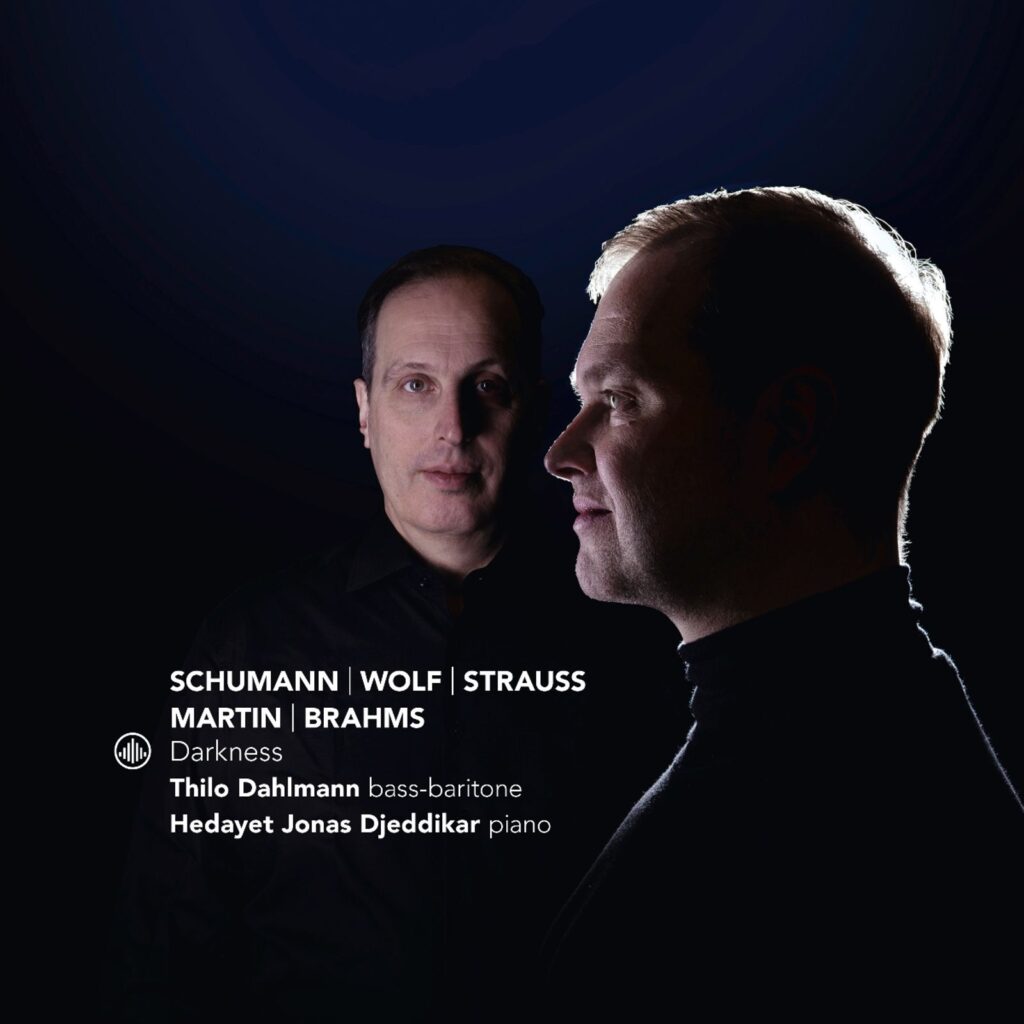
Darkness is devoted to the symbolic depth of the bass and baritone voice as a vehicle for expressing existential questions. With works by Robert Schumann, Hugo Wolf, Richard Strauss, Frank Martin and Johannes Brahms, the album unfolds a broad emotional and spiritual space, characterized by themes such as death, transience, loneliness, melancholy and ultimately transcendence. The program opens with Schumann's Requiem, which serves as a tribute to Nikolaus Lenau – as a kind of motto: a combination of weightiness, longing and quietly affirming melancholy. From here, the journey travels through works that were often composed during biographical turning points or late phases in the lives of their creators. Wolf's Michelangelo Songs, composed shortly before his mental breakdown, revolve around love, devotion and artistic melancholy. Strauss's dark-hued songs reflect withdrawal, loneliness and a wistful becoming one with nature. Frank Martin's Six Monologues from "Everyman" finally lead to a direct confrontation with death and sketch a moral and spiritual transformation from fear to humility and faith. Together, these works show darkness not as mere despair, but as a space for finding truth. At the same time, the album does not remain in the shadows. For both Wolf and Brahms, the selected pieces point to late creative phases in which resignation and reconciliation balance each other. Brahms' Four Serious Songs, based on biblical texts and conscious of impending loss, move from a merciless contemplation of transience toward an ultimate affirmation of love as the greatest human force – thus closing the arc opened by Schumann's Requiem. Throughout the program, sorrow is repeatedly transformed into acceptance, fear into realization – illuminated by the "soft compositional light" as described in the liner notes. Darkness thus emerges as a profoundly human meditation: an artistic path through emotional depths toward solace, spiritual clarity and a love that points beyond life and death.