

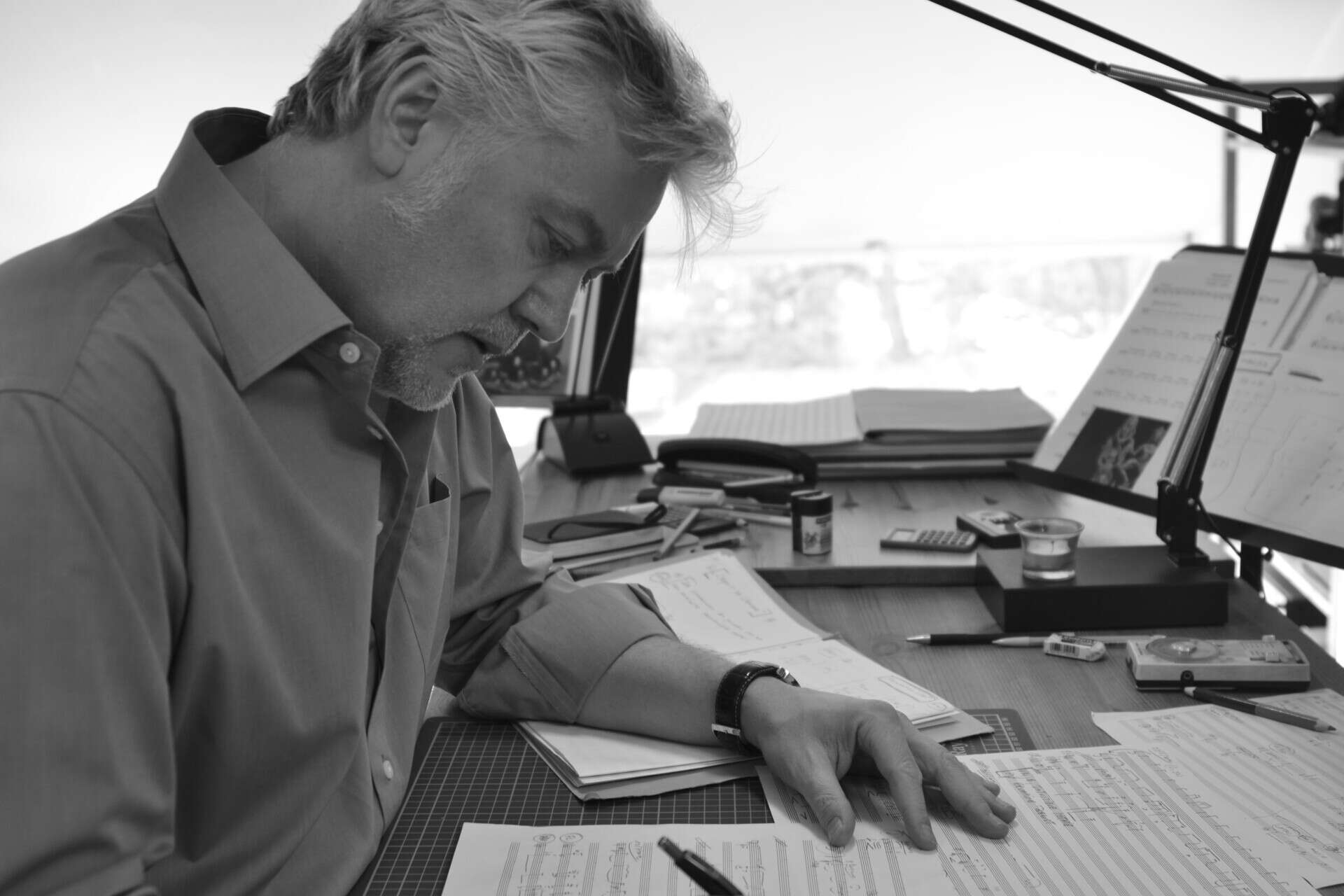
The Transit festival is in its 25th edition. And as always, you can experience creations from many corners of the world, as well as from the contemporary Flemish composer world. There is even a posthumous creation. Work by the too-early-deceased Wim Henderickx. There were still quite a few sketches on his workbench. His long-time assistant Diederik Glorieux prepared the advanced score for accordion and strings for the musicians to perform. The creation will premiere on Saturday, October 19 during the Transit festival in the Soetezaal of Leuven's STUK.
He always wrote for very diverse instrumentation. This new work will also sound unusual. And will there be electronics in it again and will we be immersed in an Eastern bath again? We asked his wife Bea Steylaerts.
K-C: Where does this long-standing engagement in his music with ragas, chakras, tantras…those instruments like an ud, a duduk…..where does this interest come from?
Wim had an enormous love for traveling, people and other cultures. Music from other corners of the world also had great appeal for him. Initially these were African instruments and rhythms. In the early nineties of the last century, he heard the Indian G.S. Sachdev play the bansuri at a concert in Antwerp and he was completely blown away. From then on, he immersed himself in the music and culture of the East, he traveled to India and Nepal and brought back suitcases full of instruments. Later his fascination for the Middle East was added. He learned to play the tombak and Daf himself and implemented that in his music. For him, the world was one big playground, in which he moved with great enthusiasm and curiosity.
K-C: Someone said about him "an Easterner lost in the West", was that so?
[caption id="attachment_35579" align="alignleft" width="229"]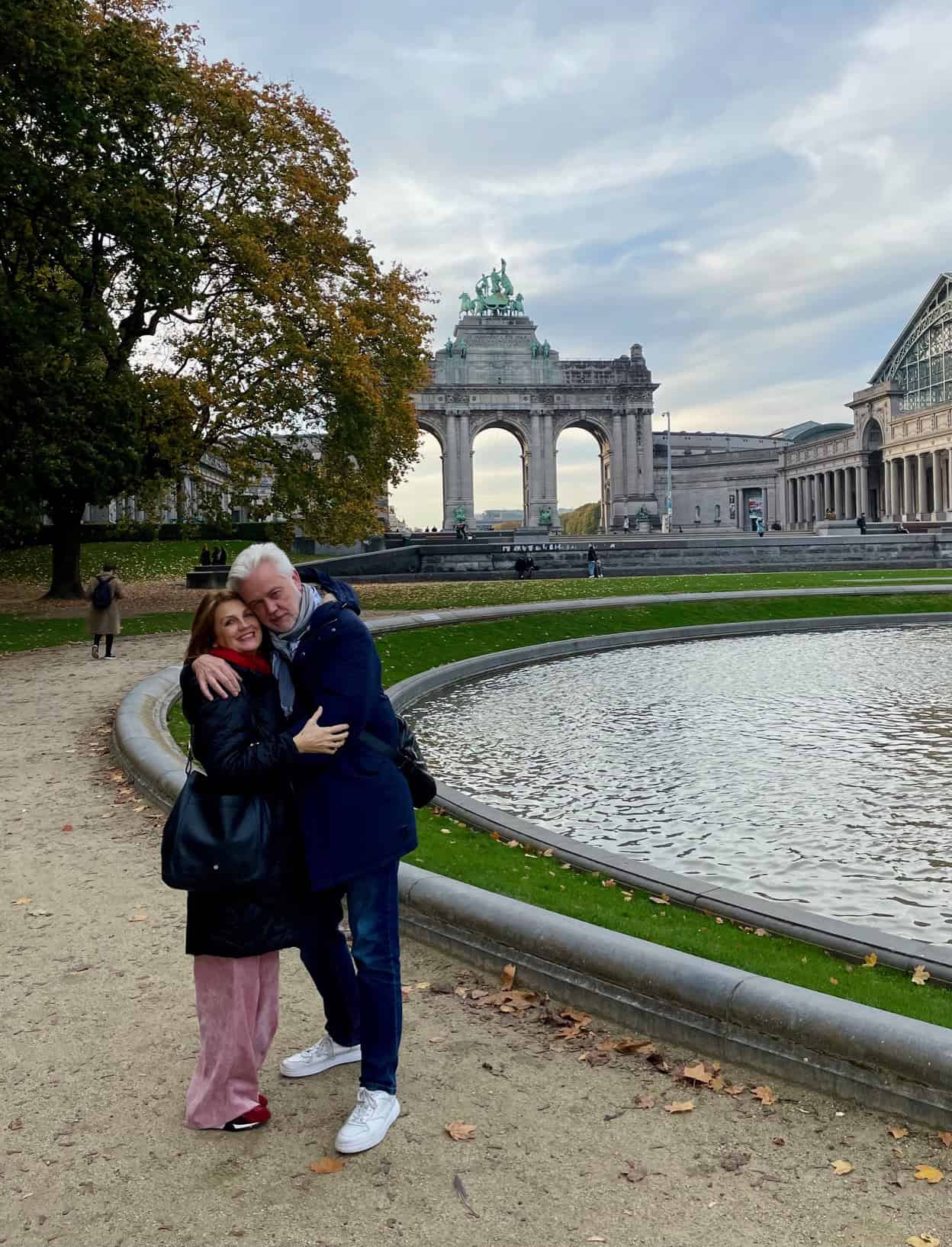 © Ruben Henderickx[/caption]
Actually, he said that about himself, in the documentary made about him by Canvas in 2009. Later he said that the circle had come full circle for him. With works like Revelations, inspired by the impressive visions of the 13th-century poetess and mystic Hadewijch d'Anvers, he returned to his original roots. He was undoubtedly a very spiritual person, but he saw all religions as one great whole, there was no distinction for him. Moreover, he was particularly fascinated by the universe, the stars and the planets. The intangible, the mysterious triggered him from a young age.
K-C: How do you explain that versatility, he could be found in classical concert halls, but also at Jazz-Middelheim and at pop festivals….
Just like with religions, music could be very broad for him. As long as quality and craftsmanship were involved, he could enjoy it and wanted to learn from it. In the summer, I visited the Laus Polyphoniae concerts in Antwerp with him every year, where he could be swept away by music from the Middle Ages, the Renaissance and the Baroque. With our sons, we went several times to the North Sea Jazz Festival in Rotterdam, a highlight in our summers. There we attended jazz concerts, but also performances by Miles Davis, Al Jarreau, Lionel Richie, Carlos Santana, Erykah Badu, Robert Glasper, Earth Wind & Fire, Chaka Khan, D'Angelo etc. Enjoying good music together was the pinnacle for him and dancing together was part of that when it was possible.
K-C: The title of the composition is inspired by the iconic line "Thunder only happens when it's raining" from the album Dreams by Fleetwood Mac. Can we say that Wim tried to bring Classical and Pop closer together.
You can certainly say that and not only the music itself. He also wanted to bring as many people as possible to the 'classical' music concerts. He believed that classical-contemporary music should be accessible to all people in society and that was also why he increasingly wanted to work inclusively with his own compositions. In his large opera De Bekeerlinge he worked with a city choir of amateurs, some of whom could not read music, but could sing beautifully. He wanted to bring them into the opera house and thus break down walls for people who would otherwise never come into contact with it.
K-C: And is there work in the pipeline that will be completed?
[caption id="attachment_35577" align="alignleft" width="300"]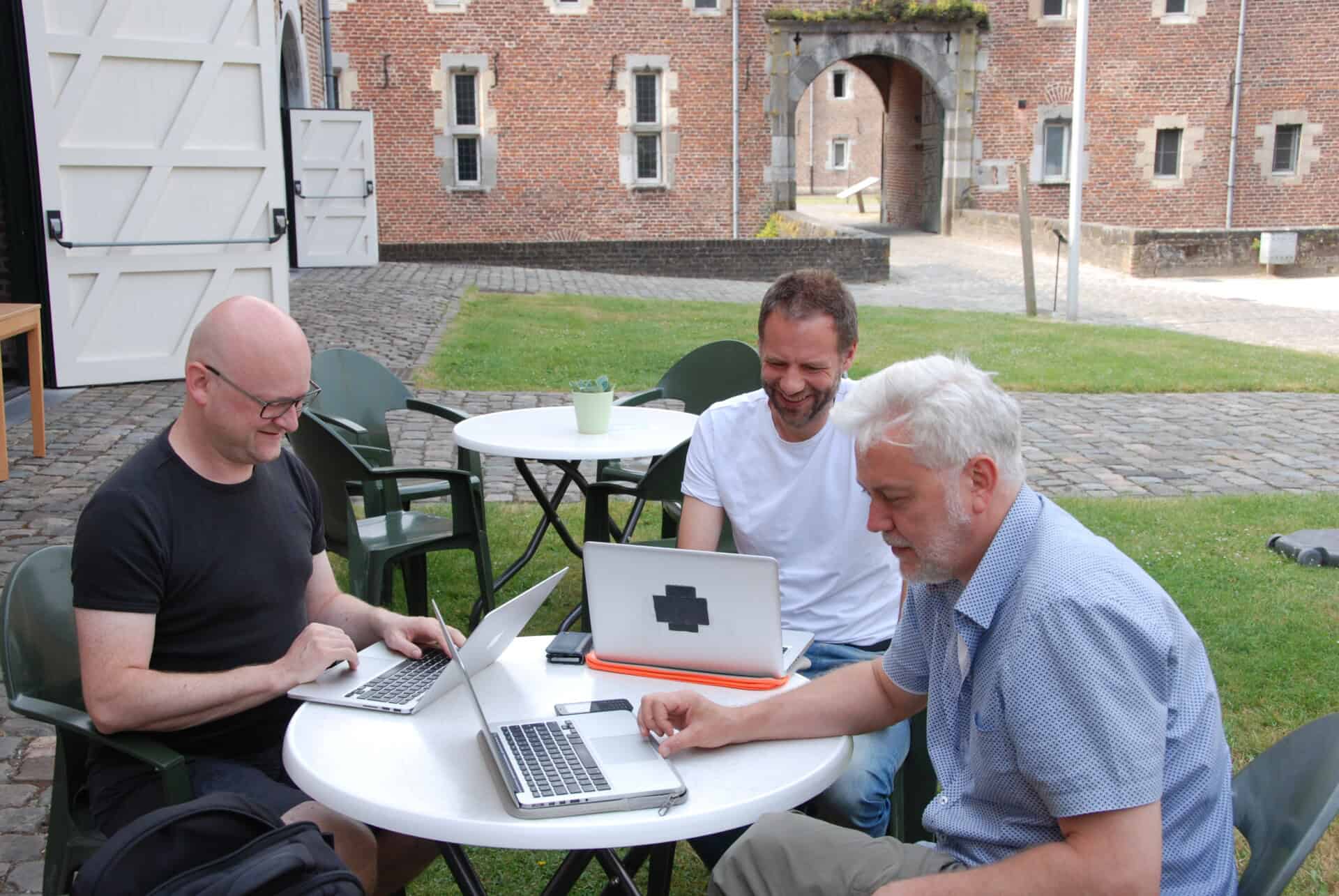 from left to right: Diederik Glorieux, Jorrit Tamminga (electronics) and Wim Henderickx ©Tine Van den Bunder[/caption]
There were several works on his work desk that were virtually ready. Some completely, others needed more work. Because Diederik Glorieux worked intensively with Wim as a musical assistant for seventeen years, I asked him whether it was feasible to make the works performance-ready. After a conversation with my sons and the family, we decided that the music Wim had worked so hard on should not simply disappear into a drawer. He still had so many ideas and plans and had already made enormous progress with a large part of them. Diederik agreed and for the commissioners too it was very special that the works could still receive a première. His work Inner Life premiered at deSingel in September 2024 and travels on to TABLOO in Dessel, November Music in Den Bosch and Muziekgebouw aan't IJ in Amsterdam. The Accordion Concerto will also receive a Dutch première at November Music after Leuven. In March 2025 his Pauken Concerto will premiere with Gert François, Brussels Philharmonic and Jorrit Tamminga (electronics) in Brussels. Also an orchestral work for Antwerp Symphony Orchestra, a work for percussion, trumpet and orchestra and even his third Symphony were ready on his work desk.
K-C: And if we may be personal for a moment. He is portrayed everywhere with that kind but also penetrating gaze. How did you experience that in your life together?
Wim was a unique personality. You rarely encounter someone like that in your life. I chose to be part of his world, not only privately, but also professionally. Making music, performing, experiencing and also teaching, teaching music was his life mission. My life mission increasingly became him and my sons. I chose wholeheartedly for my four men. I never wanted anything more than to be with them and thanks to Wim I was able to live that way. He had a very strict organization, an enormous work ethic and a great sense of responsibility. But he could also celebrate well, create a wonderful atmosphere. Being alone in his room was in a sense against his nature. He had an enormous need for the presence of people. But he wanted to achieve certain things and create his own oeuvre and he was happy to make sacrifices for that. After work he surrounded himself with family and friends. And our being together and working together was enormously important to him. There was great trust between us two, drive, pleasure also and alliance. We understood each other without many words.
The Dutch orchestra LUDWIG and accordion virtuoso Vincent van Amsterdam will perform the creation on Saturday 19 October at 20:30 in STUK, Leuven during the Transit Weekend. More information on the festival 20·21 website
Transit looks resolutely forward to what is stirring in new music and lets an exciting combination of recent artistic voices resound in that diverse landscape.
From Norway to Southeast Asia. From respected figureheads (even with posthumous tributes) to young talent. With improvised music, electronics, video art and performance. Equally there is a postmodern twist on the primordial classical piano sonata. Transit gives a platform to international developments alongside or in dialogue with the flourishing Flemish new music scene.