

There are concert programmes that function as a dialogue across the boundaries of time and geography. The Antwerp Symphony Orchestra (ASO) presented on Saturday afternoon 16 May in the Elisabethzaal a triptych in which the Scandinavian nature poetry of Jean Sibelius (1865-1957), the Slavic emotionality of Sergei Rachmaninov (1873-1943) and the searching American voice of Amy Beach (1867-1944) met each other. On paper a somewhat hybrid constellation, in practice a programmatic line that proved unexpectedly coherent: three composers who each in their own way attempt to grasp a late Romantic language that stands at the intersection of both its peak and its dissolution.
Mist that becomes form
Sibelius' The Oceanides opened the afternoon not as a traditional overture, but as a slow emergence of space. The work from 1914 belongs to the period in which Sibelius increasingly abstracts his symphonic language. The sea he evokes has little in common with the explicit nature paintings of Richard Strauss or Debussy's sensuous impressionism. With Sibelius the landscape emerges from within: motifs move like currents, attracted and repelled again, as if the music itself becomes subject to tides.
Conductor Jan Söderblom understood that arc of tension excellently and consistently chose clarity and breathing space. The ASO thereby avoided any form of late Romantic oversaturation. Particularly the woodwinds constructed a refined network of colour shifts in which light and movement were central, while the horns added extra depth to the sound picture with warm roundness. The harps too were given all the space to weave subtle glimmers through the orchestral texture. It was also beautiful how the strings kept their sound transparent deep into the climaxes, allowing the music to keep breathing continuously. Söderblom did not opt for overwhelming natural power, but for a reading in which the landscape unfolded slowly and precisely thereby retained its hypnotic effect, although at times a certain restraint remained perceptible where a suddenly turning natural force might also have been conceivable.
Tempestuous youthfulness
Then followed Rachmaninov's First Piano Concerto in F-sharp minor, opus 1, a work that curiously is still treated as a preparatory sketch for the later concertos. That does the work an injustice. Certainly one hears the young composer searching for his own balance between Lisztian bravura and Tchaikovsky-like lyricism, but it is precisely that impetuosity that lends the work its appeal. Rachmaninov writes music here that sometimes wants to say more than he can compositionally fully carry, and it is precisely through this that an exciting friction arises between ambition and control.
 Alexander Melnikov confirmed once again why he belongs to those rare pianists who make virtuosity completely subordinate to musical thinking, without losing a shred of presence. He moved across the keys with a naturalness that seemed almost careless, while behind that apparent effortlessness lay a performance of enormous precision and intensity. His approach was analytical without ever becoming cold: technical brilliance was entirely in service of structure, lines were carefully laid out, harmonic shifts clearly profiled and climaxes organically built up rather than gratuitously enlarged. Yet his playing at the same time possesses precisely the drive that this early Rachmaninov demands. He did not play the concerto as broad-spun sentiment, but as a nervous pulsating organism that constantly wants to move forward.
The collaboration with Söderblom and the ASO also proved exemplary. The orchestra did not profile itself as a mere accompanist, but as a congenial partner that continuously breathed with the soloist. Where necessary the fireworks burst from the stage, with powerful brass accents and broadly fanned strings, but equally convincing were the moments of stillness in which piano and orchestra found each other almost as chamber music. Söderblom kept the large line taut in hand without denying the music its natural breath, whereby this performance found precisely the right balance between architecture and emotional impulse. It was precisely in that interplay between eruption and intimacy that this concerto gained its full significance.
A tradition displaced
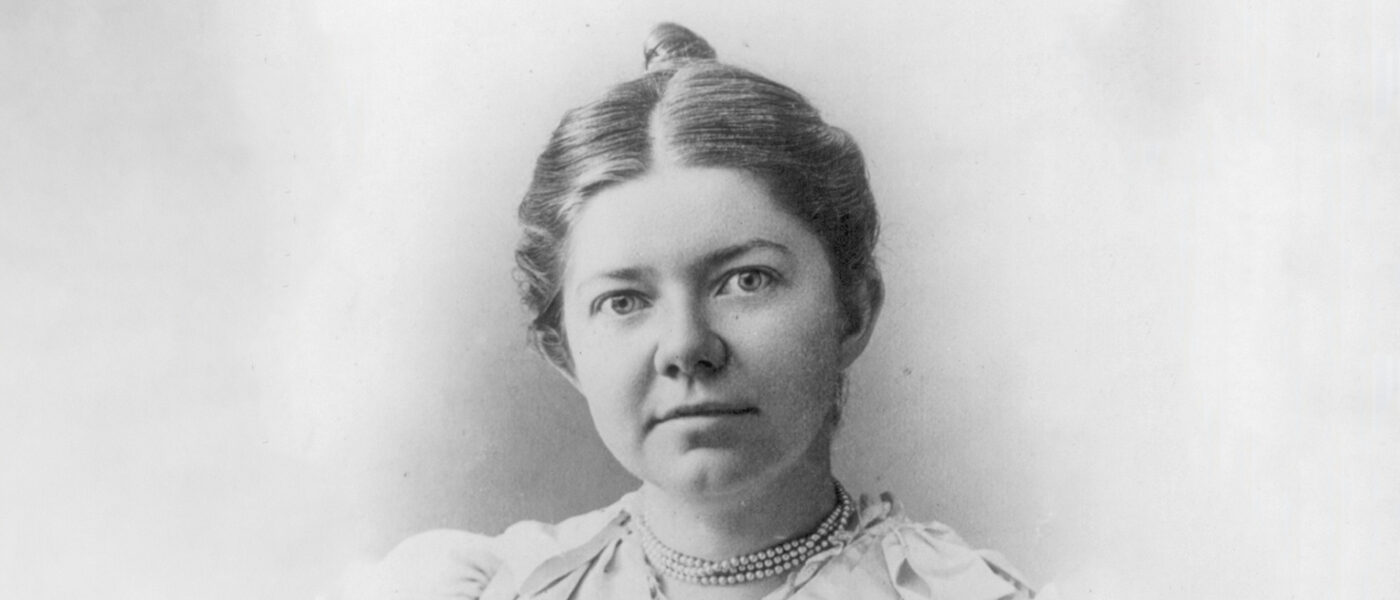
After the interval the perspective shifted completely with the Gaelic Symphony. Amy Beach is still too often approached from her historical position as the first female American composer within the symphonic repertoire, while the intrinsic quality of this work remains underexposed in the process. Yet this symphony is much more than a musicological statement: it is an attempt by a young American musical culture to give itself form via European models.
Composed in the years in which Dvořák called for a national American musical tradition, Beach does not opt for exotic folklore, but for a more subtle approach. The "Gaelic" elements do not function as literal quotations, but as echoes of a migration culture. Irish melodic contours and modal inflections flow organically together in a late Romantic orchestral language that is indebted to Brahms and Dvořák, but at the same time develops a remarkably personal lyricism.
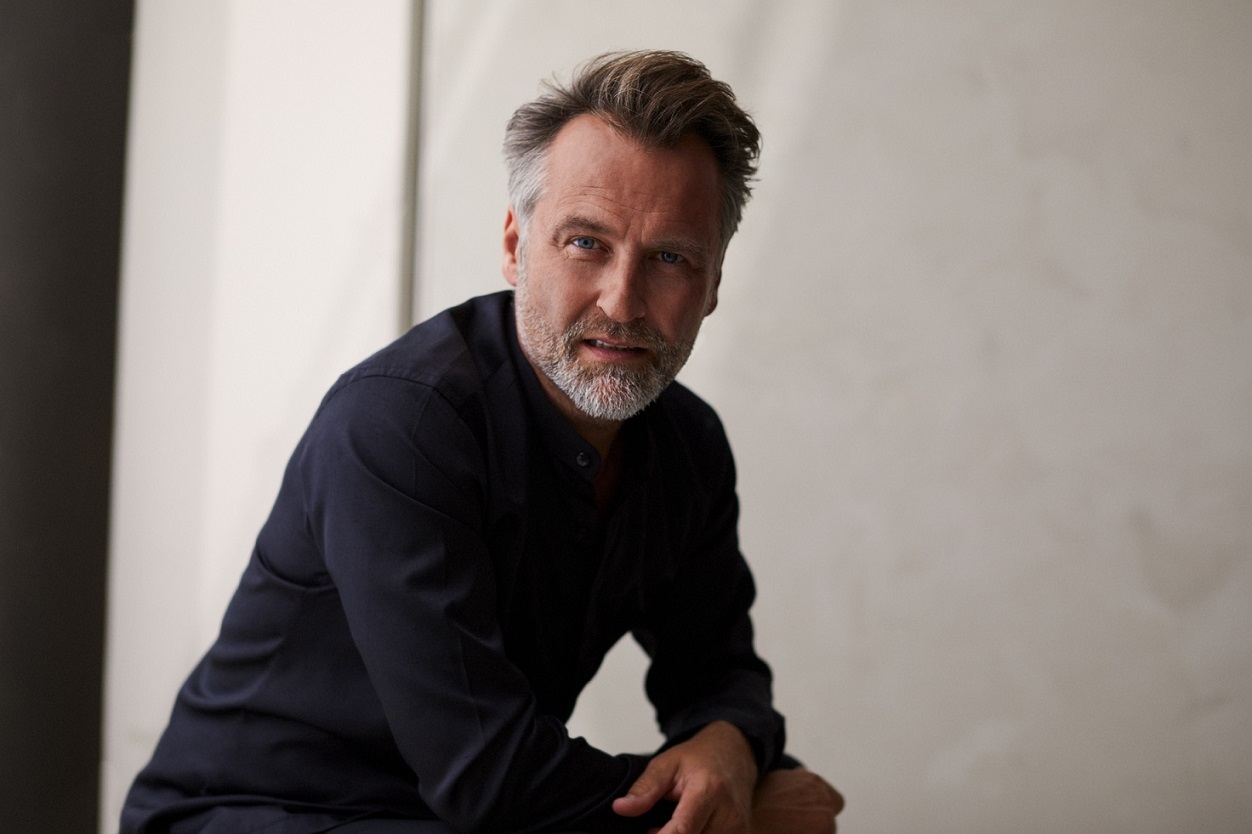 Söderblom conducted the work not as a historical curiosity, but as fully-fledged repertoire, and it was precisely this confidence that gave the performance its persuasive power. The ASO felt visibly and audibly at home in this warm, broad-breathed orchestral language and presented the symphony without any missionary gesture as a self-evident part of the concert repertoire. This made it all the clearer how much craftsmanship and musical imagination lies within this work. Particularly the horns and woodwinds colored the whole with a melancholic glow that continually balanced between intimacy and expansion. In the second movement, an almost irresistible lyrical fluidity unfolded in the woodwinds, while Beach unexpectedly lets a fiery core break open amid that slow stream. Conversely, the scherzo takes on something introspective beneath its dancing surface; it is precisely these subtle shifts that give the symphony its own, elusive character.
The solo contributions were also particularly fine: the concertmaster and principal cellist gave the third movement an almost chamber-like intensity, with a warmly spun dialogue that organically wove itself into the orchestral fabric. The ASO played this music visibly with love and engagement, while Söderblom continually watched over the great symphonic line and drew from the score a degree of refinement and depth that far surpasses Beach's modest reputation. It was precisely this that allowed the Gaelic Symphony to grow into more than a discovery: one of those rare performances in which one wonders why this work does not appear on the podium far more often.
What gradually unfolded
What ultimately made this concert special was not so much interpretive radicalism, but the intelligent way in which the program gradually unfolded. Sibelius abstracted the Romantic experience of nature into pure movement. Rachmaninov drove Romantic emotionality to its breaking point. Beach displaced that same tradition geographically and gave it a new cultural self-definition – and proved to be one of the afternoon's most intriguing discoveries.
Thus this became not a concert of spectacular statements, but an afternoon of shifting perspectives and carefully built resonances. Music that does not impose itself by force, but slowly sinks into memory – like a ripple on water after the wind has died down.