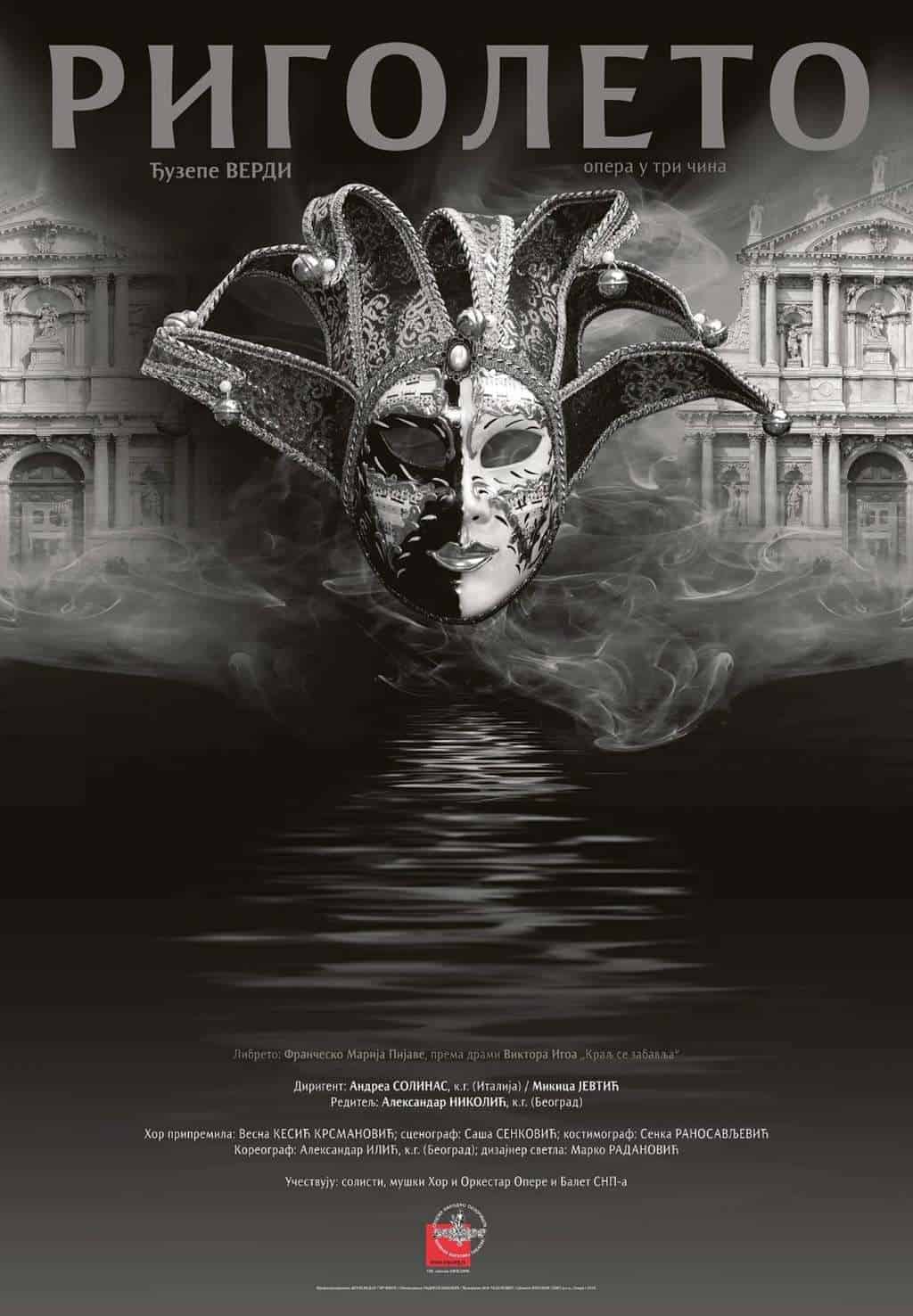
Enjoying probably the best Rigoletto in many years in the unknown opera house of the Serbian cultural city Novi Sad. For the full story about the opera itself, you can go to this link. Twice I happen to find myself in the same city within a year's time, at the opera and experience something special. Remember the review about Liszt's opera Sardanapalo (click here) and now Rigoletto and how! Yes, that's truly having luck…
Excellent level, brilliant direction with a rarely rich vision - actually the best I ever saw - and breathtakingly performed roles in great harmony, strong choir, fantastic orchestra and a conductor who led it as if it were his 100th time. That's how I want to recover from being sick again if I can attend and experience something like this, participate, be part of the event. It helps and is something different than pills. Yes, music is healing.
What did I hear and see then that makes me so enthusiastic and that I absolutely want to share with you, readers? Rigoletto is so well-known that you don't necessarily have to travel through a piece of Europe to experience that opera once. But if you have the chance while you're somewhere and can fill your evening while clouds outside threaten to spoil the evening anyway? Then you go into the hall? That's what we once did with a group of friends in New York, we spent three days there and walking past the MET we saw a poster: this evening Mozart's Così fan tutte with Kiri Te Kanawa. Of course we bought a ticket and even now, years after that month of March in 1987, I enjoy it. If at all possible, I also think I may enjoy this Rigoletto in Novi Sad for another good 30 years (and hopefully more).
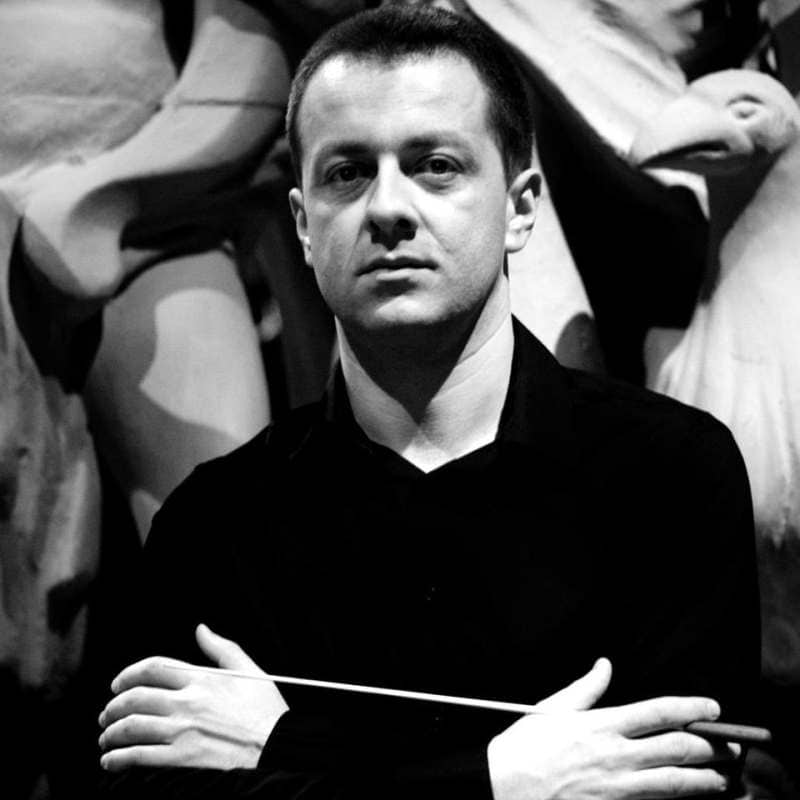
The orchestra starts with a slightly too fast trumpet. In a fraction of a second I immediately think: "This is going to go wrong!", but except for one similar mistake, the orchestra runs smoothly and follows carefully conductor Mikica Jevtić who performs magically. It becomes a strong musical performance with enormous peak moments. To mention a downside of which I hear that it will belong to the past within approximately a year and a half: the acoustics are not the best. Singers who stand a bit further on stage are quickly less clear to hear. Fortunately, the hall will be completely renovated at the end of the 2019-20 concert season and this problem will be thoroughly addressed.
Orgies, decadence, abduction and rape, betrayal, filth…
We learn that there is nothing new under the sun when it comes to when some people get bored by the excessive wealth in which they live, by the excessive power they have. See the story of American billionaire Epstein, it could well serve as a scenario for Rigoletto. Abducted girls, gang rapes, murders. Because that is what Rigoletto is about: horror.
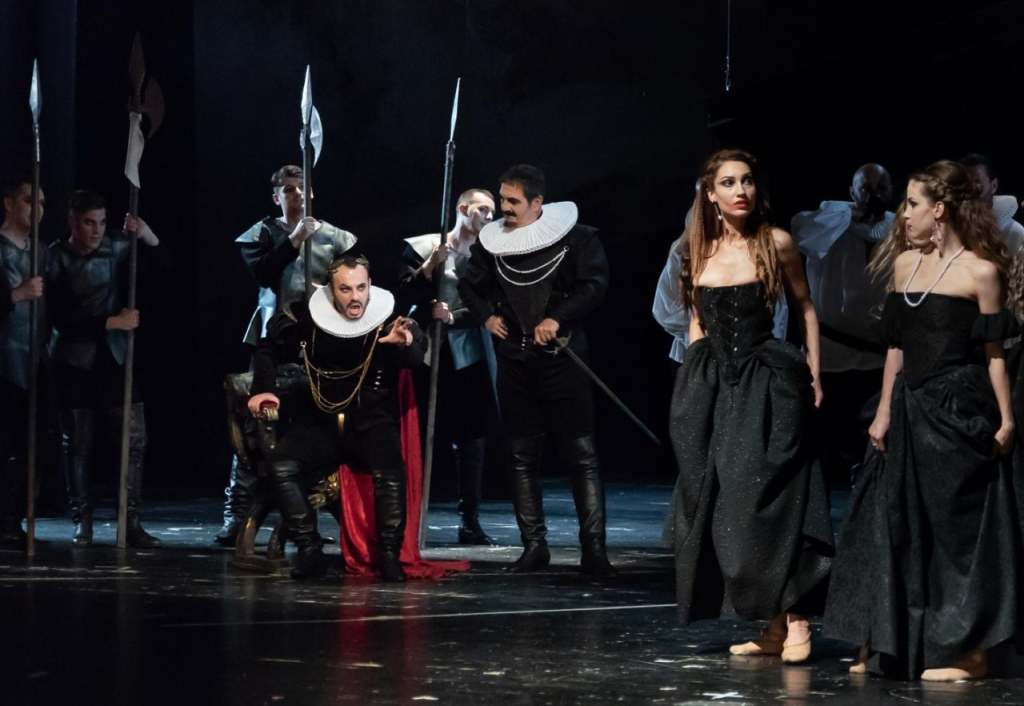
It is not only the hunchback, Rigoletto, who follows his master the Duke of Mantua in everything out of opportunism, even the grossest things. All those who live in wealth thanks to the Duke do participate in this dealings. They could choose otherwise, but how would he, the hunchback, have to live? Because he knows, better than anyone, what the gentlemen are like who on the one hand give the order and on the other hand carry it out – for the money and/or to possess the girl's body (briefly) – he anxiously protects his daughter. A young emerging woman, still very attractive too. Of course he is more fearful than any other parent in the vicinity of the Duke of Mantua for the honor and life of his daughter Gilda.
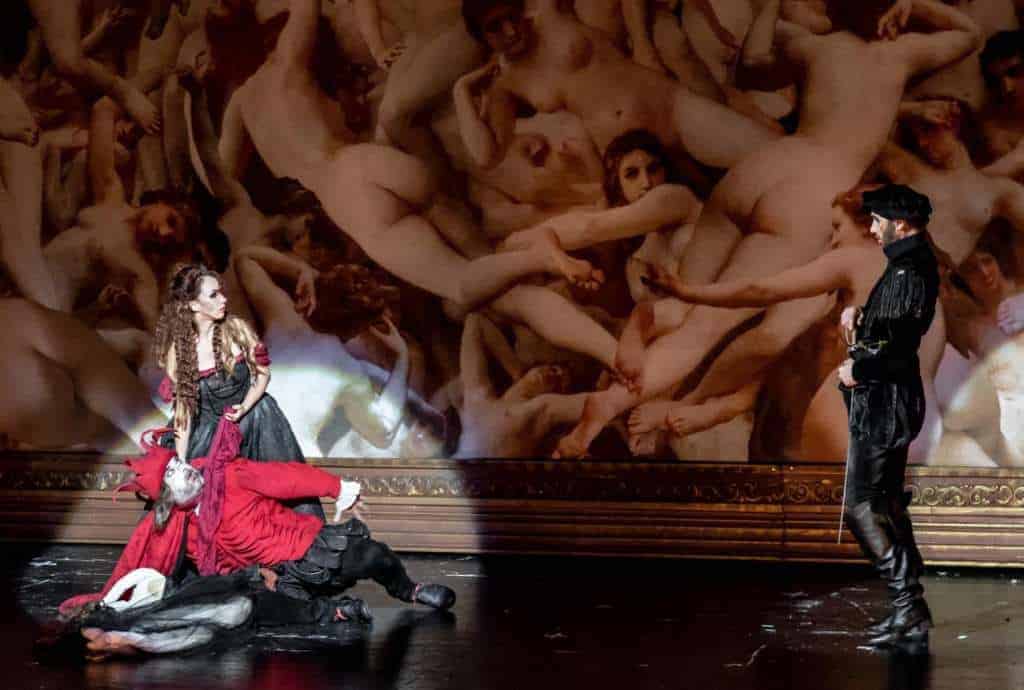
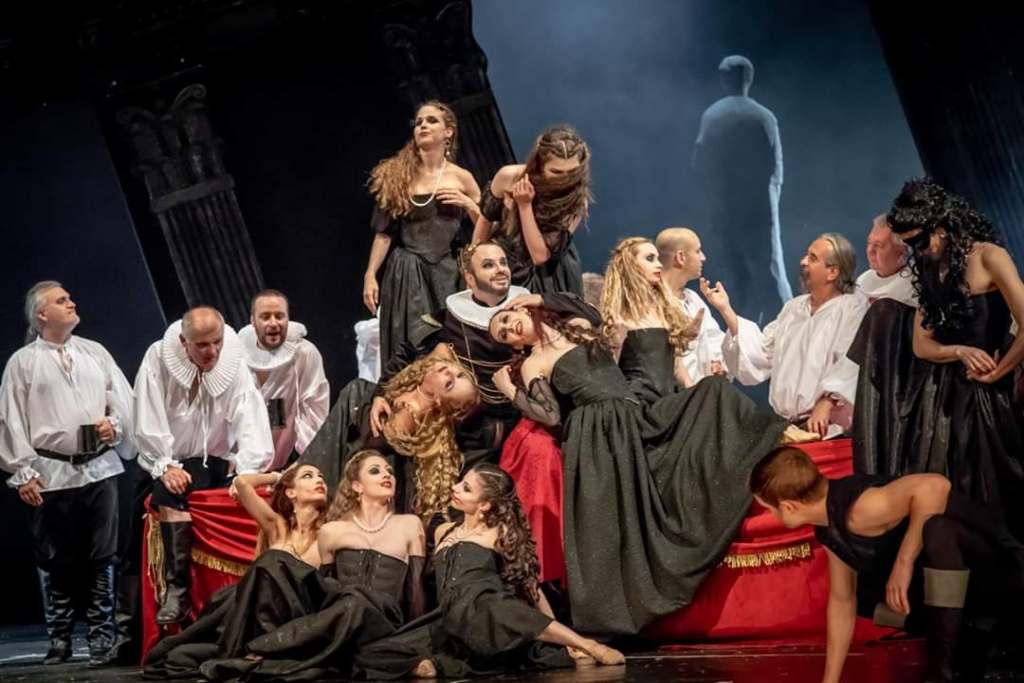
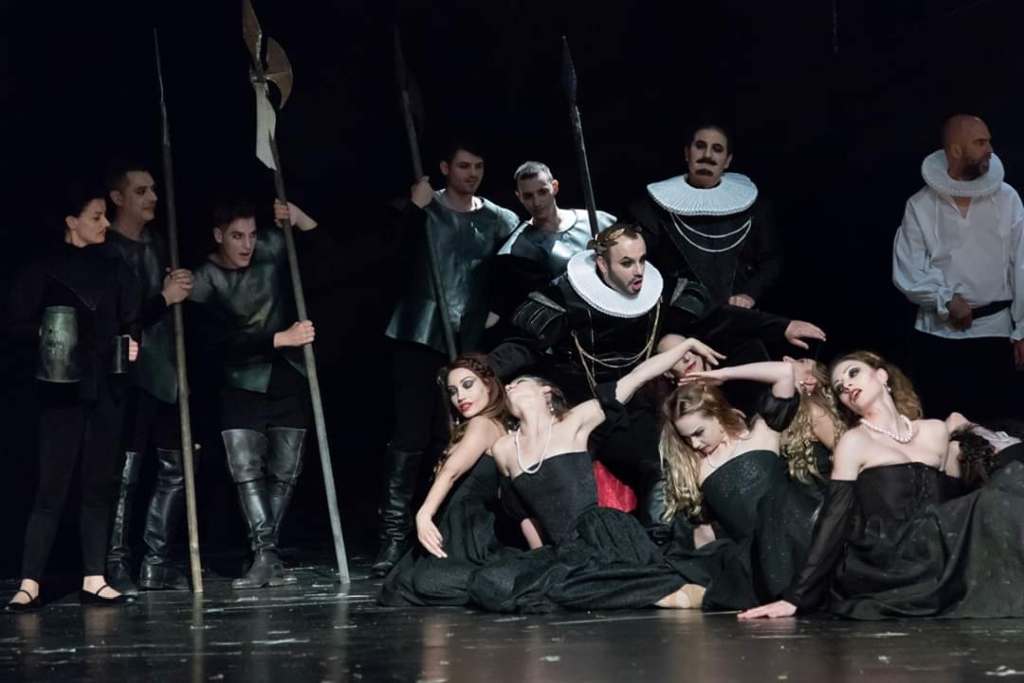
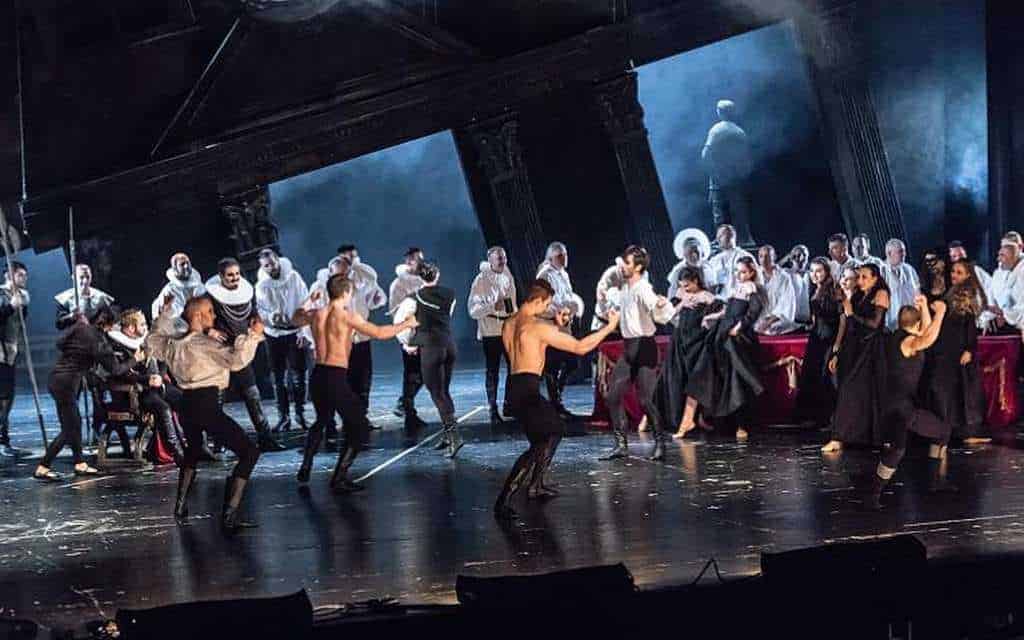
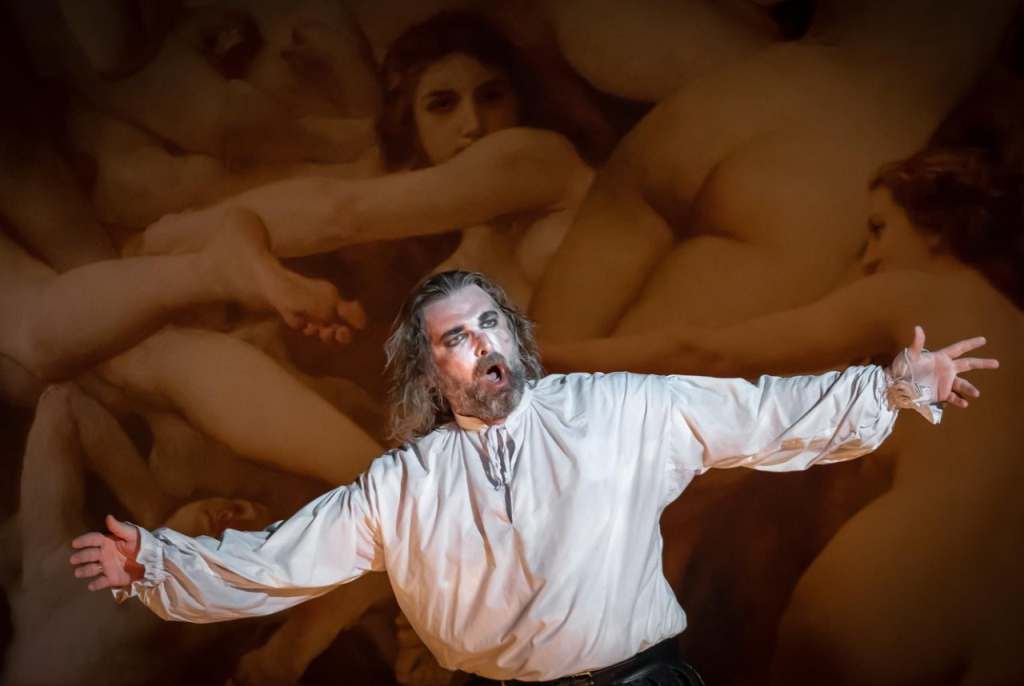
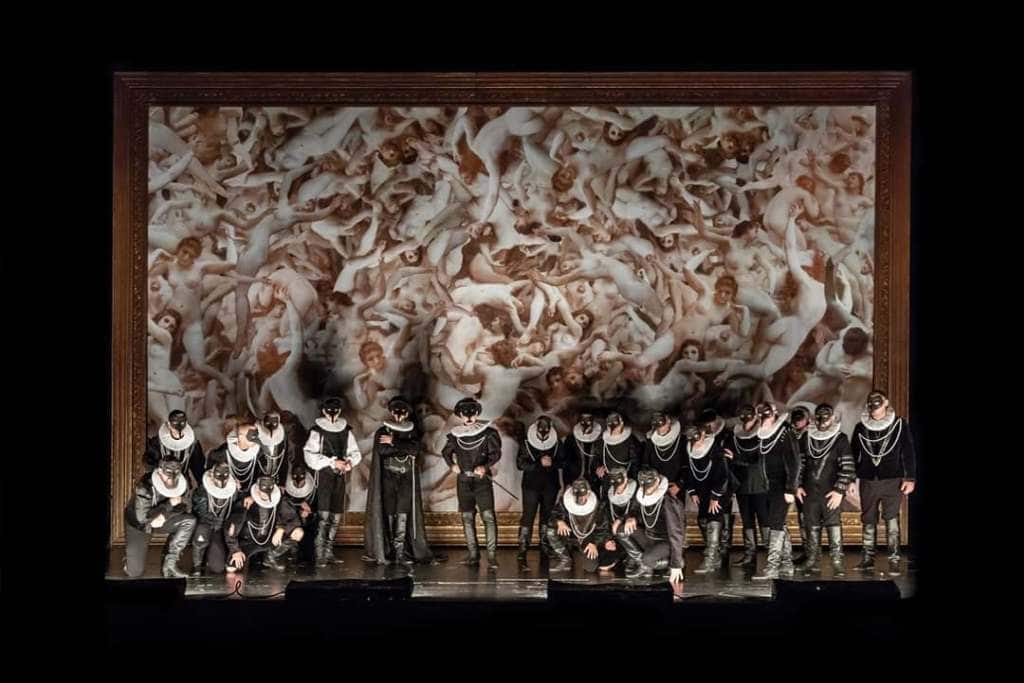
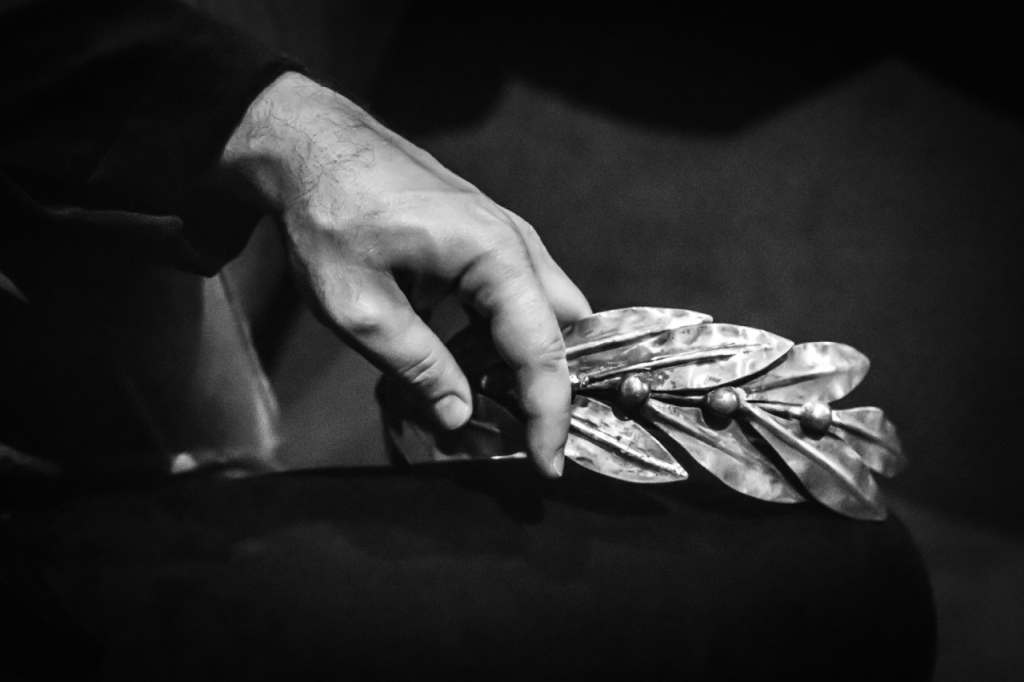
That disgusting Duke, who fancies himself an emperor of Rome – and that was literally so in the time the story takes place – is the alter ego of Don Giovanni, another such horror with his cowardly helper. He has already caused many deaths. Girls, parents who don't just spontaneously throw their daughter to the wolves, they have to pay. Heads roll by the dozen. And that becomes immediately clear when the theater curtain opens. A large painting is shown with all sorts of fallen naked young women while Rigoletto walks past with a doll depicting his daughter and other abused girls. After him appears the Duke, who crowns himself with a laurel wreath. Immediately you think of Caligula or Nero & Co. Then the painting rises up and you see bodies lying on the stage, all young women… The overture transitions into singing and the figures jump up, the opera has truly begun. Ballet dancers – a very strong group of male dancers with a central figure that alludes to and makes fun of Conchita Wurst (Austrian Eurovision winner) and graceful dancers master the stage while the choir takes over from the Duke.
Singing and acting talent stimulated to the utmost
It is the younger Serbian tenor Stevan Karanac who convinces very personally and characterfully in this not simple role where everyone hopes to hear Luciano Pavarotti once more. This must make it extra difficult for every tenor to take on this role. Karanac lets it pass him by and sings very fluently what he couples with a facial expression that marks the perversity that characterizes the Duke's behavior and radiates throughout. It is hard to believe that he is singing this role for the very first time.
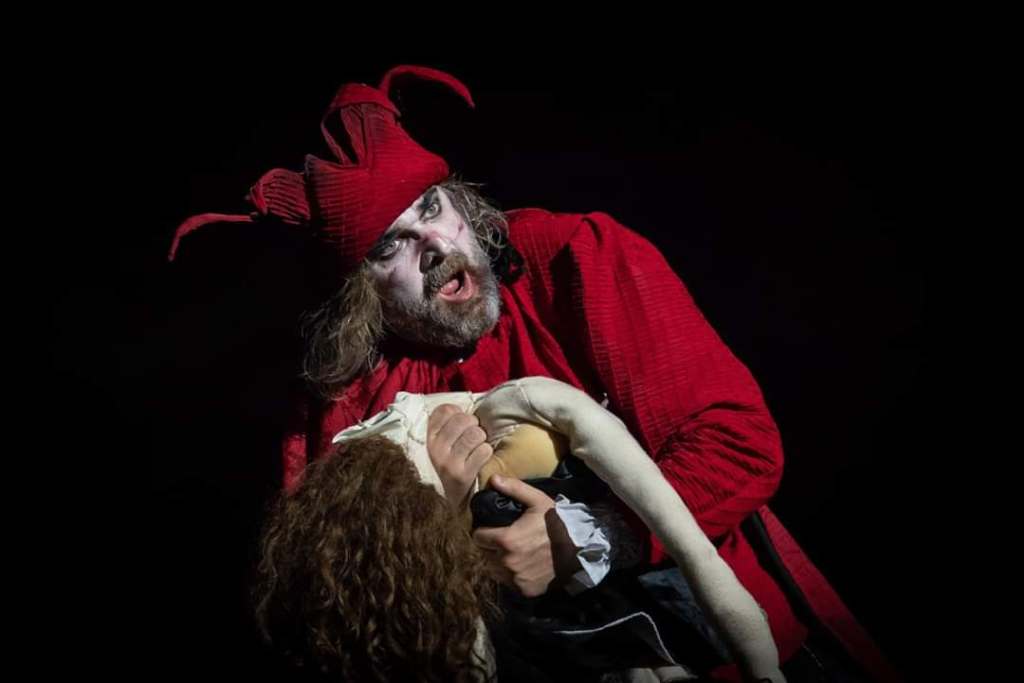
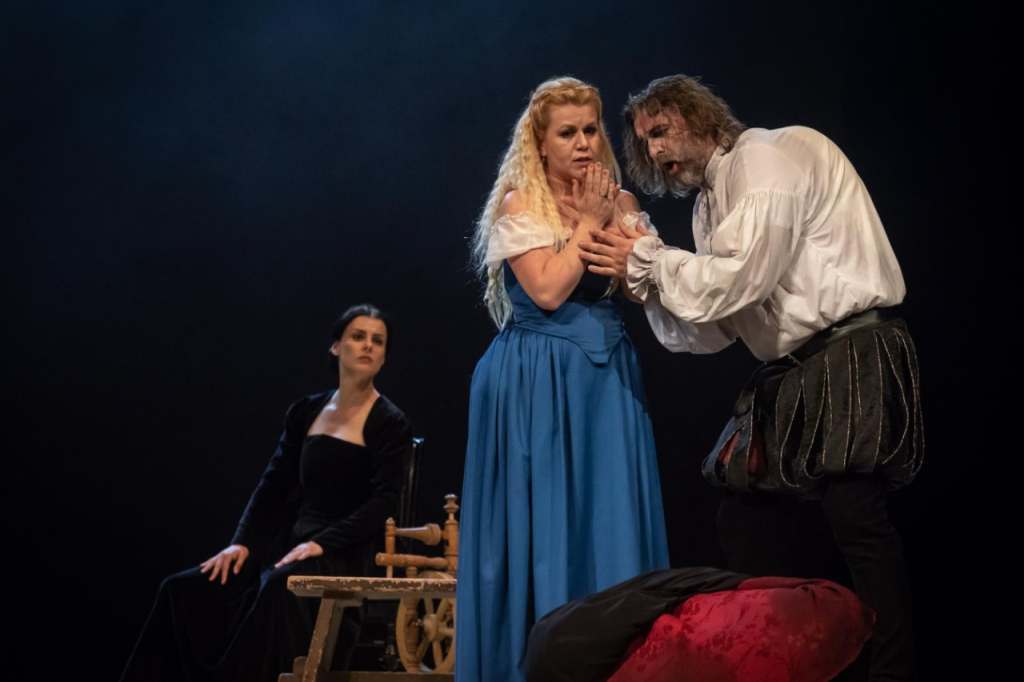
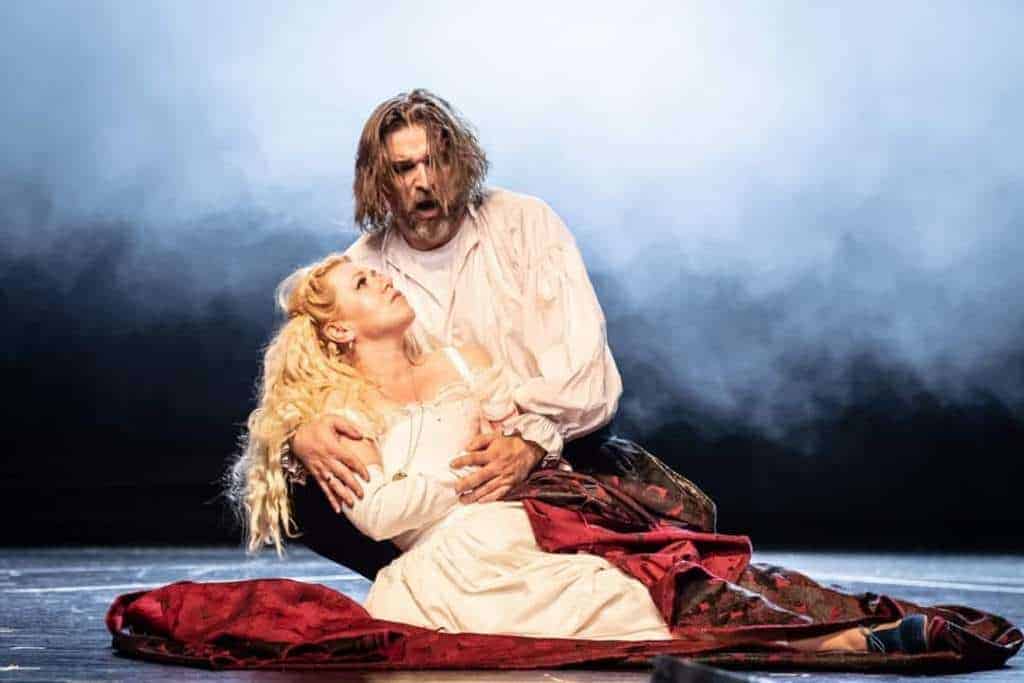
Who also makes their role debut and what is equally unlikely, is baritone Zeljko R. Andrić as Rigoletto. He is the father of the child: his body language, his facial expression, his voice sometimes very restrained and then again not quite really weeping, make clear what must be and what Verdi himself translated into music: the pain of losing a child that a father cherishes so. You almost feel the full hall weeping along. Very emotional.
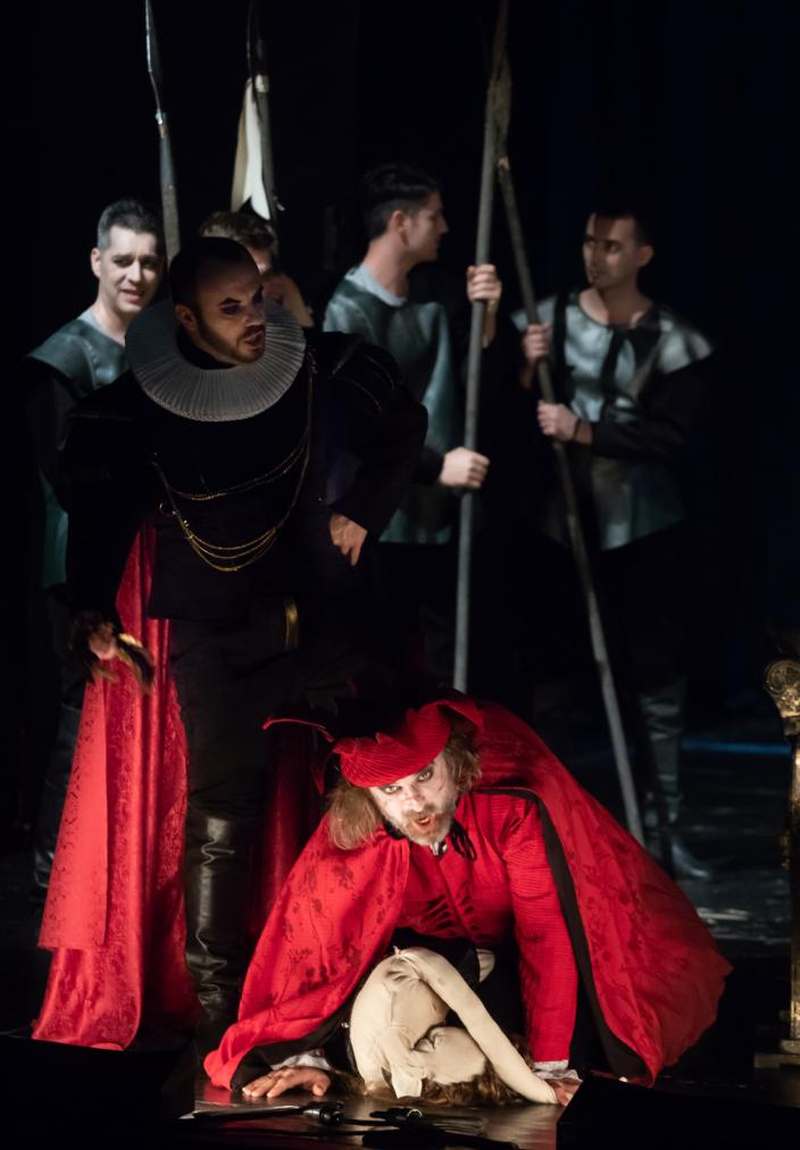
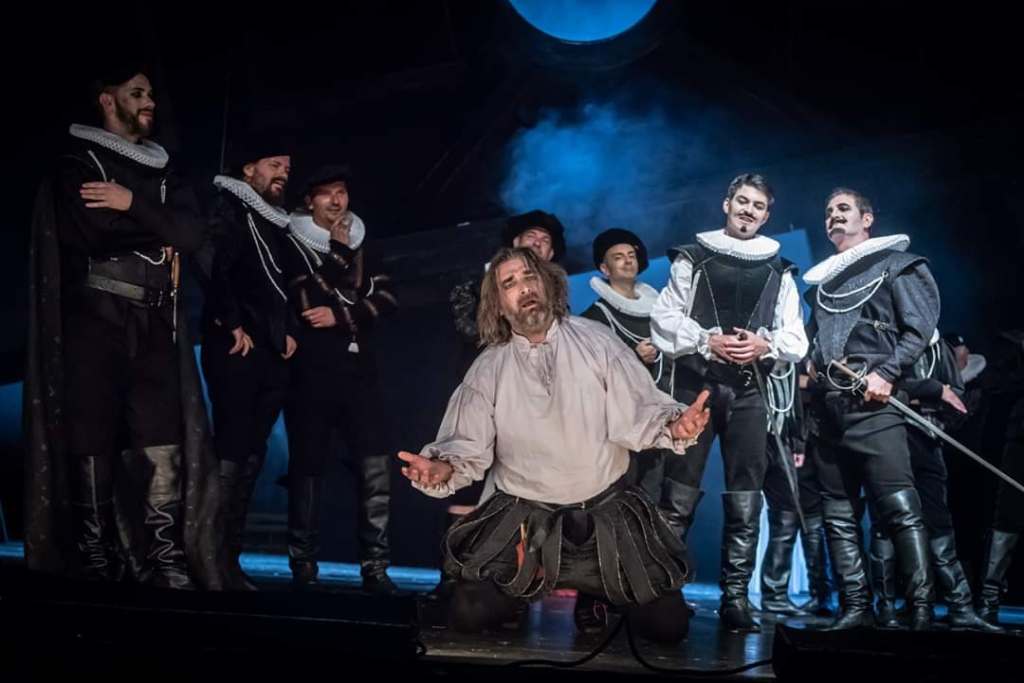
You get chills when bass Strahinja Djokić, the count of Monterone, storms onto the stage to try to recover his daughter, abducted and abused. Heartrending is his 'roar', his anger, his helplessness and his curse on the jester Rigoletto who humiliates him even more. How vile can you be? But woe, the curse! Can it be true? A curse has power and comes true, the old jester is in panic and that it is not for nothing will be proven later: fate will strike him as hard as it possibly can.
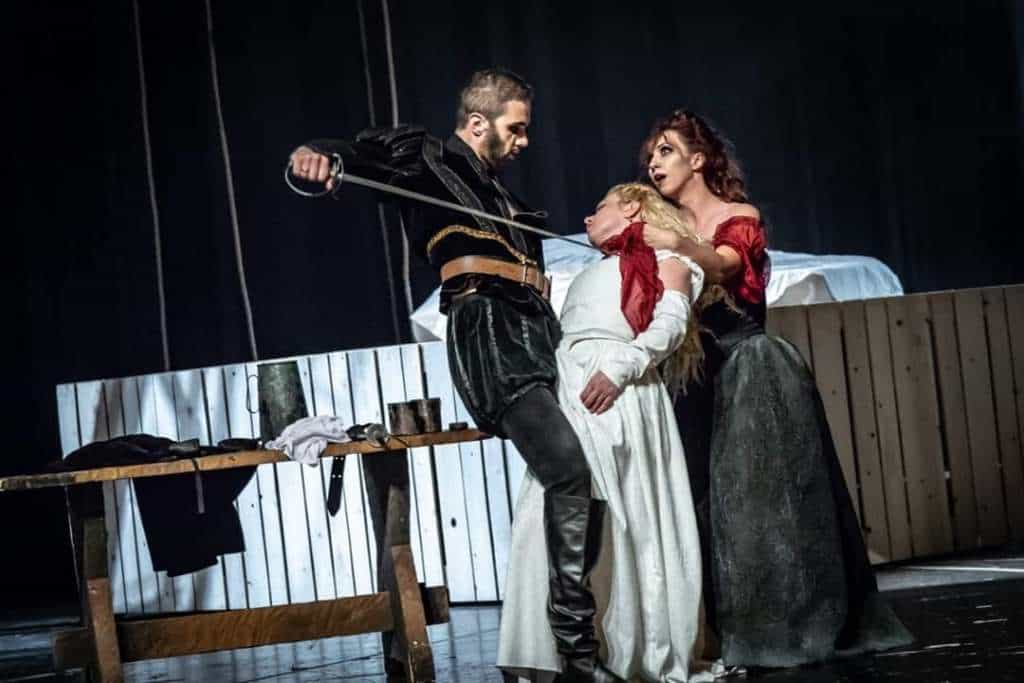
In seven hurries Rigoletto tries to protect his daughter from all evil, but the young, developing woman Gilda radiating pure virginity – what a fine, soft and yet full soprano with powerful coloratura is Darija Olajoš Čizmić - is already in love with a young poor student... None other than the duke who has already bribed Rigoletto's housekeeper with a fat tip in her purse. And to make it worse, the duke's hangers-on discover that the old man seems to have a young sweetheart, and a pretty one at that. They learn that she is his daughter after the abduction and abuse in the palace by the duke. Meanwhile, those gentlemen have given the housekeeper Magdalena (Jelena Končar) who assisted with the abduction her promised extra wages in a form other than this wicked woman expected: instead of a purse she gets a dagger in the heart. Betrayal doesn't always pay off.
In the palace, a building that tilts sideways in its foundations – it stands as a symbol for decadence – father and daughter sing a gripping duet. The audience thanks with an open handkerchief, which happens several times in this production and not only with applause, but with many bravos and rightly so!
The murder…
For Rigoletto it is now enough. He addresses Sparafucile. A hired murderer with professional honor who always keeps his word and murders whoever it may be. Value for money... Goran Krneta is a deep stern bass, somewhat dry and therefore just penetrating enough and with the perfect posture for this role. The atmosphere of the story but also on stage and in the hall becomes frightening: you feel and taste and smell the disaster. A bunch of scum fills the stage with only one pure soul, Gilda. Gilda… She sacrifices her life, not only to end her lovesickness, but also to grant the sister of the hired murderer, an ordinary prostitute, the love of her life and that love is none other than him who sings: "La donna è mobile" (woman is fickle), the duke of Mantua…
Gilda knows what she is doing and enters the inn convinced, knowing that she will immediately get a sword through her body and will die.
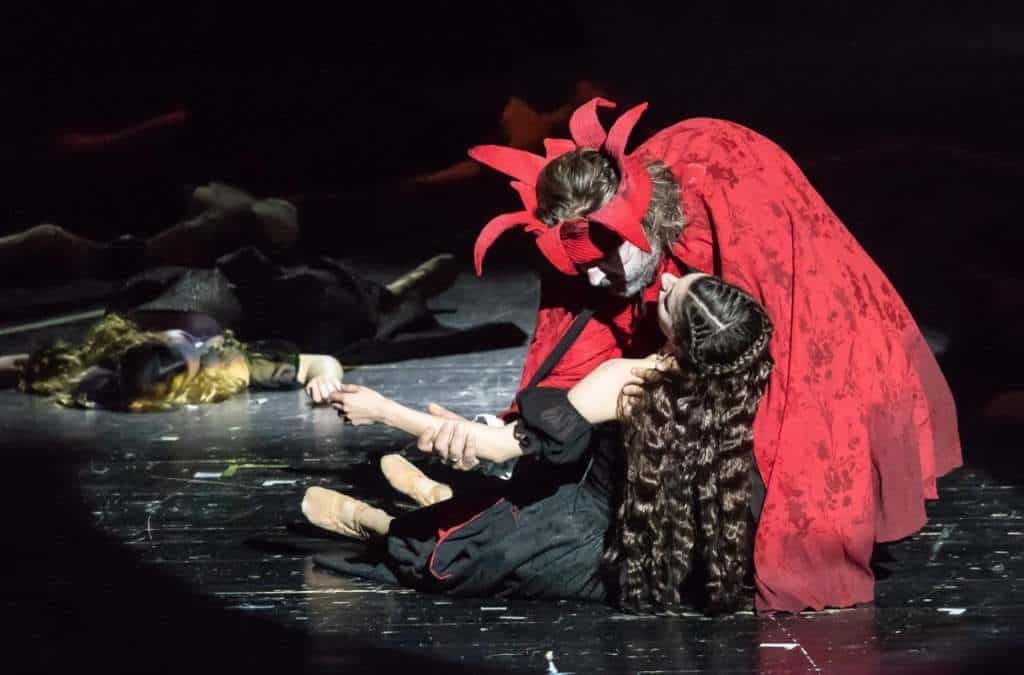
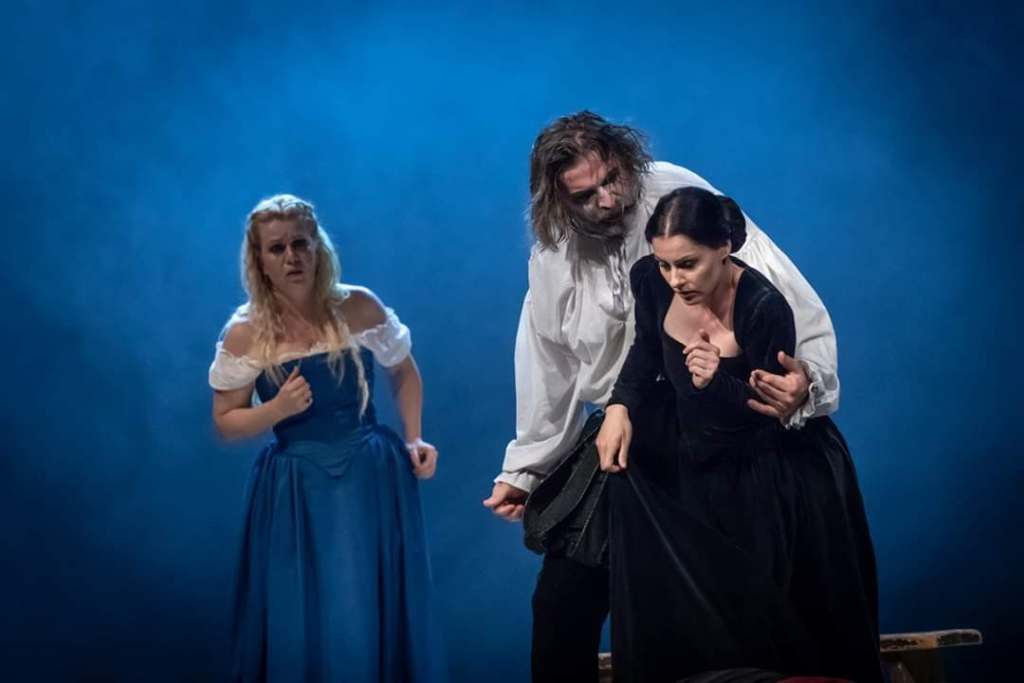
Sparafucile delivers the body bag to a triumphant Rigoletto. The scoundrel is dead! Revenge has triumphed and then? Then the dead man sings… O curse? It cannot be and yet it is… That man is alive and well. The bag!?… The anxious jester opens the bag… Gilda. And then you get a father for real. People's eyes become wet. Not only because of what Verdi wrote in the music, the deaths of his own children, young woman and young sister, but also the pain that the man on stage portrays, if it were his child. The look, the hands, the posture and how softly he sings 'Gilda, mia Gilda' instead of shouting it out immediately… At the back of the stage appears in a white dress among white flowers a little angel figure. It is the dying soul of Gilda stretching out in length, reaching her hand towards the heaven that will receive her soon. Even as I write this, I experience the emotion in the hall. It is the strongest moment of this entire gripping opera. For me the greatest masterpiece of Verdi that achieves the greatest result here with very limited means.
The applause? Thunderous and with countless bravos… This Rigoletto may go international!
Do you know what made it even better? A street poor Roma child of 11 years old was allowed to come along by her mother. That girl loves ballet and 'beautiful singing', but yes, chances? She enjoyed every second and was afterwards allowed to join the singers and the director at the theater café. "I will never forget this, so beautiful!". And look? One of the artists gave the name of a soprano with a career, also Roma, who has poor children who rarely get a chance, give free lessons... "That way you can become a great ballet lady", said a young retired lady who once also got the chance of her life. Will you all keep your fingers crossed for that artistic, barely educated girl who returned home overjoyed?
- WHAT: Rigoletto – Libretto Francesco Maria Piave, music Giuseppe Verdi
- CONDUCTOR: Mikica Jevtić
- DIRECTOR: Aleksandar Nikolić
- CHOREOGRAPHY: Aleksandar Ilić
- COSTUMES: Senka Ranosavljević
- SCENOGRAPHY AND LIGHTING: Saša Senković and Marko Radanović
- CHOIR CONDUCTOR: Vesna Kesić Krsmanović
- VOICES: Rigoletto – Zeljko R. Andrić; Gilda – Darija Olajoš Čizmić; Duke of Mantua – Stevan Karanac; Sparafucile – Goran Krneta; Magdalena – Jelena Končar; Count of Monterone – Strahinja Djokić
- ORCHESTRA AND CHOIR: Srpsko Narodno Pozorište (Serbian National Theater)
- WHERE & WHEN: Novi Sad, Serbian National Theater, 25 September 2019
- PHOTOS: © Srdjan Doroški
[embed]https://www.youtube.com/watch?v=n_mKUv9xin0[/embed]
[embed]https://www.youtube.com/watch?v=M90JwP0cr7U[/embed]
[embed]https://www.youtube.com/watch?v=PYEn5XuE-5A[/embed]