


The Chœur de Chambre de Namur and the Baroque orchestra Les Ambassadeurs-La Grande Ecurie were guests at deSingel for a special performance of Zoroastre, tragédie lyrique by Jean-Philippe Rameau (1683-1764), the most important French opera composer of the eighteenth century.
Special, because Rameau's operas are not so frequently performed in our concert halls or opera houses. The high demands placed on the performers for this repertoire is certainly an important factor in this. These were undoubtedly met during this concert, with respect to the orchestra, choir and soloists alike.
As an opera composer, we could call Rameau a late bloomer. He is mostly known for his harpsichord pieces. During his lifetime he initially performed mainly as a harpsichordist and organist, and in that early period his oeuvre consisted mainly of harpsichord music and religious music (motets and cantatas). He was already fifty years old when his first opera Hippolyte et Aricie was performed. From then on he produced a whole series of opéra-ballets, tragédies lyriques and pastorales. His operas represent a step forward in the evolution of opera because he pays more attention to the inner characterization of his characters, not just to dramatic action. He can handle the comic aspect – think of Platée, of which the Flemish Opera brought a hilarious performance some twenty years ago, directed by Laurent Pelly and conducted by Marc Minkowski. The opéra-ballet genre came back to life thanks to the efforts of a monument for the Baroque genre like William Christie.
Zoroastre is the fourth tragédie lyrique that Jean-Philippe Rameau wrote. The libretto is by Louis de Cahusac, a man who not only belonged to the higher circles in Clermont, but was also Grand Master of "La Grande Loge de France". The succession of fierce confrontations between Good and Evil, personified by Zoroastre and Abramane, can be traced back to the Freemasonry connotation. He is also said to have been one of the only collaborators of Rameau who could handle the composer's difficult character.
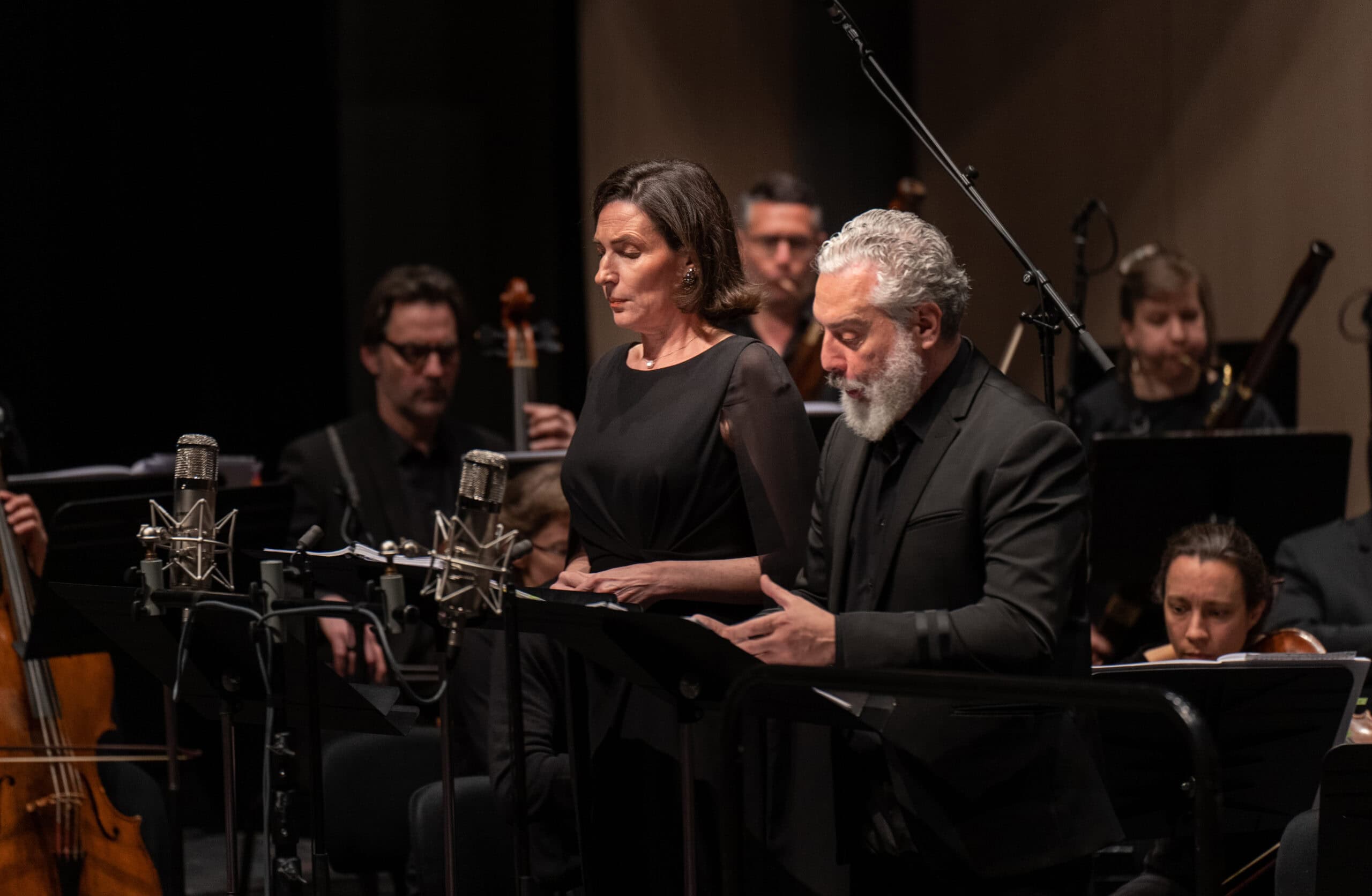
The main character Zoroaster (or Zarathustra) is a Persian religious reformer from the seventh century BC. The essence of his teaching is the duality between good and evil. In the libretto, this struggle is of course worked out within the framework of a love affair, although the story comes across as rather forced. Zoroastre is the representative of Oromasès, the Supreme Being and the god of Light. His opponent is the sorcerer Abramane, servant of Arimane, the Spirit of Darkness. The work had scarcely any success at its creation in 1749, which led Rameau to present a second version in 1756. Characters were cut and added, but above all the love entanglements received more attention. The struggle for power between Zoroastre and Abramane is accompanied by their rivalry in love for Amélite. The chances of success in love are thwarted by evil – or protected by good spirits. A key figure in the conflicts is Erinice, who is also in love with Amélite. There are also allegorical parts personifying Revenge, Fury, Hate, Despair. Ultimately Zoroastre wins. When Abramane threatens to kill Amélite, he calls upon heaven and Abramane and his company are struck by lightning. In the temple of Light, Zoroastre and Amélite are united. Their victory is celebrated with exuberance.
In this concert performance we were given the still exceptionally rare original version of 1749.

Virtuosity everywhere
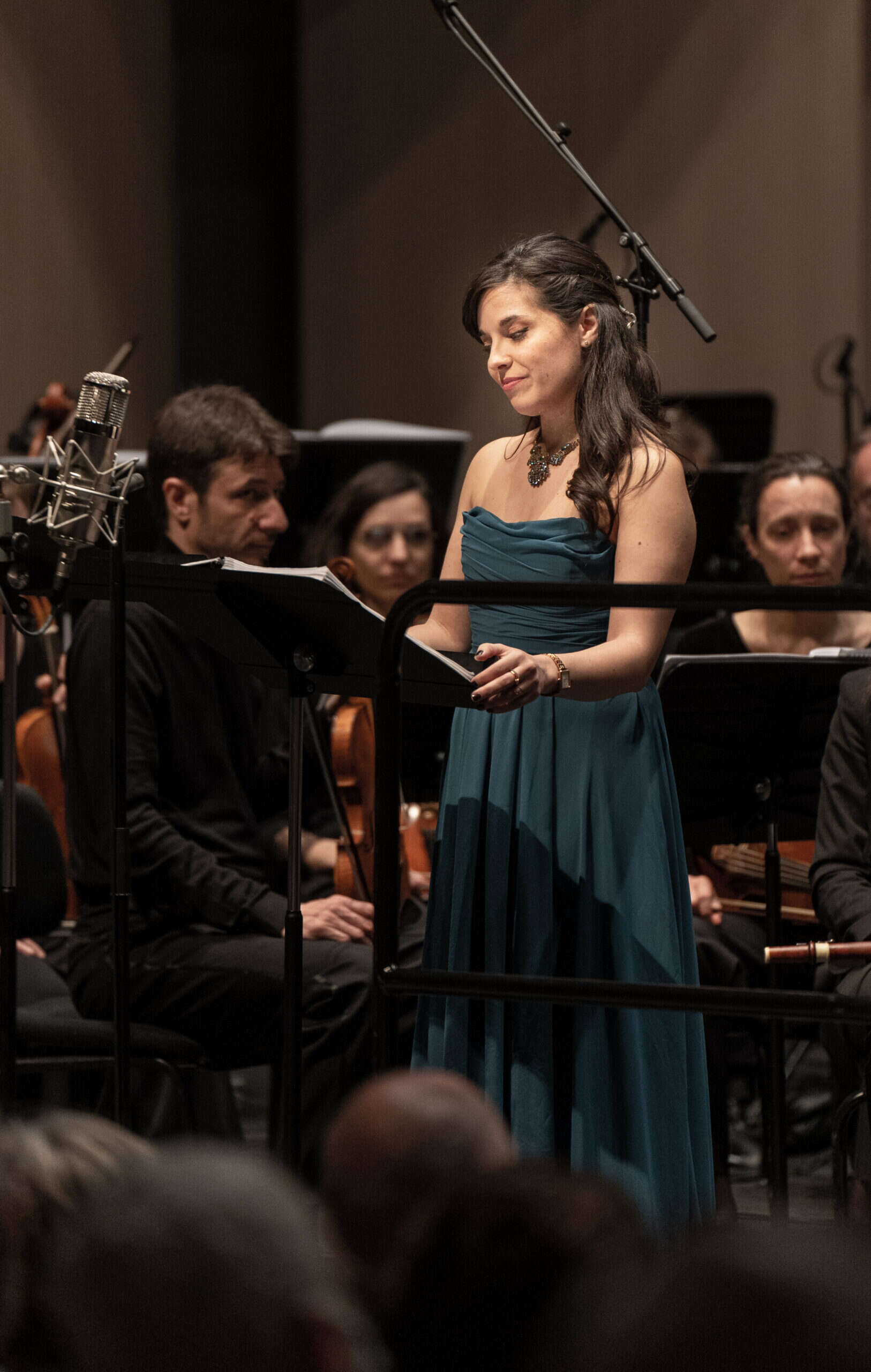
From the overture onwards, the colourful richness of the orchestra is immediately striking. The warm sound of the bassoons – which play a major role throughout the score as the voice of darkness - the brilliant strings. Since we hear the 1749 version, it is the oboes that are responsible for their precise tones in the tender passages. And of course the traverso (Anna Besson), which simply delivers a marvellous performance and plays a predominant role in the first part of the evening, very often as the instrumental partner of Amélite. The continuo part is also sublimely performed by three cellists, double bass and harpsichord. Moreover, they make the transitions from recitative to aria or choral passage seamlessly smooth. While the libretto cannot be entirely exonerated from a certain verbosity, the orchestration compensates for this drawback almost entirely. Conductor Alexis Kossenko plays an important role in this thanks to his mastery of the alternating palette between very dramatic pages and sublimely contemplative passages. Shimmering strings, rapidly descending and ascending scales in the woodwinds, alternating dynamics, constantly the orchestra sets the contrast between good and evil in a strikingly vivid manner. It is a true sounding board of tenderness and melancholy opposed to passages of violent outbursts of rage, hatred and revenge. The lady at the percussion (Marie-Ange Petit) certainly deserves a special mention. With her very diverse instruments she surprises with the most bizarre sounds, not only to depict the "forces of darkness", but also all manner of emotional and literal storms.
While the orchestra makes a stunning impression, the choir is equally impressive. The choral passages (eight sopranos, the rest countertenor, tenor and bass) theatrically make the connections between the soloists' performances and, like a Greek chorus, provide commentary.
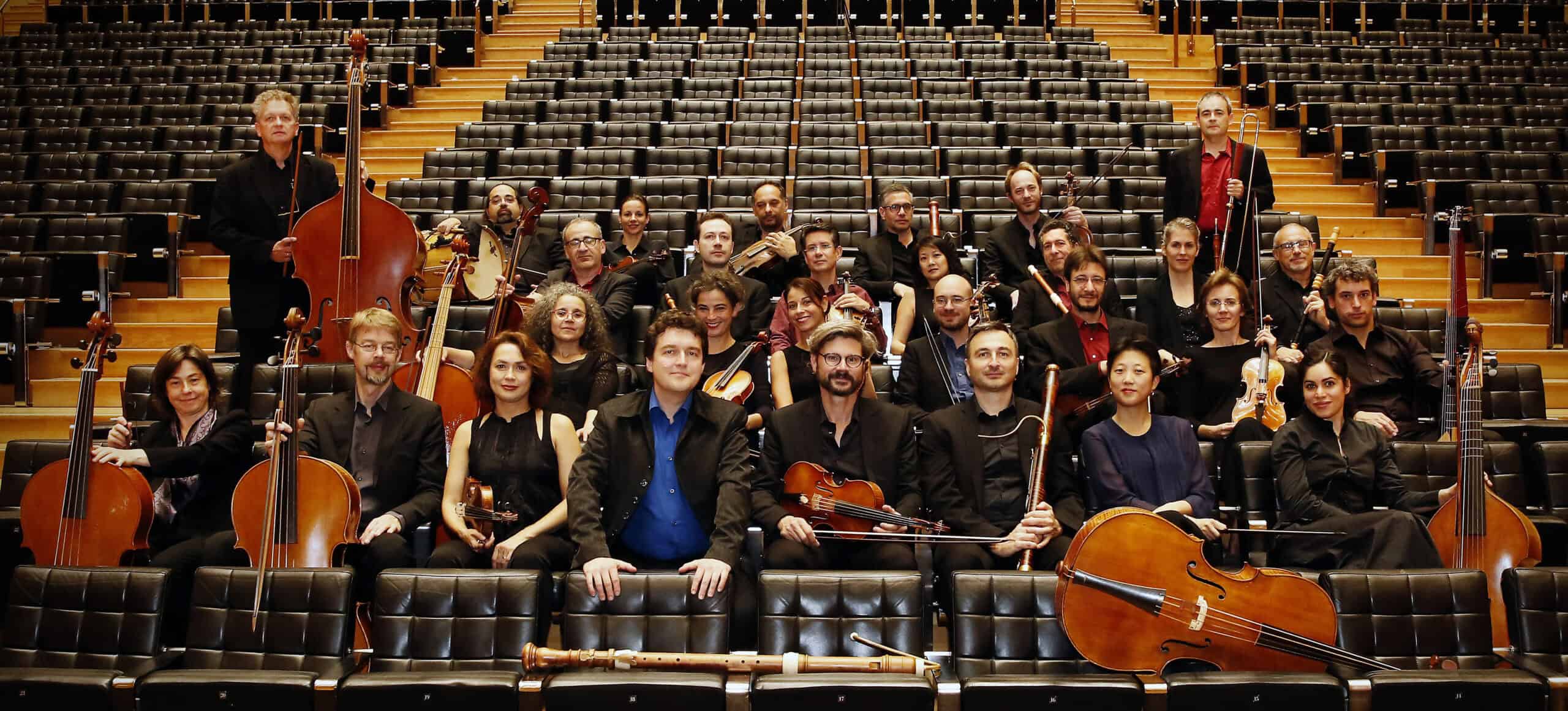
Among the soloists, Reinoud van Mechelen takes the crown. After his performance at Opera Vlaanderen as Ferrando in Mozart's Cosí fan tutte, it is evident here that his voice is ideal for this French Baroque repertoire, in which he as haute-contre effortlessly commands the entire range of the vocal part and moreover has perfect diction. However high the notes, the timbre remains soft and pleasant (e.g. beginning 2nd act "A mes tristes regards" to give just one example). He receives a fine response from his beloved Amélite, sung by Jodie Devos. She too has no difficulty with the required high notes and manages through simple gestures and especially vocal colour to bring her character to life. Her tone is more nasal and less caressing than in her recent Mignon performance at the Opéra Royal de Wallonie, but suits perfectly the elegiac style of this Rameau score. As the negative factor in the game, Véronique Gens grabs us by the throat. The way she takes the stage makes her hateful role in the game feel self-evident. Her beautiful full soprano voice with intelligent phrasing and, where appropriate, some prickly chest tones, completes the character portrayal. The fourth major role is assigned to the real "villain", the baritone Tassis Christoyannis who - albeit sometimes with a rather dull voice - but with menacing authority gives shape to the aggressor Abramane. The smaller parts (sometimes soloists from the choir) fit homogeneously into the whole.
To sum up the experience of the (long) evening in two words, I would like to quote Professor Ignace Bossuyt: a "fascinating listening adventure"
WHAT : Zoroastre (1749), Jean-Philippe Rameau
WHO : Véronique Gens, Jodie Devos, Reinoud Van Mechelen, Tassis Christoyannis, Gwendoline Blondeel, Marine Lafdal-Fran, Mathias Vidal, David Witczak, Choeur de Chambre de Namur and Les Ambassadeurs-La Grande Ecurie cond. Alexis Kossenko
WHERE : deSingel
WHEN : 28-4-2022