

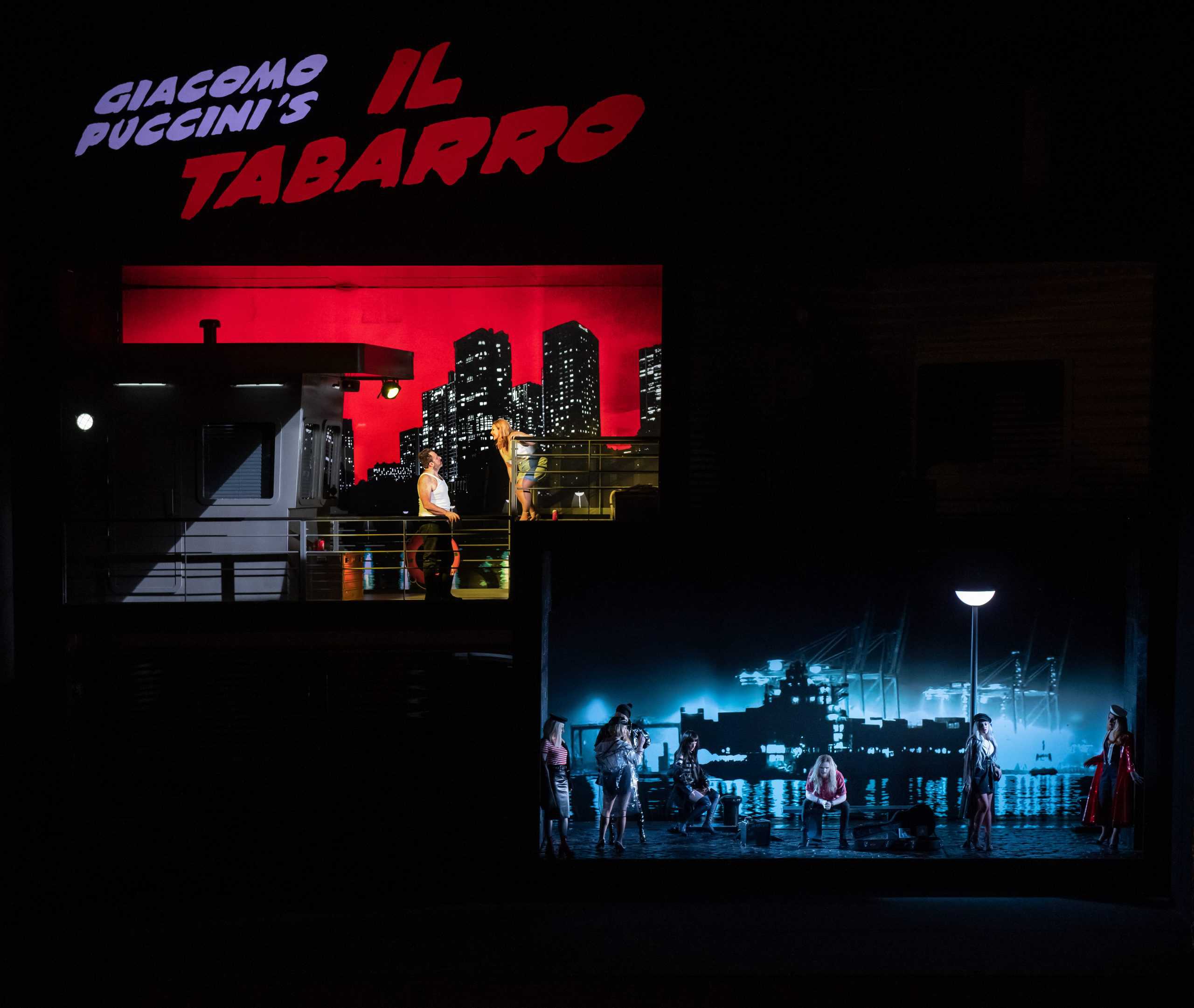
With Giacomo Puccini's Il trittico, De Munt brings a triptych about the pleasures and tensions of life. The three one-act operas - Il tabarro, Suor Angelica and Gianni Schicchi - are each interesting tableaux. Il tabarro deals with forbidden passion, longings and pain. Suor Angelica brings the spiritual and the human into confrontation with each other. Gianni Schicchi is a Dantesque comedy with greed and love as central pillars. Three beautiful stories, brought by De Munt under the direction of conductor Alain Altinoglu.
Il tabarro, Suor Angelica and Gianni Schicchi
Vanitas means something like "vanity and emptiness". This looks back on the transience of life, something that clearly plays a role in the triptych of Il trittico. All three pieces have an organic progression where the protagonists always seem to be playthings of fate. Puccini created Il trittico in the period of 1918 as a triptych of verismo operas. Verismo, or realistic opera in which sound and narrative closely reflect the reality of the time, goes hand in hand with the human, psychological undertones of Puccini's musical work. The three works are conflicts in spirituality, love and psychological power games. The reality behind three such stories makes Il trittico also a musical game in which the viewer can be moved. Nothing speaks as loudly as a story steeped in the reality of life. Puccini's masterpiece brings three such scenes.
"Ditemi voi, signori…"
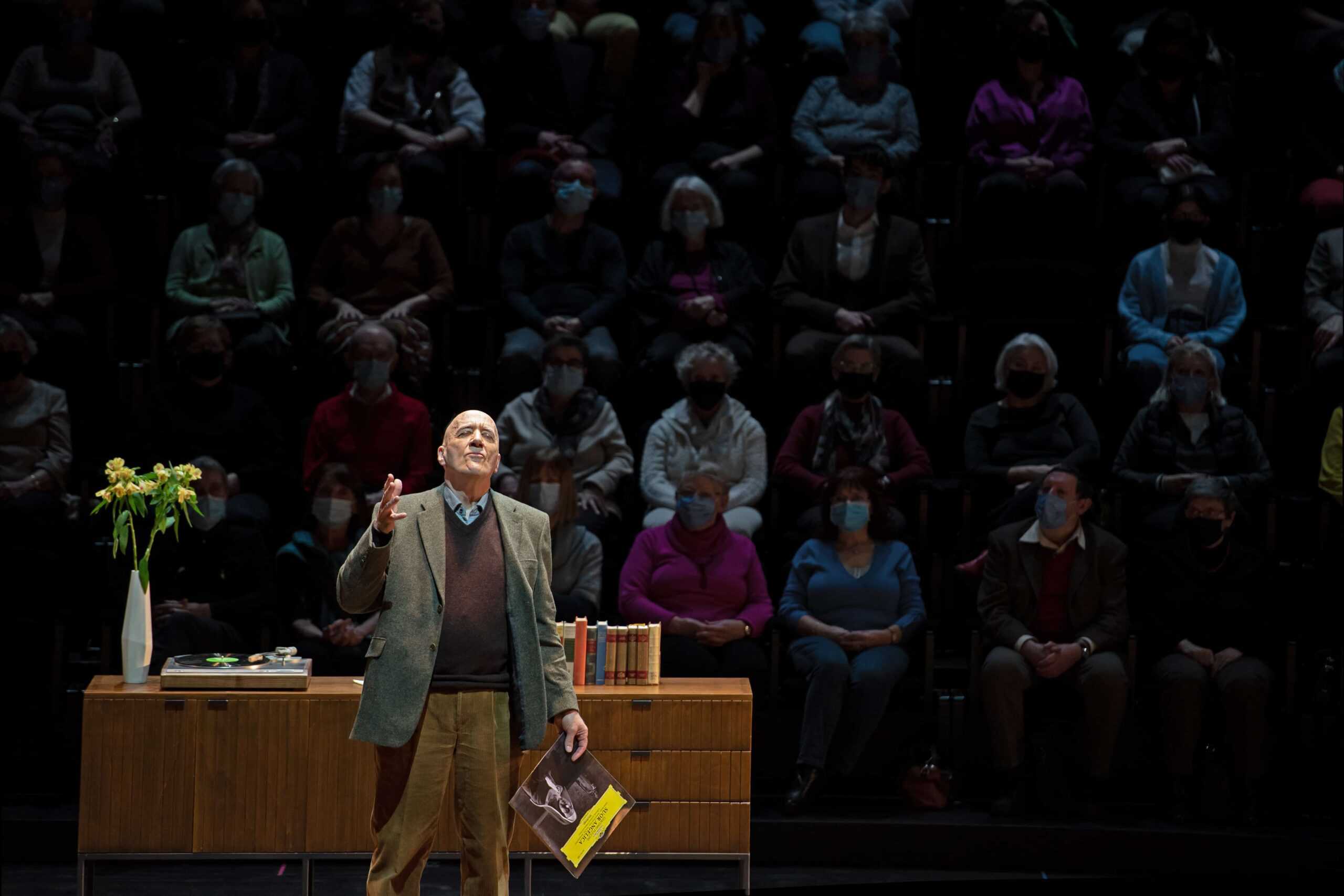
With these words, Gianni Schicchi, here performed by bass-baritone Péter Kálmán, addresses the audience as the finale of Il trittico. There is much to be said about the performance and direction of De Munt, because there was such a diversity between the tableaux that it felt as if one was standing in a museum looking at three different paintings. One shocking pop-art (Il tabarro), another a religious Memento mori scene (Suor Angelica), and another a kind of peasant scene by Pieter Bruegel the Elder (Gianni Schicchi). These are just quick comparisons, but I want to emphasize how fascinating and diverse these musical one-act operas were presented. Tobias Kratzer (direction) and Rainer Sellmaier (sets and costumes) have delivered a Tour de Force in bringing the three stories together.
Il tabarro
People familiar with American cartoonist Frank Miller will immediately recognize the Sin City hints in the set. Strong contrasts in color, blood-red letters, a threatening emptiness that pursues the audience, it was all present. In this part, everyone in the cast was like a cartoon character, vocally following his or her fate. The voices were thus also strong and daring. To give a small tip: contralto Annunziata Vestri is worth keeping an eye on as La Frugola. Her interpretation of the bizarre character vocally gave a sense of unease, but at the same time fascination. As a beginning, Il tabarro was a strong starting point.
Suor Angelica
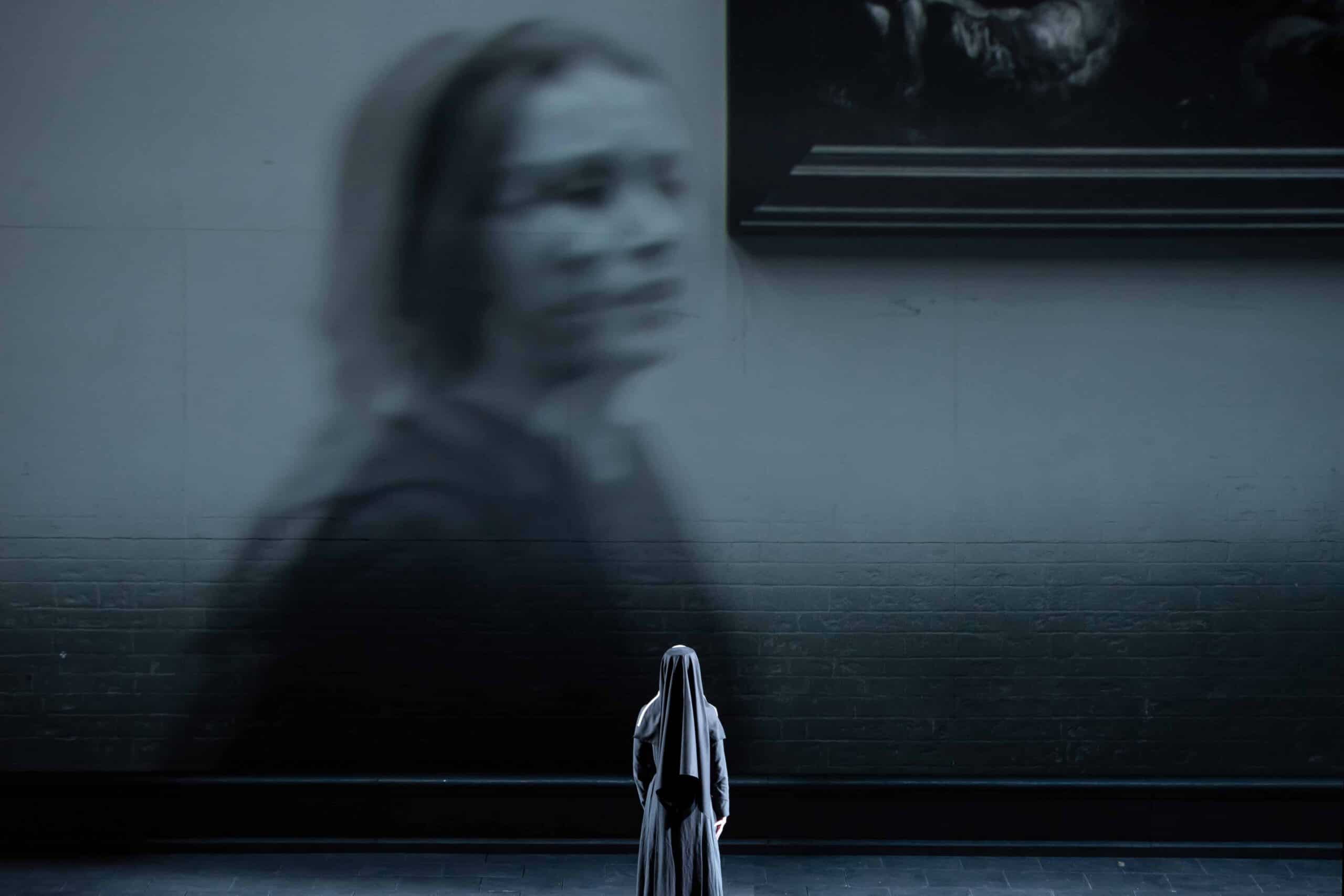
Puccini's favorite part of Il trittico tells the story of a mysterious sister. During the one-act play, the fate behind Suor Angelica's tragic past unfolds. For this production, De Munt worked with a combination of film projections and physical unfolding on stage. A successful idea, because the performance of Suor Angelica often requires a pure heart to lay bare the psychological layer. Less is more is certainly applicable here. Mezzo-soprano Raehann Bryce-Davis, seen here as La Zia Principessa, delivers an enormously strong vocal interpretation. It is very easy to make a one-sided caricature of the heartless woman, but in her voice one hears above all the voice of tradition that drives Suor Angelica (soprano Lianna Haroutounian) to madness.
Gianni Schicchi
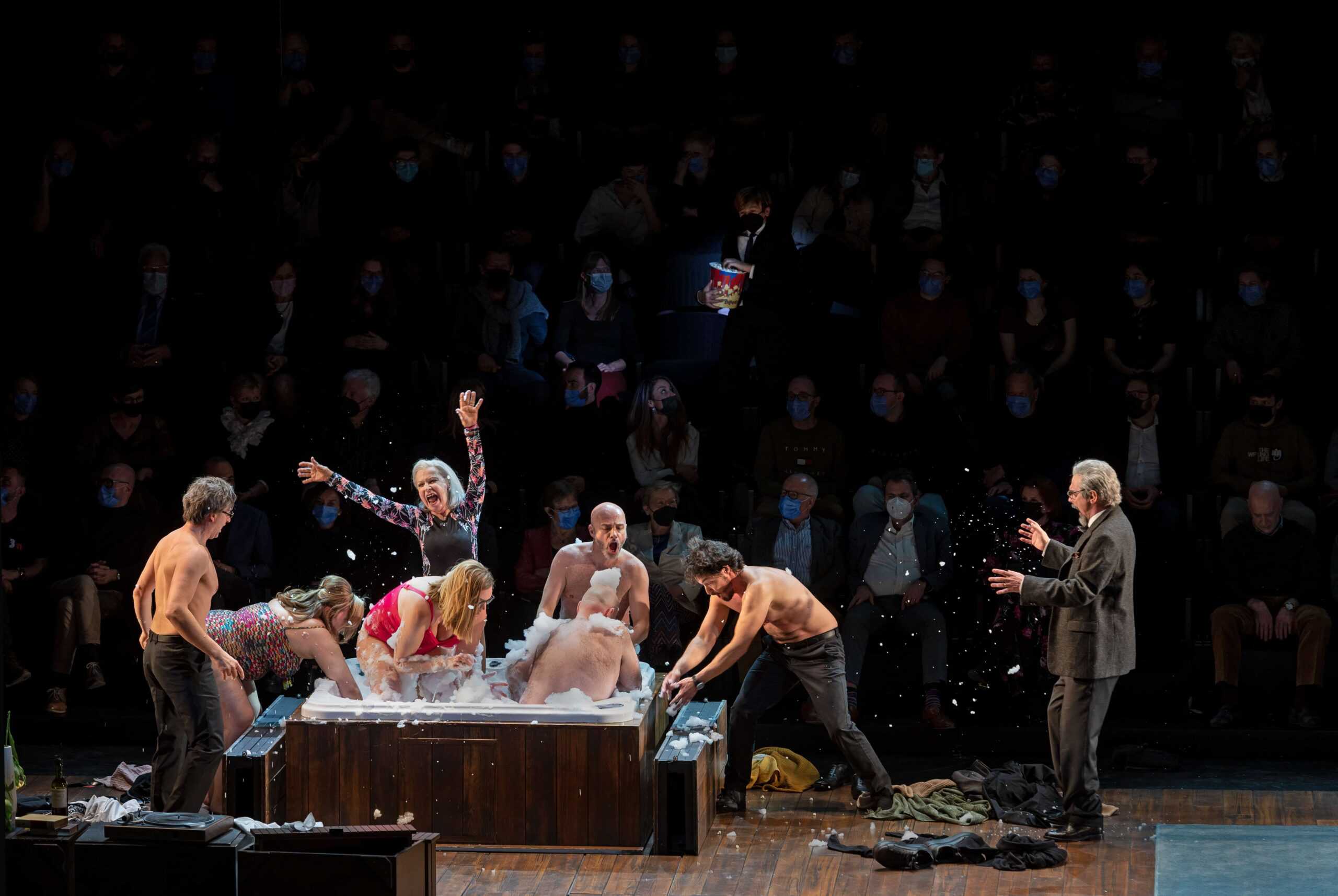
The final piece of Il trittico is a comedy, a moral image of love and greed. De Munt makes the bold decision here to also have the audience sit on the stage itself. What effect this has on the sound experience I will leave open, but it is certainly a fascinating opportunity for a viewer. Gianni Schicchi is clearly an ensemble piece, with Puccini's own version of the cunning but comic Falstaff in the center: Gianni Schicchi (Kálmán). What particularly works in this production is how the voices sound almost caricatural, always on the edge. A choice that fits the exaggerated image of this one-act opera. The closing words, as mentioned earlier, are directed at the audience: now tell what has been seen, and what is truth, what is deserved, or not!
Il trittico bringing in its entirety is a challenge for any opera house. It is either a hit or a miss. The production of De Munt has with its fascinating choices and strong voices created something that will resonate for a long time. For those who have not yet been able to witness this fascinating production: definitely do! Bravo De Munt!
WHAT: Il trittico: Il tabarro, Suor Angelica & Gianni Schicchi (1918), Giacomo Puccini (1858-1924)
Where: De Munt
When: 15/03/2022