


On the square in front of the Opera stands a crowd of people with Ukrainian flags draped around their shoulders. Evocative songs from their homeland echo through the air. They are asking for support for their overwhelmed country. Already 100,000 people, civilians and soldiers, have lost their lives in this senseless war. The world outside the opera house has strong bonds with music. Brahms composed Ein deutsches Requiem for those who must continue without their loved ones, support and solace: mothers, fathers, wives, children…
Uniqueness
This requiem is not mournful music or lamentation, it is above all soothing, comforting and mitigating music for those left behind in a connecting moment. Brahms began the work in the prime of his life when he was 28 years old. A possible trigger was the tragic death of his good friend Robert Schumann. He left the composition unfinished in his drawer for several years. Only when his mother died a few years later did he complete it. Through this loss, the music is deeply felt. Brahms had his reasons for writing his Ein deutsches Requiem in German text and not in the original Latin language. He wanted above all to address the bereaved. It is a hymn of comfort. With him no hell and damnation, no threatening apocalyptic perspectives, but encouragement for the mourning based on a comforting trust in God's unconditional love and a reconciliation with death. Actually, Brahms had wanted to call the work 'A human requiem'. Because he was able to choose the texts himself, he had free rein to set up an ingenious structure with great dramatic arcs. He creates musical coherence through, among other things, an ingenious use of recurring motivic material.
Brahms appeals with his requiem to a universal religious sentiment. He cultivates a spirit of gentleness, tenderness and love that is quite rare in the history of requiems. Anyone sensitive to subtle tonal nuances and mysterious beauty will find plenty to enjoy.

Structure
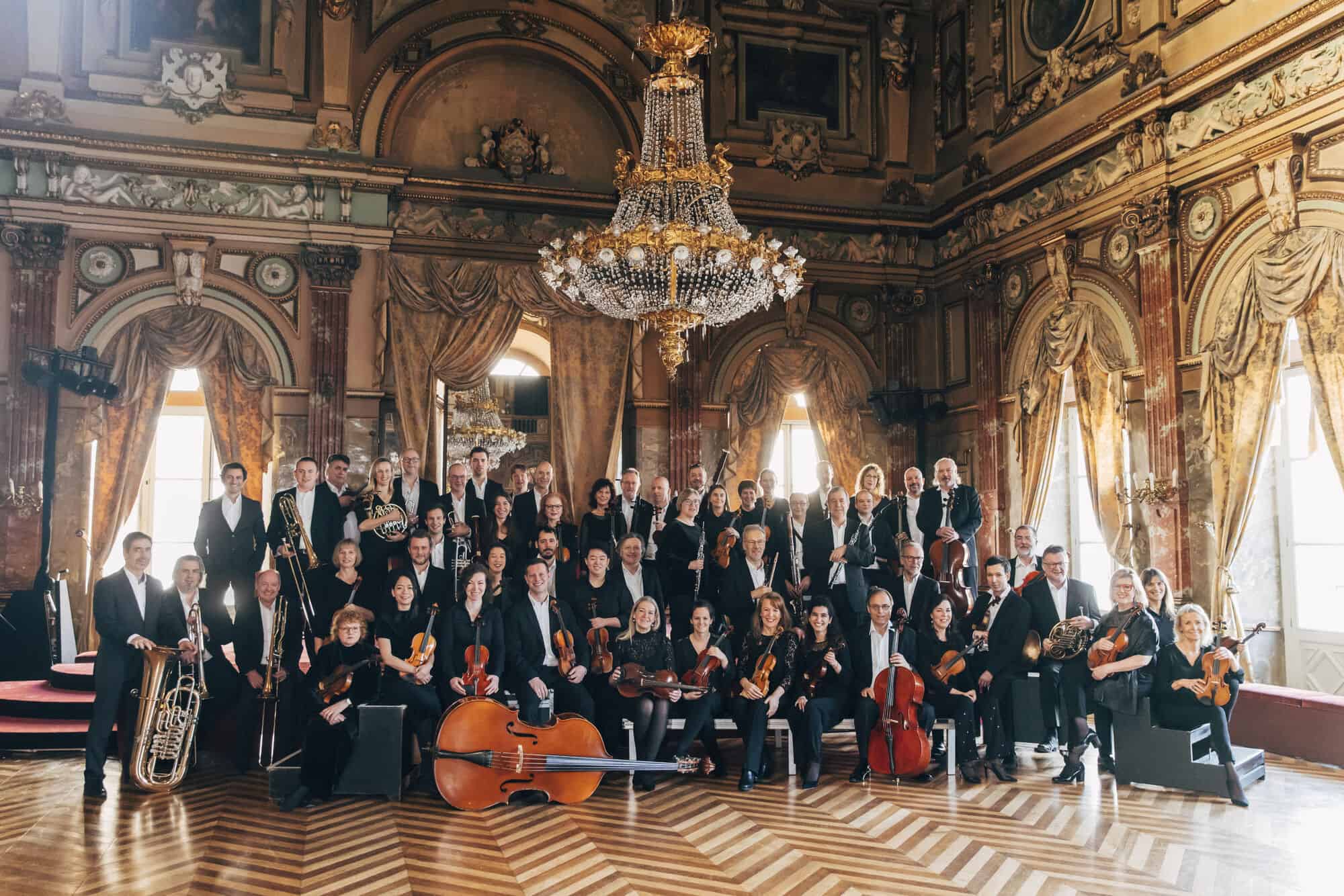
Ein deutsches Requiem consists of seven movements for mixed choir and orchestra. A baritone soloist appears in movements 3 and 6, here sung by Austrian Wolfgang Stefan Schwaiger, the solo part of movement 5 is performed by Dutch soprano Lenneke Ruiten.
The opening movement begins sonorously with strings: violas, cellos, double basses, "Selig sind, die da Leid tragen". Almost in prayer, the Opera Choir begins. Conductor Alejo Pérez gives the orchestral sound height and depth. In movement 2, a funeral march that also has brightening moments, the full orchestra unfolds. The conductor knows how to beautifully meter the stylistic force: the tonal and emotional value. Baritone Wolfgang Stefan Schwaiger boldly launches into movement 3, "Herr lehre doch mich". He addresses God with confidence: 'Let me know how transient I am'. In movement 6, "Denn wir haben hie keine bleibende Statt", he also has milder passages to sing. They fit with the secret he reveals: man can overcome death. The choir then sings defiantly: 'Death, where is your sting?' in an orchestral hurricane and impressive orchestration.
[caption id="attachment_38618" align="alignleft" width="200"] © Thomas Janssen[/caption]
Very beautiful and poignant is movement 5, in which a wonderful passage is reserved for soprano Lenneke Ruiten, a beautiful appearance with an impressive voice: a song like a spell against sorrow and grief. A word of encouragement for those who remain alone. Only at the end does the choir join her in a whisper.
The 7th movement is in several ways the conclusion of the requiem as a whole. Brahms returns to the opening key and resumes motivic material.
It is a work of comfort and that is also what this beautiful, transparent performance offers. Brahms lets hope prevail in a sad context. Singers and instrumentalists complement each other seamlessly in this grand work full of pathos, intimate lyricism and hopeful serenity. A wonderful choice work to let the full potential of Choir and Orchestra shine.
WHAT: Ein Deutsches Requiem - Johannes Brahms (1833 – 1897)
Festival van Vlaanderen Gent in coproduction with Opera Ballet Vlaanderen
WHO: Lenneke Ruiten [soprano], Wolfgang Stefan Schwaiger [baritone], Symfonisch Orkest Opera Ballet Vlaanderen and Choir conducted by Alejo Pérez
WHERE: Opera Antwerpen
WHEN: Sunday 25 Sept.'22 - 15:00