You know Rossini in his buffo operas as a master of confusion, surprise and absurd situations? Nino Rota matches him by far! Il cappello di paglia di Firenze is a hilarious opera with here and there a nod to the ensembles and virtuoso coloraturas of bel canto.
We immediately associate the name Nino Rota with the films of Federico Fellini. But Nino Rota composed not only for cinema. It is therefore a good idea of the Opéra Royal de Wallonie to bring his opera to the fore.
Who is Nino Rota?
Nino Rota (3 December 1911 – 10 April 1979) studies composition with, among others, Ildebrando Pizzetti and Alfredo Casella but is certainly influenced by pioneering composers from the early twentieth century such as Igor Stravinsky and Manuel de Falla. The harmonic sounds of Debussy and Ravel are also familiar to him, and when Toscanini recommends him in 1931 to the Curtis Institute in Philadelphia, he stands as a colleague alongside Gian Carlo Menotti and Samuel Barber. In the United States, he also gets to know Gershwin, Copland and the jazz scene. Back in Italy, Nino Rota emerges especially as a composer of film music for Fellini, Visconti and Zeffirelli, to name but the most important.
He becomes professor at the Conservatorium Piccinni in Bari, where he counts among his students none other than conductor Riccardo Muti, who praises him in his biography for his advice and affection. Muti testifies that Nino Rota did not pin himself to one style, his technique is versatile and not limited to avant-garde.
Il Cappello di paglia di Firenze was created at the Teatro Massimo in Palermo on 21 April 1955. The composer based it on the comedy by Eugène Labiche Un chapeau de paille d'Italie and wrote the libretto together with his mother Ernesta Rota Rinaldo. René Clair had already made a silent film based on it in 1927. In the 1950s, the opera was successful at the Piccola Scala in Milan in the staging of the famous director Giorgio Strehler.
La Folle journée de Fadinard
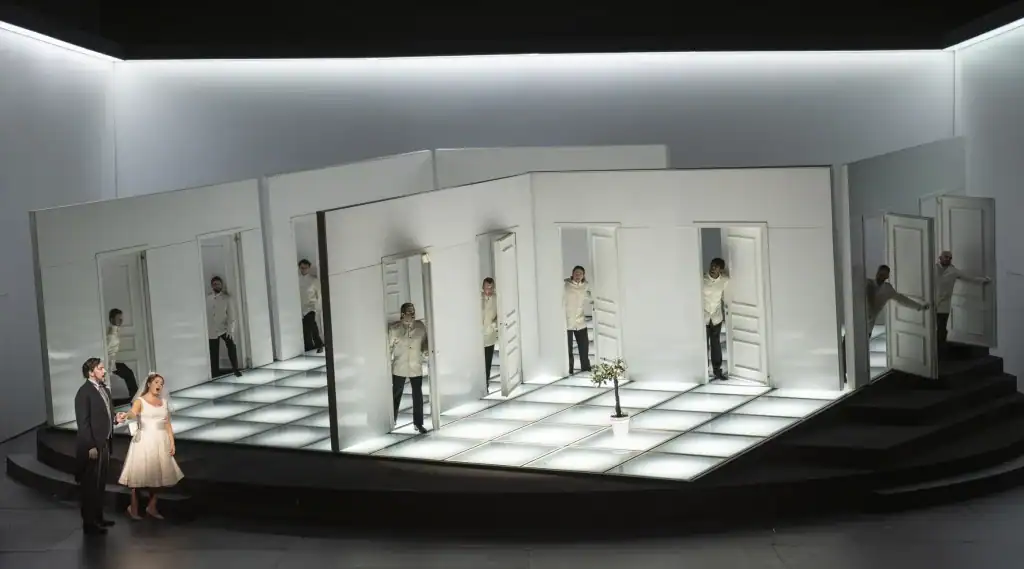
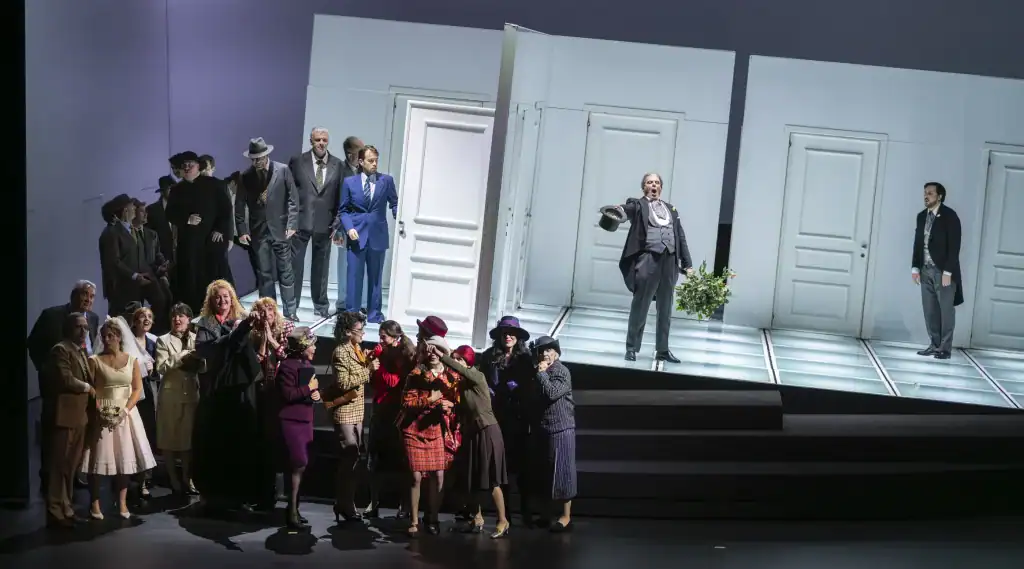
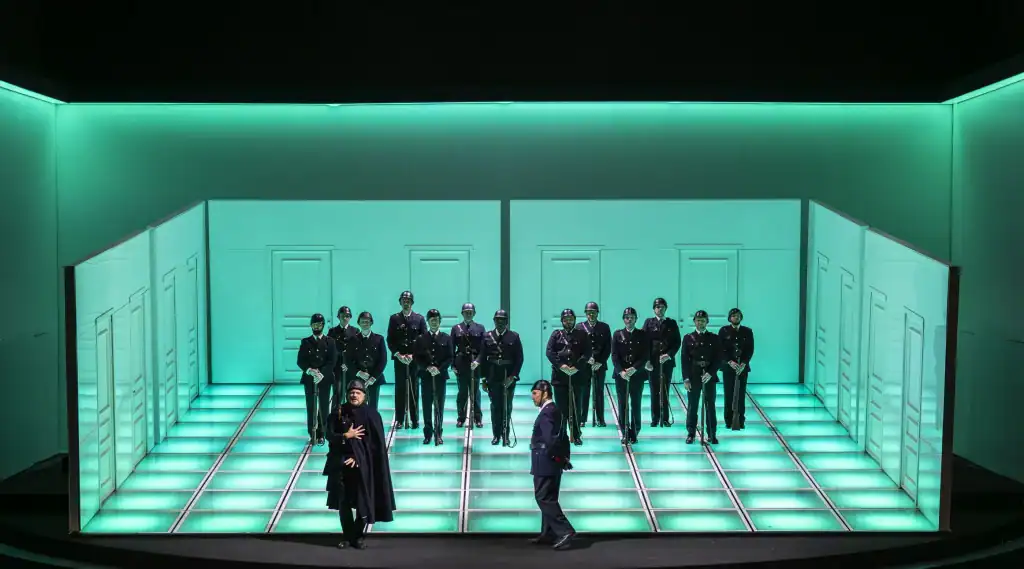
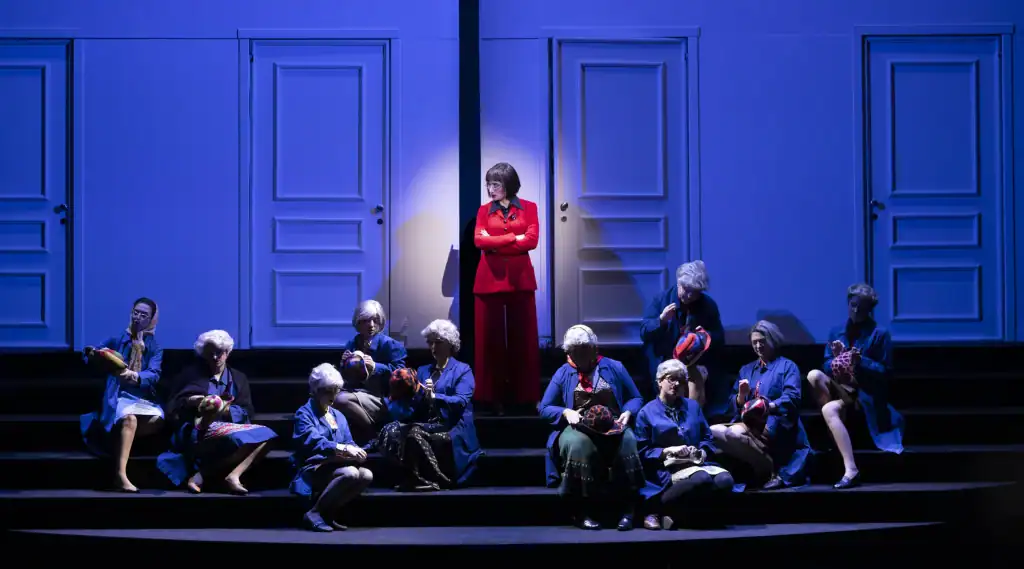
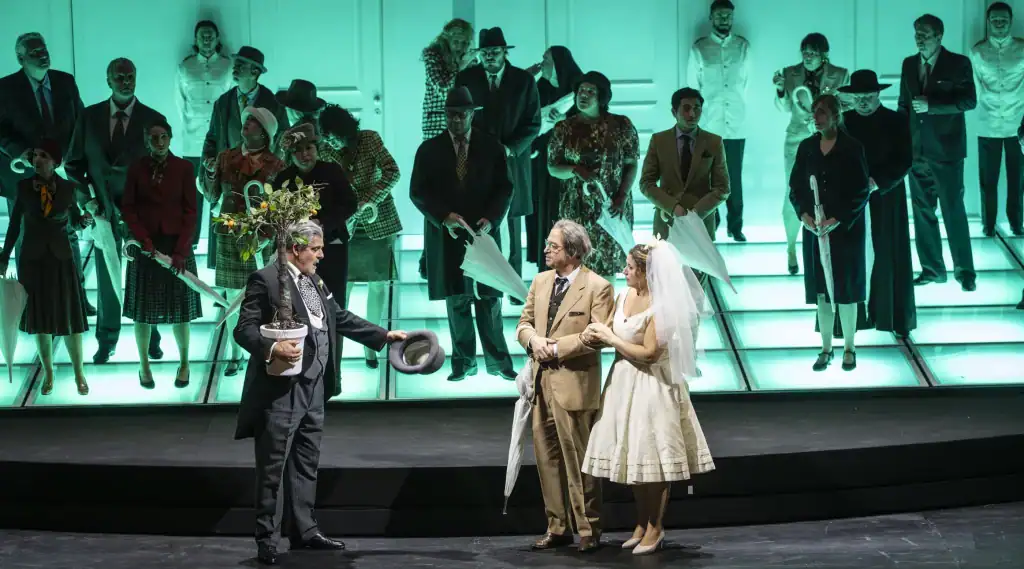
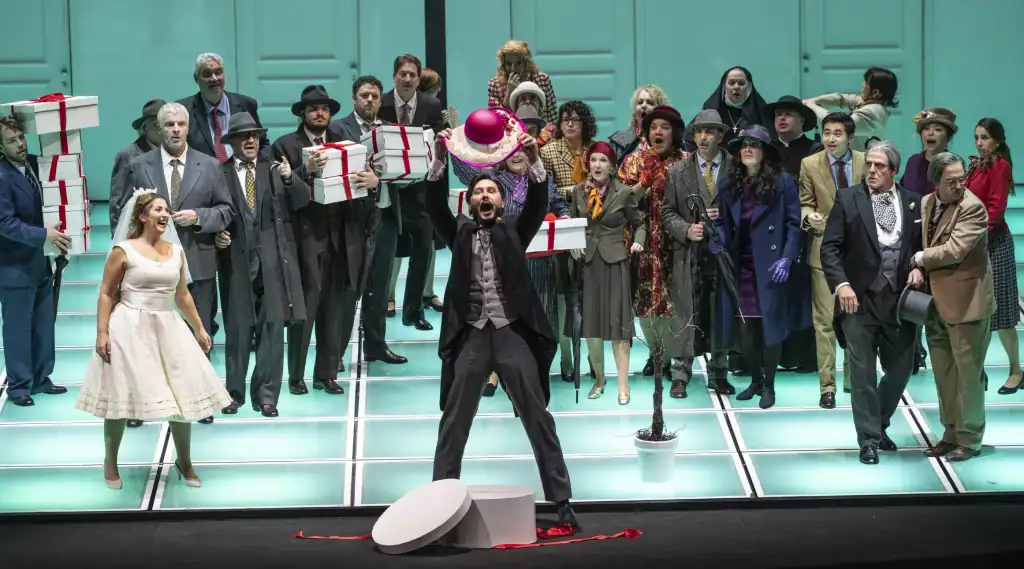
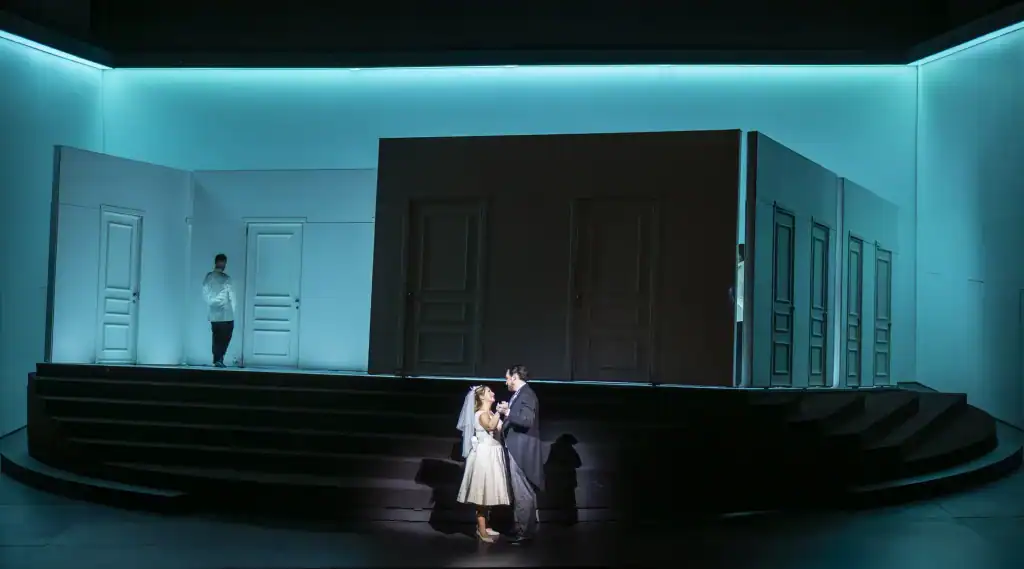
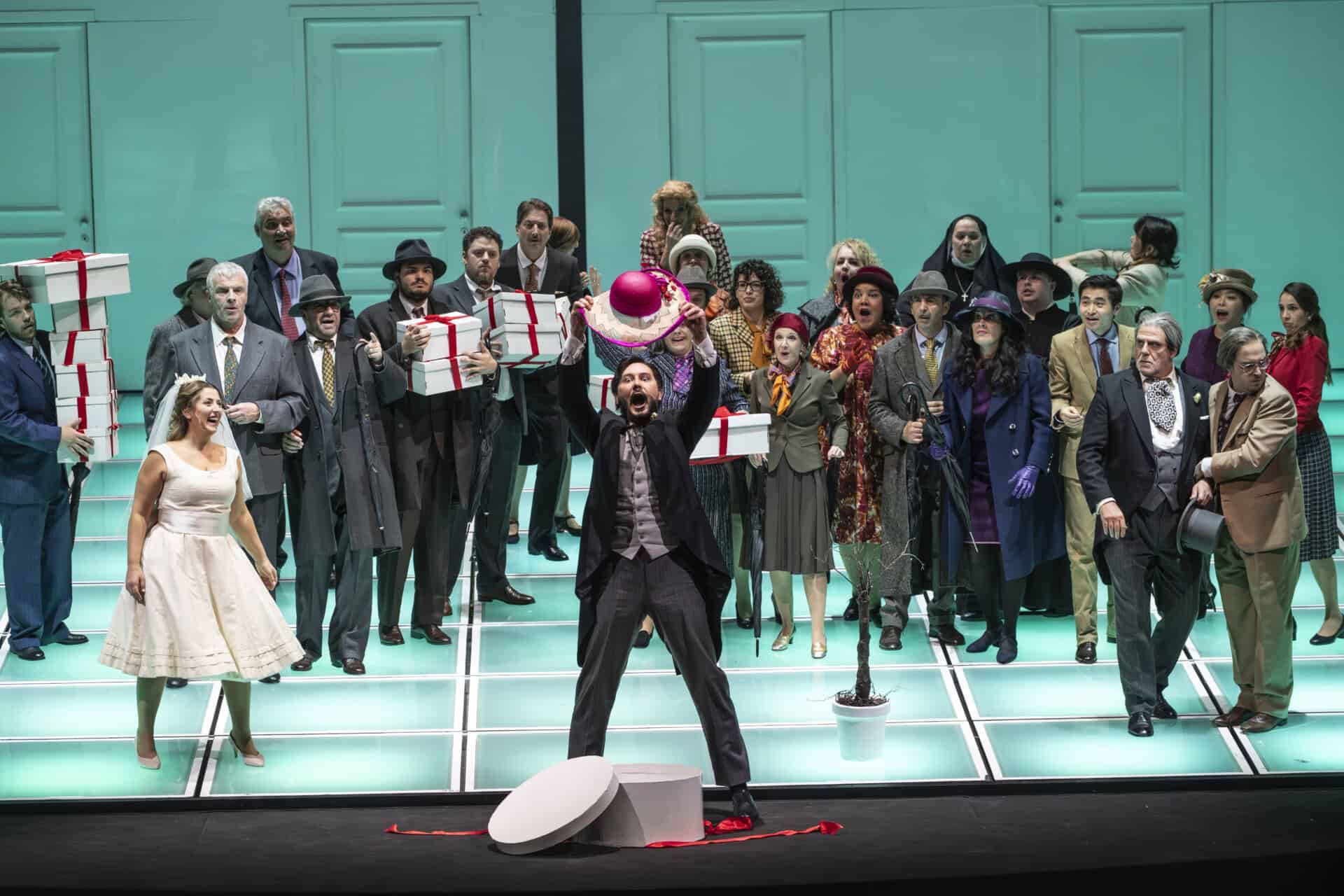
The story of "Il cappello di paglia di Firenze" is simply hilarious. A bridegroom, Fadinard, is on his way to his wedding, but the horse of the carriage munches up the straw hat of a lady in the company. The opera then spends all four acts on: getting the bridegroom to his wedding on time, keeping the prospective father-in-law calm, obtaining a straw hat "from Firenze" to prevent Anaide's husband, the lady of the hat, from suspecting her of infidelity. We plunge from one surprise and confusion into the next, minor characters (milliner, soldiers) and foolish situations (tight shoes) ultimately drive the story to the happy end: bride and bridegroom are united!Damiano Michieletto rightly interprets Il Cappello di paglia di Firenze as a "folle journée" à la Nozze di Figaro by Mozart. He ensures surprise and verve in his production, and the set is perfectly adapted to it. The story is colourful enough in itself to tolerate the snow-white decor. The main feature is the flexibility and mobility of the walls and the many doors. Sometimes the piece takes on the style of a farce. The characters behave very smoothly and lively. However torn Fadinard may be at some events, he does not lose courage and maintains a naïve hope that with the little bit of the hat remaining, he will ultimately find the right straw hat "from Firenze"!
We know Michieletto as a master of comedy on the opera stage, and here too he succeeds in letting the characters experience their foolishness as real and making the stupid details (the orange tree that symbolizes marital love moves from scene to scene, the too-small shoes, the soldiers) seem acceptably comic and never as unbelievably ridiculous. The singers certainly contribute to the success of the whole: it is a total team that realises both the vocal parts and the acting with verve and in the correct style. Perhaps Pietro Spagnoli as the future father-in-law brought the right "spirit" to the cast. Young conductor Leonardo Sini feels at home in the brisk and colourful score and lays the ironic accents delicately in the vocal lines where it comes to "Firenze". A subtle reference by Nino Rota to Puccini's Gianni Schicchi?
The audience certainly appreciated the introduction to this charming comic opera!
[embed]https://www.youtube.com/watch?v=kpbsg9mdCg4[/embed]