

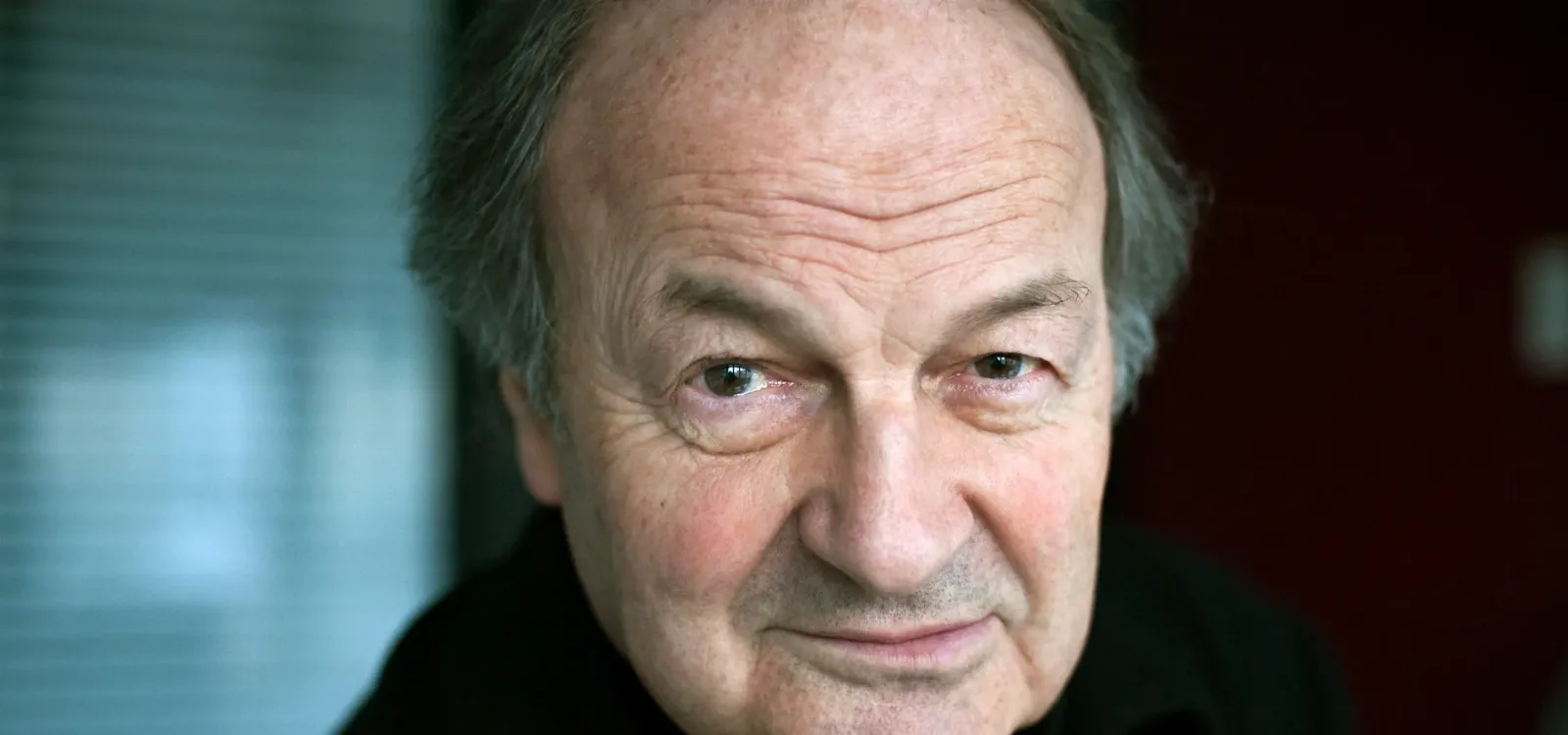
It was particularly good to see Michel Tabachnik again on the Flagey stage after more than ten years, as conductor emeritus of “his” Brussels Philharmonic. I cherish warm memories of the concerts I was lucky enough to attend with him in the past. This evening brought that glow back. With Tabachnik, music seems to arise spontaneously, carried by the moment and the interplay between conductor and orchestra. His interpretations never sound overly polished: the music remains alive, and you feel that not only among the musicians but also in the hall.
The programme brought together three very different musical worlds: Don Juan by Richard Strauss (1864–1949), Empreintes by Iannis Xenakis (1922–2001), and the Eighth Symphony by Ludwig van Beethoven (1770–1827). In this way the evening offered both familiar music and a surprising introduction.
Stories in sound
In Don Juan, the symphonic poem with which Strauss firmly placed himself on the map as a young composer, it was immediately striking how finely detailed Tabachnik's approach to the score was. The broad tempi gave the music room to unfold. The lyrical passages acquired a special expressive power, while the orchestral outbursts retained their brilliance. Concertmaster Otto Derolez also impressed with an exquisitely refined solo. The various voices of the orchestra came clearly to the fore and together formed a richly nuanced whole. It was astonishing orchestral playing, with an eye for detail as well as for the broad line.
With Empreintes we entered a very different sound world. Xenakis approaches music from sound and movement, rather than from melodies and recognisable themes. In this work from 1975, large, flowing sound movements arise alongside short, repeated note patterns. The different layers interlock and constantly change shape.
Beforehand, Michel Tabachnik himself took the microphone to guide the audience through the music with a few played notes and listening excerpts. He spoke about the meaning behind the sounds, about the emergence of photons before the appearance of humankind, and about the way sound moves through space. This introduction was fascinating: it offered a surprising perspective on music that you might otherwise experience mainly as an overwhelming mass of sound.
During the performance it became clear how lucidly the Brussels Philharmonic worked out those different sound layers. The individual movements remained easy to follow and together formed a constantly changing whole. Thanks to Tabachnik's explanation, you listened with different ears: you heard not only the sounds themselves but also gained more insight into the thinking behind them. The applause afterwards made clear that his commentary had helped the audience better understand and appreciate this remarkable music.
Classical clarity and joie de vivre
After the interval came Beethoven's Eighth Symphony, a work that in the shadow of some of the composer's better-known symphonies sometimes receives less attention. This performance was a convincing plea for the work. Tabachnik opted for a classical approach, but brought it with an irresistible joie de vivre. Beethoven's rhythmic wit, his unexpected accents and the humour with which he bends symphonic conventions to his will came to life with effortless playing pleasure. The music sounded clear and sparkling, never for a moment becoming predictable.
Tabachnik's body language made the performance especially memorable. Every gesture seemed to arise directly from the music. You saw a conductor thoroughly enjoying what was emerging in that moment, and that pleasure carried over into the orchestral playing. This was Beethoven as I like to hear him: with rhythmic sharpness, humour and a zest for life that carries the music from beginning to end.
Looking back with gratitude and looking ahead
What struck me most, after more than ten years, was Tabachnik's spontaneous musicality. His way of making music reminds one how special it is when a performance not only convinces technically but also gives the impression that the music unfolds before your eyes and ears. Such an experience is something I find far too rare in the concert hall these days.
The combination of Strauss, the discovery of Xenakis, and a Beethoven played with such pleasure made this an ideal concert evening. The Brussels Philharmonic played with great alertness and conviction, under a conductor who communicated his enthusiasm for the music in an infectious way.
I therefore hope that Michel Tabachnik, for as long as he wishes to and his health allows, will return to Flagey every year from now on. I will certainly be there.