

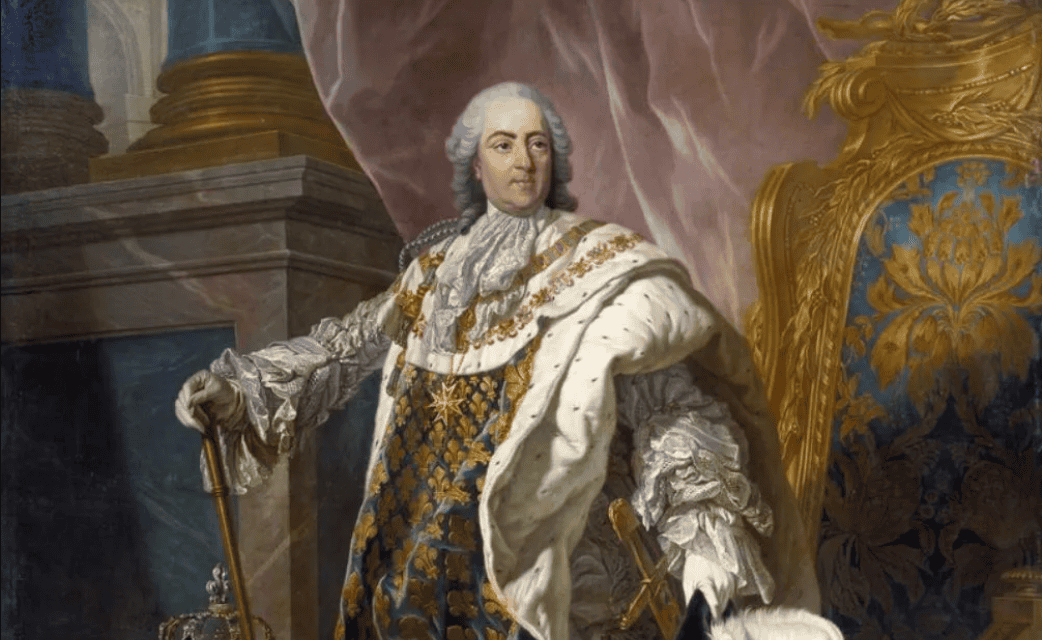
After the death of the Sun King, Louis XIV, the 5-year-old great-grandson Louis of Anjou was crowned Louis XV. The young king inherited a France with serious financial problems. Regent Philip II of Orléans managed to bring some order but the papal Unigenitus bull hung over France and divided the country. Absolute power was not in the cards for Louis XV. And le Grand Siècle for music and the arts was over.
Despite the financial constraints, the rebellious nobility, the difficult relationship with the clergy and the political indecisiveness of Louis XV himself, the king still supported artists and craftsmen at his court. The French court remained a cultural hub. Not in the same proportion as his predecessor but it still led to some pearls of French baroque.
Secular Music & Opera
| Rameau: L'orchestre de Louis XV
One of the most well-known names at the court of Louis XV was Jean-Philippe Rameau (1683-1764). The relationship between prince and composer was certainly not comparable to that between Louis XIV and Jean-Baptiste Lully. Rameau was 25 years in the service of Alexandre Le Riche de la Pouplinière, the tax farmer of the French exchequer. Even after la Querelle des Bouffons (1752/53), the composer continued to compose at court but without a patron.
You could say that Rameau was responsible for secular music at court. He did not enjoy a monopoly like Lully but still managed to compose quite a bit of opera and ballets for L'Académie royale de musique (Paris) and le Théâtre du château (Versailles). His first creations were the opera Hippolyte et Aricie (1733) and the ballet Les Indes galantes (1735).
The cd Rameau: L'orchestre de Louis XV brings four orchestral suites from his ballets and opera, starting with Les Indes galantes (1735). The dotted rhythms of the "Ouverture" [track 01] immediately set the tone and convey the French national style right away. French dances such as the musette, the minuet and the gavotte are abundantly present on this double album. Performed by Le Concert des Nations under the direction of Jordi Savall, this music sounds authentic.
Religious, Higher Spheres
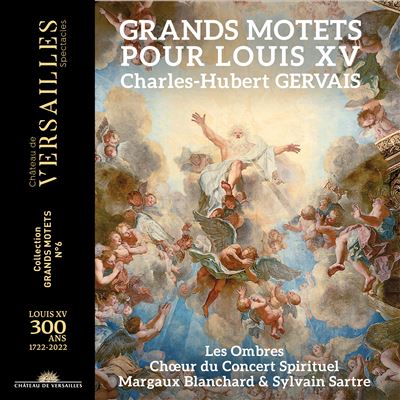
| Gervais: Grand motets pour Louis XV
Charles-Hubert Gervais (1671-1744) was the son of Hubert Gervais, a valet in the service of the Duke of Orléans. In the service of the regent, Gervais began as ordinaire de la musique and later in life grew into superintendent of the duke's music. Gervais had the ambition to follow in Lully's footsteps and to devote himself to secular music and opera. Gervais composed a number of operas, some in collaboration with Marc-Antoine Charpentier (1671-1744), and tried before la Querelle to find a compromise and reconcile the French and Italian styles. But this is not the oeuvre for which he is remembered today. No, it is the forty-five grands motets that he composed in the last 10 years of his career that we still know.
According to État actuel de la Musique du Roi (1733), the composer would have begged the duke not to receive the title of Sous-Maître of the royal chapel of music. The duke gave Gervais this position anyway and the composer's fate was sealed. He would no longer compose secular music but devote himself to the Latin tradition. It is in this capacity that he composed his grands motets .
In honor of 300 years of Louis XV (1722-2022), the label Château du Versailles selected some of these motets and compiled them on the cd Gervais: Grand motets pour Louis XV. They are all dramatic and follow a simplified form of his predecessor Michel-Richard Delalande (1657-1726). No complex structure then but clear structures that direct the listener's attention to the text. The Jubilate Deo (Psaume 100) [track 10-13] would have been one of the most popular works of the royal chapel of music. Both Louis XV and his successor Louis XVI are said to have enjoyed this work many times according to written sources. The other selected motets also have a similar, high level. The result is a beautifully composed program in a tasteful performance.
Intimate Circles at the Harpsichord
| L'aimable: une journée avec Louis XV
The harpsichord became a beloved instrument at the French court. Many composers, including Gervais, wrote Méthodes for this keyboard instrument. The cd L'aimable: une journée avec Louis XV compiles a program from "réveil-matin" to "étoiles" and thus reflects the daily arts education in the beaux arts for noble ladies.
Harpsichordist Céline Frisch brings together compositions by five different composers for this program. Of course, François Couperin (1668-1733), as one of the most important French baroque keyboard composers, has a place on this cd. The other four names are less well known today but also had successful careers. Frisch presents this repertoire with a light and sometimes even playful touch, tasteful ornamentation and carefully chosen registers.
Information
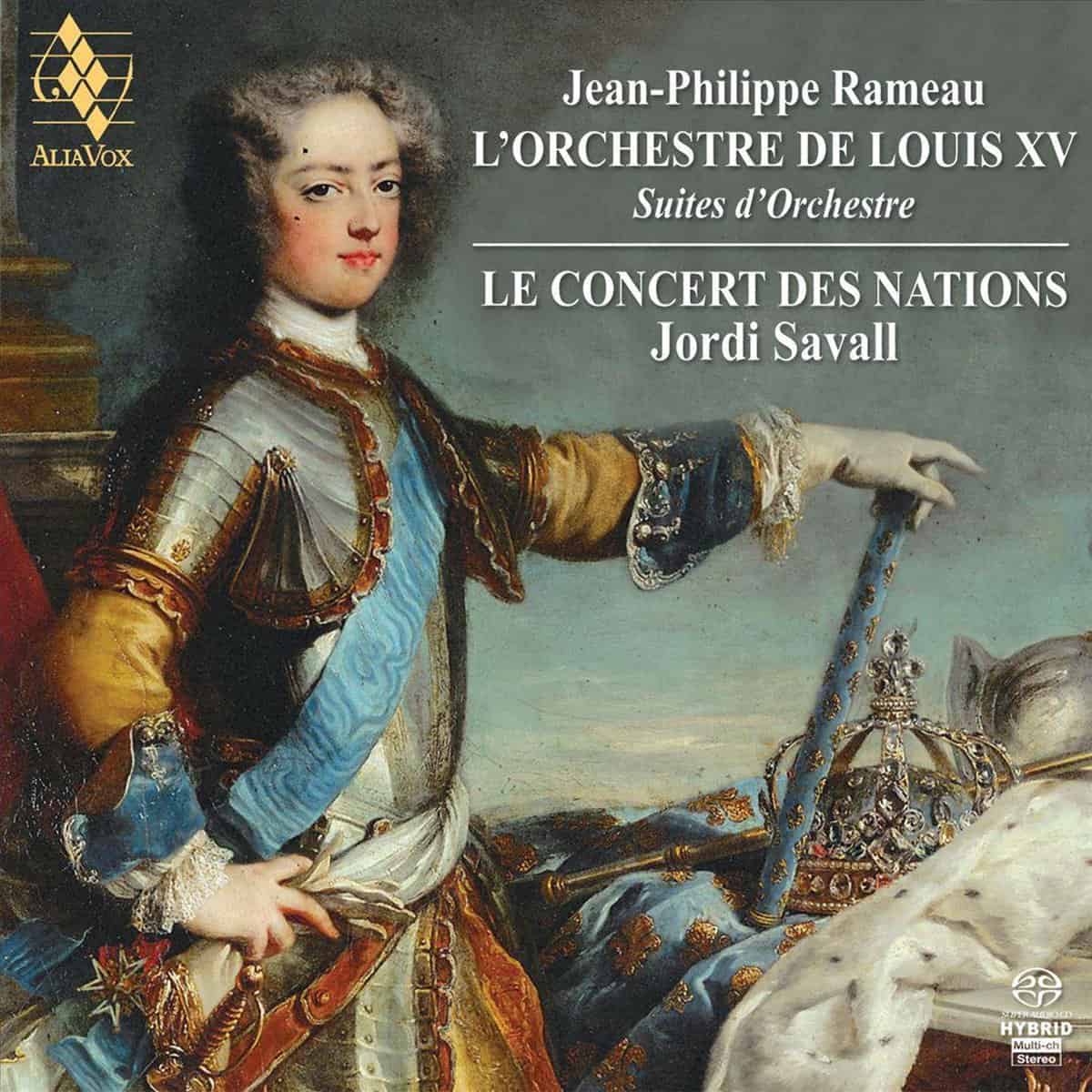
Rameau: L'orchestre de Louis XV
- WHO: Le Concert des Nations conducted by Jordi Savall
- WHAT: Rameau: L'orchestre de Louis XV
- RELEASE: AliaVox (AVSA9882A+B / AVSA 9882A+B)
- ORDER: JPC
Gervais: Grand motets pour Louis XV
- WHO: Choeur du Concert Spirituel, Les Ombres conducted by Sylvain Sartre
- WHAT: Gervais: Grand motets pour Louis XV
- RELEASE: Château de Versailles Spectacles (CVS073)
- ORDER: JPC
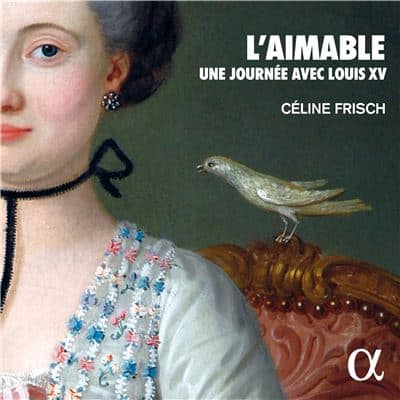
L'aimable: une journée avec Louis XV
- WHO: Céline Frisch [harpsichord]
- WHAT: L'aimable: une journée avec Louis XV
- RELEASE: Alpha Classics (ALPHA837)
- ORDER: JPC