

You might think: well, there's only one work on the program – the seventy-minute Fifth Symphony by Gustav Mahler (1860-1911). Will this attract an audience? Yes, certainly: Mahler is in the DNA of the Concertgebouw, and his Mahler festivals are invariably sold out months in advance. Some symphonies you hear, others you experience. Mahler's Fifth unquestionably belongs to that latter category. As a musical rollercoaster, this one stands on its own and needs no other work as – irreverently put – filler.
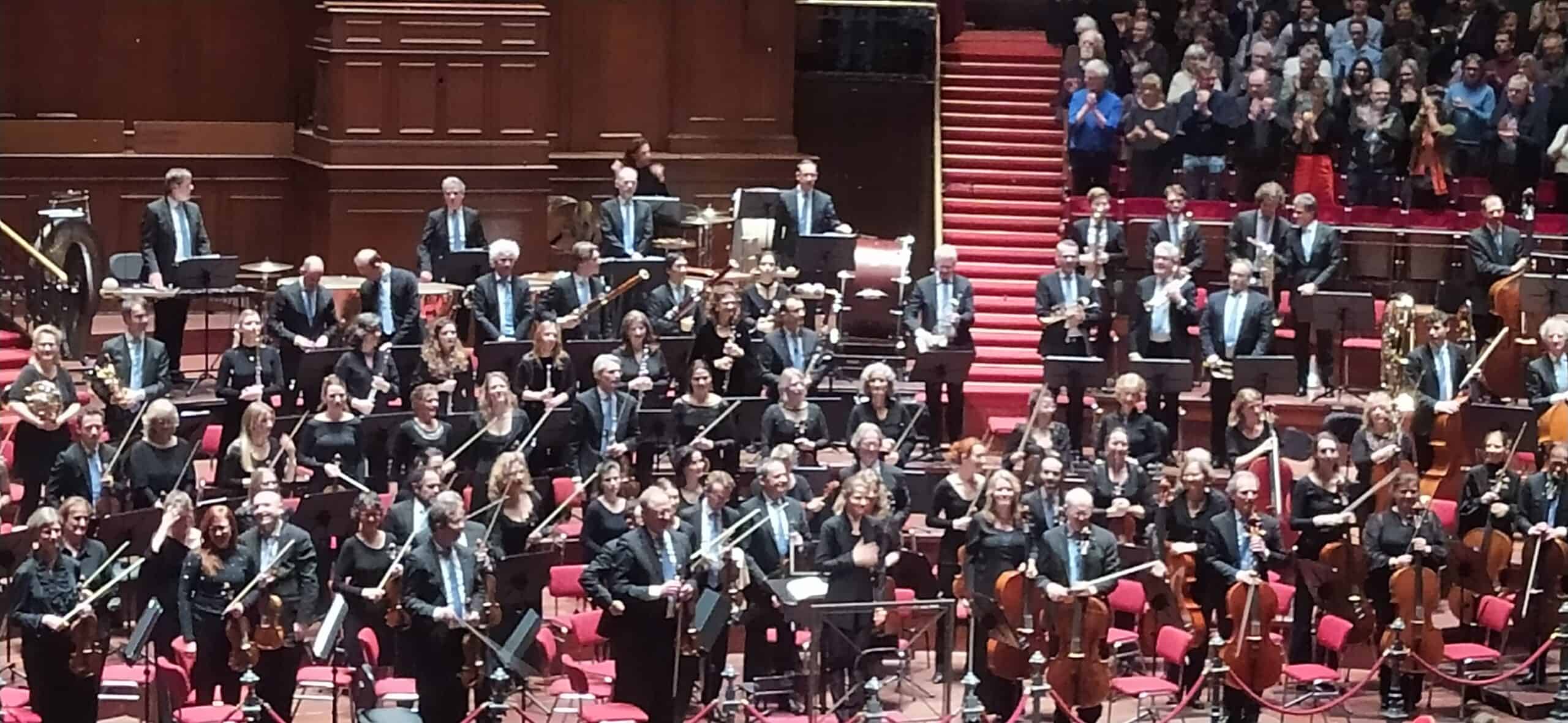
Karina Canellakis made of this symphony in a packed Concertgebouw in Amsterdam during the Saturday Matinee of January 17 a compelling journey through grief, restlessness, love and temporary liberation. No loose moments, no effect-seeking, but one great, breathing narrative that slowly unfolded.
What immediately struck was the matter-of-factness with which she led her Radio Filharmonisch Orkest through this complex score. Her background as a violinist was evident in the way the strings phrased and connected lines, but equally in her attention to transparency and balance. The orchestra sounded cohesive and alert, with woodwinds sharp and characterful, brass powerful yet disciplined, and strings lyrical and layered. Moreover, every solo – both from brass and woodwinds – sounded matchless, a challenge and far from a sinecure, with special praise for the horns. Everything was in service of the symphony's long breath.
A symphony as inner biography

Mahler wrote his Fifth in 1901–1902, in a period of physical vulnerability and artistic reorientation. It is his first completely instrumental symphony in a long time, and perhaps also his most inner. At the same time, this work marks a break with the vocal-symphonic thinking of the Wunderhorn years: here the orchestra itself carries the existential burden. The five movements form not separate parts, but a carefully constructed dramaturgical arc: from the dark Funeral March to a finale that does not claim the light triumphantly, but slowly earns it, and even then dares to problematize it.
The first movement, Trauermarsch, was carried and tautly held. Canellakis deliberately avoided any form of pathos, among other things by keeping the march in constant motion and carefully dosing the rubato. The rhythm remained relentlessly forward-marching, while above it a world of melancholy and tension was built. The low strings gave weight, the brass cut sharply through the texture. This movement did not sound like a static monument of mourning, but as a living, breathing process that set the tone for the rest of the symphony.
In the second movement, Stürmisch bewegt, the music burst open. Here the inner struggle became audible: restless motifs, suddenly appearing accents, violent dynamics. Canellakis kept the tempo tense but manageable, so that the complex polyphony remained clear. The chaos was palpable, but never came across uncontrolled, which in some performances is apt to go wrong. The moment when we first catch a glimpse of heaven in this work was rightly immediately stifled in its infancy.
Dancing on a volcano
The central Scherzo, Kräftig, nicht zu schnell, brought a different kind of energy. Grotesque, rhythmic, at times ironic. Here the orchestra showed its enormous flexibility: nimble where it could be, threatening where it had to be. Canellakis let the dancing motifs breathe, without losing the underlying tension. It was Mahler at his most ambiguous, as if you were dancing on a volcano: lust for life and menace in one breath, life itself called into question, with a glimmer that flares up only to be extinguished again.
Then the Adagietto. Perhaps the most fraught part of the symphonic repertoire, because almost everyone has a personal connection to this music. Canellakis chose a calm, but not dragging tempo, allowing this part to retain its place within the symphonic arc of tension and not get bogged down in mere sentimentality. The tempo could have been somewhat faster for me – in the tradition of Mahler himself and Bruno Walter – though even the legendary Bernard Haitink allowed himself to be seduced into a quarter hour in his recording with the Berliner Philharmoniker. Harp and strings sounded intimate, warm, almost vulnerable. Every phrase seemed carefully weighed, every silence meaningful. There was no sugaring or romanticizing, but an understated telling. The Adagietto functioned not as a loose intermezzo, but as the emotional turning point of the symphony. It was ideal that the finale followed immediately afterward, just as Mahler intended.
The Rondo-Finale brought apparent relaxation, although Mahler continues to search for the light. Rhythmic vitality, contrapuntal clarity and an increasingly broadening sound image gave this movement a liberating character. The brass radiated without dominating, the woodwinds kept the play sharp, and the strings connected everything into one flowing stream. Again and again Mahler tries to capture that heaven and transform it into music. When it finally seems so – and many a conductor slows down here to let the sublime music spread – Canellakis makes short shrift of it. Finally a conductor who dares to do this! For that glimpse is after all illusion and is already contradicted in the notes themselves.
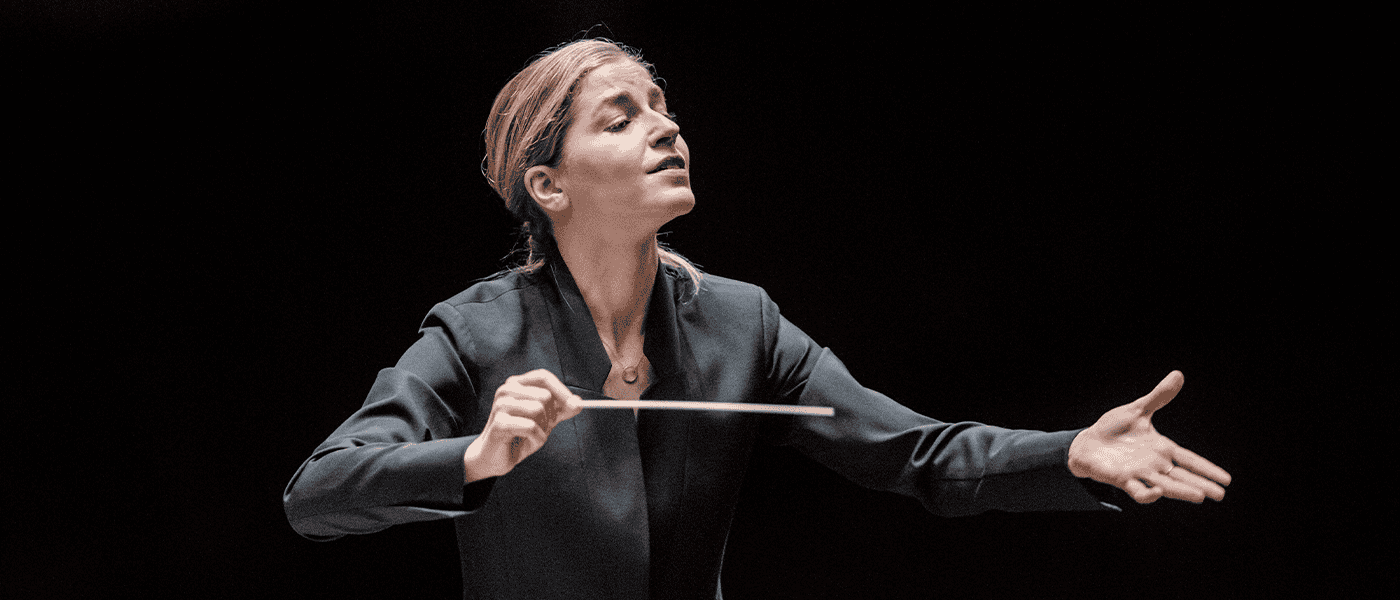 With this, Canellakis demonstrates that she truly comprehends the 'unheimliche' character of Mahler's music, and does not remain at the surface as too many contemporary performances do. This ending is not a victory claimed, it offers no redemption. It makes audible what philosopher Martin Heidegger (1889-1976) calls 'unheimlich': the moment when man loses his taken-for-granted sense of home and is confronted with existential displacement. The music steadfastly refuses to offer support and leaves the listener in a state of vigilant uncertainty.
What made this performance so convincing was the way emotion and structure remained continuously in balance. Canellakis told the story of Mahler's Fifth without exaggerating it, but also without neutralizing it. She found the right equilibrium: motifs were given space, arcs of tension were carefully spun out and details presented themselves naturally. With the exception of the Adagietto, she came as close to the core of Mahler himself, and for me this performance – unexpectedly – became a new standard.
Let us hope that more conductors distance themselves from the Bernstein tradition, which plays Mahler ever more slowly, and seek once again the essence of Gustav Mahler the man. Unlike his mentor Anton Bruckner (1824-1896), he, as a displaced person, never finds God. All his symphonies are an attempt to do so, each time doomed to fail anew. Precisely for this reason these works grip us again and again: they remain the soundtrack of our uncertain, uprooted society.
Remaining on the way
This was no Mahler crying out for attention, but Mahler being listened to, understood and passed on. A performance that not only made an impression, but lingered like a long thought that only came fully to rest after the final chord, leaving the listener with an essential question.
For in Mahler's Fifth creeps in a feeling that does not immediately reveal itself: a slight disruption, as if the ground beneath the music never quite settles. It is not fear in the ordinary sense, but an inner unrest that keeps the listener awake. What seems familiar suddenly tilts; what offered support is relinquished again. Precisely therein lay the strength of this performance. Canellakis did not lead us to a safe destination, but let us wander between darkness and light, between mourning and longing. Not to feel at home, but to accept being underway itself…