

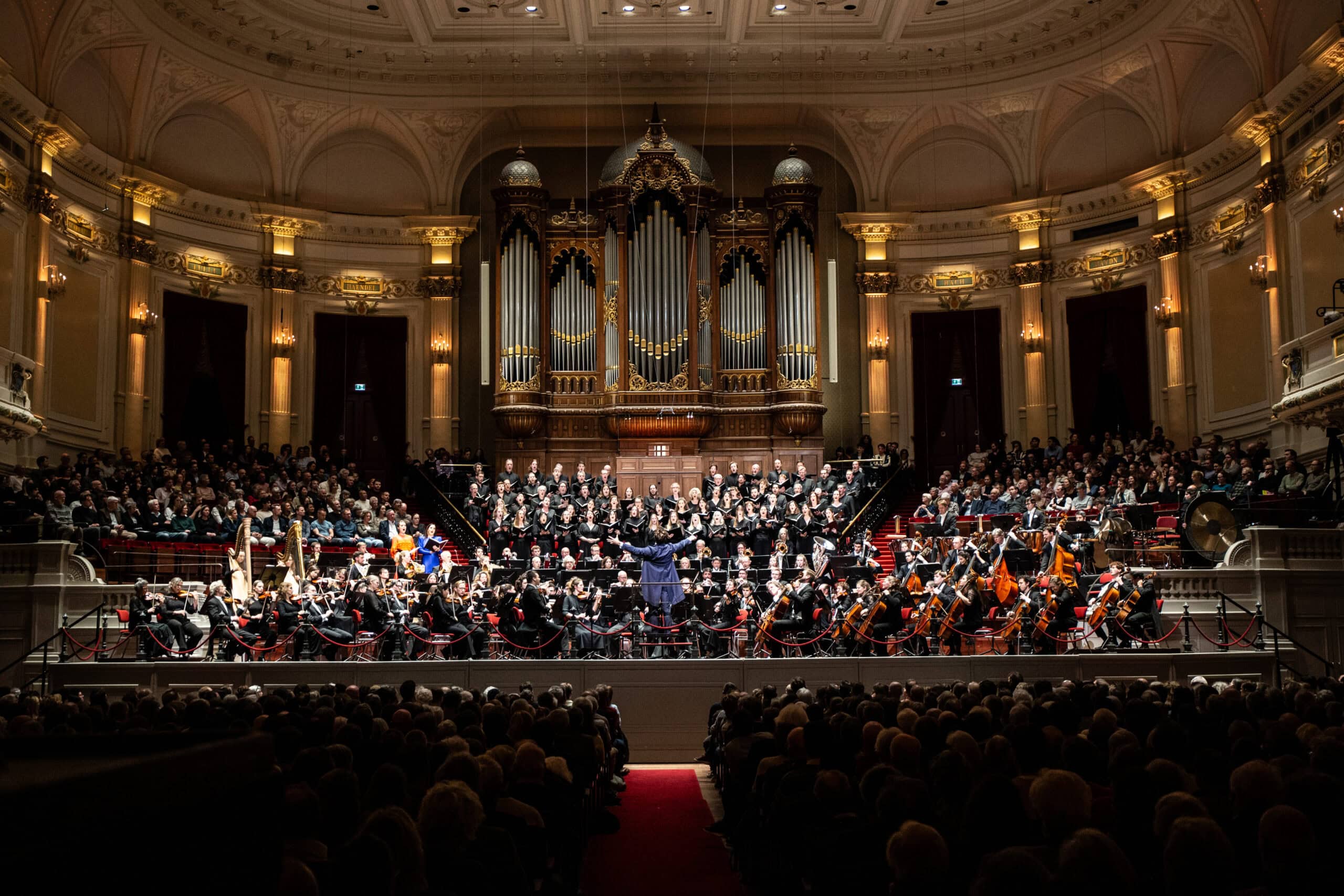
May a reviewer remain critical when the audience swoons? The answer is a resounding yes. Especially when one has had the privilege of experiencing the Second Symphony, Auferstehung, by Gustav Mahler (1860-1911) live on multiple occasions and can thus measure a performance against previous experiences. Audience emotion is no guarantee of interpretive correctness – least of all with a composer for whom the existential weight of every note is essential. Precisely with Mahler does emotion truly count when it springs from an inner, musical logic and not merely from overwhelming sound.
That the audience responded with blazing enthusiasm and visible emotion after the final measures was nevertheless hardly surprising. Who can remain unmoved after this monumental symphony? Mahler composed his Second between 1888 and 1894, a period in which he was active primarily as a conductor. For him, composing was no casual side activity, but an obsessive quest. His ambition was nothing less than "a symphony like the world," a work that brought life, death, memory, irony and hope together in one all-encompassing musical trajectory. The Auferstehung is his first symphony with choir and soloists, and above all a work in which orchestra, voice and silence function as bearers of an inner experience. It is music that wants not only to be heard, but to be experienced – from within.
A revelation of musical craftsmanship
The Netherlands Philharmonic Orchestra, celebrating its fortieth anniversary this year, delivered a performance of exceptionally high caliber. What struck particularly was not merely technical perfection, but the palpable intensity with which every musical thought was carried. The strings sounded rich and homogeneous, with warm depth in the lower registers and broadly breathing lyricism in the upper lines. Woodwinds and brass excelled in crystal-clear solos that never felt like isolated moments, but were organically embedded in the whole. The percussion stood like a rock, powerful yet measured, and the harps shimmered through the hall as a continually pulsating undercurrent.
Had the orchestra wished to present its calling card anywhere, it was now. The choir Laurens Symfonisch, which I had not heard live before, also made a deep impression with its discipline, tonal balance and controlled intensity. Their whisper-soft entries and layered buildup in the finale bear witness to exceptional collective musicality and concentration. Together, orchestra and choir formed the true revelation of the evening and carried the existential weight of Mahler's score with audible dedication.
Seeking Mahler's depth: Viotti's slowness and tension
The problem, then, lay not with the performers, but with the interpretive choices of conductor Lorenzo Viotti.
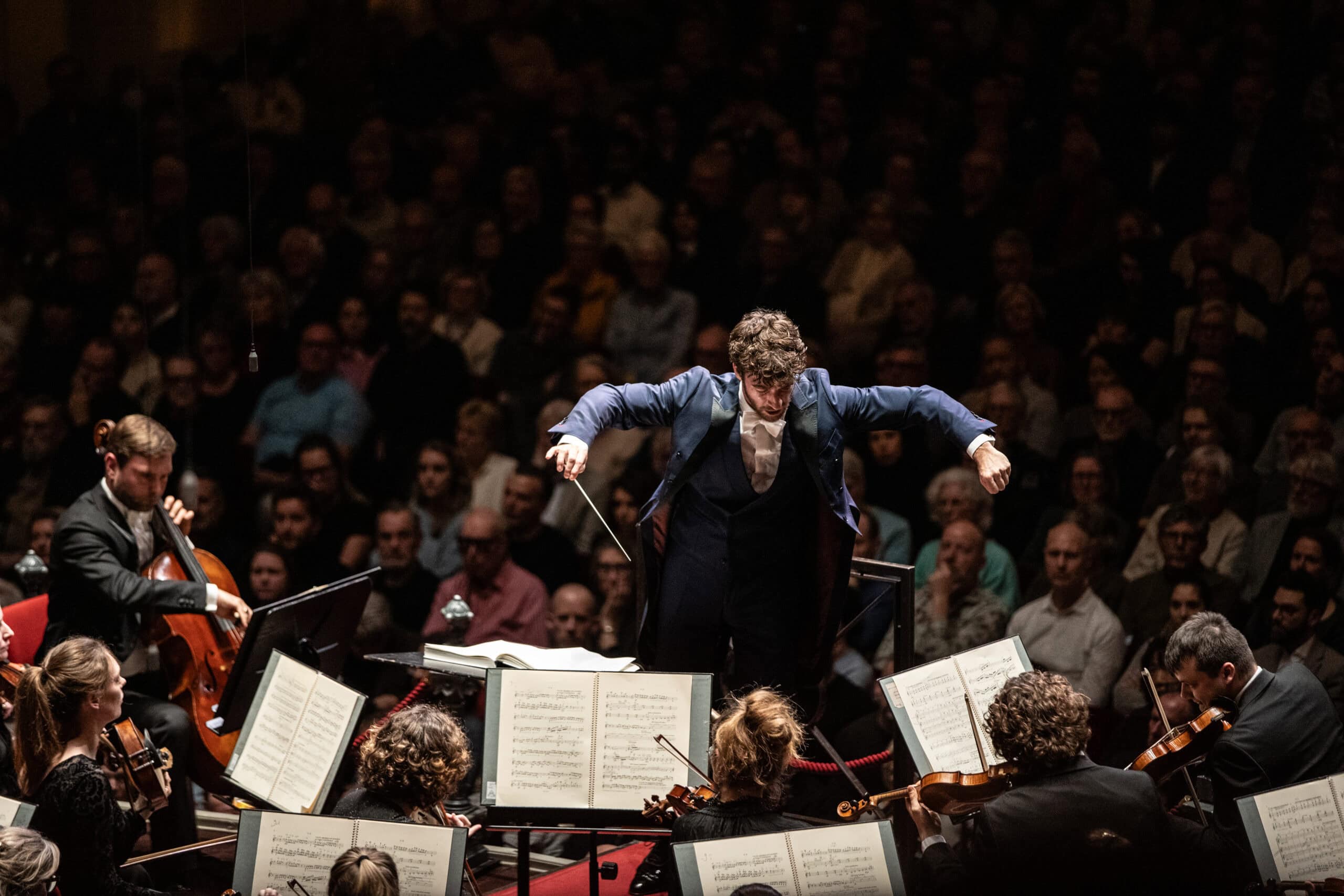 From the opening section, the monumental Allegro maestoso based on Mahler's earlier Totenfeier, Viotti opted for expansive tempi in the hushed passages. The funeral march sounded threatening and heavily struck, with low strings and brass pointedly underscoring the weight of mortality. The tension was maintained but built extremely slowly. On paper, this is a defensible choice, but in practice it led to a certain saturation of musical discourse. The tension failed to settle deeply in the listener's experience and risked congealing rather than transforming organically. That the conductor visibly corrected himself at one point and gestured to the woodwinds to follow the harps better seemed partly a consequence of tempo choices that continually tested the ensemble's coordination, but which were accommodated by the orchestra with great concentration and discipline.
The Andante moderato, with its roots in the minuet and its retrospective glance at bygone life moments, was rendered transparently and frailly. Here Viotti's attention to detail and tone color came more into its own. The gentleness and nostalgic shimmer of this section were undeniably beautiful. Yet here too lingered the feeling that reflection was stretched to near standstill. The music breathed, but sometimes against its natural movement, causing melancholy and stillness to risk calcifying into mere aesthetics.
The scherzo, based on the song Des Antonius von Padua Fischpredigt, did bring more movement and ironic sharpness. The capricious rhythm and circular character – life endlessly turning – were rendered clearly. Woodwinds and percussion articulated sharply, the strings maintained the foundation in continual motion. Yet here too remained the feeling that everything was meticulously measured, calculated rather than organically grown.
Viotti's approach became most vulnerable in Urlicht. The opening was extremely soft and slow. The opening words O Röschen rot did not sound stable everywhere and were difficult to understand. Against this stood a particularly successful use of the Fernorchester, which gave this section an almost sacred depth and beautifully supported the spatial character of Mahler's vision.
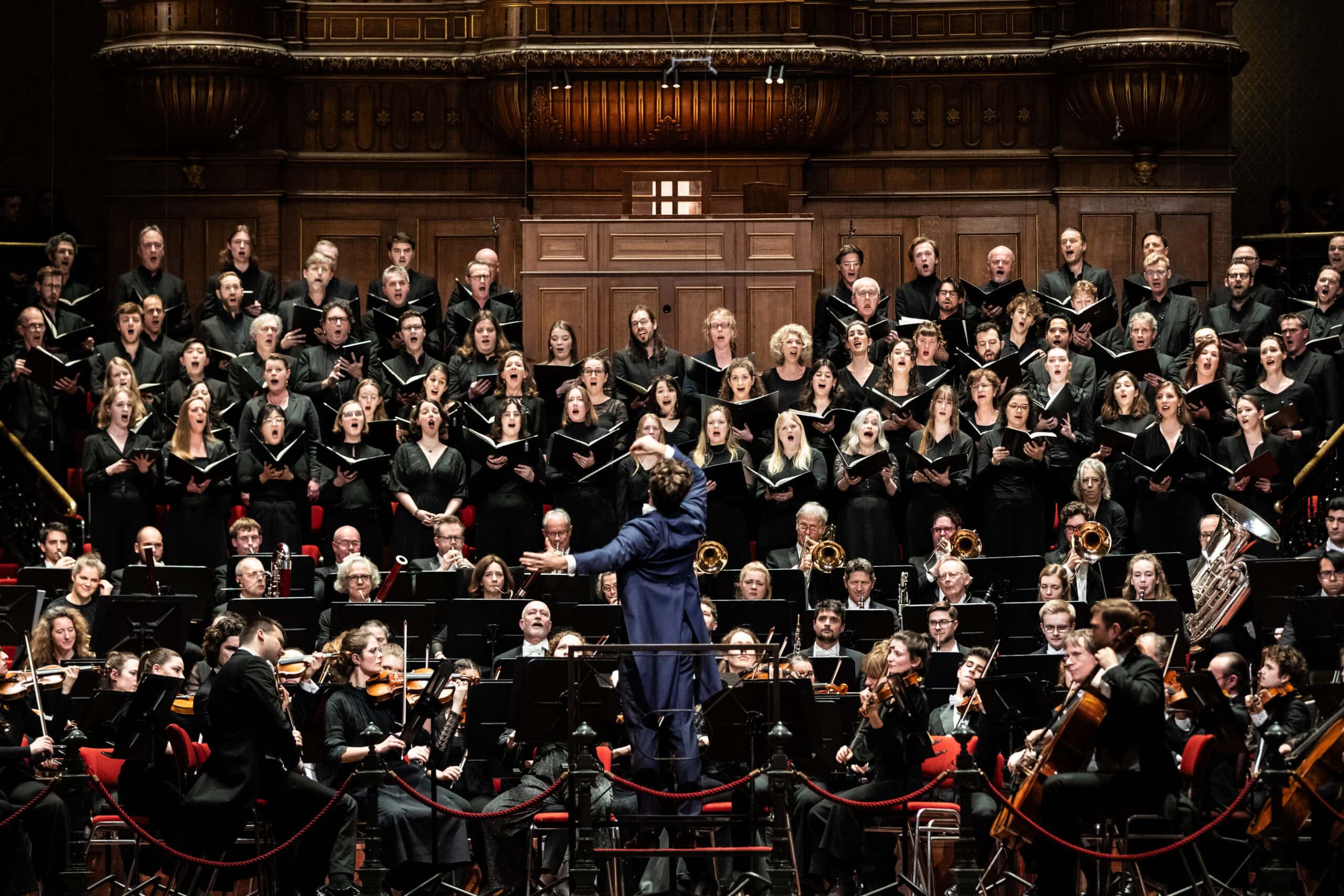 Viotti remained strikingly consistent throughout his interpretation: silence meant extremely slow, loud meant fast. Only in the finale was this deviated from. There, the great climax was exceptionally slow – so slow that the boundary between tension and emphasis blurred – making the effect far too explicit. The finale, in which themes from earlier sections return cyclically and Mahler, via Klopstock's hymn Die Auferstehung, cautiously gropes toward redemption, thus became an overly carefully constructed emotional arc, in which the path to redemption seemed more directed than truly experienced.
That this global approach did not inspire unqualified enthusiasm in everyone was also noticeable in the hall. Next to me, I regularly heard sighing, and someone even began impatiently moving his legs, apparently hoping that the tempo would finally be picked up. It did happen, but exclusively in the fast passages.
Emotion or calculation?
With other repertoire, I might have overlooked this approach. But precisely with Mahler, where it is not merely about sound and monumentality, but about existential necessity and inner truth, a reading so strongly focused on effect convinces me far less fundamentally.
All the more striking was this experience because I heard Lorenzo Viotti earlier with this orchestra in, among others, Stravinsky, Dvořák and Brahms, where he did manage to convince me. For his Mahler, however, I shall pass in the future. His vision of this composer and his search for that which "was die Welt im Innersten zusammenhält" (Goethe, Faust I) seems to me too focused on external discharge and too little on the tragic, yet profoundly human inner necessity that, for me, forms the heart of Mahler's universe. Precisely because the Nederlands Philharmonisch Orkest and Laurens Symfonisch possess such exceptional musical resources, this remains a missed opportunity.