

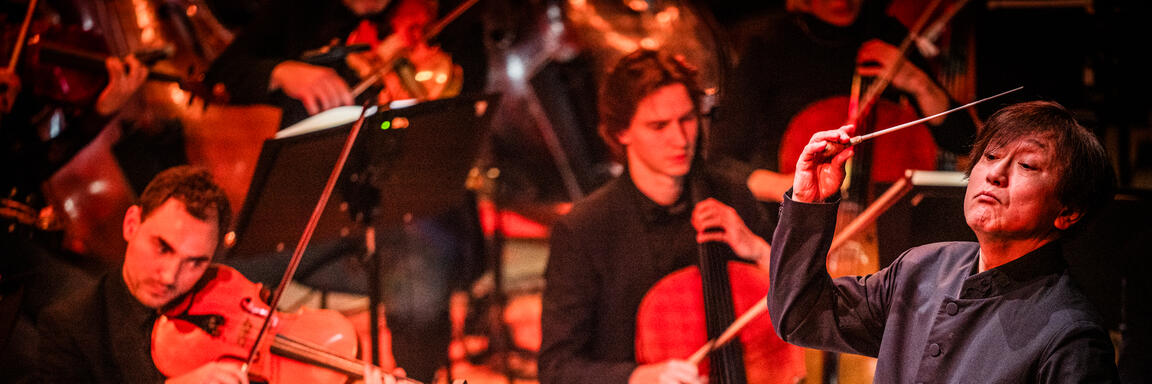
If you were looking for the ideal soundtrack for a sultry spring evening on Saturday, May 23 at Flagey, you were in exactly the right place. Brussels Philharmonic presented under chief conductor Kazushi Ono a program that did not want to overwhelm, but to seduce: music that gleams without showing off, that radiates warmth without becoming sentimental. What made this evening special was not only the quality of the musicianship, but especially the ease with which everything flowed into one another. Ono showed how music can simultaneously breathe, sing and dance.
The Siegfried Idyll by Richard Wagner (1813-1883) formed an ideal opening. The work originated in 1870 as a birthday gift for Cosima Wagner, performed on Christmas morning by a small ensemble on the stairs of their villa in Tribschen. It remains a remarkable composition within Wagner's oeuvre: no theatrical explosions, no monumental dramatic arcs, but an intimate piece of music that whispers rather than declaims. This is precisely why it so often goes wrong in performances. Too much romantic indulgence quickly turns the work into a miniature version of Tristan.
Ono fortunately chose the only correct approach: lightness, transparency and trust in the score itself. The small ensemble gave the music an almost chamber music intimacy. The strings played with velvety softness without ever becoming weak; the woodwinds let their motifs naturally emerge from the texture, as if they were simply present in the space. And then there was that beautiful horn: warm, round and melancholic, like a distant memory of the world of Siegfried that here was suddenly reduced to human proportions. Ono understood that this music must not sound "made." He let it emerge. Thus Wagner sounded here exceptionally human: not the visionary opera composer, but a man trying to hold a moment of happiness in music.
From that intimacy, the Clarinet Concerto by Gerald Finzi (1901-1956) flowed in almost unnoticed. This work remains a discovery, certainly on our concert stages. Perhaps because Finzi never really fit into the great musical currents of the twentieth century. His music seeks no revolution, no modernist statement. It seeks beauty, comfort and human warmth – concepts that for a long time were considered almost suspect in the classical music world.
And yet this concerto possesses everything a great work needs. Finzi wrote it shortly after the Second World War, in a period when England breathed both relief and melancholy. That double emotional layer is present throughout the score. The opening section radiates an almost pastoral calm, but beneath that lyricism lurks a constant gentle sadness, as if the music is aware of how fragile the newly closed peace actually is.
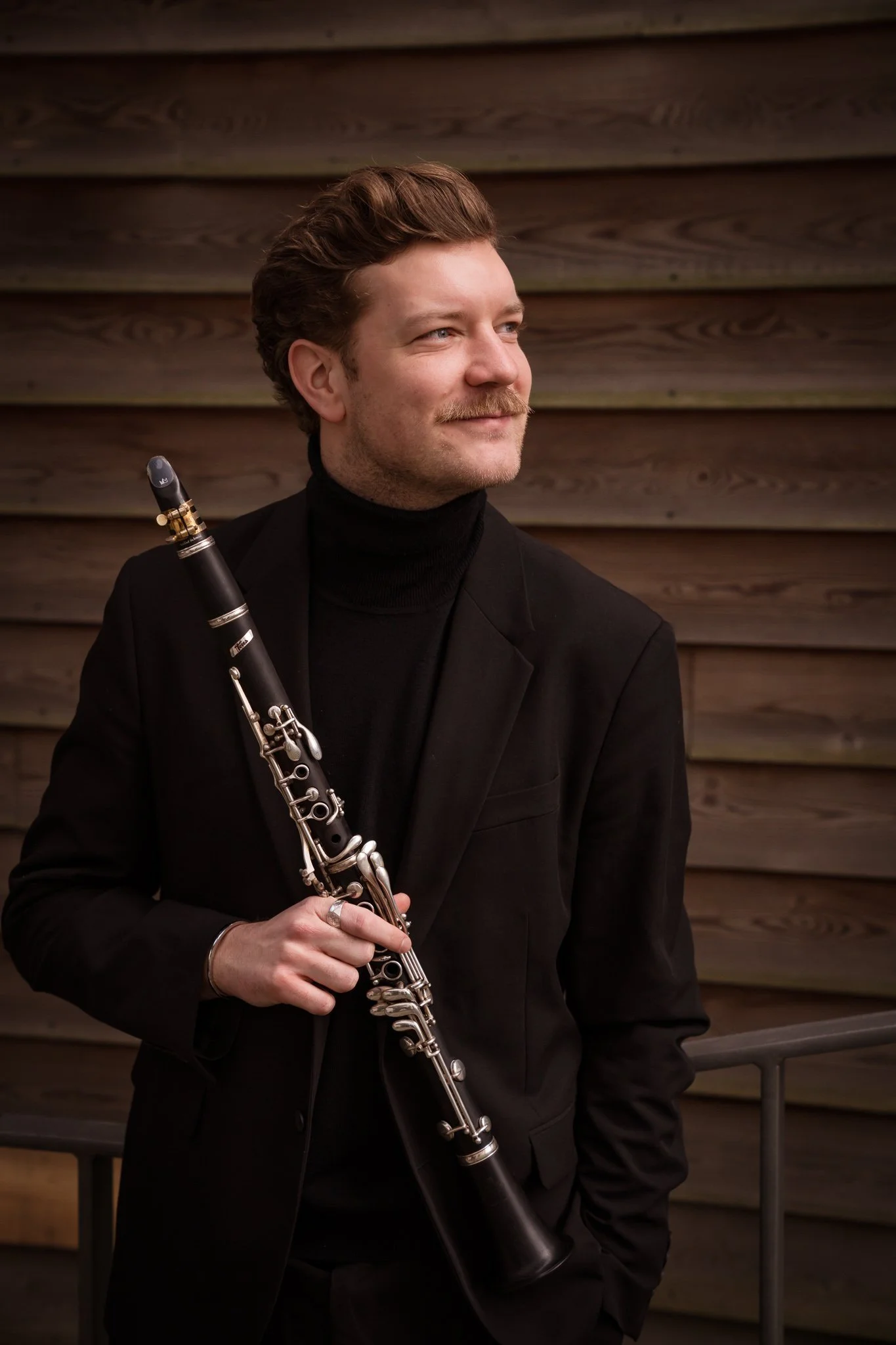 Emile Souvagie, principal clarinetist of Brussels Philharmonic for several years now, played the solo part with great conviction and striking naturalness. His tone remained warm and round without ever seeking to sound demonstrably beautiful. Precisely that made an impression: he never placed himself ostentatiously in the foreground, but remained constantly in dialogue with the music and the orchestra. In the long melodic lines, he gave each phrase a breathing fluidity, while in the more lively passages he retained just enough lightness to let the music dance.
The central Adagio formed the emotional center of the evening. Here time seemed to stand still for a moment. Finzi writes melodies that seem almost unwilling to end, and Souvagie unfolded them with touching simplicity. No effect, no sentimentality – only pure song line. The strings accompanied him with great tenderness; Ono kept the orchestra transparent and breathing, so that soloist and orchestra continuously sounded as one breath. It sounded less like a concerto than like a shared story.
The finale then brought lightness and movement back, almost as if the music gently pushed itself back toward sunlight. Souvagie showed more playfulness and virtuosity here, without ever lapsing into bravura. Finzi's typically English elegance – always somewhat melancholic, even in joy – remained completely intact. Beautiful too was how the orchestra continuously supported and surrounded its soloist: not as accompanists at a distance, but as colleagues who audibly breathed together in every phrase.
And then the Eighth Symphony by Antonin Dvořák (1841-1904) still had to come. From the first measures it was clear how much pleasure the orchestra took in this music. You could see it literally on the faces of the musicians: smiles that didn't seem forced, glances of recognition between orchestra members. Here notes were not merely executed; here music was brought fervently to life.
This work belongs among those rare symphonies that sound both grand and spontaneous, as if they are inventing themselves on the spot. Ono understood that perfectly. His interpretation avoided all folkloristic exaggeration. No worked-up Slavic bombast, no heavily-imposed climaxes. Instead, he let the music breathe organically. The opening section grew like a landscape gradually becoming visible in morning light. Woodwinds let bird motifs emerge as if they were improvised; the strings maintained that constant warm undercurrent on which the entire symphony seems to drift.
What stood out especially was the flexibility of the orchestral playing. Thanks to Ono's fluid movements, the music acquired enormous elasticity: tempi moved naturally with the phrasing, without ever losing their direction. The Adagio remained in motion and thereby avoided any sense of heaviness. The third movement too – half waltz, half melancholic reminiscence – achieved precisely the right balance between elegance and underlying sadness.
The finale then became a celebration of pure joy of life. The famous trumpet fanfare at the beginning sounded not triumphant but inviting, as if Dvořák were personally drawing the audience into the festivities. Ono built the tension with great patience, so that the explosions of energy never felt gratuitous. Everything felt earned, grown from the music itself.
And therein lay ultimately the great strength of this evening. Not in spectacular effects or stunning originality, but in the conviction that music above all must live. Under Kazushi Ono that idea acquired a rare inevitability, and Emile Souvagie was in Finzi the ideal voice within that whole. Wagner whispered, Finzi sang, Dvořák danced – and Brussels Philharmonic gave every voice precisely the space it needed. Sometimes that is more than enough for an unforgettable concert evening.