

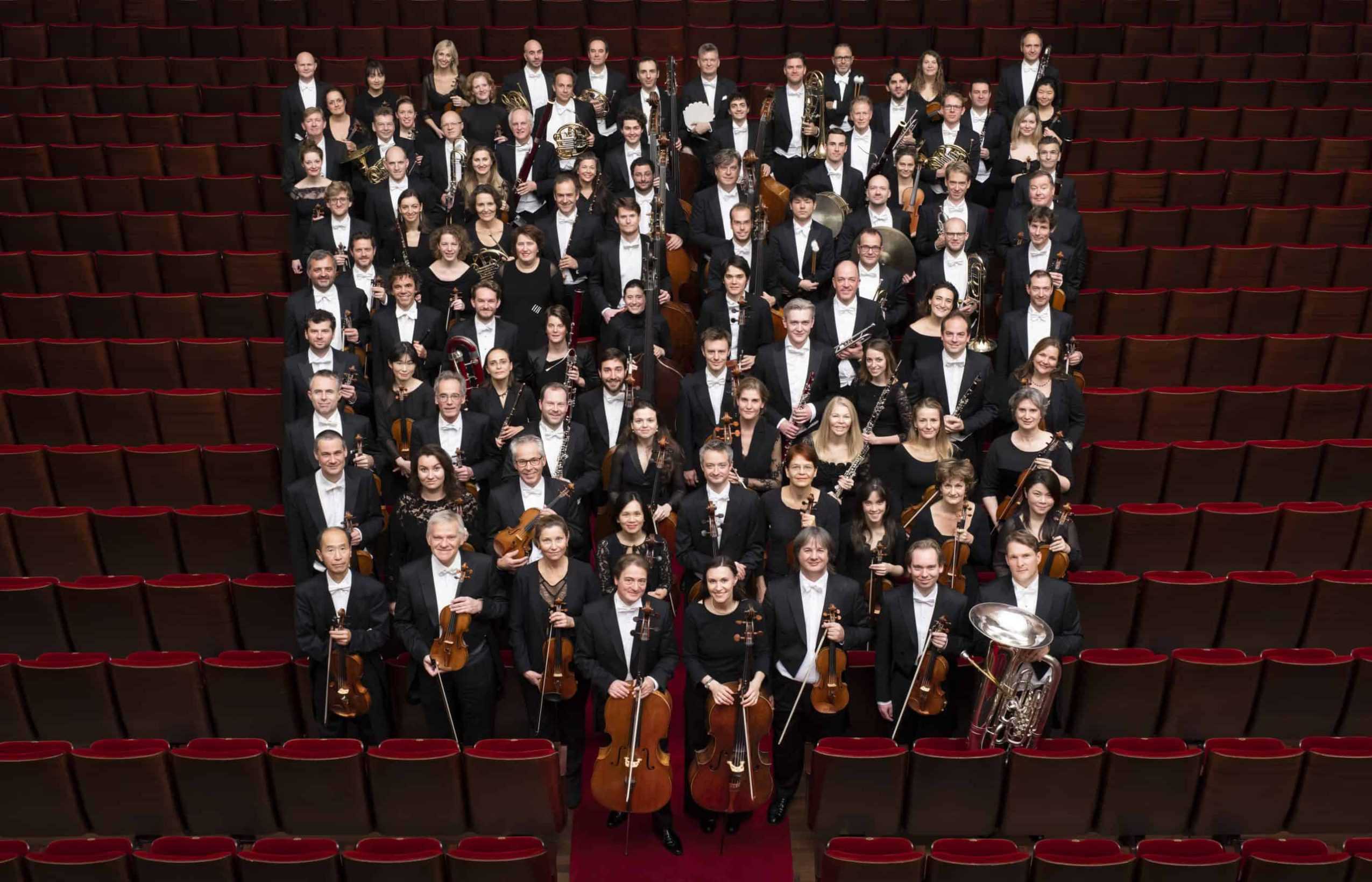
On 9, 10 and 12 February, the Koninklijk Concertgebouworkest performs three very special concerts with honorary guest conductor Iván Fischer. For the concert on 9 February, the orchestra musicians sit in the middle of the Grote Zaal, grouped around the conductor, with part of the audience in between. The rest of the audience sits around the orchestra. On 10 and 12 February, the orchestra performs as usual on the stage.
The Grote Zaal as a time machine
The programme of the three concerts is closely connected with the history of Het Concertgebouw and the Concertgebouworkest. It contains a short work by each of the seventeen composers whose names appear on the cartouches (name plates) along the balcony in the Grote Zaal (another 29 names appear on the walls above). Since most of these names were added in the 1920s, the programme largely represents the spirit of the times from a hundred years ago. As conductor Iván Fischer puts it: "It is a time machine". The pieces on the programme are performed in the order in which the composers' names appear on the balconies, from right to left - from Dvořák to Stravinsky. Soprano Anna Prohaska performs solo in songs by Richard Strauss, Alphons Diepenbrock, Max Reger and Maurice Ravel.
Some of these seventeen composers are still famous today. A section from Anton Bruckner's 'Symphony No. 0 in D Minor' is on the programme, as is Blumine by Gustav Mahler, which was originally a symphonic movement. Other composers, such as Cornelis Dopper, Julius Röntgen and Bernard Zweers, are less well known.