

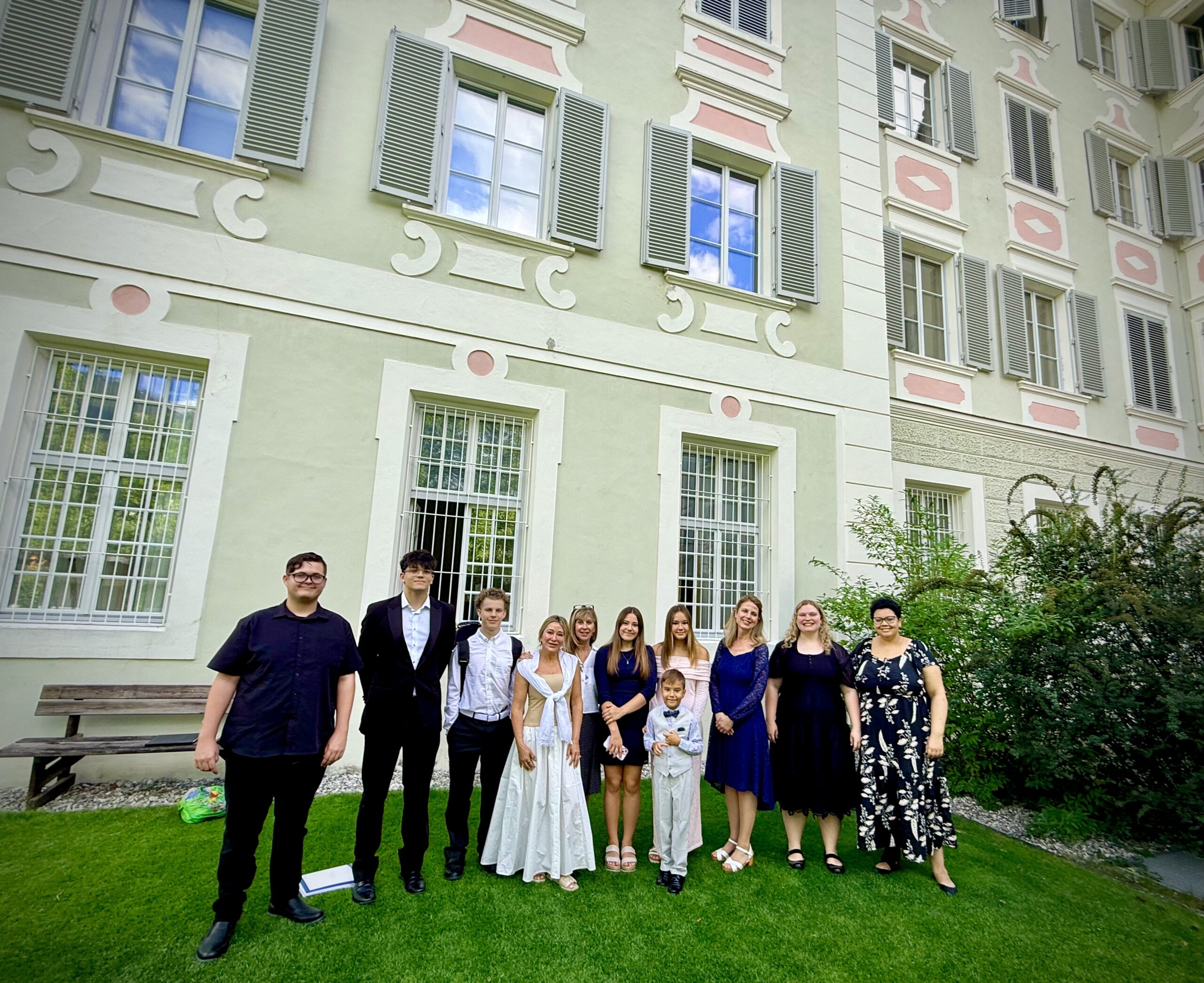
There are festivals that announce themselves with great fanfare, and there are festivals that first take root in a city before filling it with music. The Orfeo Music Festival chose the latter. For its twenty-second edition, it exchanged its familiar location in Sterzing/Vipiteno for the historic Brixen/Bressanone, and after the first concerts it became clear how natural that choice was. The baroque Kaisersaal of the Hofburg, the hushed spaces of the Priesterseminarie and the Parzivalsaal of the Vinzentinum formed not merely a backdrop, but halls where chamber music naturally found its place. The architecture did not demand admiration; it invited listening.
Whoever attended one of those concerts between July 8 and 14 encountered a festival that presented teachers, internationally renowned guest musicians and students not as separate worlds, but as partners in one shared musical adventure. Rehearsals, lessons and concerts flowed almost imperceptibly into one another. Where a masterclass elsewhere easily remains a pedagogical exercise, here an artistic dialogue grew in which experience and youthful enthusiasm continually reinforced each other. It was not hierarchy that was central, but interplay.
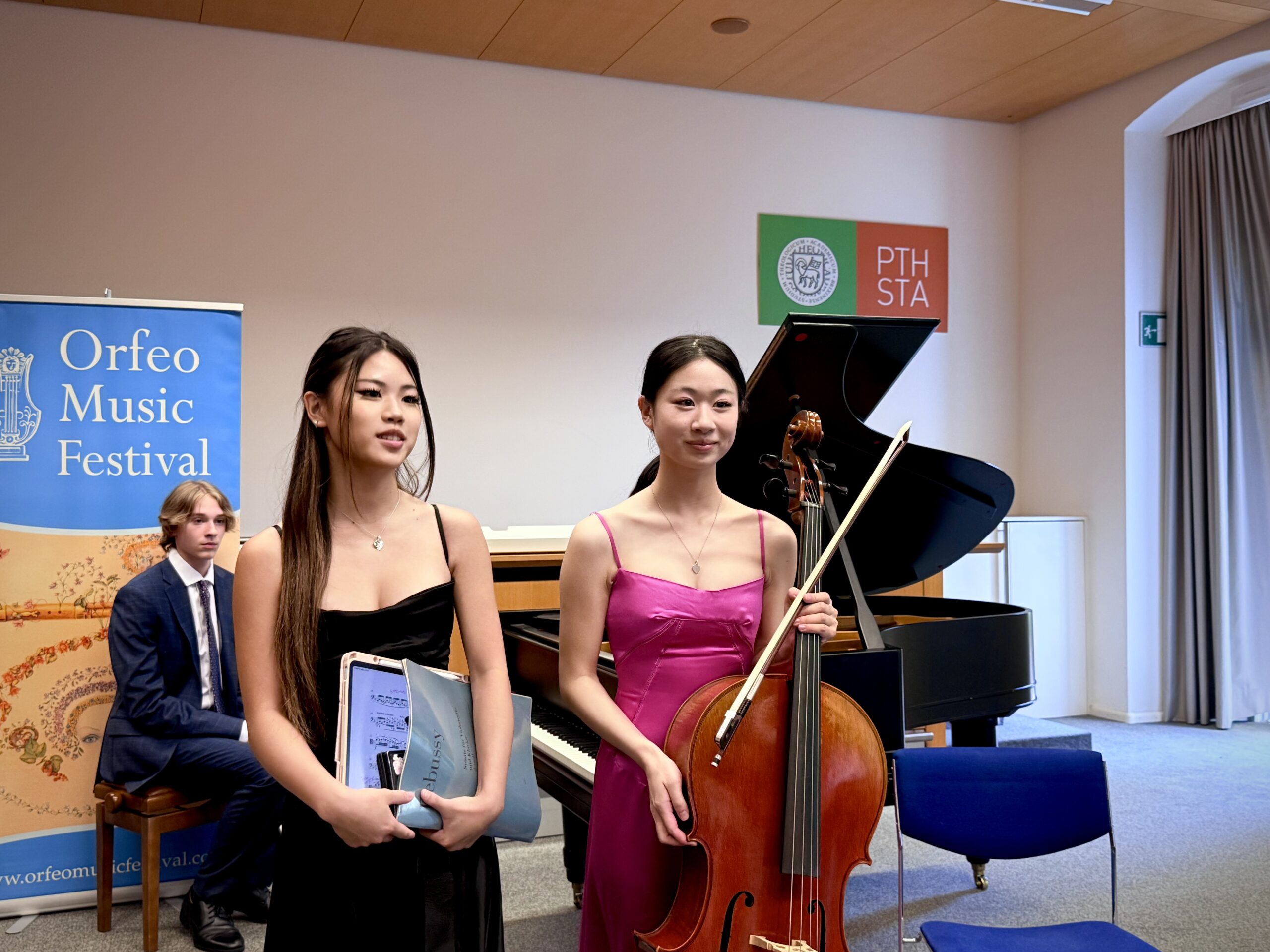 This approach became perhaps clearest during the student recitals. They were far more than a supplement to the evening programme. The concerts showed how artistic development takes shape in practice. For some, a performance at the festival meant a first stage experience; others already stepped forward with striking maturity. The audience was thus not only a witness to finished performances, but also gained insight into a visibly and audibly growing process, in which listening, experimenting and making music together were as important as technical perfection.
The following concert reports are written from the conviction that a review may be more than a chronological overview of performed works. They try not only to describe what was played, but especially how interpretations were created, how musicians communicated with each other and how ensembles developed over the course of the festival week. For this report I attended both several evening concerts with teachers and guest musicians as well as recital moments of the students. Together they sketch a representative picture of a festival where artistic quality, education and encounter naturally reinforce each other.
Those who followed all the concerts from beginning to end also saw how gradually a clear thread became visible. Technique rarely proved to be an end in itself, but a means to say something. Listening proved to be at least as important as speaking, both during lessons and on the stage. Precisely therein lay the greatest strength of this first festival edition in Brixen: not only in the high performance level, but especially in the way young musicians and experienced artists together created an environment in which artistic growth, collegiality and musical pleasure continually reinforced each other.
July 8 – An evening of growth, surprise and musical interplay
The first evening of the official concert series immediately confirmed the impression the festival had left from day one. The teachers brought in changing ensembles a varied programme in which not only the music, but also the pleasure of making music together was central. The concept of the evening concerts offers the teachers the opportunity to bring a broad and surprising repertoire, in which different styles and ensembles alternate. The result is a programme that is not only musically interesting, but also perfectly suited to the warm, relaxed atmosphere of a summer music festival.
The opening evening brought baroque, romanticism and late-romantic lyricism together in a programme in which listening and interplay were especially central. Perhaps some combinations of musicians still had to grow towards each other somewhat, but that process itself made the evening compelling: during the various works you felt the music growing and increasingly natural ease emerged between the players. This gradual development also gave the evening a very human and pleasant dimension.
Alvaro Gomez, especially known as a viola player, opened with the Chaconne by Tomaso Vitali (1663–1745). His interpretation had a natural breath and warm musicality. Dena Kay Jones proved herself as an attentive and refined partner at the piano, constantly supportive and thoughtful. In the Sonate BWV 1037 by Johann Sebastian Bach (1685–1750), a beautiful musical dialogue then emerged between Routa Kroumovitch and Gomez, with Jones' piano part providing colour as a natural third perspective to the whole.
A pleasant surprise was Trio Jeng with works by Richard Strauss (1864–1949) and Francesco Paolo Tosti (1846–1916). Especially Tosti's A vucchella managed to touch through its simplicity, charm and warm directness. Whereas Strauss' Morgen demanded greater vocal mastery, refined diction and more bravura, Tosti received a spontaneous and natural interpretation in which the intimacy of the song was beautifully preserved. The soprano, together with Haroutune Bedelian and Lorna Griffitt, showed how powerful a simple musical line can be when it is delivered with feeling and conviction.
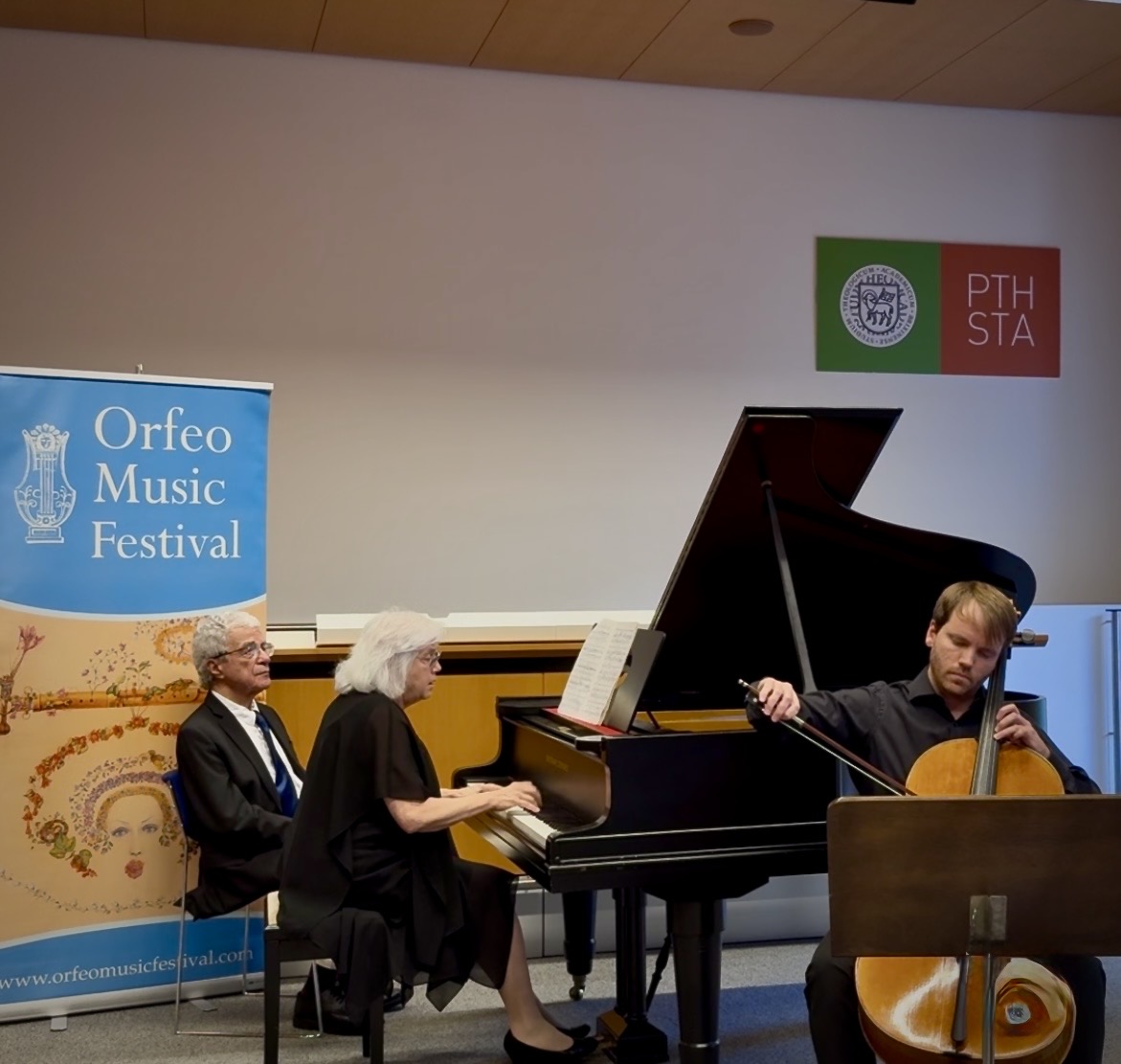
The great artistic moment of the evening came with Christian Bertoncello. For this South Tyrolean cellist, the performance had something of a homecoming, but at the same time also a strong artistic affirmation. In the Sonata for Cello and Piano, op. 19 by Sergei Rachmaninov (1873–1943), he held the audience spellbound from beginning to end. His cello resonated with a particularly beautiful, ideal tone: warm, deep and rich in color. The melancholy of the work was never exaggerated, but grew quietly into impressive expressive power. Lorna Griffitt followed him with great sensitivity at the piano and managed to convey both the transparency of chamber music and the full sound world of Rachmaninov.
The closing with Tritsch-Tratsch-Polka by Johann Strauss II (1825–1899) and Tico-Tico no fubá by Zequinha de Abreu (1880–1935), performed by Anna Gliadkovskaya and Kirill Gliadkovsky at the piano, provided a delightful change of atmosphere. The joy of playing radiated from it, although the touch could have been somewhat softer and more refined in places. The liveliness and spontaneity made these works more than an encore; they formed a cheerful conclusion to an evening in which musical seriousness and relaxation went hand in hand. The unexpected change of seats during Tico-Tico added another playful moment to it.
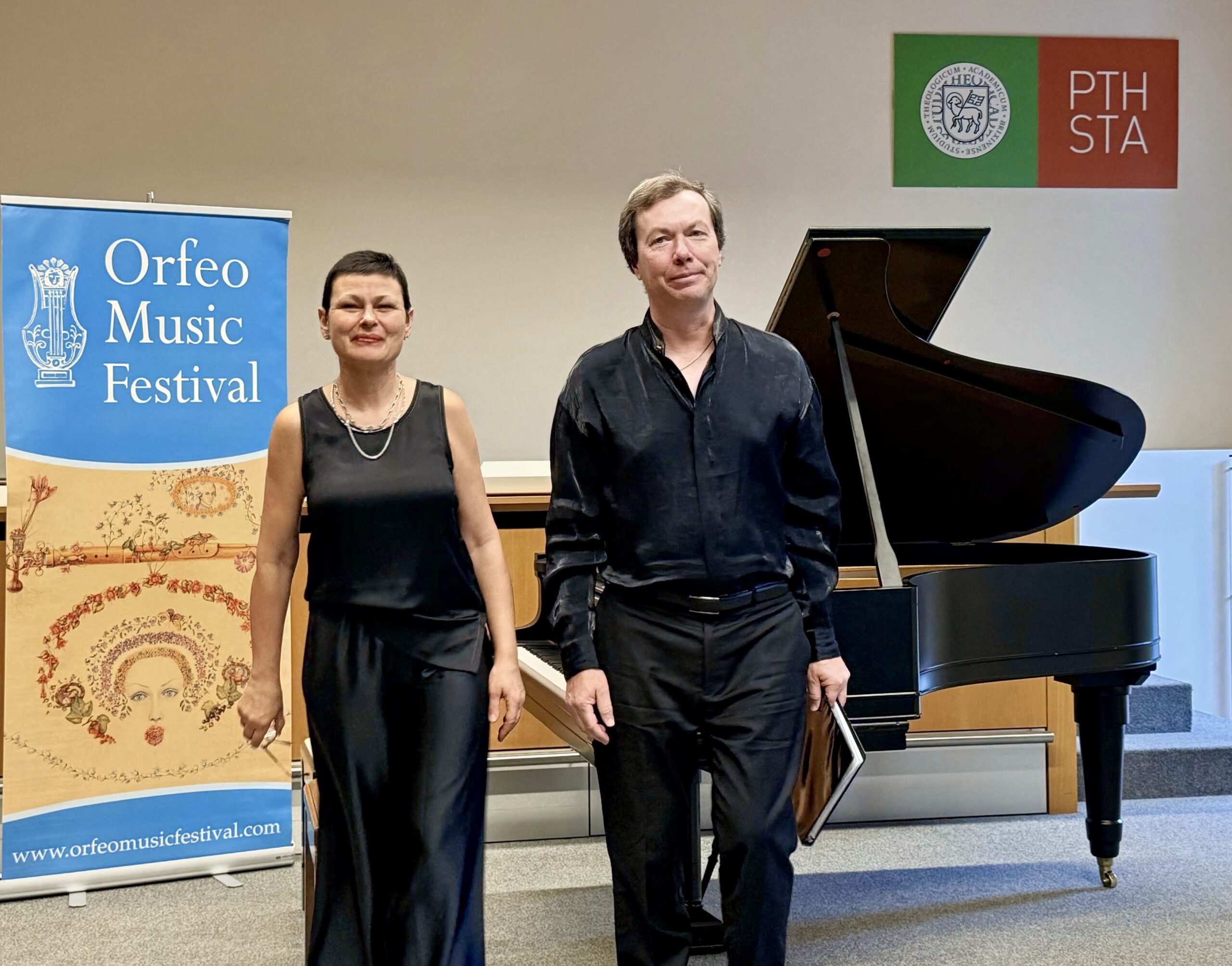 Overall, this first evening offered a very varied program in which there was something to discover for everyone. That is precisely what makes this concert series so suitable for a summer holiday period: surprising encounters, beautiful music and above all an atmosphere in which musicians and audience can enjoy making and experiencing music together. Here and there the refinement could grow a bit further, but that very prospect makes the upcoming concerts extra fascinating. The warm, relaxed atmosphere and the visible pleasure in making music formed a particularly strong start to the festival.
July 10 – First Steps on the Podium
This afternoon I started my festival day by attending the student recital, for me always one of the most beautiful parts of a music festival. As a teacher, I know how much preparation, tension and perseverance lie behind the first steps on a podium. For some, this even meant their very first public performance, as the festival organizers told me, which gave the afternoon an extra dimension. In addition to technical preparation, these performances also required the courage to be vulnerable and share their music with an audience.
This gave each student the opportunity to tell their own musical story and to explore different styles and characters.
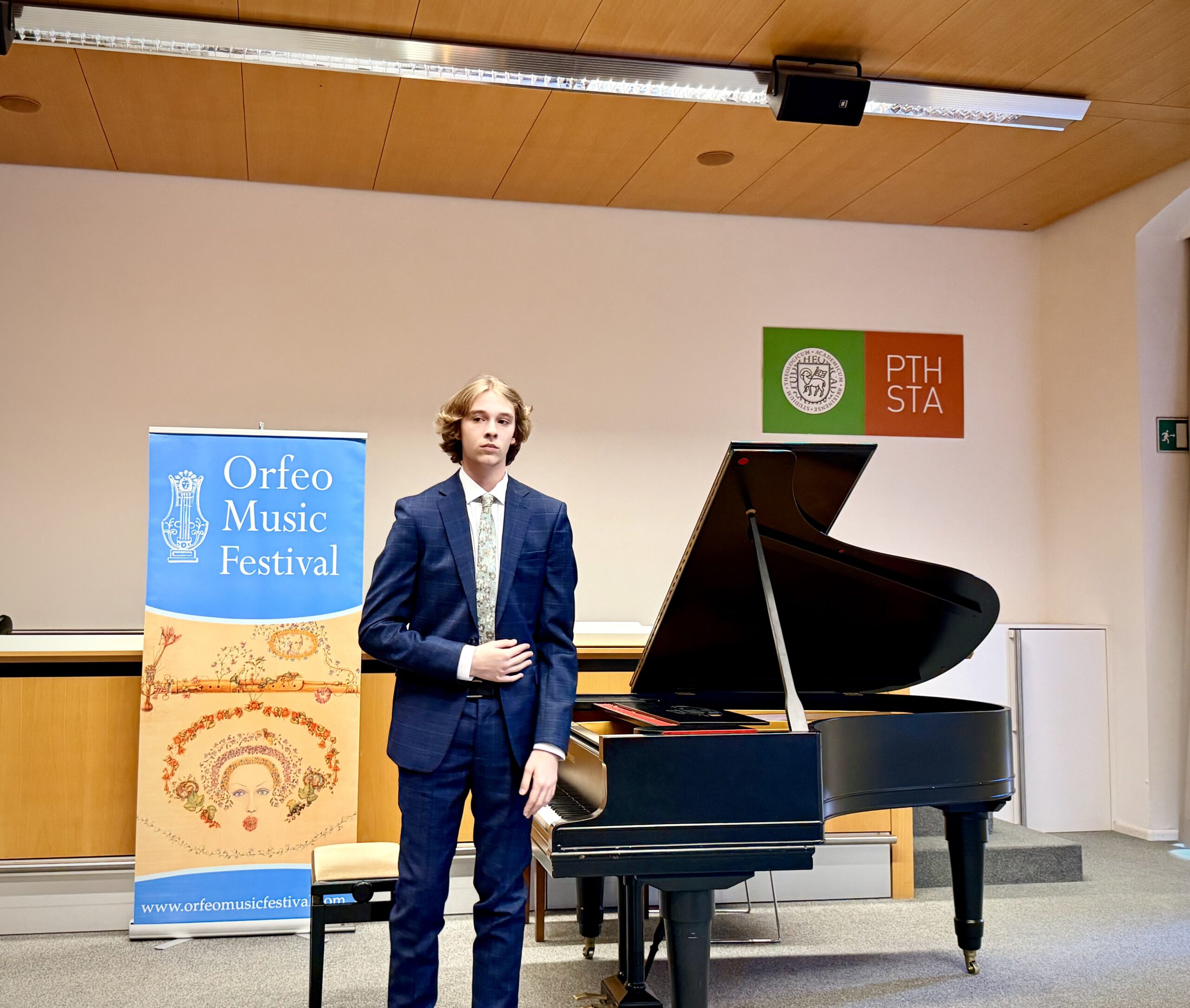 Anastasia Powell opened energetically with the sparkling Sonatina by Aram Khachaturian (1903–1978), after which Amy Graham invoked a very different sound world in Reflets dans l'eau by Claude Debussy (1862–1918). Henry Canning demonstrated in the Mazurka in F minor, op. 63 no. 2 by Frédéric Chopin (1810–1849) and Debussy's Rêverie how lyricism and refinement can complement each other. Especially his Debussy impressed me greatly and convinced from the first note. Then Daniil Safin and Daria Powell provided a light and youthful touch with the playful piano pieces by Catherine Rollin (°1952), with rhythmic clapping during the playing creating an extra playful effect. Their enthusiasm was contagious and emphasized that making music should also convey pleasure.
A particularly charming moment followed with Isabella Calhoun, who together with pianist Howard Chen performed Porgi amor from Le Nozze di Figaro by Wolfgang Amadeus Mozart (1756–1791). Her warm voice came into its own beautifully and was carefully supported by her pianist. A particularly charming detail was that Trio Jeng together with Samuel Aldana had created a small staging of this aria. This brought the scene to life not only musically, but also visually.
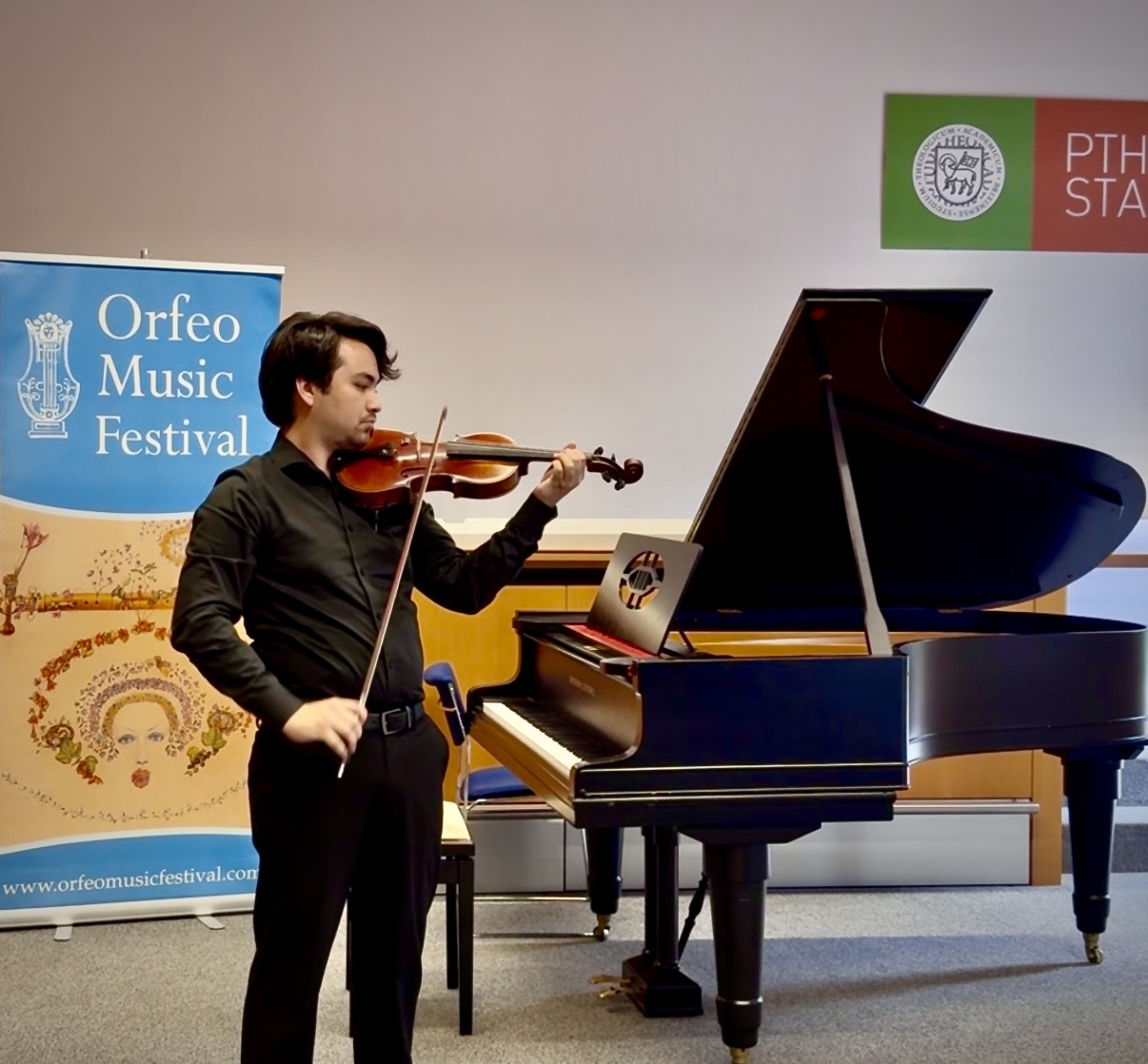
The recital was further enriched by that same Samuel Aldana, who performed the first movement of the Violin Concerto by Felix Mendelssohn (1809–1847). Perhaps the intonation was not always entirely secure, but he clearly demonstrated his own vision of the work. Claire Tu proved herself to be a very reliable and responsive piano partner. The afternoon was concluded by Daria Powell with three movements from Papillons by Robert Schumann (1810–1856), with which the program was rounded off in an elegant and characterful way.
As is to be expected at a student recital, not every performance was at the same artistic level. That need not be the case. It was precisely the combination of first stage experiences, visibly growing confidence and the willingness to expose oneself musically that made this afternoon particularly valuable. As a teacher, during such a recital I look not only at the end result, but especially at the growth process that unfolds before your eyes. The attentive and warm audience gave the students all the space they needed for that. That is precisely what makes these recital moments an indispensable part of the festival.
10 July – Virtuosity in service of music
After a first festival evening in which the dialogue between musicians was central, the faculty concert titled Romantic Fire and Virtuosity emphasized individual expressiveness. Yet it also became clear here again that virtuosity was never an end in itself. In the beautiful setting of the Kaisersaal – a historic hall where Mozart himself once performed music, during a stay in Brixen in 1769 – Romanticism had all the space it needed. Not as a demonstration of technical superiority, but as a quest for colour, character, imagination and dramatic tension.
Moreover, it was a particularly challenging evening: the exceptionally high temperatures posed an extra trial, but seemed hardly to affect the musicians. From the first notes, an alternating and versatile programme unfolded that remained engaging to the last note. Each work received its own character, and it became clear time and again how many musical personalities came together here.
Anna Gliadkovskaya opened with Rondo capriccioso by Felix Mendelssohn Bartholdy (1809–1847), a work that can easily succumb to its own brilliance. However, she avoided any form of superficial virtuosity. The lightness and elegance of the opening section remained completely intact, while the virtuosic passages were built up naturally and with restraint. Her playing possessed clarity, refinement and a great sense of style, so that Mendelssohn's refined writing remained continuously audible.
Routa Kroumovitch then chose Zapateado by Pablo de Sarasate (1844–1908) for a completely different idiom. The Spanish dance rhythms received exactly the sharpness, energy and fire that the work requires, but her impressive left-hand technique and accurate bow control were never presented as a technical contest. On the contrary: the difficulties seemed to dissolve entirely into musical pleasure and the natural movement of the music. Dena Kay Jones supported her with a piano part in which rhythmic precision and a remarkable sense of balance came together.
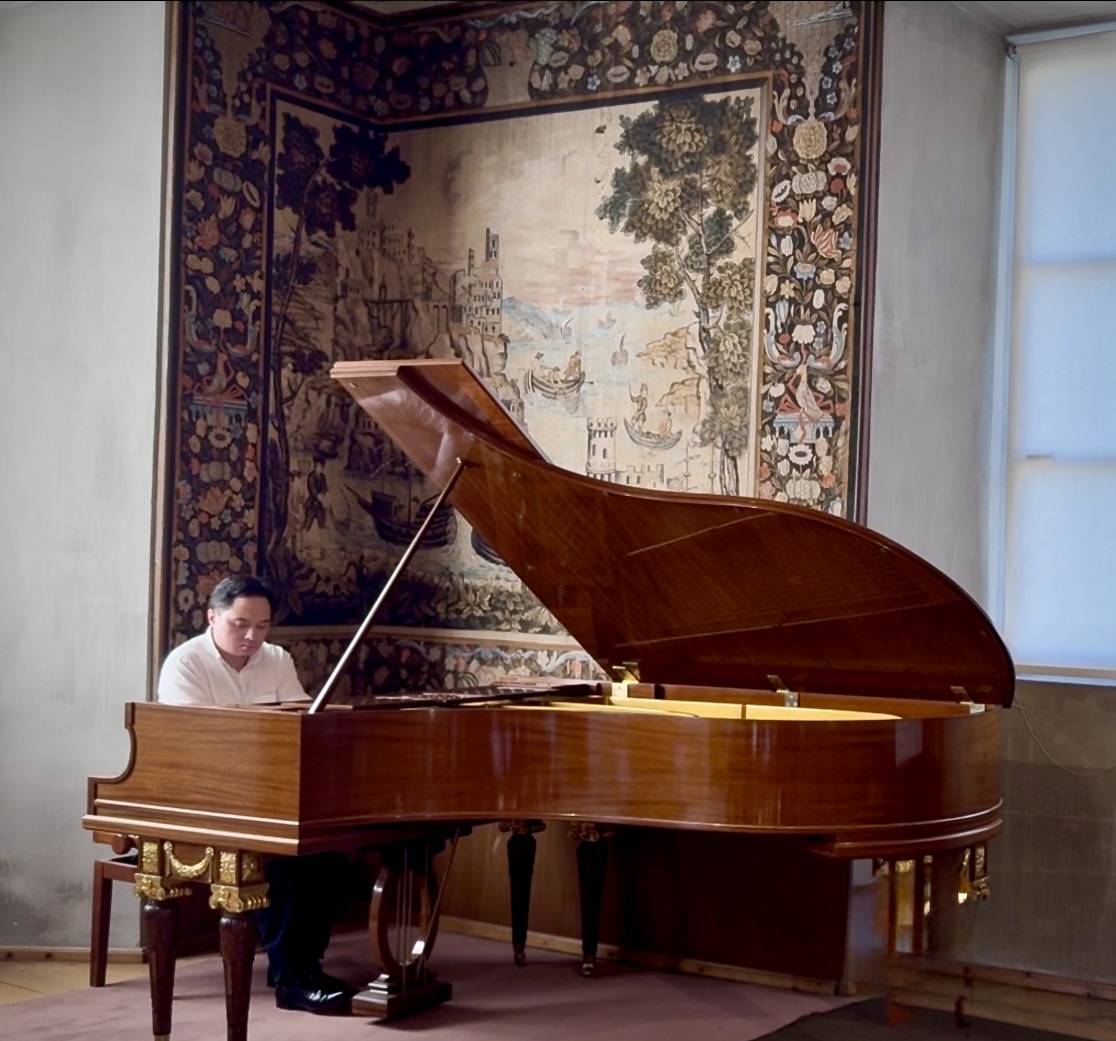
Scott Allan Cohen then brought Réminiscences de Norma by Franz Liszt (1811–1886), a monumental piano work in which the world of opera and the concert hall meet. He did not opt for mere external grandeur, but allowed the melodies from Vincenzo Bellini's (1801–1835) opera Norma to breathe beneath the rich, sometimes overwhelming pianistic textures of Liszt. This gave the performance a strong dramatic coherence and made the work more than a virtuosic tour de force. It was one of those moments when technical mastery completely coincided with musical imagination – a striking experience that left many in the audience with a real "wow" impression.
Kirill Gliadkovsky closed the first part with two Études-tableaux from opus 39 by Sergej Rachmaninov (1873–1943): no. 2, often associated with the unofficial subtitle The Sea and the Gulls, and no. 6, which due to its narrative character is regularly associated with Little Red Riding Hood. These titles do not originate from Rachmaninov himself, but do help to understand the strongly evocative atmosphere of these works. Gliadkovsky did not seek external effect or mere pianistic power, but rather the dark, almost orchestral sound world behind this music. The massive chords, complex figures and dramatic arcs of tension remained constantly connected to a larger musical narrative.
After this series of solo highlights, another strength of the festival became visible again: collaboration. The String Trio in c, opus 9 no. 3, by Ludwig van Beethoven (1770–1827) brought Routa Kroumovitch, Alvaro Gomez and Christian Bertoncello together in a performance that excelled through homogeneity, refined communication and mutual attentiveness. None of the three musicians tried to dominate the others; each phrase seemed to flow logically from what the other voices had contributed before.
Already in the opening movement, the Allegro con brio, the natural balance between energy and transparency was striking. The dramatic power of Beethoven was convincingly conveyed, without the performance becoming heavy or massive. The three voices retained their own character, but at the same time formed a coherent musical whole in which tension and dialogue were constantly present. The lively exchange of motifs took on an almost conversational character: sometimes one voice took the initiative, then again a subtle response emerged from the ensemble.
The friendly, sometimes even playful glances between the musicians revealed a relaxed collaboration, but always with deep respect for the individual character and role of each voice. The Adagio con espressione subsequently gained a natural breath and warm expressivity, while the Scherzo retained its playful bite without becoming sharp or over-accentuated. In the fast Finale, the transparency of Beethoven's writing remained remarkably intact: complexity never became heaviness, but remained lively music.
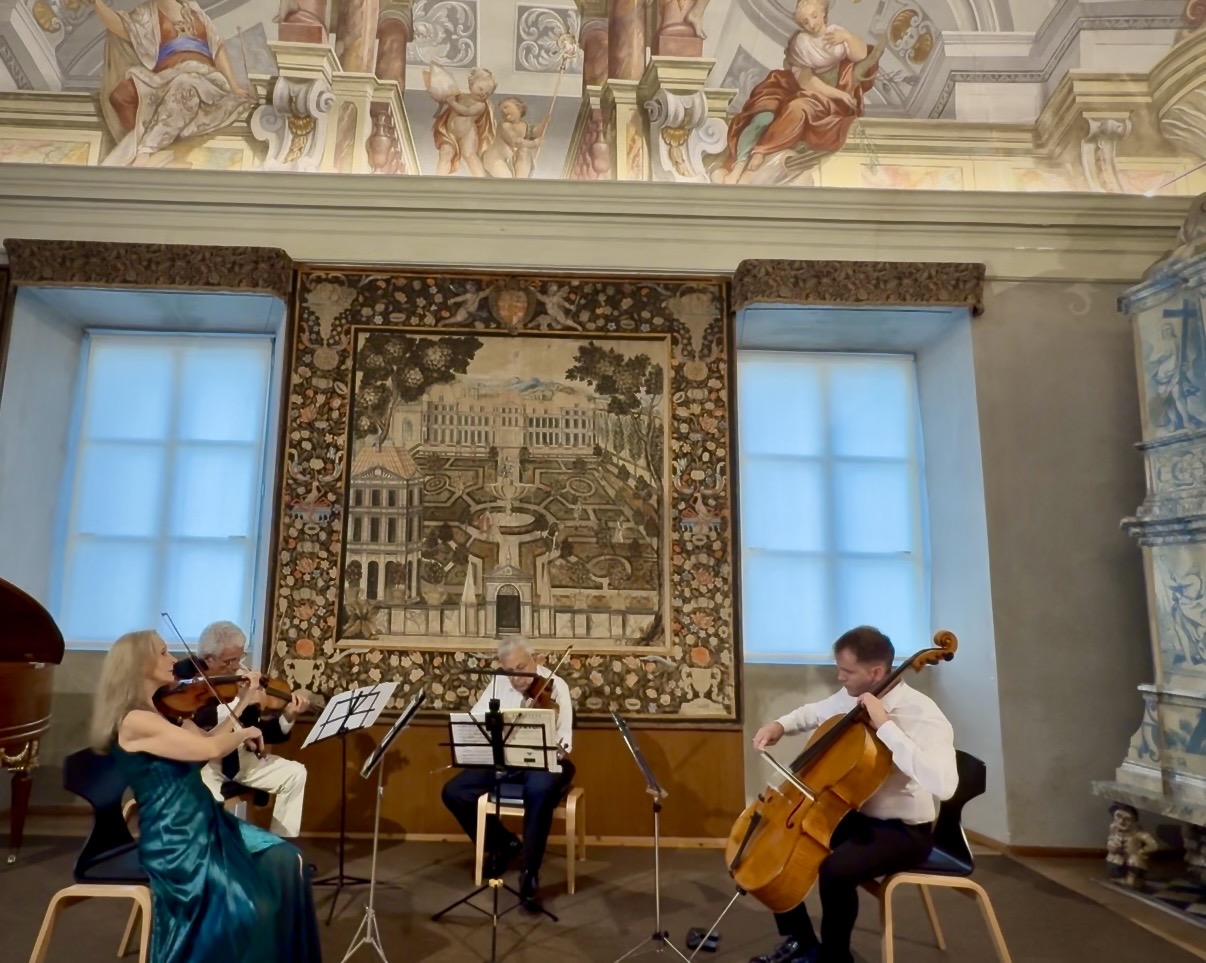
The closing with excerpts from the Sérénade for Strings by Piotr Ilyich Tchaikovsky (1840–1893) formed an appropriate and elegant conclusion. With Haroutune Bedelian as second violinist, the ensemble gained a warm, homogeneous string sound that revealed its most beautiful colors especially in the Élégie. The Waltz brought the evening to a refined close, in which melancholy and lightness remained in constant dialogue.
After this second evening, all expectations on the musical level were completely fulfilled. Where after the previous concert a certain hesitation or doubt was still possible, it disappeared here entirely. The technical situation of the earlier performance in the seminary – with a less convincing piano – may have played a role in this, but in the Kaisersaal the full quality of these musicians came across convincingly.
What ultimately made this evening so special was the combination of individual class and collective musicality. Warm applause was thus deserved not only for the individual performances, but especially for the musical bond that ran like a red thread through the entire concert: substantive virtuosity, personality without ego, and collaboration in which listening was as important as playing.
July 14 – Making music together as final destination
The last day of a festival is always a special moment. Not only because a week of intense musicmaking comes to an end, but also because it is only then that one truly sees what such a week has yielded. During the student recital in the Priestly Seminary, the emphasis was no longer on individual performances, but on making music together in changing ensembles. Where at the beginning of the week the first introductions were still audible, ensembles now took the stage that had built a remarkable musical unity in just a few days.
The program was as varied as the composition of the ensembles. From Russian miniatures to baroque and classical chamber music to folk music, choral works and romantic string literature: each performance formed a new combination of styles and musicians. It was precisely this variety that made the recital compelling. No single work lasted long, but each offered an insight into a different facet of the festival.
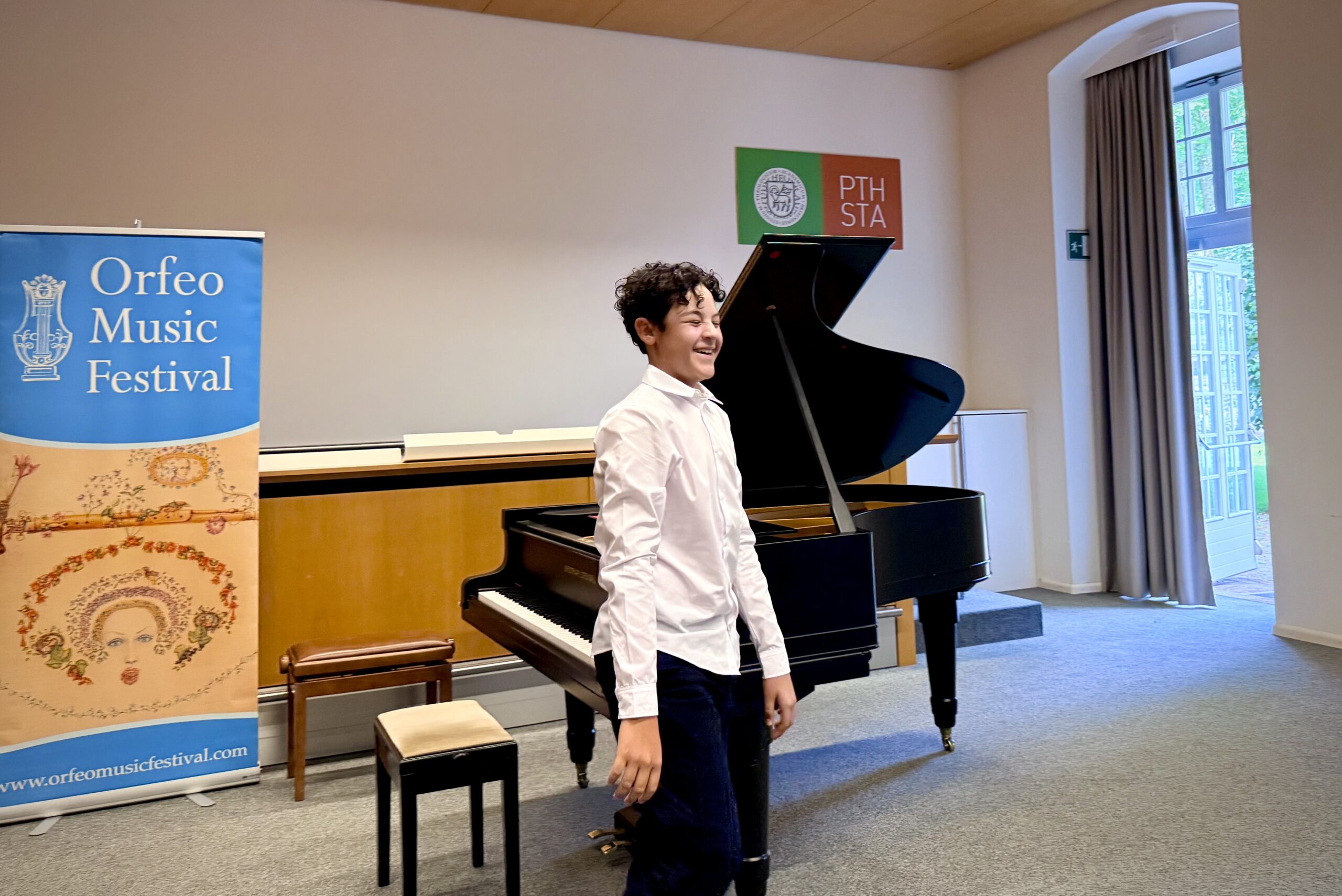 Andrew Dixon and Henry Canning opened with the Hélène Polka by Aleksandr Borodin (1833–1887) and the Italian Polka by Sergei Rachmaninov (1873–1943), two works in which playfulness, rhythmic sharpness and mutual precision are central. Both pianists quickly found a natural balance. The humor remained light, while the more virtuosic passages never degenerated into a competition for volume or speed. Striking was also the natural collegiality between the two musicians. In small gestures before and after the performance, one could see how a more experienced participant supported a younger colleague – a simple but telling image of the atmosphere that characterizes the festival.
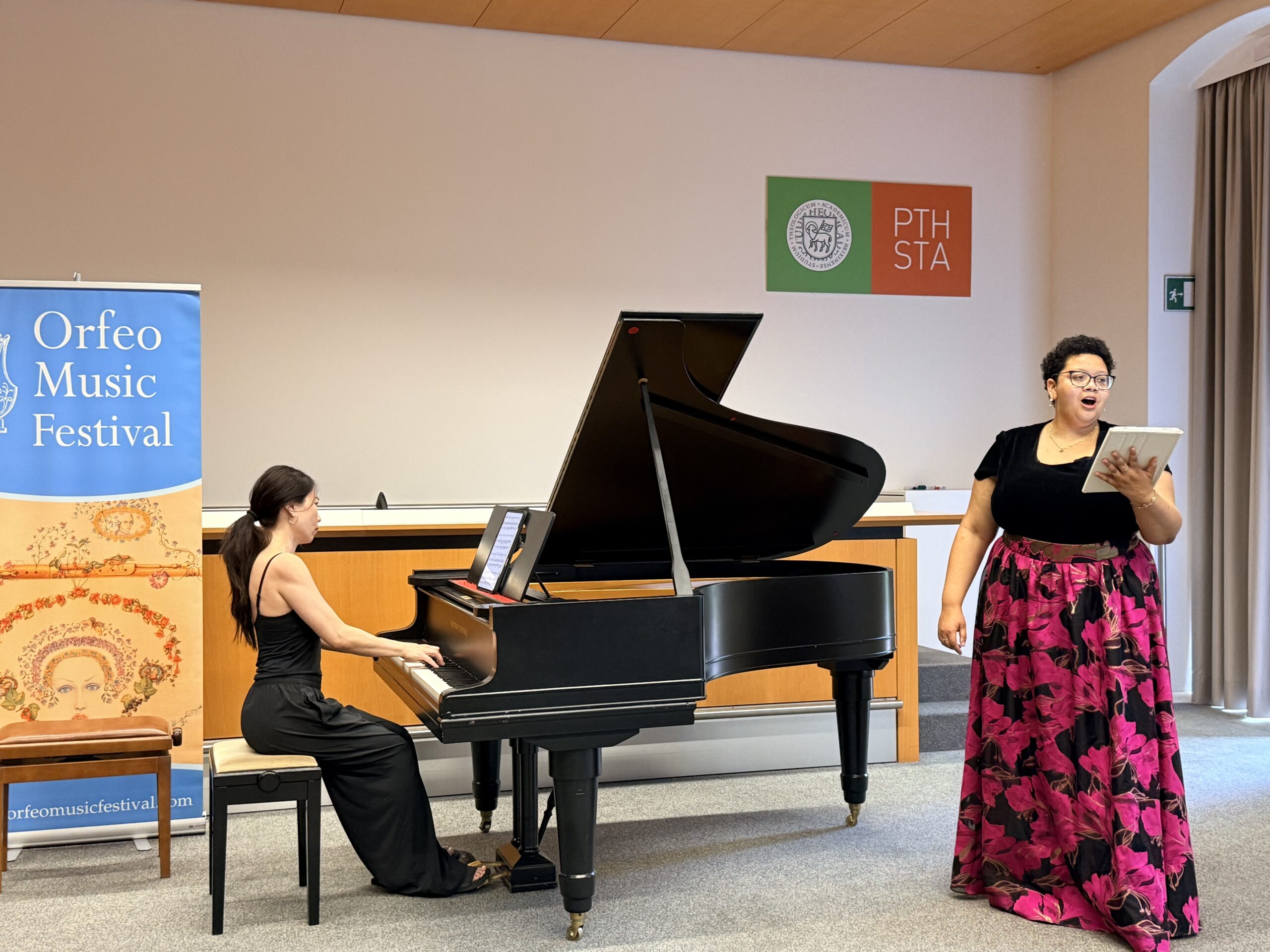 Peter Jackson subsequently brought the Invention in A minor by Johann Sebastian Bach (1685–1750). After the exuberance of the opening works, this formed a moment of stillness, in which clear articulation and careful voice-leading gave the music all the space it needed. A surprising stylistic shift followed. Kaytie Kear performed her own composition Reversing Reflections, which she sang herself and accompanied on the piano. The personal, contemporary tone of the work contrasted beautifully with Die Lotusblume by Clara Schumann (1819–1896), in which Isabella Calhoun delivered a sensitive and restrained interpretation.
With Tchaikovsky and the Other Russians by Kurt Weill (1900–1950) the atmosphere changed completely once again. Kaytie Kear and Isabella Calhoun gave the ironic text exactly the right dose of theatrical flair, without overloading the music with caricature. The Orfeo Festival Choristers supported them with enthusiasm and visible pleasure, while Vera Watson shaped the piano accompaniment smoothly and stylistically. Under the inspiring direction of Trio Jeng, a light intermezzo emerged that was visibly enjoyed by the audience.
Kevin Watson chose the middle section of Summer from The Four Seasons by Antonio Vivaldi (1678–1741), in which the hushed tension of the Adagio is abruptly shattered by the fury of the storm. After a somewhat cautious opening, he gradually found more composure and managed to play out that contrast convincingly. Vera Watson proved to be an alert and sensitive partner here as well.
The recital then built organically on that alternation of instrumentation and styles. With the Andante from the Piano Trio in G, KV 564, by Wolfgang Amadeus Mozart (1756–1791), Samuel Aldana, Kristina Tu and Tana Smith brought one of the most refined moments of the afternoon. The three musicians continually listened to each other and created a naturally breathing performance in which no single voice sought to dominate. It is precisely in this apparent simplicity that Mozart shows how difficult true balance can be.
Then Howard Chen accompanied Isabella Calhoun in Liebeszauber by Clara Schumann (1819–1896) and Widmung by Robert Schumann (1810–1856). Here his qualities as a pianist immediately stood out. He breathed with the singer, supported her with great sensitivity and always remained in service of the musical whole. In retrospect, this recital already provided a beautiful foretaste of the distinction he would receive later that evening.
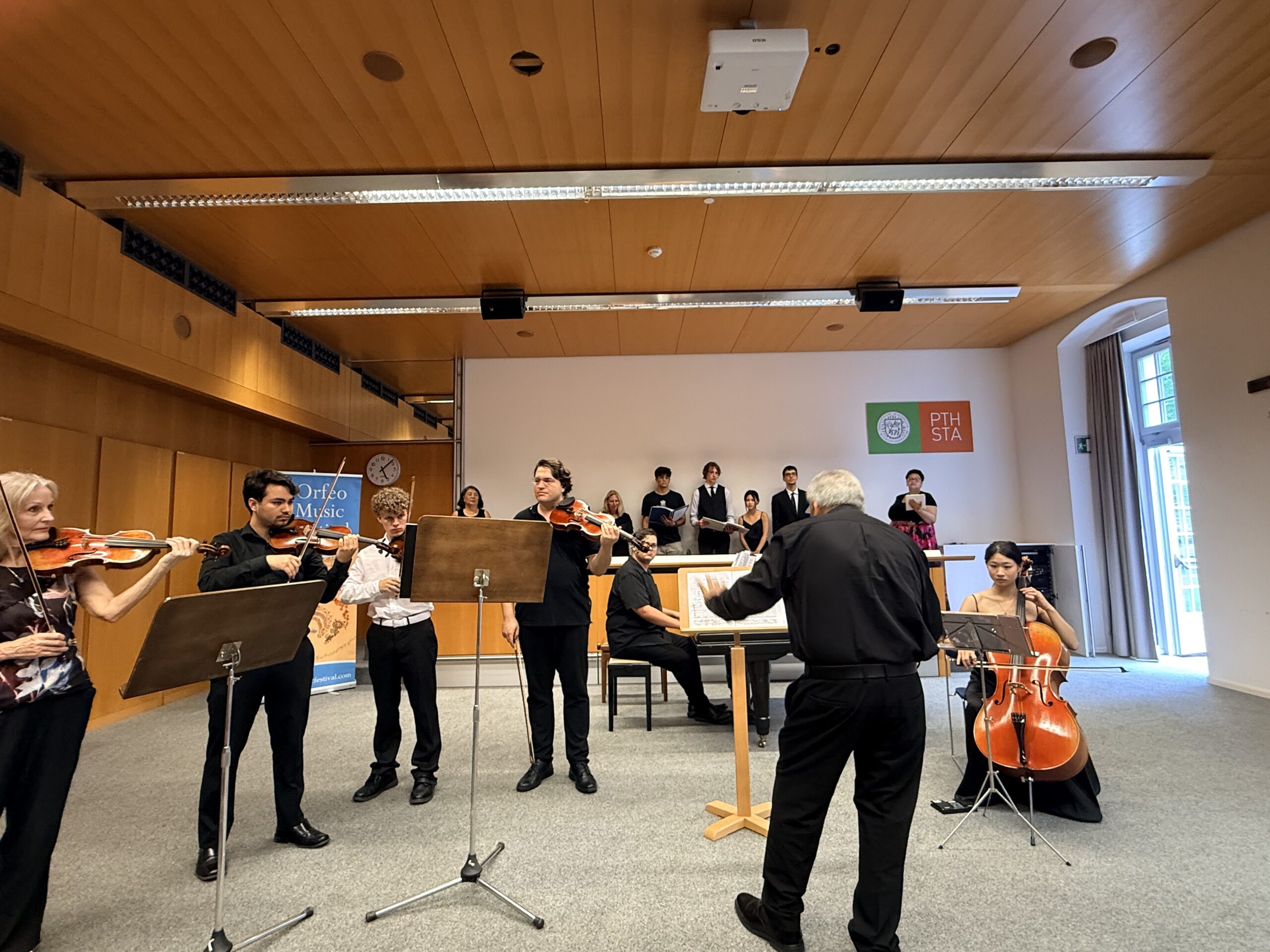 There followed a special triptych for the Orfeo Festival Choir. Striking was that instrumentalists also actively participated in the choral work, a fine illustration of the broad musical training the festival strives for. Red Rose and Dead Rose by Louis Lavater (°1948), the Austrian national anthem Auf der Alma and the opening chorus from Stabat Mater by Giovanni Battista Pergolesi (1710–1736) presented three completely different sound worlds. Under the direction of Trio Jeng in the first two works and accompanied by an instrumental ensemble, composed of students and teachers under the direction of Alvaro Gomez, the Orfeo Festival Choir switched effortlessly between folk musical simplicity, contemporary choral sound and religious restraint. Daniil Safin supported the whole with sober but always sustaining piano accompaniment.
The concluding orchestral works once again made clear how much progress the participants had made during the week. The Élégie from the Sérénade for Strings by Pyotr Ilyich Tchaikovsky (1840–1893) sounded warm and homogeneous, with fine dynamic transitions and a broadly sustained melodic line. That the performance then shifted to Prelude and Gavotte from Five Pieces by Dmitri Shostakovich (1906–1975) once again underscored the stylistic versatility of the festival. Under the direction of Alvaro Gomez, the Orfeo Festival Ensemble maintained a remarkable cohesion. Once again it became clear how naturally teachers and students make music together, while Vera Watson filled the piano part with discretion and a fine sense of ensemble.
What stood out most during this recital was not so much the individual level – that had been high all week – but the speed at which unfamiliar musicians had grown toward each other. In barely a week, an instinctive collaboration developed in which listening became more important than impressing. It was not only audible in the musical finish, but also visible on stage: brief glances, a smile, a subtle breath or a small gesture sufficed to find each other. That trust gave the performances a natural liveliness that cannot be rehearsed.
It is perhaps in this that the greatest achievement of the Orfeo Music Festival lies. Technique and talent are the starting point, but the ultimate destination is making music together. This student recital was perhaps the finest proof of that. It formed a worthy conclusion to a festival week in which young musicians not only grew artistically, but also discovered how much music can gain when individual qualities blend into one shared musical voice.
14 July – A Natural Culmination
A closing concert often carries the risk of being primarily a farewell: many performers, much applause and a programme that adds up rather than provides direction. The Orfeo Music Festival chose a different approach.
Following the presentation of the Cohen Family First Prize 2026 – the first awarding of what will undoubtedly become a new festival tradition – to pianist Howard Chen, came a musical thank you. With Étude opus 10 no. 2 by Frédéric Chopin (1810–1849), he demonstrated not only impressive technical mastery, but above all a remarkable musical intelligence. As before during the student recital, his instinctive sense of phrasing and collaboration stood out. The distinction thus seemed more than deserved. The Orfeo Music Festival wants to be a springboard for young talent. Howard Chen certainly gave the impression of a musician of whom we will undoubtedly hear more.
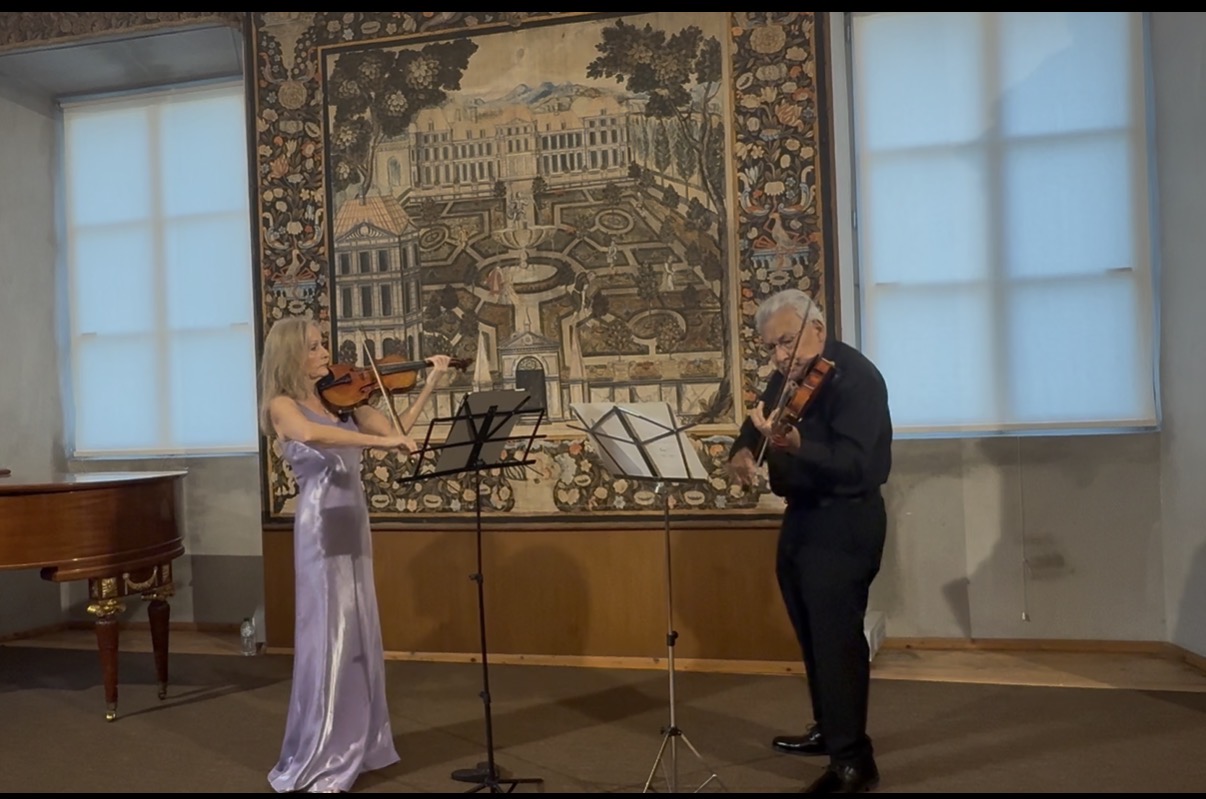
As a short overture to the actual program – Orfeo Grand Finale – Routa Kroumovitch and Alvaro Gomez performed the Sonate opus 3 nr. 5 by Jean-Marie Leclair (1697–1764). Their ensemble playing immediately stood out for its stylistic refinement and elegant articulation. The baroque dialogue between the two violins was clearly worked out and formed an elegant opening to a carefully constructed program.
Then Routa Kroumovitch and Dena Kay Jones performed Introduction et Rondo capriccioso, opus 28, by Camille Saint-Saëns (1835–1921), a work in which elegance and bravura continually compete for prominence. Kroumovitch allowed the restrained melancholy of the introduction to flow organically into the irresistible momentum of the rondo. Her playing remained remarkably transparent; the virtuosity never seemed more important than the melodic line. Jones once again proved how naturally she adapts to her soloist. Her piano playing supported, colored, and responded without ever claiming attention for itself.
The vocal part of the evening was carried by Russian baritone Yury Kopyrin, who together with Dena Kay Jones presented a recital that moved between Italian bel canto and Russian romanticism. His warm, substantial baritone proved capable of effortlessly carrying different styles. That Kopyrin was only nineteen years old made his performance all the more remarkable. He possesses not only an outstandingly mature voice, but also a stage presence and text handling that suggest a much more experienced singer.
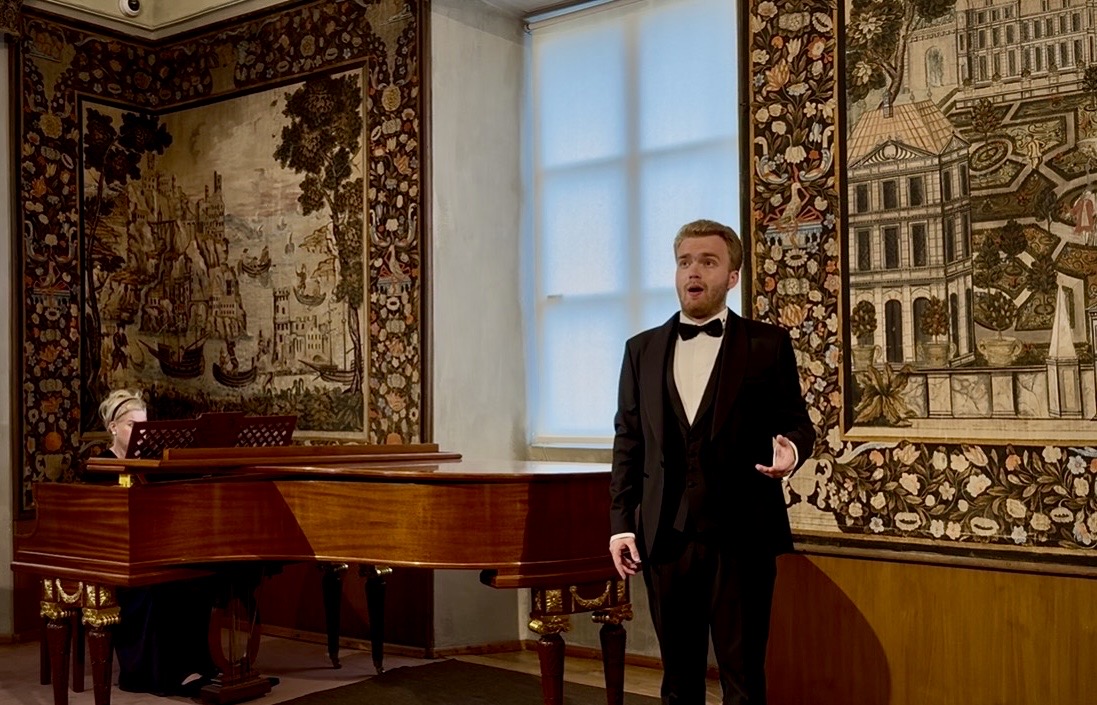
He opened with Vergin, tutto amor by Francesco Durante (1684–1755), in which he chose a restrained, almost meditative approach. He then performed Durante's well-known Danza, danza, fanciulla gentile with a light elegance that allowed the character of the song to come fully into its own.
The atmosphere then shifted to Russian romanticism with None but the Lonely Heart and I'd Like to Merge into a Single Word by Pyotr Ilyich Tchaikovsky (1840–1893). In particular, None but the Lonely Heart, subtly supported by the cello sound of Kristina Tu, formed an emotional highlight of the evening. The addition of the cello gave the song an extra melancholic depth, making the intimacy of the singing even more pronounced. I am in Love with You by Aleksandr Dargomyzhsky (1813–1869) also fit seamlessly into that line of refined expression.
As an instrumental intermezzo, Kirill Gliadkovsky performed a moving rendition of Prelude in C-sharp minor, opus 3 no. 2, by Sergei Rachmaninov (1873–1943). The work is among the best-known piano pieces in the repertoire and is performed so frequently that it easily loses its element of surprise. Gliadkovsky, however, chose a restrained buildup of tension, in which the monumental chords gradually developed without losing sight of the lyrical undercurrent. In this way, the prelude became not an isolated virtuosic moment, but a natural pivot point within the recital.
In the final section of the song program, different European song traditions were given a place once again. Widmung by Robert Schumann (1810–1856) sounded warm and lyrical, while La serenata and Malia by Francesco Paolo Tosti (1846–1916) retained an elegant, almost salon-like charm without becoming superficial. With Musica proibita by Stanislao Gastaldon (1861–1939), Kopyrin concluded his recital convincingly. Here too he impressed less through vocal display than through his natural expressiveness, a quality that the audience clearly appreciated. With La donna russa from Fedora by Umberto Giordano (1867–1948), Kopyrin finally had the opportunity to demonstrate his operatic qualities. Without losing the intimacy of the preceding song repertoire, he gave the aria the dramatic tension and vocal allure that it demands. Thus it formed a convincing conclusion to a recital in which musical expressiveness remained continually more important than vocal showmanship.
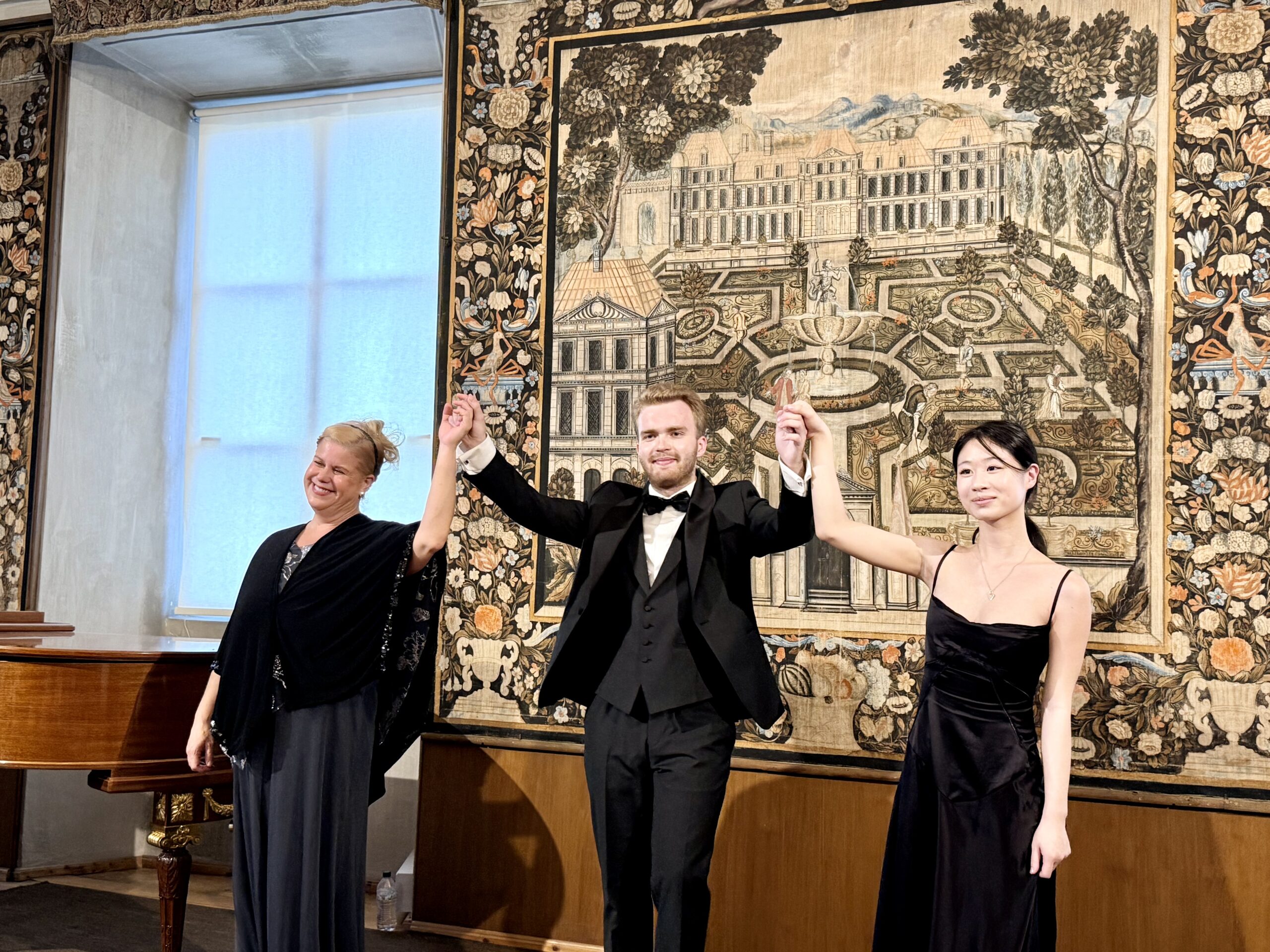 What ultimately made this closing evening so convincing was not the scope of the program, but the concentration with which every performance was brought. The different styles – from baroque through romanticism to late romantic song – did not form a loose succession, but an organic whole. In this way, this final concert also seamlessly connected to the spirit of the festival: technical mastery was always in service of musical expression, and experienced teachers found themselves naturally in dialogue with young musicians.
The prolonged applause with which the evening concluded was not only for the performers of this final concert, but for the entire festival week. Those who had followed the concerts from beginning to end had seen young musicians develop into convincing ensemble partners, guided by teachers who generously shared their experience while at the same time leaving room for the individual musical personality of their students. In this way, this Grand Finale was not a spectacular endpoint, but the natural culmination of a week in which listening, ensemble playing, and musical curiosity had always been central.
Closing Reflection
During the five concerts I attended, the Orfeo Music Festival unfolded gradually as much more than a series of separate concerts. From the first notes in the Priesterseminarie to the Grand Finale in the Kaisersaal, a festival revealed itself that did not stand out for spectacle, but for the care with which programmes, musicians and venues were attuned to each other. The historic spaces of Brixen formed no decorative backdrop, but an essential part of the listening experience. Each hall gave the music its own character, without ever diverting attention from it.
What perhaps struck most throughout the whole week was the self-evident way in which experienced musicians and young participants made music together. Teachers did not keep their distance as unreachable examples, but took an active part in the musical process, both on stage and beyond. Students were given space at the same time to take responsibility, take risks and develop artistically. This blurred the distinction between lesson and concert, between education and performance. Listening proved to be at least as important as speaking.
That attitude formed the true thread running through the festival. Skill remained rarely an end in itself, but consistently served the music. Whether it was a solo recital, a song programme, a chamber music ensemble or a student ensemble: dialogue was always central. Precisely because of this, not only a few exceptional performances lingered, but especially the image of a musical community in which experience, curiosity and mutual trust continually reinforced each other.
The Alpine landscape around Brixen provided the setting; the musicians gave the festival its meaning. If this first edition in Brixen is indicative of the future, then the Orfeo Music Festival has found not only a new venue, but also a new home. More than a series of successful concerts, this festival week showed how music can bring together people with different backgrounds, ages and experiences. Perhaps that is ultimately the greatest achievement of the Orfeo Music Festival.