The 24 candidates admitted to the semi-finals are expected at Flagey from Monday 16 May onwards. As with every instrumental session, two new works were commissioned for the Cello Competition. These works were commissioned from Daan Janssens and Jörg Widmann, with the support of the Fonds Baillet-Latour and Sabam. For this semi-final, the creation Wie aus der Ferne by Daan Janssens is on the programme.
The 24 semi-finalists of KEW22 received the score of the mandatory work upon final acceptance of their registration file. The chosen work was composed by Daan Janssens.
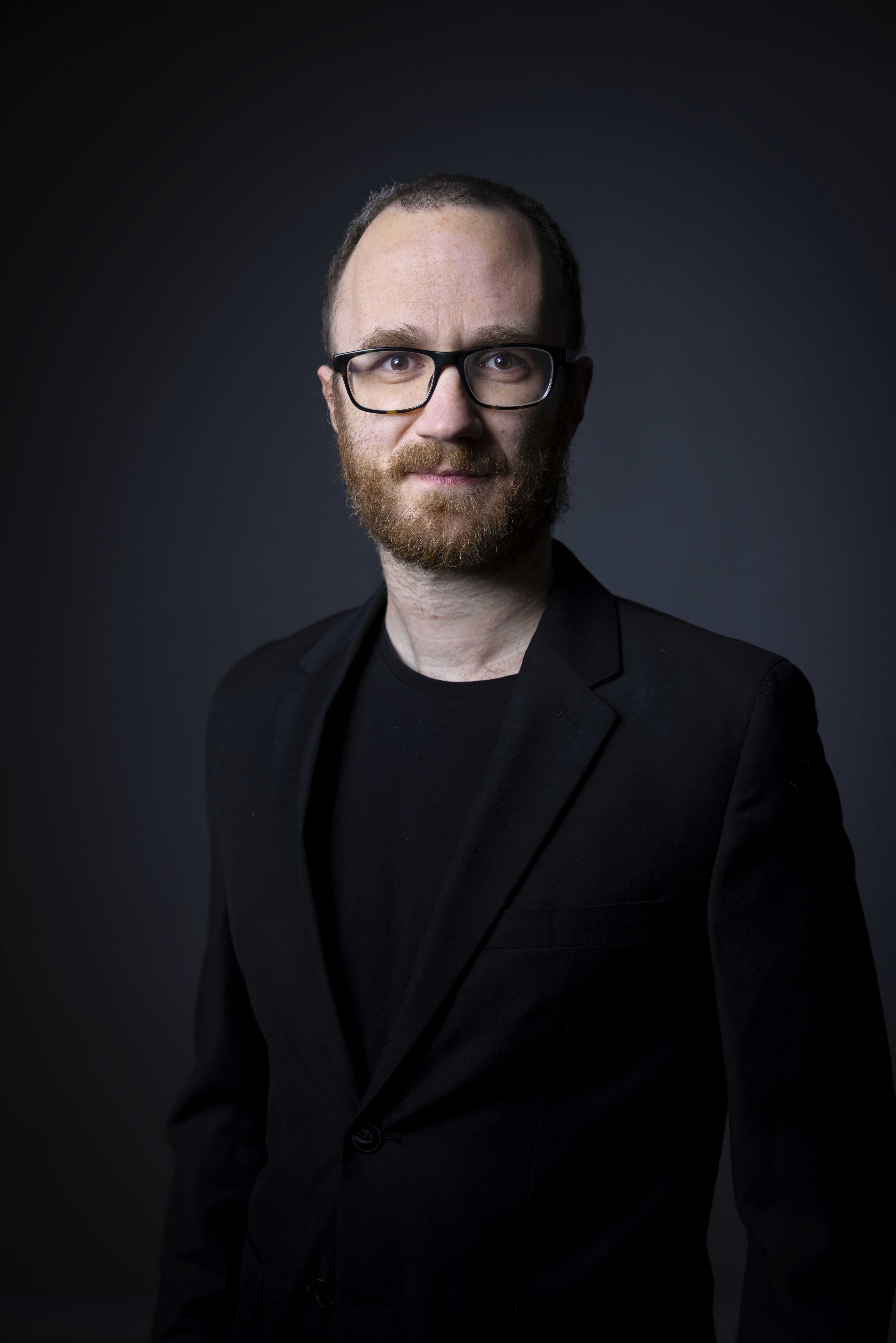
Daan Janssens (born 1983) is a Belgian composer from Brugge. In his native city he studied violin, piano, music theory and composition at the conservatory. He then continued his composition studies at the Gent conservatory with Frank Nuyts and attended master classes with, among others, Peter Eötvös and Magnus Lindberg. Janssens had his breakthrough with the chamber music work …Passages… (2006) with which he won first prize at the Ghent Week of Contempory Music. His recent work includes the "Doppelzycklus" Eine schöne Müllerin (2018) and this newly composed mandatory work.
Wie aus der Ferne has its world premiere on Monday 16 May at 3 p.m. in Studio 4 at Flagey and will be performed by the 24 semi-finalists during their recital. The composer will be regularly present during the semi-final to attend the performance of his work.
A FEW WORDS FROM THE COMPOSER ABOUT HIS WORK...
"Wie aus der Ferne", writes Robert Schumann in the penultimate section of his piano collection Davidsbündlertänze. In his piano work, two very different musical characters continually alternate; the turbulent Florestan, and the more restrained, lyrical Eusebius. "Wie aus der Ferne" also sings the Dutchman in the second act of Wagner's opera Der fliegende Holländer. In this duet with Senta, the woman who will ultimately free the Dutchman from his curse, the characters initially sing alongside each other at the beginning, each expressing his own feelings. However, both vocal lines slowly grow towards each other, to merge completely with each other at the very end of the duet.
When I was asked to create a composition for cello and piano, I drew inspiration from these compositions by Schumann and Wagner. At the beginning of the work, the cello and the piano express two very different characters; the cello plays turbulent, unpredictable musical figures, while the piano presents itself much more restrainedly. However, both characters slowly grow towards each other, to merge completely with each other in the final part of the composition.
Thanks to VRT, RTBF and Proximus, all performances are streamed live on www.koninginelisabethwedstrijd.be.
From the semi-final onwards, you can also follow everything live on Klara and Canvas.
On Saturday 21 May, the announcement of the twelve finalists will be streamed live on our website around midnight.
We use necessary cookies to make the site work. With your consent we also measure visits anonymously (Google Analytics) to improve the site.
More in our cookie policy.


 Daan Janssens (born 1983) is a Belgian composer from Brugge. In his native city he studied violin, piano, music theory and composition at the conservatory. He then continued his composition studies at the Gent conservatory with Frank Nuyts and attended master classes with, among others, Peter Eötvös and Magnus Lindberg. Janssens had his breakthrough with the chamber music work …Passages… (2006) with which he won first prize at the Ghent Week of Contempory Music. His recent work includes the "Doppelzycklus" Eine schöne Müllerin (2018) and this newly composed mandatory work.
Wie aus der Ferne has its world premiere on Monday 16 May at 3 p.m. in Studio 4 at Flagey and will be performed by the 24 semi-finalists during their recital. The composer will be regularly present during the semi-final to attend the performance of his work.
A FEW WORDS FROM THE COMPOSER ABOUT HIS WORK...
"Wie aus der Ferne", writes Robert Schumann in the penultimate section of his piano collection Davidsbündlertänze. In his piano work, two very different musical characters continually alternate; the turbulent Florestan, and the more restrained, lyrical Eusebius. "Wie aus der Ferne" also sings the Dutchman in the second act of Wagner's opera Der fliegende Holländer. In this duet with Senta, the woman who will ultimately free the Dutchman from his curse, the characters initially sing alongside each other at the beginning, each expressing his own feelings. However, both vocal lines slowly grow towards each other, to merge completely with each other at the very end of the duet.
When I was asked to create a composition for cello and piano, I drew inspiration from these compositions by Schumann and Wagner. At the beginning of the work, the cello and the piano express two very different characters; the cello plays turbulent, unpredictable musical figures, while the piano presents itself much more restrainedly. However, both characters slowly grow towards each other, to merge completely with each other in the final part of the composition.
Thanks to VRT, RTBF and Proximus, all performances are streamed live on www.koninginelisabethwedstrijd.be.
From the semi-final onwards, you can also follow everything live on Klara and Canvas.
On Saturday 21 May, the announcement of the twelve finalists will be streamed live on our website around midnight.
Daan Janssens (born 1983) is a Belgian composer from Brugge. In his native city he studied violin, piano, music theory and composition at the conservatory. He then continued his composition studies at the Gent conservatory with Frank Nuyts and attended master classes with, among others, Peter Eötvös and Magnus Lindberg. Janssens had his breakthrough with the chamber music work …Passages… (2006) with which he won first prize at the Ghent Week of Contempory Music. His recent work includes the "Doppelzycklus" Eine schöne Müllerin (2018) and this newly composed mandatory work.
Wie aus der Ferne has its world premiere on Monday 16 May at 3 p.m. in Studio 4 at Flagey and will be performed by the 24 semi-finalists during their recital. The composer will be regularly present during the semi-final to attend the performance of his work.
A FEW WORDS FROM THE COMPOSER ABOUT HIS WORK...
"Wie aus der Ferne", writes Robert Schumann in the penultimate section of his piano collection Davidsbündlertänze. In his piano work, two very different musical characters continually alternate; the turbulent Florestan, and the more restrained, lyrical Eusebius. "Wie aus der Ferne" also sings the Dutchman in the second act of Wagner's opera Der fliegende Holländer. In this duet with Senta, the woman who will ultimately free the Dutchman from his curse, the characters initially sing alongside each other at the beginning, each expressing his own feelings. However, both vocal lines slowly grow towards each other, to merge completely with each other at the very end of the duet.
When I was asked to create a composition for cello and piano, I drew inspiration from these compositions by Schumann and Wagner. At the beginning of the work, the cello and the piano express two very different characters; the cello plays turbulent, unpredictable musical figures, while the piano presents itself much more restrainedly. However, both characters slowly grow towards each other, to merge completely with each other in the final part of the composition.
Thanks to VRT, RTBF and Proximus, all performances are streamed live on www.koninginelisabethwedstrijd.be.
From the semi-final onwards, you can also follow everything live on Klara and Canvas.
On Saturday 21 May, the announcement of the twelve finalists will be streamed live on our website around midnight.

