


Violist Kaja Nowak and violist Diede Verpoest laugh in denial when I ask them whether the aim of the Karski Quartet is primarily to perform Polish composers, male and female. After all, the quartet consists for three quarters of Polish musicians: alongside Kaja Nowak also the sisters Natalia (violin) and Julia Kotarba (cello). Moreover, the ensemble is named after the Polish resistance fighter Jan Karski.
That name turns out to have been suggested by their teacher Philippe Graffin at the Brussels Conservatory, where the four got to know each other. 'Philippe Graffin is deeply passionate about the history of the Second World War and has also organised a festival around forgotten and persecuted composers,' Kaja Nowak explains. 'Jan Karski, however, had nothing to do with music. Philippe came to know him through the documentary Shoah by Claude Lanzmann, in which Karski played an important role. As a resistance figure in occupied Poland, he was approached by Jewish people who asked him to go and see the Warsaw ghetto. Completely shocked by what he saw there and later also in the concentration camps, he decided to inform the West about it. He wrote a report and, at risk to his own life, travelled abroad to speak with British and American politicians. That mission, admittedly, to his great sorrow, achieved little.'
Climate
'Although our quartet consists of three Polish musicians, it was in fact not at all our intention to promote Polish culture, quite the contrary. The first work we played together, by the way, was a string quartet by Claude Debussy. We therefore did hesitate about that name. But Karski's personality – compassionate, upright and courageous – and his values appealed to all four of us enormously. We want our music not to stand on its own, but to be a reflection of life and society. We want to let our voice be heard.'
'We translate our social commitment into our programming,' Diede Verpoest adds. 'Recently, for example, we put together a programme that revolves mainly around nature. There is a lot of folk music in it, because many natural elements appear there. In this way we draw attention to the climate issue. We do immerse ourselves in the music, but we are also people who are engaged with society.'
No time for self-pity
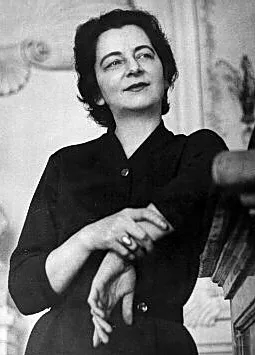
But now a Polish female composer is on the programme after all. Not because she is Polish or because she is a woman, says Kaja. 'The music of Grażyna Bacewicz is simply wonderful. And that is mainly why it matters to me. Although we admit that we are riding the wave of the increased attention for female and forgotten composers. The spirit of the times is certainly on our side.'
According to her biographer Diana Ambache, Bacewicz herself was not so preoccupied with relations between men and women. Yet in a conversation with Nadia Boulanger (which she recounts in an early essay, included in the collection Znak szczególny (A Distinguishing Mark), published after her death), the composer described how hard she found the life of a woman: it was impossible to be a wife, mother, housewife and creative artist all at once. The illustrious pedagogue Boulanger, under whom Bacewicz studied in the 1930s in Paris at the École Normale de Musique, is said to have replied that 'to succeed in this essentially male world, there was no time for self-pity and moments of weakness' (*).
Her being a woman has in any case not made things easy for Bacewicz. In 1949, for example, a critic wrote after a performance of her piano concerto in Vienna that it was 'a well-known fact that behind Grażyna Bacewicz stands a man who writes her compositions for her' (*). Letters were regularly addressed to 'Mr. Bacewicz'.
Kaja: 'As a composer she was initially laughed at. Fellow students would ask: "Have you lost your way? This is the composition room, you know." Later her colleagues came to value her enormously, and she received commissions from leading musicians. As a violinist, too, she had a fantastic career. What a rich life she had! And not only as a composer and violinist: she was also a mother, sister and daughter, and always took care of her family.' On top of that she was the author of four novels, short stories, essays, and television, radio and theatre plays.
Role model
After a serious traffic accident in 1954 she had to bid farewell to concertising and devoted herself with even more zeal to composing. She became a jury member at leading violin competitions and in the 1960s vice-chairwoman of the Polish Composers' Union. According to the composer Bernadetta Matuszczak (1937–2021), Bacewicz was accepted by her male colleagues as an equal, as the first female composer in Poland, and cleared the way for others. 'In Poland Grażyna paved the way for female composers. She had a hard time, but she succeeded; thanks to her great talent she gained fame... For us the path was open afterwards, and nobody looked strangely at us anymore: "Good heavens, yet another female composer!" Bacewicz had gone before us, so the next one too had a right to exist.' (*)
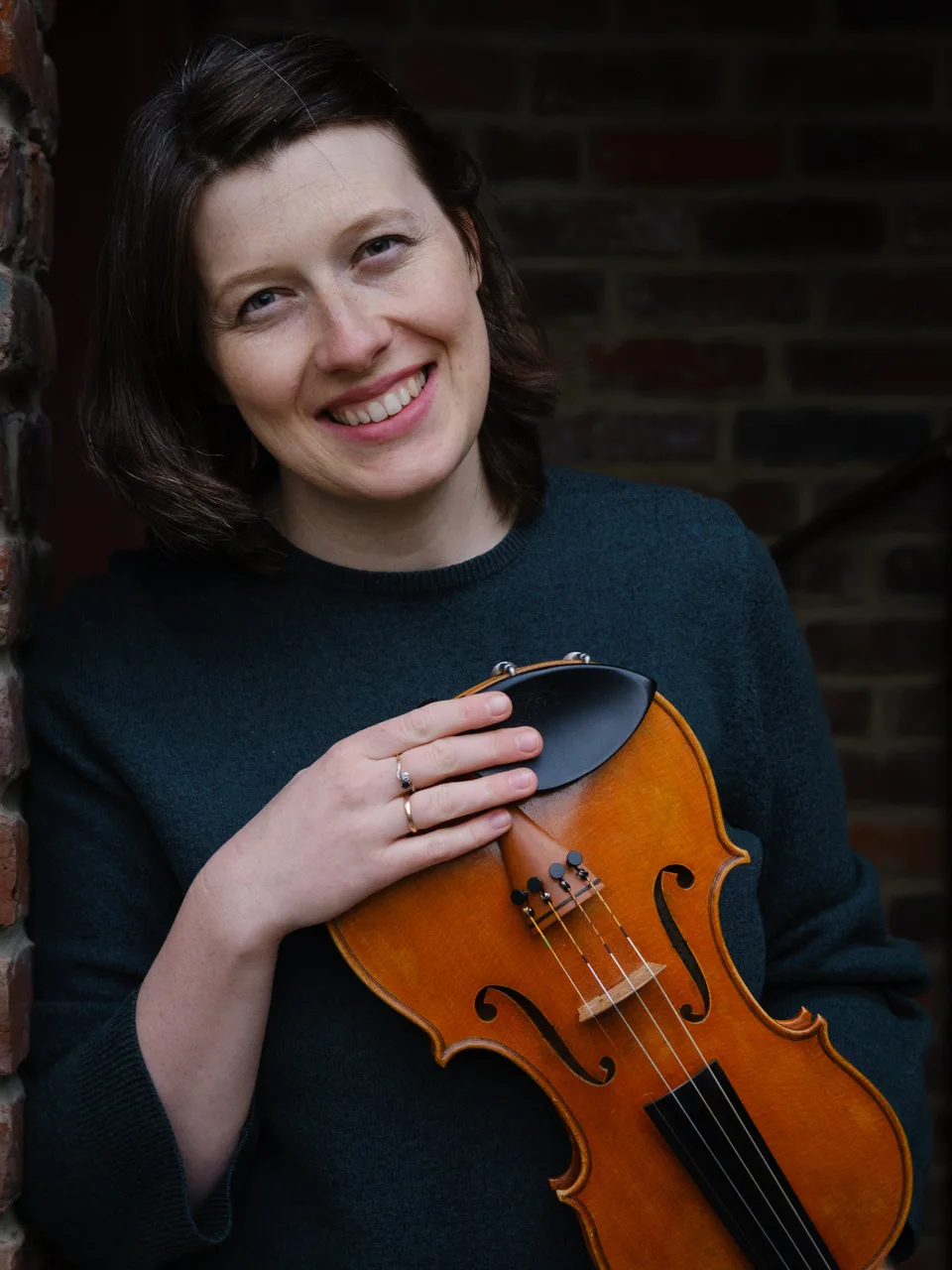
'Yes, Bacewicz is absolutely a role model for us too', Kaja says with a beaming smile when asked. 'But history tends to forget women quickly, even when they had a flourishing career during their lifetime. Bacewicz even won prizes in Belgium: in Liège the first prize for her fourth string quartet and later the second prize for her fifth string quartet. In 1966 she won the second prize in the Queen Elisabeth Competition for composition, and the Belgian government prize, with her seventh violin concerto. So it's strange that she is so little known here. Not even at the conservatory, perhaps except among violinists with some solo pieces.'
Diede Verpoest confirms: even before he joined forces with the three Polish musicians, he had already played her Caprice polonais, one of her better-known pieces.
For Polish musicians, Bacewicz is on the other hand a constant presence in their musical lives, Kaja knows. 'I think every violinist in Poland has played at least one of her pieces. Her orchestral and chamber music is also quite popular there. In Poland today, really everyone knows her name. There are streets named after her, and the conservatory in her birthplace Łódź bears her name and that of her brother Kiejstut.' (Grażyna's two brothers, Kiejstut and Vytautas, who emigrated to the US, were also a composer and pianist. Their sister Wanda was a poet.)
Accessible
20th-century music has sometimes had the reputation of being less easy on the ear than, say, music from the classical or romantic periods. But whenever the Karski Quartet performs Bacewicz's work, they receive very positive reactions from the audience, Diede says. 'Especially when people hear her music live, because it is very lively. Moreover, we are a quartet that plays with a lot of energy and dynamism. By the way, our CD recording recently came out as the best in a blind-listening programme on Polish radio, in which a panel compared six recordings of her fourth string quartet.'
What makes her work accessible is that it is often inspired by folk music. Poles in particular recognise energetic little tunes in it, Kaja says. 'But even when they don't recognise the melody, they do recognise the inflections and the accents. It is typical Polish folklore.'
That folk-based approach is, by the way, characteristic of the work of many other Polish composers. Think of the mazurkas of the Polish-French Frédéric (actually Fryderyk) Chopin. A mazurka is originally a folk dance from the historical region of Masovia in Poland.
Socialist-realist
During the German occupation, Bacewicz worked closely with the Polish resistance. She became a member of the underground musicians' union and fought to preserve the dignity of Polish artists. After the war, artists were not yet liberated; they were subjected to the socialist-realist doctrine of the USSR, which wanted to use art for political purposes. Art had to be 'of the people'. Since Bacewicz already integrated traditional forms and genres into her compositions, she did not find it too difficult to fall in line and circumvent censorship. Her works were regularly performed by the Polish Radio Orchestra, the National Philharmonic Orchestra and other orchestras that commissioned pieces from her.
Kaja: 'It remained a difficult period for her too, but she integrated those "healthy roots of the nation" in a beautiful, sincere and intelligent way. She did not see herself as a great innovator. She was, however, obsessed with form and wanted to explore how far it could take her. Because a composer, in her view, had to evolve and not remain stuck in the same style for a whole lifetime.'
Experimenting
Grażyna Bacewicz did not like boxes and labels, and her style, apart from that folk-musical approach, is therefore hard to describe unambiguously. Her first period may be called neoclassicist. But later she also began to experiment, following the example of Western fashion. She and her Polish colleagues only became acquainted with that after 1953, when the Polish Communist Party allowed more freedom following the death of the Soviet Russian Secretary-General Leonid Brezhnev. Bacewicz then took the initiative for the International Festival of Contemporary Music, which was first organised in Warsaw in 1956 and marked the end of Poland's isolation from the new musical movements of the West. There the Poles were introduced for the first time to the music of, among others, Stockhausen and Schoenberg.
Subtle changes could therefore be noticed in Bacewicz's compositions, moving away from tonality and with a greater focus on instrumental timbre (sonorism). At the same time, we learn from her correspondence with her brother in the US that she had reservations about the Western avant-garde. She had come to realise in Belgium, she wrote, that composers 'experiment with sounds, colours, interesting rhythms and so on, but there is still no music'. In fact, with all that avant-garde they had 'ended up on a dead-end track'. 'What is more: the compositions no longer even pleased the composers themselves (exceptional geniuses aside). Music is a beautiful art form; what was being written was not that.'
Emotional music
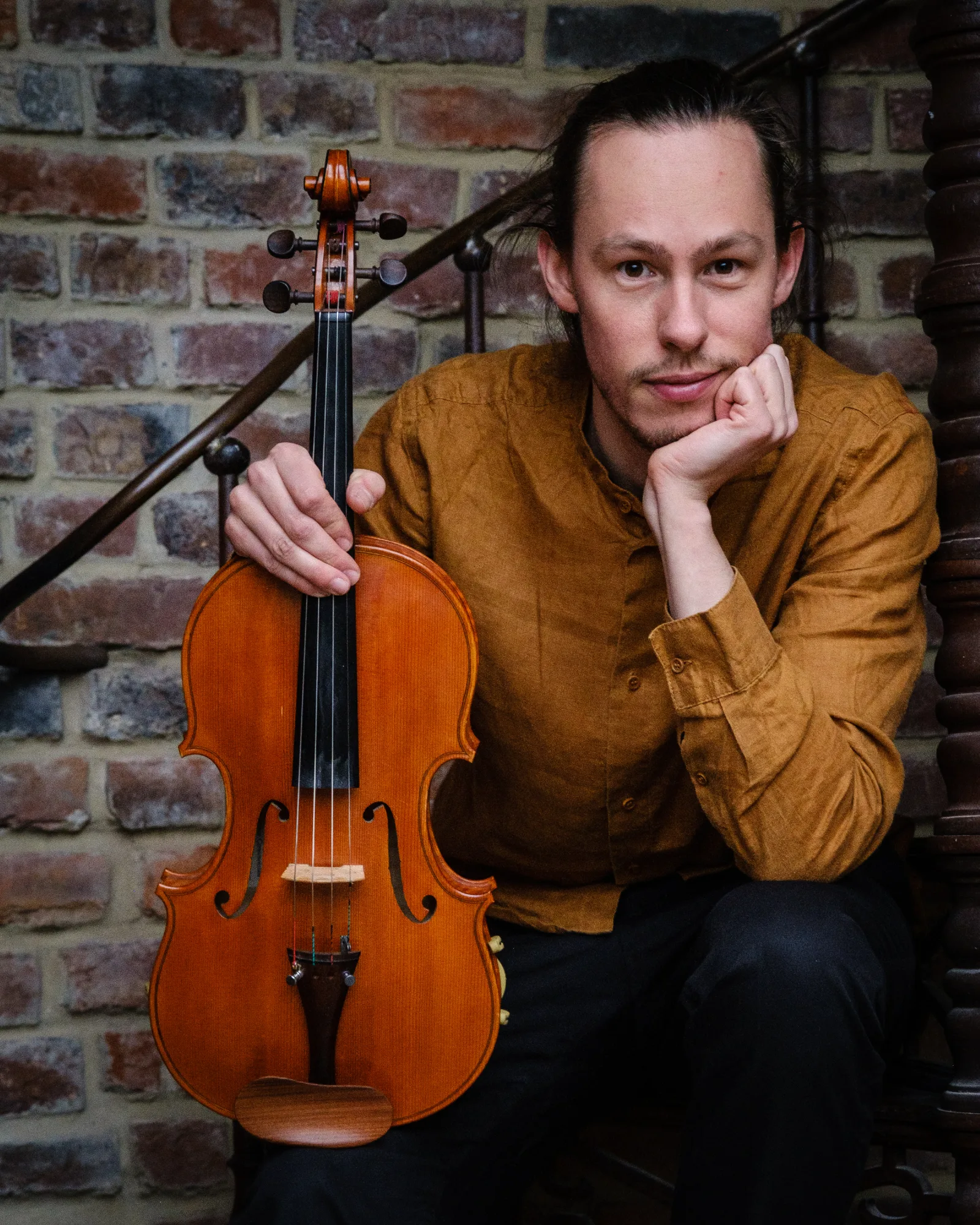
Bacewicz decided that a new path had to be found and sought it in a simplification of the musical language. Moreover, she wanted from then on to write 'emotional music', because 'composers seem to be ashamed of their emotional side'.
According to Diede Verpoest and Kaja Nowak, all of this led to Bacewicz's very own, unique style. Kaja: 'At the end of her life she did indeed write very experimental music, but she did not experiment for the sake of experimenting itself. And through all that enormous stylistic diversity you still see one clear characteristic: an incredible way of communicating with the listener. It is very direct, whether it is an experimental piece or a neoclassicist work with folk melodies. As a result, people also react after a concert that Bacewicz's music is much more accessible than they had expected.'
Motorek
Bacewicz said of herself that she never felt tired while composing and wanted to put the sounds in her head on paper as quickly as possible. She owed her energy to what she called her motorek: 'I have a small, invisible little motor in me, and thanks to that I finish a task in ten minutes that others take an hour or longer over; normally I don't walk, I run; I talk fast; even my heartbeat is faster than that of others and I was born in the seventh month. I was born for action, not for empty talk… There is only one essential requirement: 'motorek…' – without it there is no point.' (*) Her oeuvre comprises no fewer than 12 concertos, including 7 for violin, 4 symphonies, choral works, chamber music and so on. And she also discarded many pieces, strict as she was with herself.
A pleasant introduction is offered in any case by the CD of the Karski Quartet, featuring her first piano quintet and her fourth string quartet. Live during Festival 20•21 in Leuven they perform that string quartet and the first and second piano quintets. For this they are joined by the four artist in residence Brecht Valckenaers, who last year also delighted us with the Russian composer Galina Oustvolskaya (read on this blog: Galina Oestvolskaja: tussen piano, pijn en protest).
Furthermore, Kaja recommends the previously mentioned Pools caprice (Kaprys polski, 1949) for solo violin, the Concerto for String Orchestra (Koncert na orkiestrę smyczkową, 1948) – 'a beautiful work with wonderful harmonies and rhythms' – and the Quartet for 4 violins (Kwartet na 4 skrzypiec, 1949). From Bacewicz's later period, her Viola Concerto (Koncert na altówkę i orkiestrę, 1968-69) is well worth discovering.
For my part, I have resolved to delve into the Kindersuite (Suita dziecięca, 1933) on my piano, eight short pieces in a rather neoclassicist style. Bacewicz composed them when she was 23, during the period she studied with Nadia Boulanger. Don't be mistaken: unlike what the title might suggest, these pieces nonetheless offer quite a few technical challenges…
____________________
- (*) Quoted in the biography Grażyna Bacewicz The First Lady of Polish Music by Diana Ambache.
- During Festival 20•21 the Karski Quartet performs together with Brecht Valckenaers the concert Polish(ed) Power on 13 October at 8:30 p.m. in the Iers College.
- Work by Grażyna Bacewicz is also on the programme, alongside other work, during concerts in Brakel (3/10), Zomergem (4/10), Ghent (26/10), Wetteren (30/10) and Bruges (31/10). More information via the Karski Quartet.
- On the CD Bacewicz: String Quartet No.4, Piano Quintet No.1 the Karski Quartet is joined by pianist Jâms Coleman.
- This article also appeared on the blog Notities van een vrouw aan de piano.