

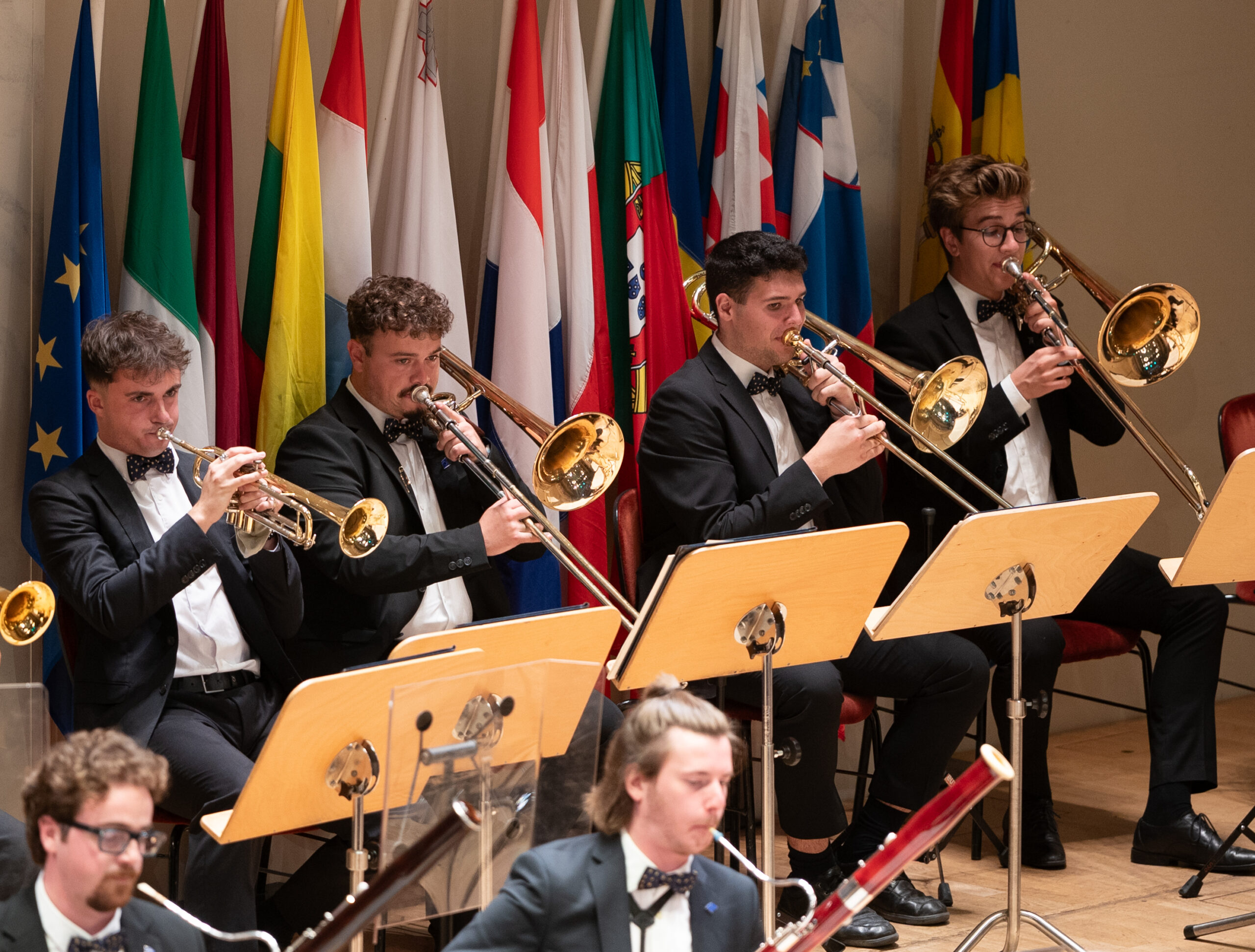
The concert by the European Union Youth Orchestra (EUYO) is one of the finest traditions of Young Euro Classic and consistently draws a packed concert hall. Year after year, the ensemble brings together young musicians from the 27 EU member states, selected from thousands of candidates. Under conductors such as Bernard Haitink, Vladimir Ashkenazy and Ivan Fischer, the EUYO has built a reputation that far exceeds that of an ordinary youth orchestra. Under the direction of Elim Chan and with Spanish violinist María Dueñas as soloist, the ensemble confirmed that reputation on Monday 3 August at the Konzerthaus Berlin, although the qualities of the two halves of the programme were strikingly uneven.
Refined orchestra, mixed impression
The concert opened with the beloved Violin Concerto by Johannes Brahms (1833-1897), a work that makes high demands on both soloist and orchestra. The EUYO immediately demonstrated how intensively the ensemble playing had been worked on: the orchestral sound was beautifully balanced, the different sections listened carefully to each other and the numerous solistic passages were delivered with great subtlety. Yet the first movement initially sounded somewhat restrained; the orchestra seemed reluctant to commit its full weight, something that quickly changed in the passages that followed when the young musicians were given more room to show their strength and enjoyment of playing.
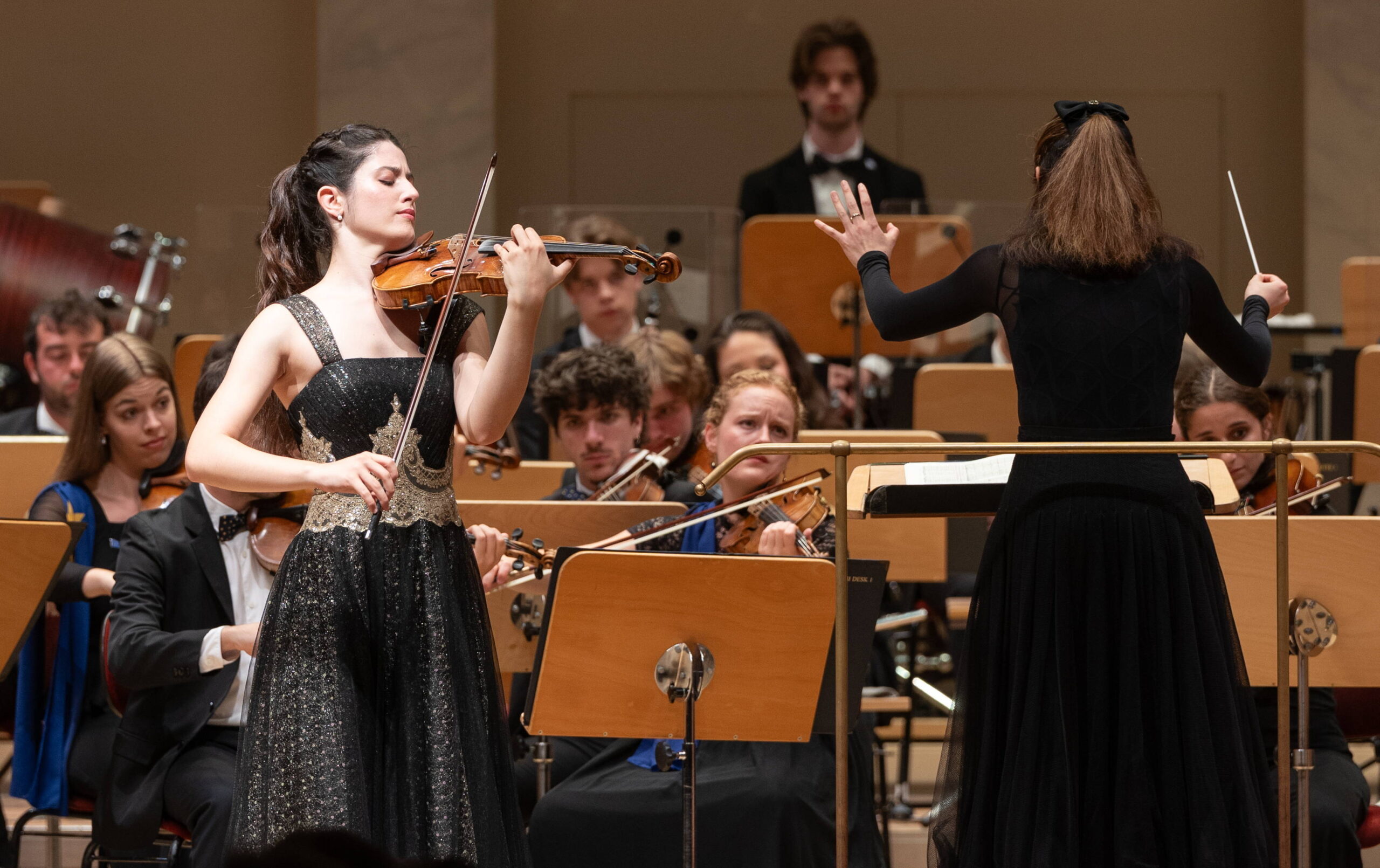 María Dueñas undeniably possesses impressive technical skill, which was evident, among other things, from the cadenza written by herself. Personally, I found it somewhat lengthy: the virtuosity was certainly there, but the musical tension arc did not quite hold my attention. Throughout the rest of the performance, my appreciation of her interpretation remained somewhat ambivalent. Her playing was precise and her tone beautiful, but it did not move me sufficiently from a musical perspective.
The orchestra gradually came more to the fore. Particularly in the slow section, the clarity of the ensemble playing stood out. The horns and woodwinds sounded immaculate, with above all a phenomenal oboe solo that silenced the hall. Brahms was taken broadly here, in my view perhaps a bit too broadly, but precisely for that reason the acceleration towards the end made all the more impact. The finale too, after a daring pause before the entry, gained a nice freedom, with soloist and orchestra visibly surrendering to the music and the pleasure of making music together becoming palpable.
A very different side of Dueñas emerged in the restrained Das kleine Mädchen singt, a traditional Norwegian song, noted by Johan Halvorsen (1864-1935). In this encore there was no virtuosity on display: with a simple, warm intensity she moved me deeply with this song.
Beyond themselves
After the interval the atmosphere changed completely. With the Second Symphony by Sergei Rachmaninov (1873-1943), the large-scale EUYO demonstrated what it was capable of. From the very first dark string tones of the opening movement it was clear that something lay ahead of us. The threatening opening received great intensity, without Elim Chan pushing the music prematurely towards a climax. That expectation was more than fulfilled in the course of the symphony.

What was particularly striking was the transparency of the orchestral sound. Despite the extensive orchestration and the rich, often overlapping instrumentation, virtually every detail remained audible. The various solos were also delivered excellently. Chan kept both the grand architecture and the smallest details in view, so that the many voices in the score found their place without the whole losing its coherence.
The second movement was played vigorously, with a nice ear for lyrical details. The music constantly moved and breathed, without getting bogged down in excessive romantic breadth. The third movement was the moment when this performance truly transcended itself. The music grew slowly towards its climax, and the carefully calculated acceleration seemed at a certain point to be no longer purely musical: it was as if the heart began to beat faster, which it probably also did in many concert-goers. It was precisely in that build-up that Chan demonstrated her great mastery of the orchestra: nowhere did she force the tension, but continuously increased it until the release became inevitable.
A moment of rest was also allowed before the finale. Then the music burst forth in energy and joy of playing. Rachmaninov certainly did not spare his orchestra and sometimes seems to want to overwhelm it with an abundance of notes, but Chan knew how to channel even that musical excess perfectly. The different lines remained audible and the finale gained enormous momentum and conviction. The young musicians played with a precision that continuously served the expression and with a joy of playing that easily took the hall with them.
It was truly a stunning performance. While Brahms primarily showcased the quality of the orchestra, with Rachmaninov all the puzzle pieces fell into place: the enormous orchestral forces, the technical mastery, the refined solos, the attention to detail, the grand lines of the structure and especially the collective breath with which this young ensemble gave shape to the symphony. Young Euro Classic wants to give young musicians a platform and at the same time show what future classical music has in Europe. The EUYO made that ambition more than come true this evening.
The exuberant applause was followed nicely with Nimrod from the Enigma Variations by Edward Elgar (1857-1934). The orchestra played the work with restraint and long breath and offered precisely the calm that was needed after the enormous emotional release of Rachmaninov. A restrained farewell to the music, but far from the end of the evening.
Musical celebration
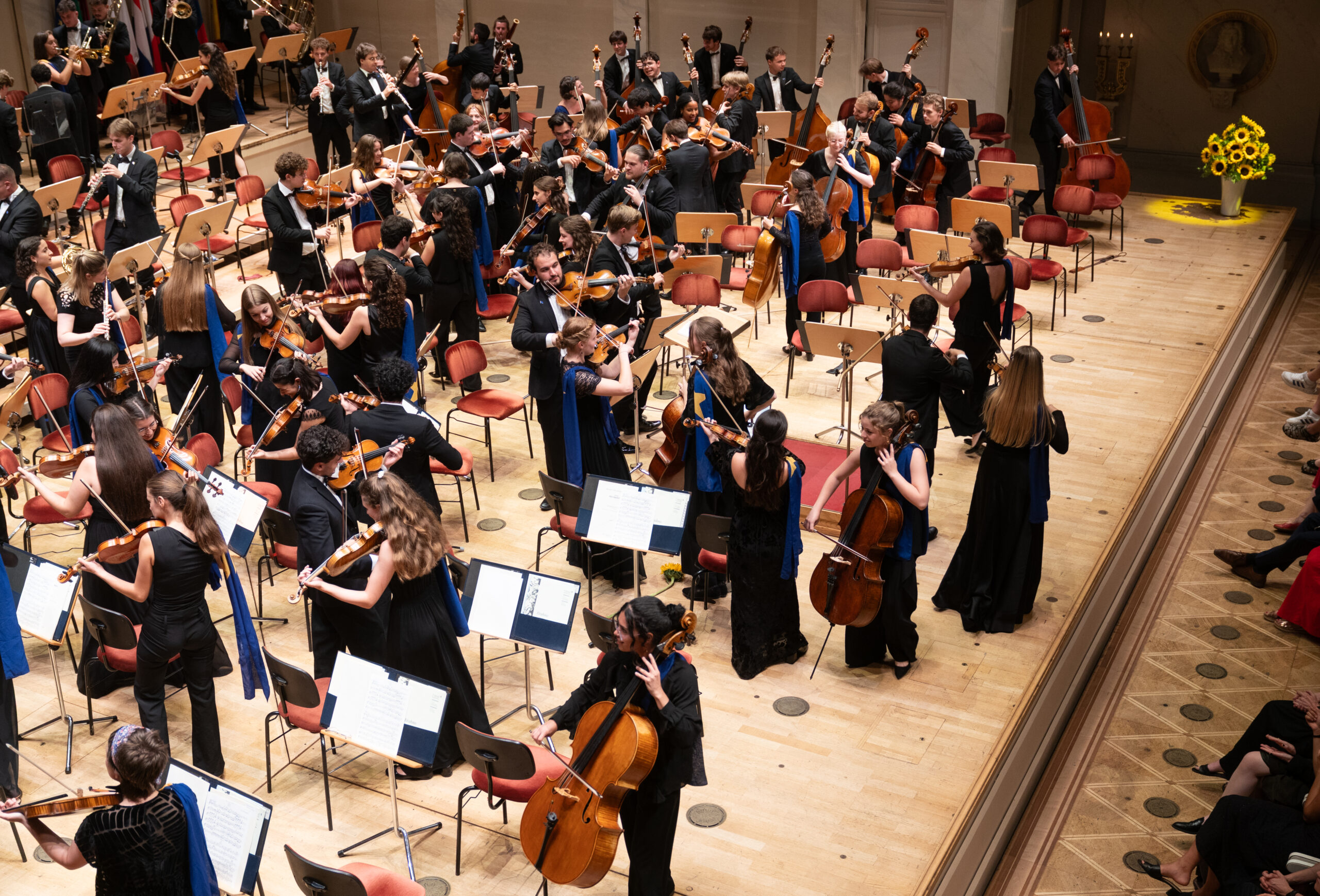
Subsequently, something happened that was at least as charming as the exceptional performance itself. The orchestra stood up and the young musicians began playfully walking around each other, while Amparito Roca by Jaime Texidor (1884-1957) provided an infectious musical conclusion. The musicians visibly shared their musical pleasure with each other and with the audience. Elim Chan also allowed herself to be drawn into the musical celebration. It was a spontaneous and disarming ending to a concert in which these young European musicians demonstrated not only their technical level, but above all how much pleasure they derive from making music together.