

[embed]https://youtu.be/sNXH2jcfBTc[/embed]
Rhythmic interplay between stage and orchestra
Going to see a new production of Verdi's Falstaff with still razor-sharp memories of the previous production that KMS presented of this opera: it is a gamble and above all a challenge. That one was still with two meanwhile lamented artists par excellence from the opera world: Willy Decker as director and Susan Chilcott as a beautiful Alice Ford.
Now Laurent Pelly is taking his turn and you expect something from him, especially since this director has stood guarantee for well-thought-out and ingenious productions for about 25 years, particularly when there is even a grain of comedy to work with. His production of Platée by Rameau can be called nothing less than groundbreaking and Donizetti's La Fille du régiment has been traveling the world for about 20 years. At the Munt, Pelly was last seen in Tchaikovsky's Eugen Onegin. And let me make it clear right away: his production of Falstaff is a complete success.
The opera with which Verdi closes his oeuvre is an oddity. Verdi approaches eighty and after so much tension and tragedy, finally wants to compose a comedy again – it dates back to the youthful work Un giorno di regno (1840). But one that allows for refined wit. He bases himself on his beloved literary source: William Shakespeare. His preferred librettist Arrigo Boito makes a masterful adaptation of it. Bernard Haitink defines it simply: "If Verdi's operas are Burgundy, then his Falstaff is Champagne".
Perfect timing
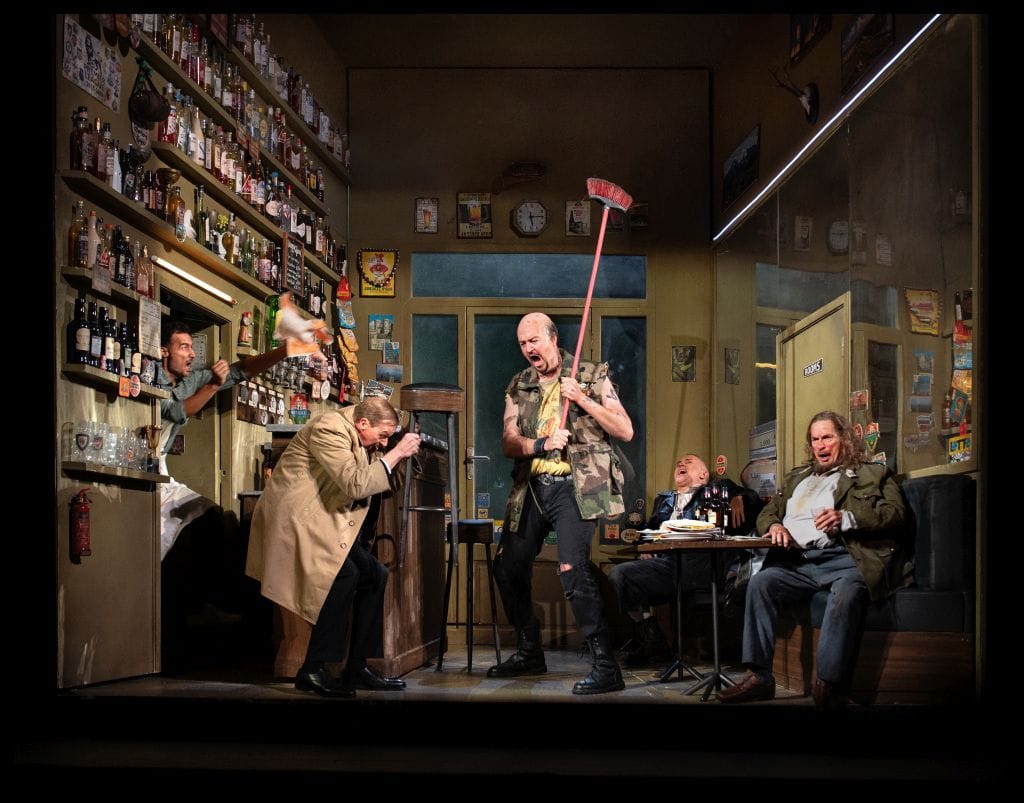
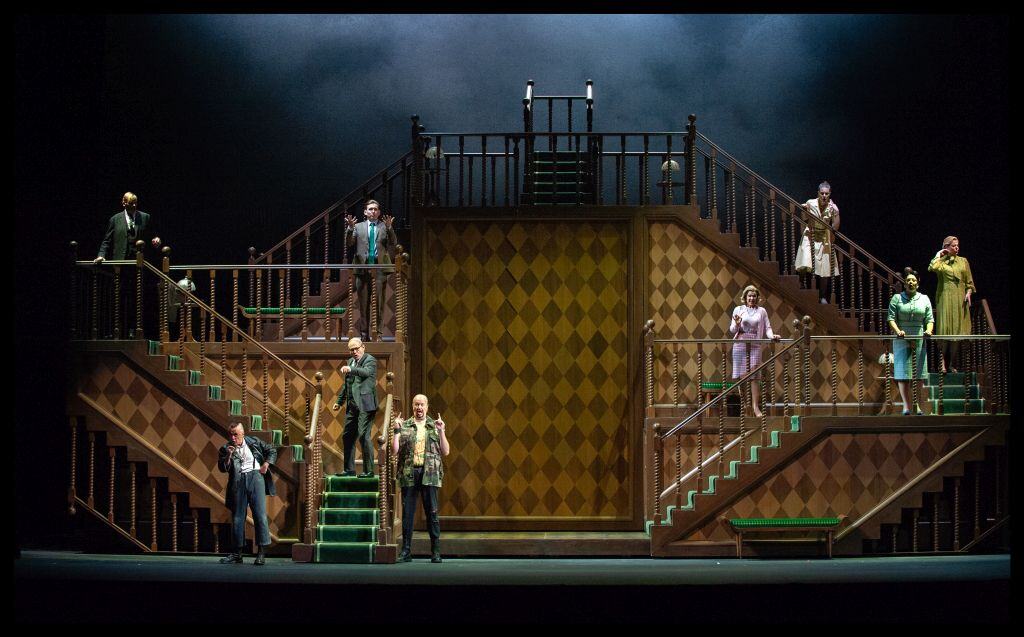
The set offers us exactly what the opera demands: a cozy pub, a bourgeois home and a magical setting for the finale. Within it, Laurent Pelly and his set designer (Barbara de Limburg) play with small changes and adjustments that each time sharpen the situation. The café changes from small to large, just as Falstaff sings about his fat belly. It may sound crude, but the way it comes across, especially in combination with the acting of Keenlyside, provides a joke. And of course the door through which Ford and Falstaff must go together: it is an obligatory gag in Falstaff. The little glass that Mrs Quickly sips from when she comes to visit Falstaff with the invitation – and she takes another one. The use of the stairs in Ford's home, along which the basket must be hauled, it creates a certain tension that surprisingly fits Verdi's music. The nocturnal forest, slowly illuminated by mist against the lights of the apartment buildings. As if Pelly wants to make clear that behind the magical spectacle there is also a real world. For every scene you could cite examples of subtle aspects and interplay between the characters that make the whole an unrelenting theatrical feast. The most important thing to make the whole work is timing and Pelly masters that perfectly and what is more: Altinoglu plays along with it completely with the orchestra. The unity in rhythm between stage-orchestra is simply sublime and it simply matches Verdi's dramatic instinct.
The opera stands or falls with its title character, the potbellied drunkard Falstaff. Always hungry, always thirsty and always short of cash. His last rescue plan: at the same time seduce two pretty and rich bourgeois ladies, Alice Ford and Meg Page. It doesn't all run so smoothly and whoever plays false is eventually deceived themselves, although Falstaff maintains his good humor and realizes at the end that the whole world is a farce! And let this be sung, to add irony, to a solemn fugue!
Simon Keenlyside is a Falstaff par excellence! Vocally the part fits him like a glove. Keenlyside grasps all the nuances that old Verdi laid into the role. He feels right at home as a true pub regular, but also always radiates enough vanity not to deny his long-gone "knight status". And beneath his comic joie de vivre there also lies genuine melancholy at the beginning of the third act after his plunge into the Thames. Keenlyside always strikes the right tone, even in the elegant passages (e.g. "Quand'ero paggio del duca di Norfolk"). In his meticulous text interpretation you recognize the experienced art song singer.
The female roles are nicely characterized as the "gaie commari di Windsor", the merry wives of Windsor, out to teach the fat seducer a lesson. Sally Matthews as Alice of the trio remains somewhat too much on the surface – especially in her buffo duet with Falstaff (with nice effects for the bassoon), but the rest of the elegant female ensemble compensates enough to bring the scheming plot of the second act to complete chaos. Their trick to also punish Ford in the final scene with the wedding of the lovers Nanetta and Fenton is a successful romantic coup de théâtre.
Among the singers we are happy to note the convincing interpretation by Daniela Barcelona as Mrs Quickly and Lionel Lhote, who neither in his absurd disguise with red beard nor in his final defeat abandons his pretense as Ford.
As already made clear: the orchestra plays under Alain Altinoglu sparkling and with delightful accents in the woodwinds but also in the piccolo which drives the irony to the top or in the trumpets which laugh at the end of the second act as Falstaff is thrown into the Thames and of course the horns, as a symbol of the deceived husband! This performance was a whirlwind celebration.
[embed]https://youtu.be/KnAZjEsmasE[/embed]