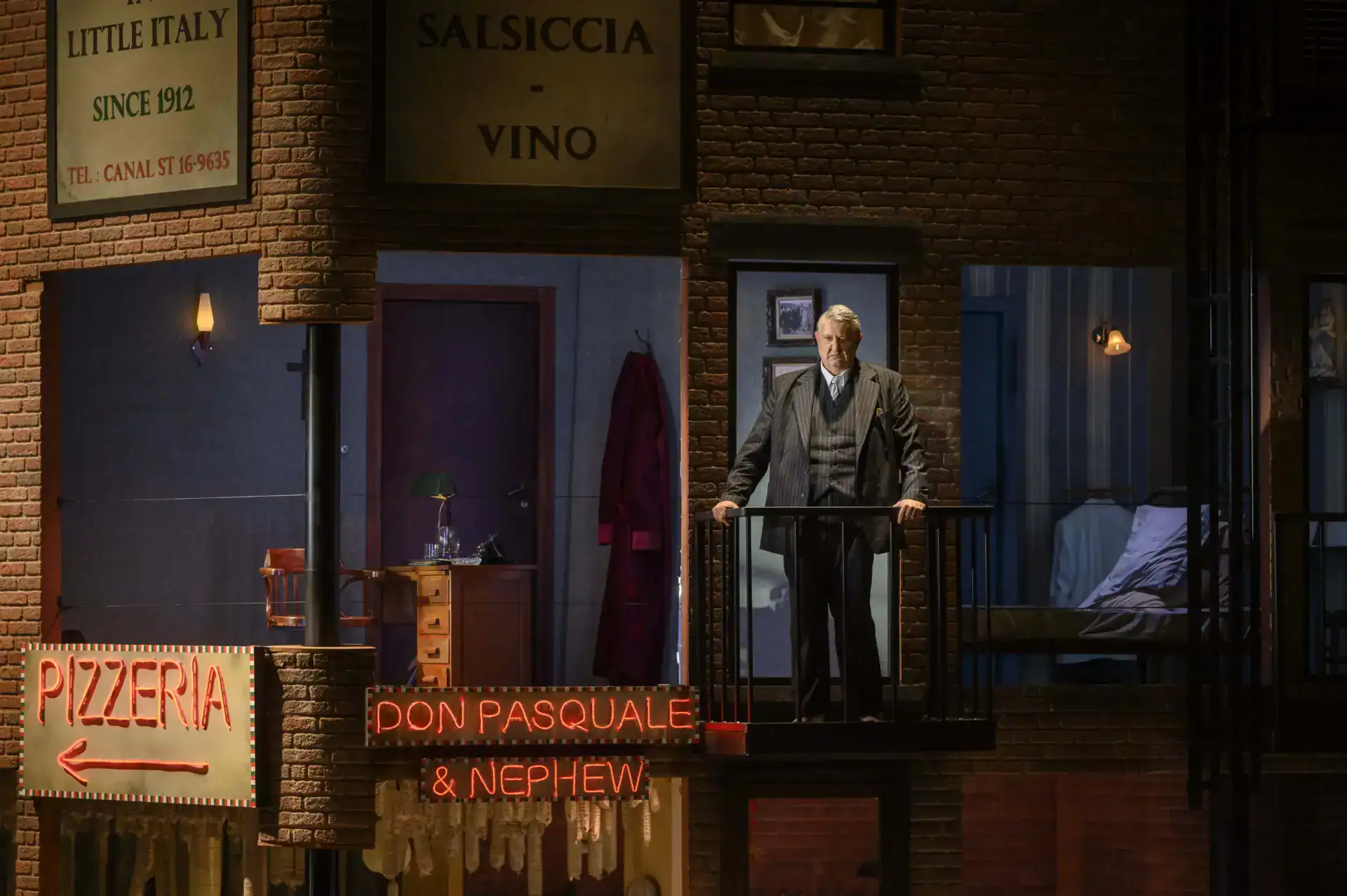
Only five years younger than Gioacchino Rossini, Gaetano Donizetti is also primarily known as an opera composer. His comic operas are characterized by a fine blend of humor and lyricism. This is certainly the case in Don Pasquale, his last opera buffa. The humor is never crude, and the characters emerge as individuals. The production at ORW directed by French director Mirabelle Ordinaire was an ideal illustration of this.
Donizetti is only 25 years old when he achieves his breakthrough in Rome with Zoraida di Granata, one of many operas that have since fallen into obscurity. In 1830, Anna Bolena at La Scala in Milan marks his international breakthrough. Success in Paris leads him to relocate his activities there for a number of years. It is also in Paris that in 1843 at the Théâtre Italien Don Pasquale is premiered as a masterpiece in the buffo genre. During this period, Donizetti begins to show symptoms of syphilis, the disease that gradually affects his brain. Almost paralyzed, he returns to Bergamo where he dies on April 8, 1848, at the age of 51.
Summary
Don Pasquale is an old bachelor who wants to prevent his fortune from going to his nephew Ernesto. He therefore quickly plans a marriage and Dottore Malatesta helps him find the chosen one. It is Sofronia, whom he presents as his sister, but who is actually engaged to Ernesto. He of course hopes that the trick will work out well. A mock wedding takes place and immediately Sofronia-Norina carries on like a hellcat. Don Pasquale wants to get rid of her, especially when he catches her in the garden with a lover. Malatesta plays it cleverly and advises him to have her marry his nephew. Don Pasquale agrees immediately and even gives her some extra money.
Lively Neighborhood
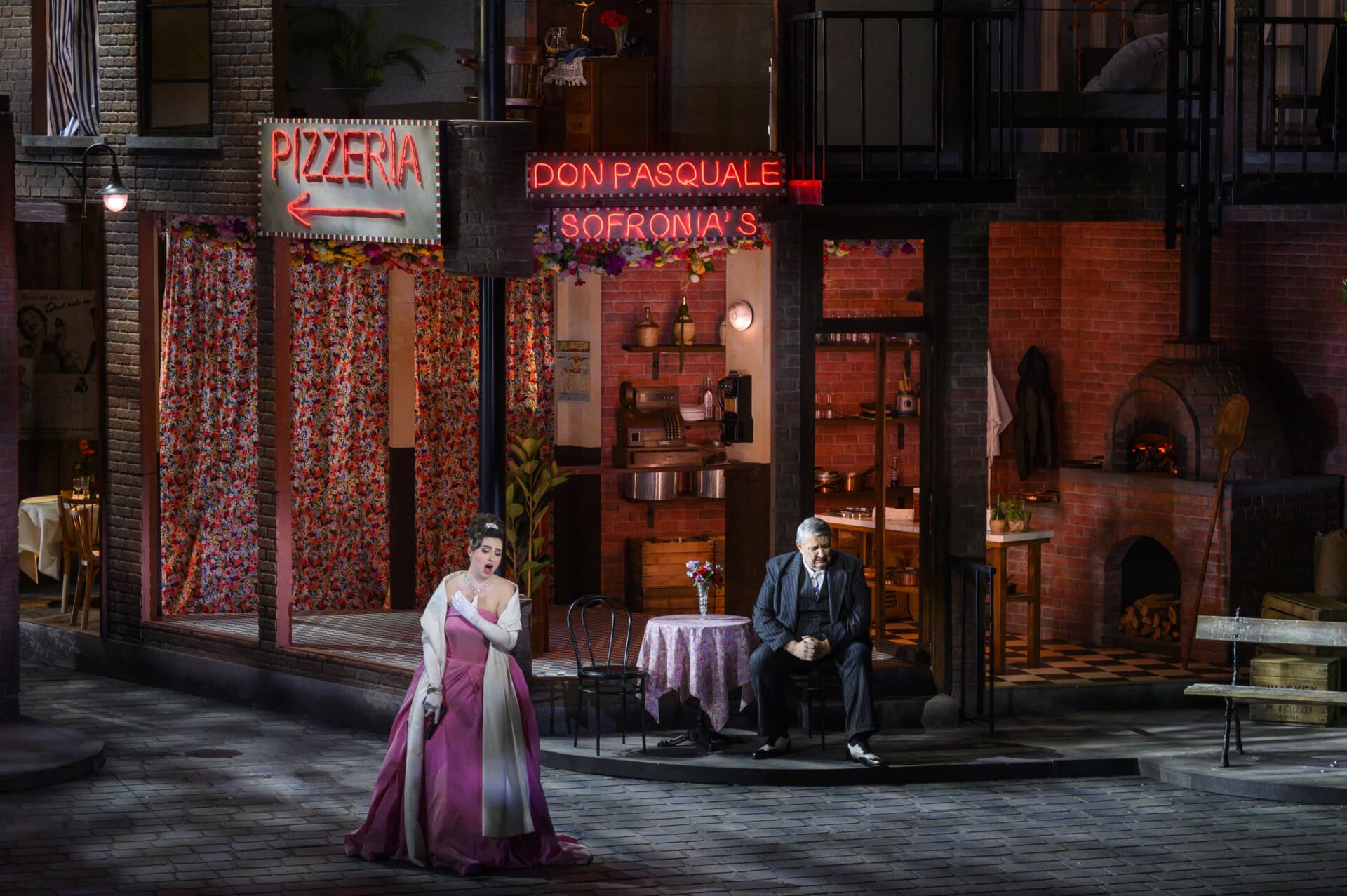
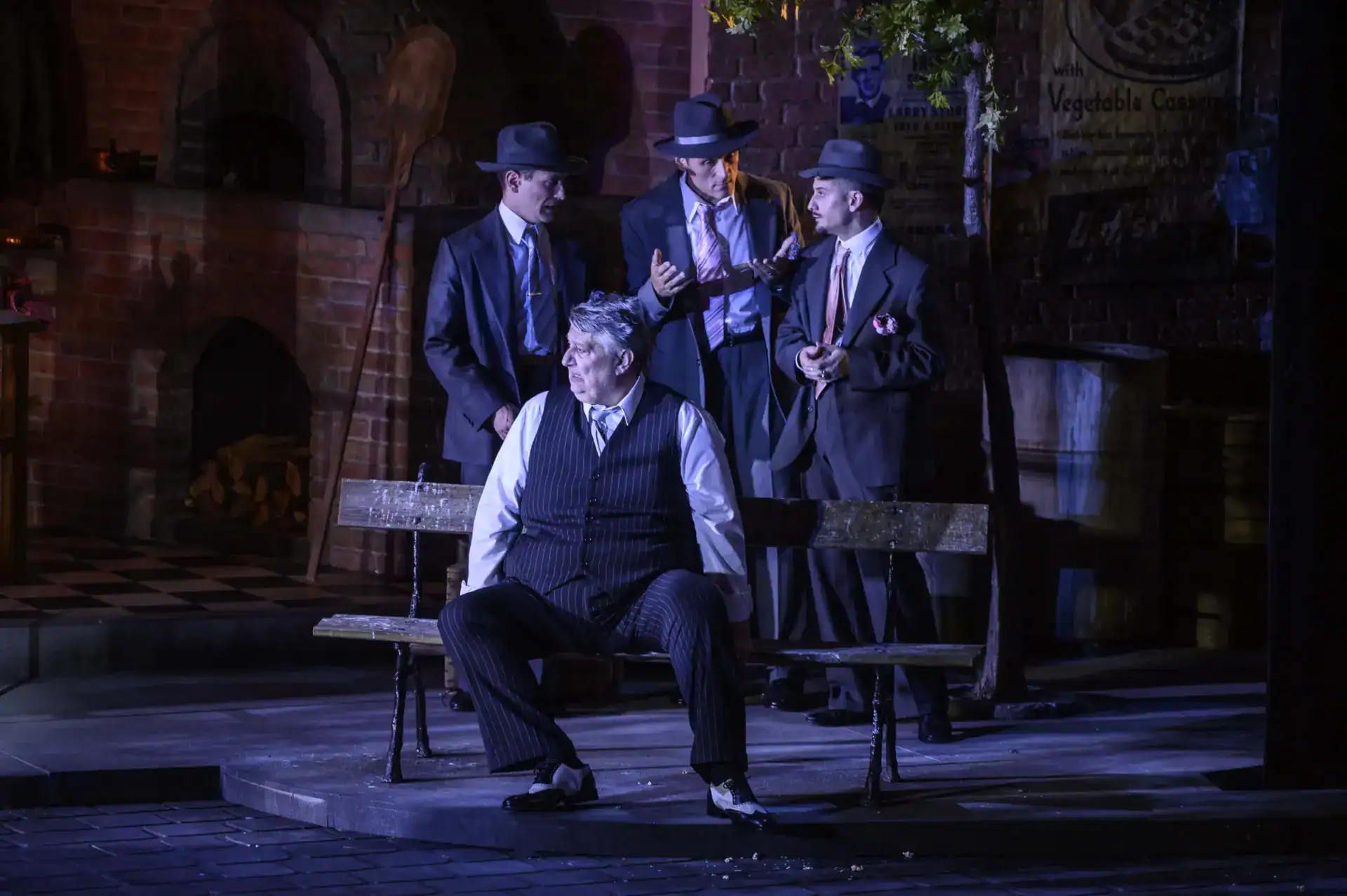
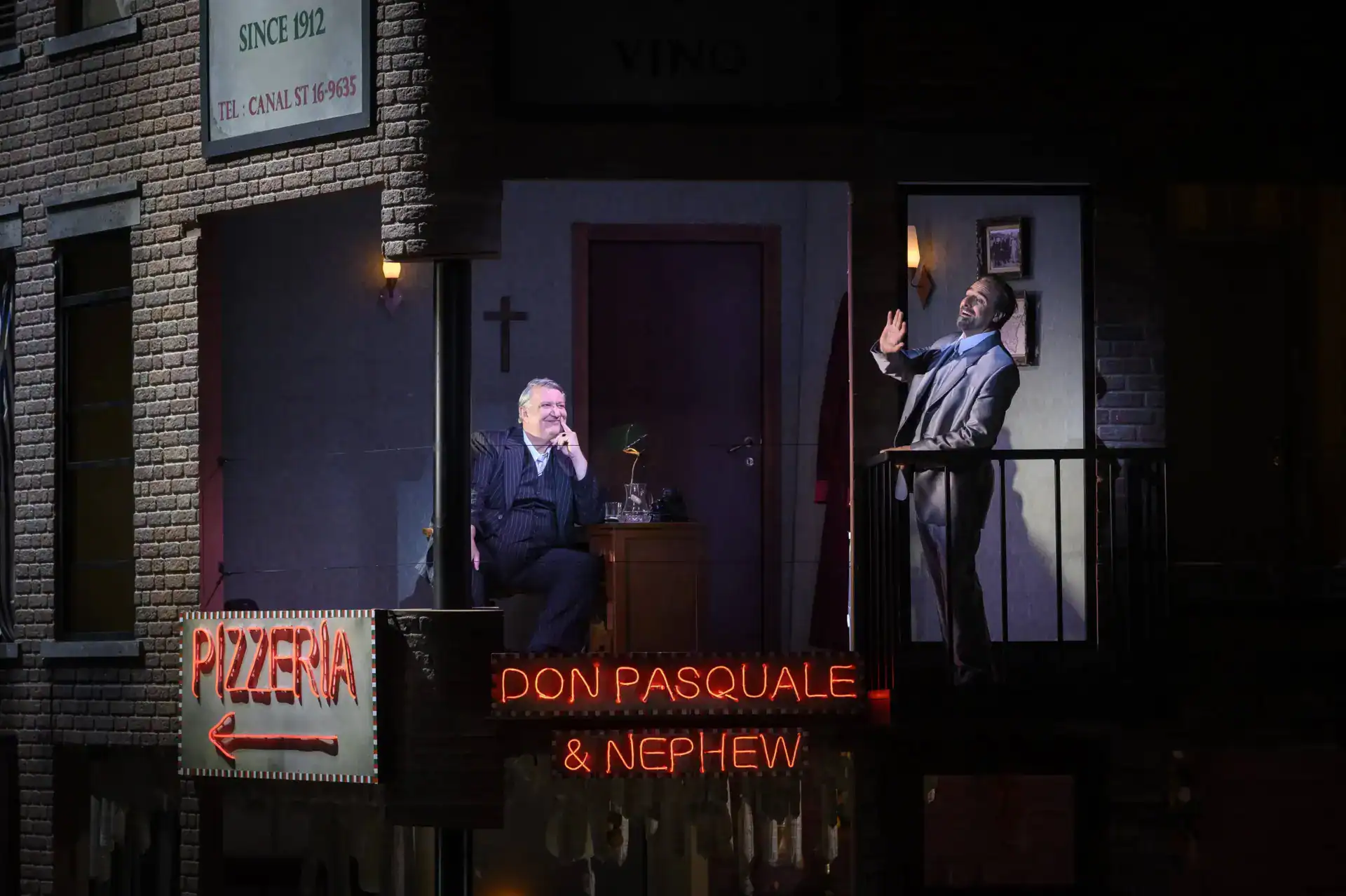
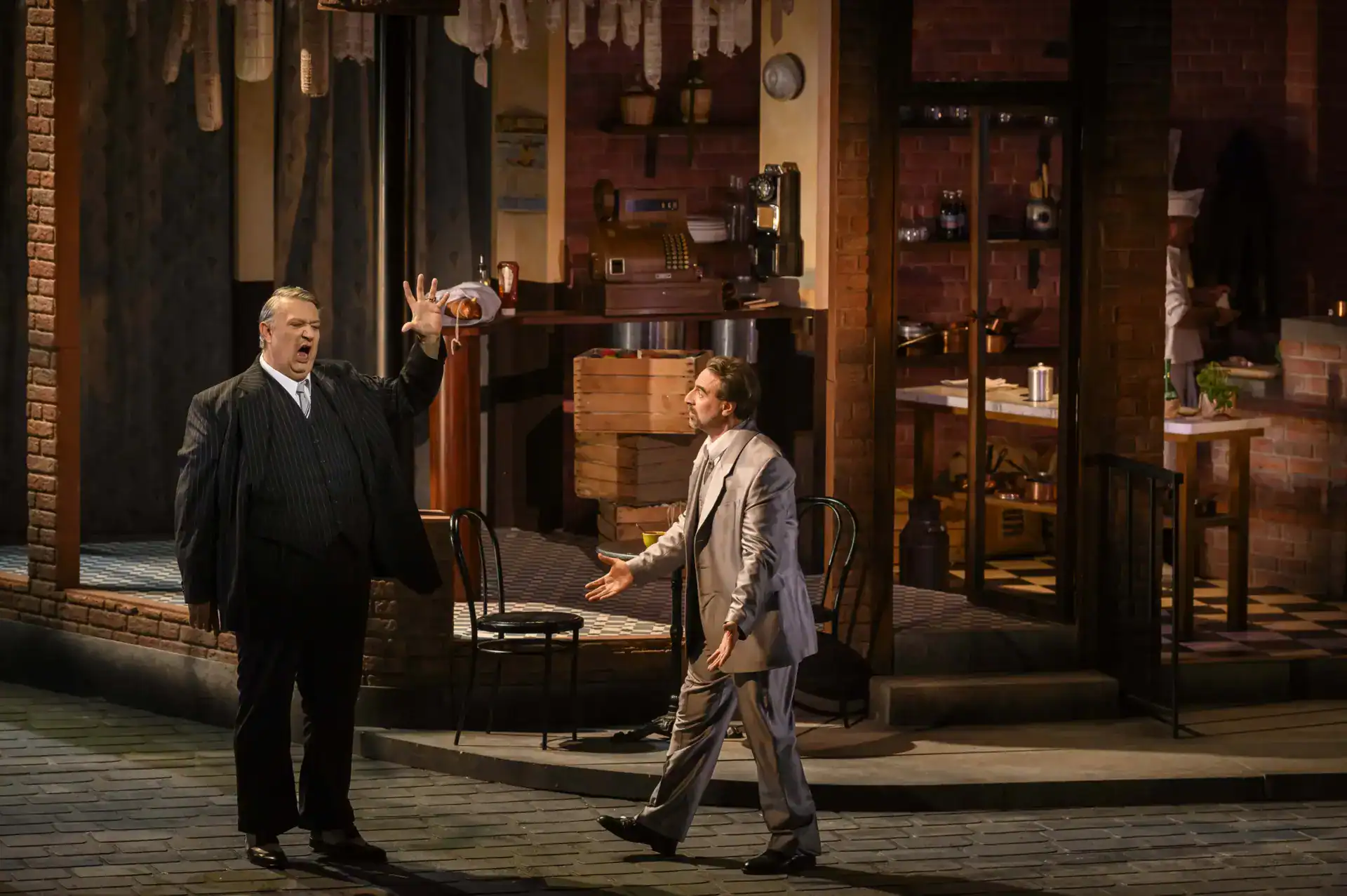
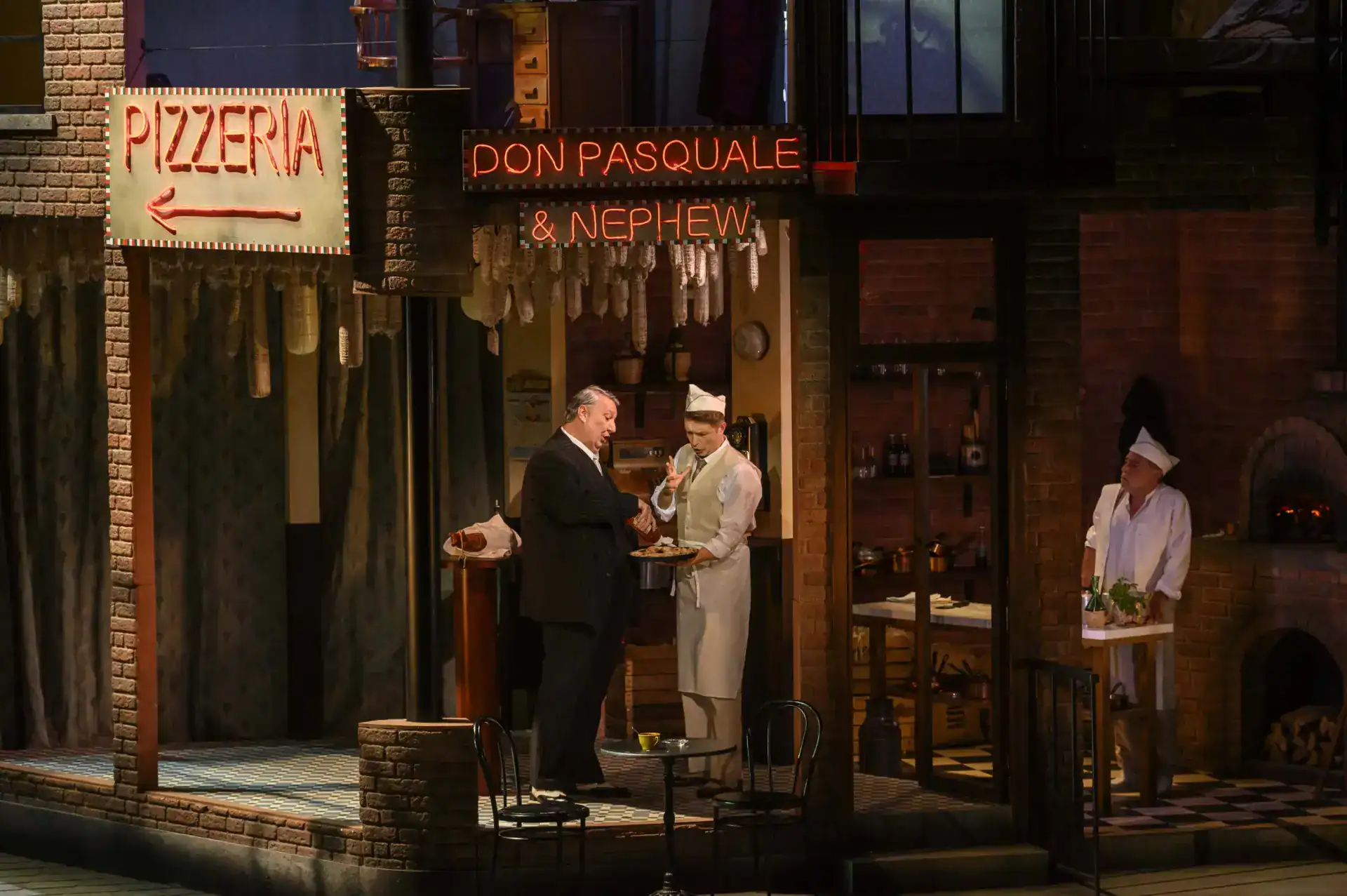
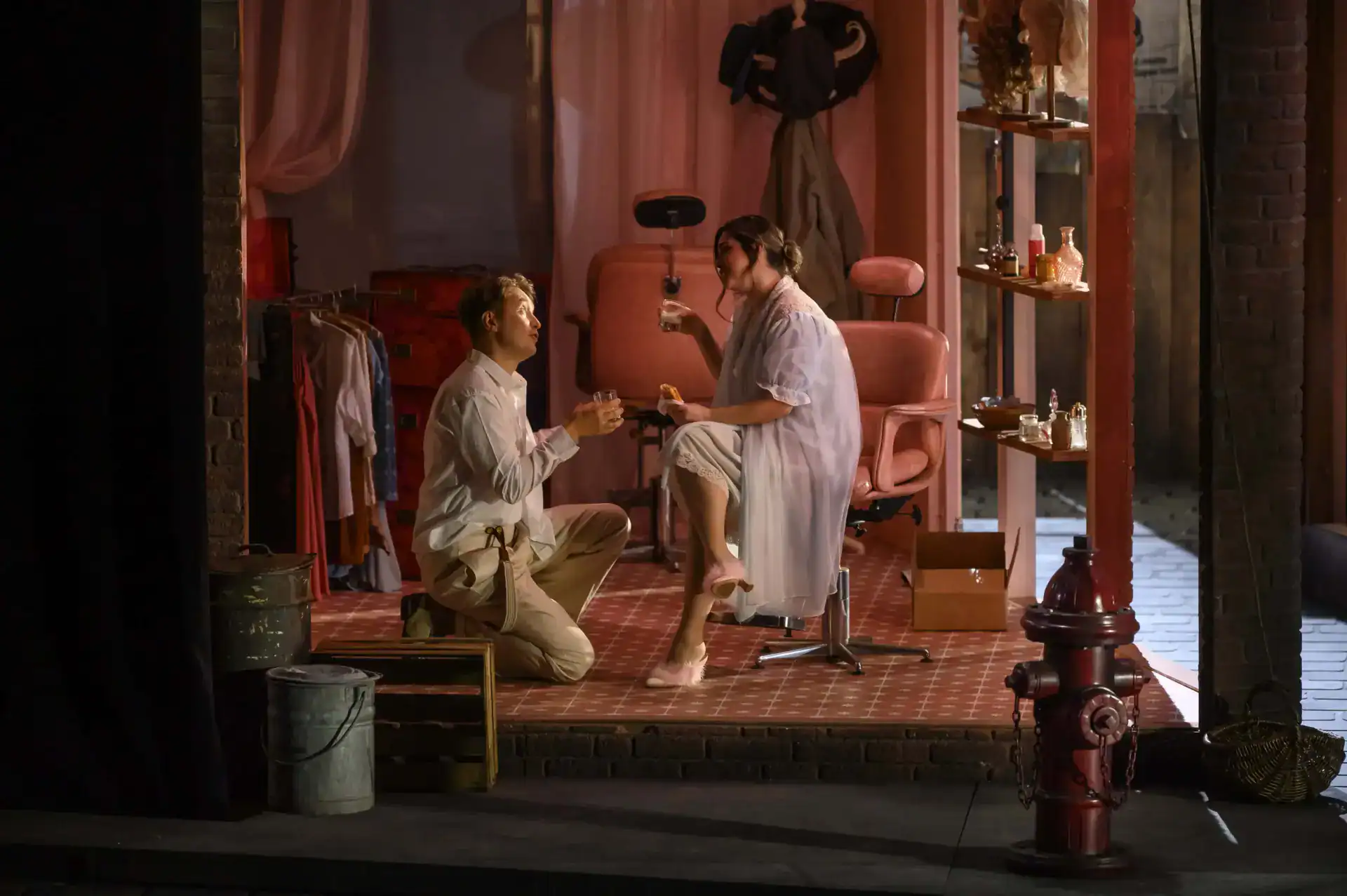
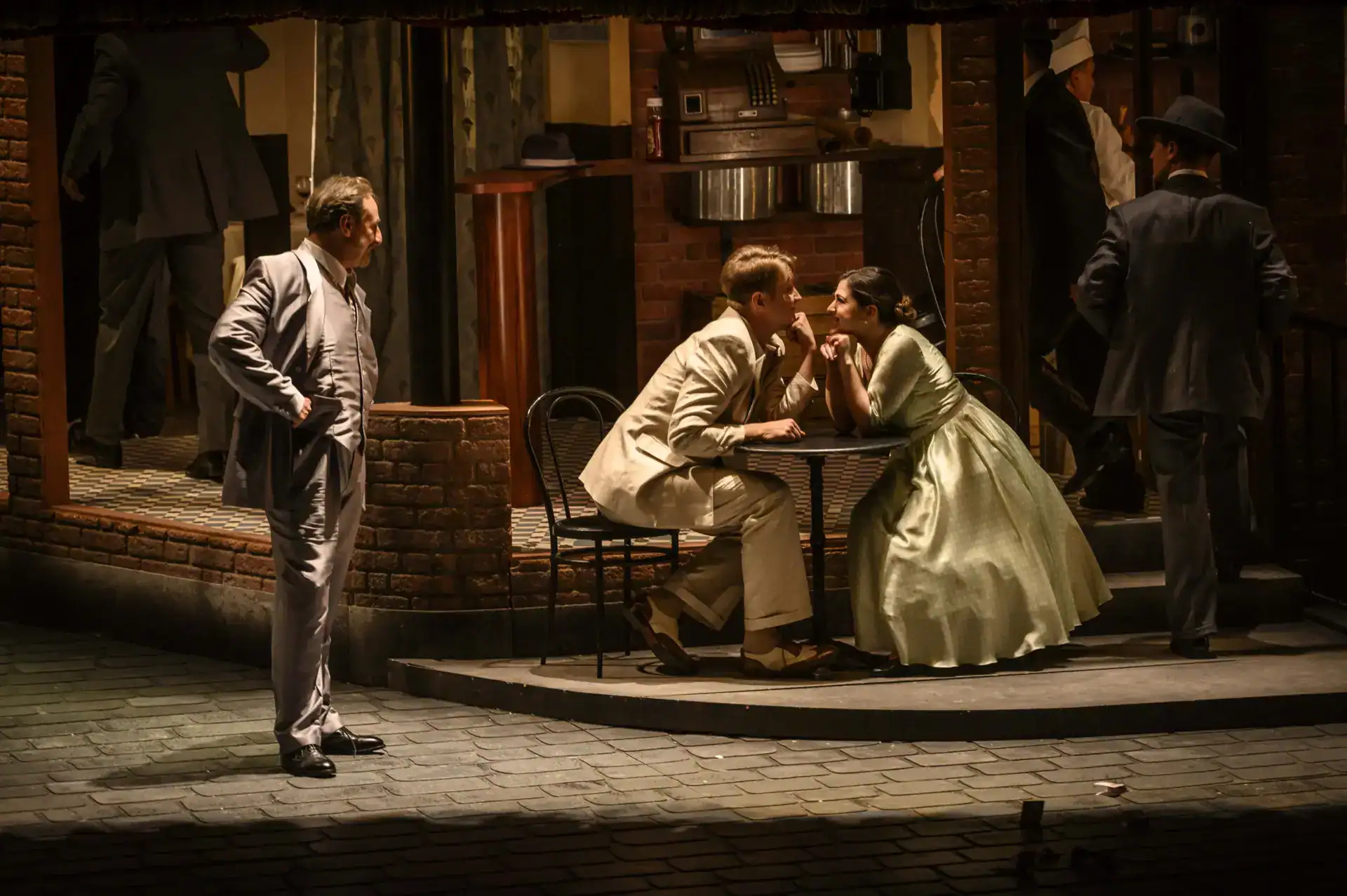
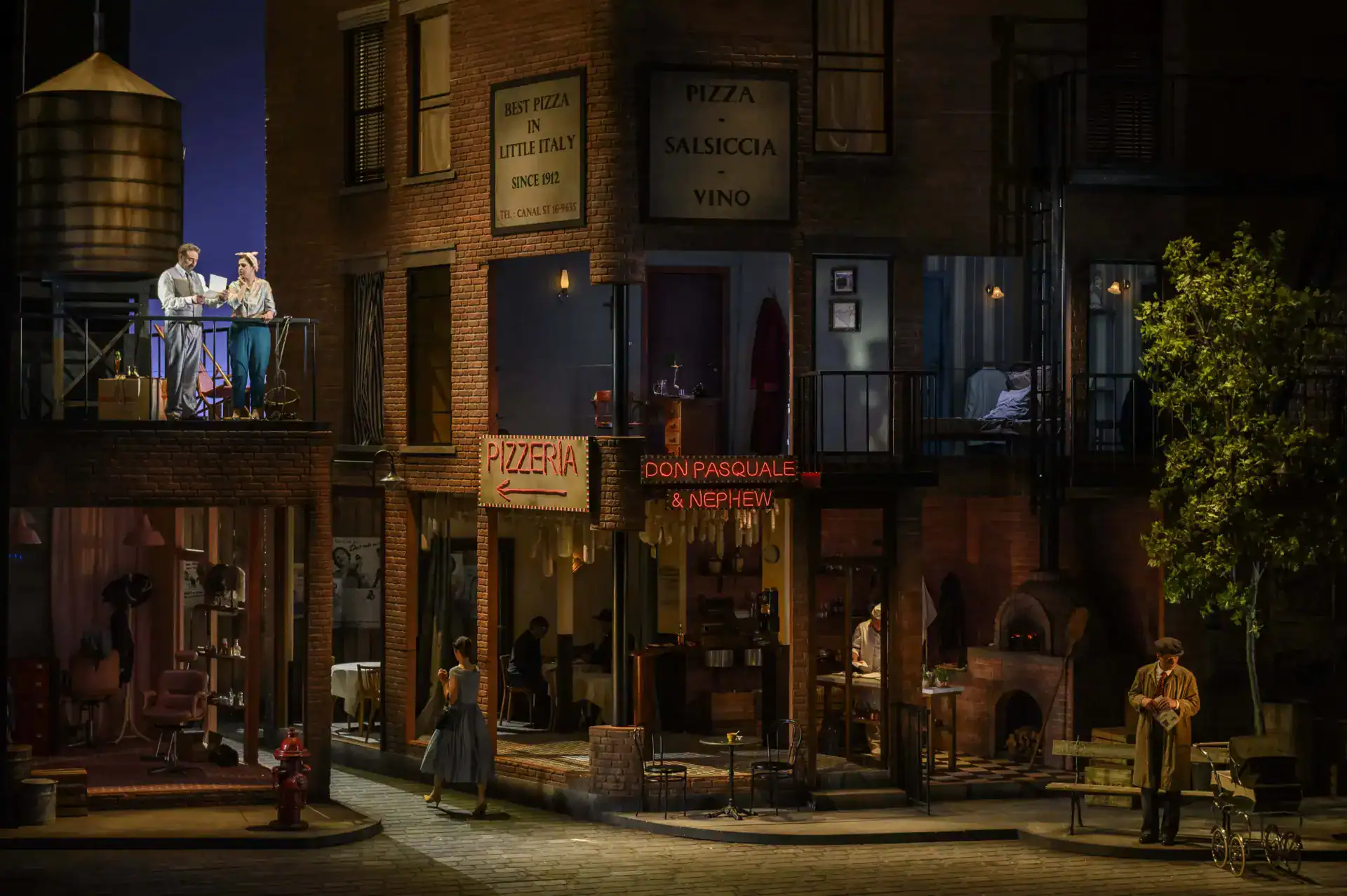
Mirabelle Ordinaire sets the story in Little Italy in New York, 1920s. A location and period that places the "italianità" of the characters and the situation in a credible, everyday atmosphere in a simple way. In the pizzeria, flour is delivered with a funny three-wheeled delivery van, the street is swept, a young woman takes a walk with a pram. In this working-class neighborhood, the characters get the chance to develop according to their typical character traits. The story immediately comes across as natural and at the same time touching. Exactly what we expect from such a lightweight plot of an opera buffa. Don Pasquale and his nephew Ernesto have their rooms above the pizzeria and above the door Sofronia-alias Norina-runs a beauty salon. ORW assembled a cast of singers who perfectly profile their character in this context. Ambrogio Maestri presents himself as Don Pasquale, a neatly dressed gentleman who can arrange his face in the most credibly naïve and gullible manner, but is immediately head over heels in love. (Un fuoco insolito). But he does not let himself be thrown off balance throughout the opera: he wants to marry and is too stingy to grant Ernesto his inheritance. But deep down he is good-natured, which Maestri effortlessly radiates as the opera progresses. Vocally, he bends his sonorous baritone voice into the now restrained, then astonished tone of the comic figure, who lets himself be taken in throughout the piece, yet stands good-naturedly above humiliation in the final rondo La morale in tutto questo. Marcello Rosiello also proves himself as the manipulative but witty and enterprising Malatesta, who keeps the strings of the deception firmly in hand. Maria Laura Iacobellis plays as Norina the impulsive and rebellious young woman, but she remains sympathetic and in the bitter lesson she gives Don Pasquale, she leaves no doubt from the first scenes that Ernesto is her chosen one. Perhaps this Ernesto, played by Maxim Mironov, comes across as an actor the least convincingly, until he gets to really claim triumph at the end of the opera. Vocally, he was seductive with his soft tenor timbre, for example in his larghetto Cercherò lontana terra. While Maria Laura Iacobellis had a tone that was too shrill to sing with nuance the lyrical soprano that Norina ultimately is. A pity for such a beautiful aria as Quel guardo il cavaliere.
The orchestra under the direction of young conductor Dayner Tafur-Diaz also often sounded especially powerful and missed the lyrical tone that in this opera buffa balances the tender with the comic. However, what was splendid—and should certainly be mentioned—was the trumpet solo as an introduction to Ernesto's aria at the beginning of the second act, which the soloist rightly got to perform on stage.
All in all, a very enjoyable performance of this comic gem by Gaetano Donizetti.