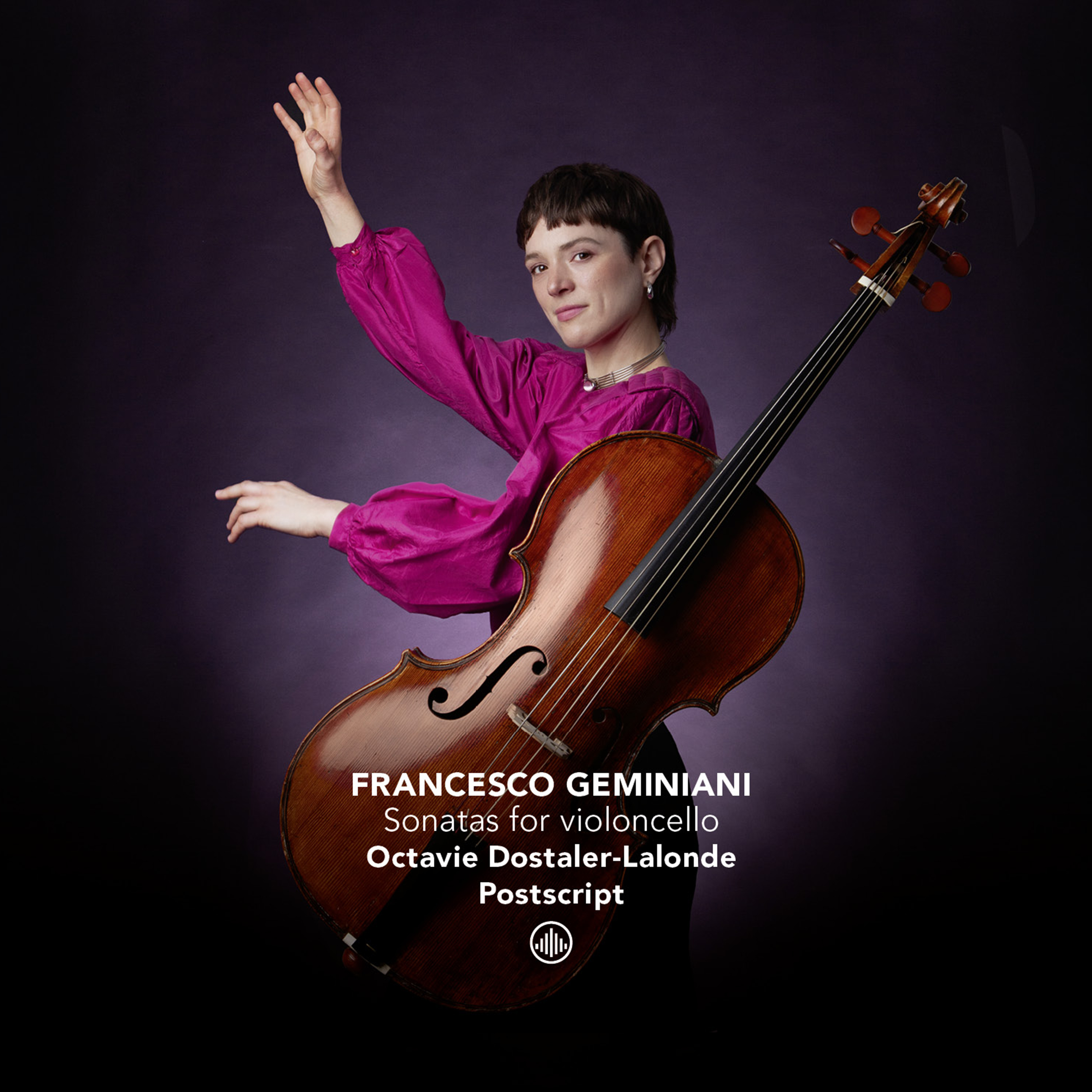
The Italian composer Francesco Geminiani (1687-1762) had little use for employment relationships and in that sense alone he differed from most of his contemporaries. No servant, then, of some (church) prince or noble family. Without a patron, however, it was quite difficult to make a living. Hence Geminiani's frequent publishing of his own works, including not only compositions but also theoretical treatises. He was thus the author of one of the first theory books devoted to violin playing, The Art of Playing on the Violin, published in London in 1731, to which city he had moved at the age of 27 to try his luck in music. Which worked out excellently for him, as this former talented pupil of Arcangelo Corelli and Alessandro Scarlatti quickly became a sensation in the British capital as a violin virtuoso and composer alike. Later, in Irish Dublin, success followed him and he even managed to establish a proper concert hall there at his own expense.
Geminiani's fame today owes much to his concerti grossi and sonatas. Of his cello sonatas op. 5 several versions exist, undoubtedly motivated by commercial considerations. Thus, together with the original version, a transcription was published for violin and continuo. Of his (twelve) violin sonates op. 1 no fewer than five different printed versions appeared. Old(er) works were often reissued by him, mostly with additional inner voices enriching the original texture. This has also – following the explanation in the booklet – inspired this ensemble: thus Geminiani's addition of harmonic progressions for the second cello also meant adding middle voices to the texture.
For both sonatas in C, op. 5 nos. 1 and 3, a five-string cello piccolo was used in this performance. This not only gave a tenor-like sound, but also helped with the higher tessitura. Thanks to the use of harpsichord, cello, cello piccolo, violone and theorbo, the range of colours is rich and varied. With respect to the transmitted stylistic conventions, the entire ensemble makes music with infectious freshness and vitality. The recording quality is such that the spatial contrast effects come into their own beautifully. This release can rightfully measure itself against the debut album of Octavie Dostaler-Lalonde, which also appeared last year on Challenge Classics, in which she fulfils a role tailor-made for her in From Mannheim to Berlin, assisted by two equally eminent musicians who are part of the Postscript ensemble: fortepianist Artem Belogurov and cellist Victor Garcia Garcia.