


First candidate: Bryan Cheng - Canada, °1997
[caption id="attachment_31969" align="alignleft" width="350"]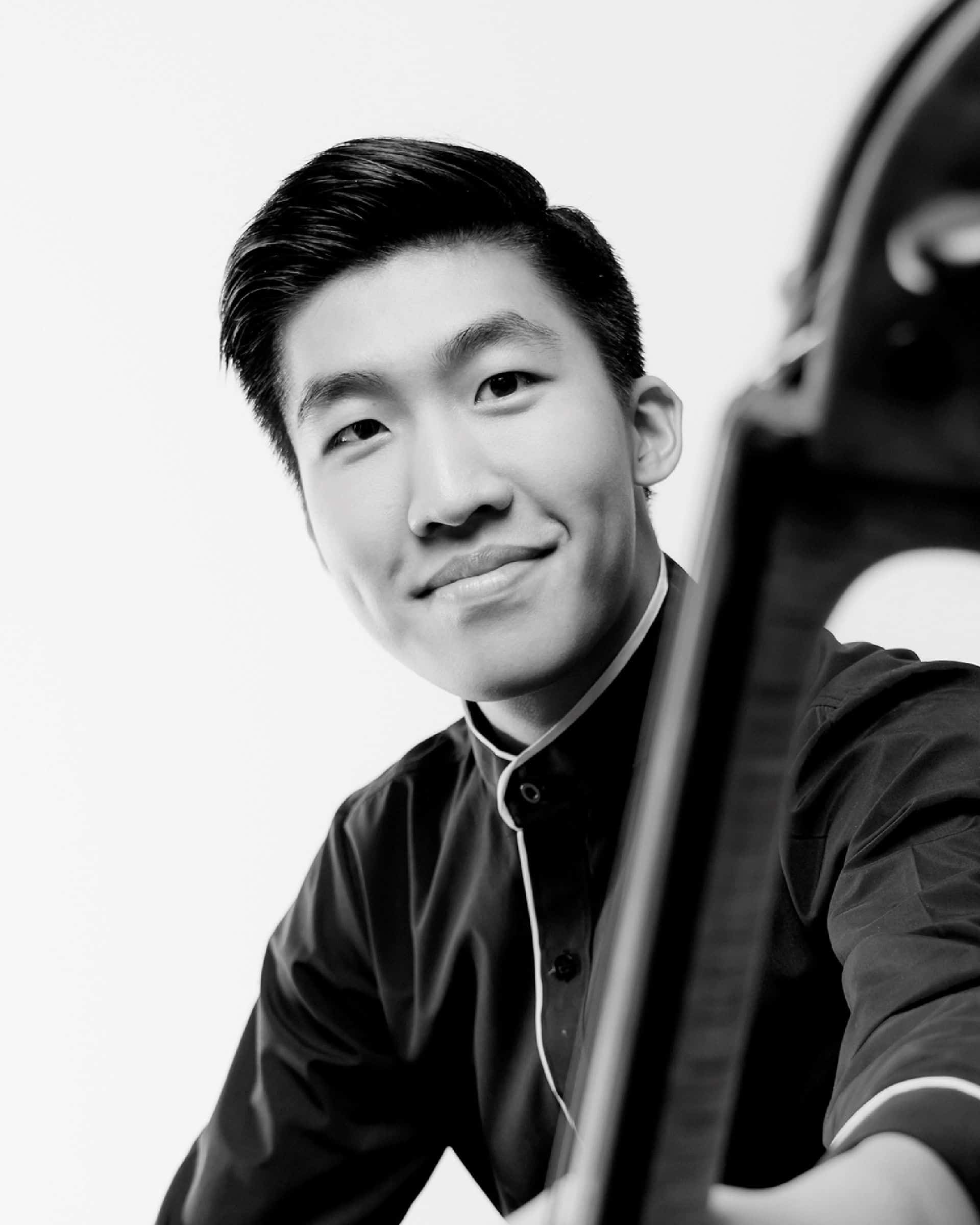 © Harald Hoffmann[/caption]
Jörg Widmann's '5 Albumblätter', as you meanwhile know is the imposed work, sounded completely different again. No interpretation is the same and that makes it fascinating and at the same time d i f f i c u l t to judge.
What I don't like are the enormous glissandos at the beginning that we haven't heard from others so far. Cheng can combine enormous technique with very great stage experience and quite a number of competition participations. You see that too in his (too?) self-confident demeanor. To my mind, he overdoes the emphasis on anything and that he underscores with deliberate gesturing. Look, juries and the audience in the hall might be seduced by that, but anyone who listens again and preferably does so blind, will form a different opinion. It's not the first 'competition beast' that ultimately doesn't have a (major) career. After all, genuine inspiration is hard to find.
Antonín Dvořák is the father of the romantic Cello Concerto no. 2 in B minor op. 104 B 191. Actually, the composer didn't feel like writing this concerto. It wasn't until after listening a few times to Victor Herbert's second cello concerto that Dvořák set to work with conviction. And how the world should be happy that he got to work. This cello concerto is one of the memorable monuments in the repertoire.
Honestly? I'm a bit horrified by Cheng's entry. This is hard and somewhat brutal, with groaning bowed strings. Finesse and romance is something quite different from what for me are sometimes even ugly sounds. In the second part, that harshness is fortunately absent and Cheng even becomes sultry.
You hear too little personality in his playing and too much of his teacher from the Russian/Jewish school for string players from which distance is being taken. It marks a certain period especially in the 20th century, but – may we be chauvinistic? – the old Belgian school is taking over on the world stage and rightly so. It is much purer and much more instrument-bound, which also allows a score to be played more clearly and warmly. That Cheng is still stuck in that technique seems unusual and can form a mortgage on his later career, however well it may be going these days. We are very curious about the jury's opinion.
Second candidate: Oleksiy Shadrin - Ukraine, °1993
[caption id="attachment_31982" align="alignleft" width="350"]
 (c) Koningin Elisabethwedstrijd[/caption]
'5 Albumblätter' by Jörg Widmann: here the warm color that makes the cello so attractive immediately prevails. A great musician, that's what we hear throughout. Shadrin makes the work more beautiful, makes the color shading clearer, lets the whole breathe. We hear no groaning, no sliding over the strings, it is the 'new old technique'. The contrast with the previous candidate could not be greater. In the final part of this work, more bravura could have been heard.
Sergey Prokofiev needed 18 years to complete the Sinfonia concertante op. 125, to rework it. The composition had no success in its early years, and when Prokofiev heard the work nine years after the premiere, he decided that the criticism was justified and he reworked it for the then still very young Mstislav Rostropovich. It is the final version that is programmed.
A good choice, for multiple reasons, as far as bringing this work for this competition is concerned. It is rarely performed and it appears to be close to the cellist's heart. He becomes deeply absorbed in the work, although it could sometimes fill the hall more and certain accents could be laid more sharply. Shadrin especially emphasizes the lyricism, a good thing and I'm with him, but still the sharpness must be put in evidence where required. Perhaps he should have chosen a more purely romantic work?
The KEW can be followed directly via livestream. Click on and sit in the front row with us.
Thursday 02/06 [20:00]
Bryan Cheng [ Antonín Dvořák, Concerto no. 2 in B minor op. 104 | Concerto no. 2 in b op. 104 ]
Oleksiy Shadrin [ Sergey Prokofiev, Symphonie concertante op. 125 | Sinfonia concertante op. 125 ]