

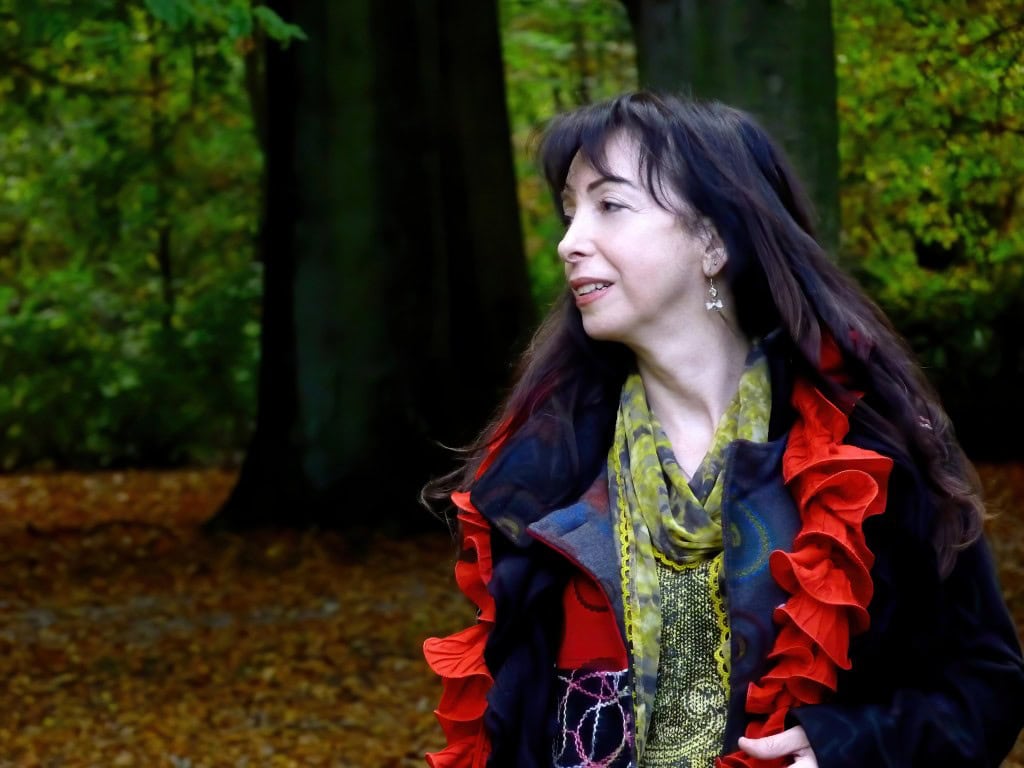
For her album 'Dreamscape', released by Parma/ Navona Recordings, she received the Silver Medal for 'Outstanding Achievement' at the Global Music Awards in 2024. In Frédéric Chopin's Second Piano Concerto and the twenty-four Preludes, she conjures an exceptionally colorful palette there. Earlier she was honored at the Van Cliburn Competition and at the Queen Elisabeth Competition in 1983 (the first edition at the time that was broadcast on television by the Flemish Public Broadcasting). When the Queen Elisabeth Competition could not take place during the covid pandemic, there was the initiative 'The Week of the Queen Top 30' and Klara listeners voted en masse for Eliane as their all-time favorite performer. And in 2013, Ludwig Van Mechelen from Klassiek Centraal presented her with the Golden Career Label.
For some time now she has been living with her husband in Switzerland and we see her here less often. But on January 17 she performs in Beernem, Herentals and Hasselt. That's why we stopped by for a conversation about her birthplace Rio de Janeiro and music education, challenges and her dog Tommy. With coffee and cake.
Hello Eliane. A new calendar year: what are your expectations musically?
There's quite a lot in the pipeline, let us surprise you!
A lot has changed for you in the past period. No more piano lessons at the Antwerp Conservatory now that you're retired.
Art is nourishing people with vitamins. Even outside the Conservatory I can continue to distribute those vitamins. On January 28, we have an event planned in Switzerland with a few people around The Little Prince by Antoine de Saint-Exupéry. With a narrator and choreography… well, multidisciplinary. The first of many events in that area!
 Lovely. How many years were you a teacher there? What has stayed with you most from that period? You did have a phenomenal farewell that they gave you there.
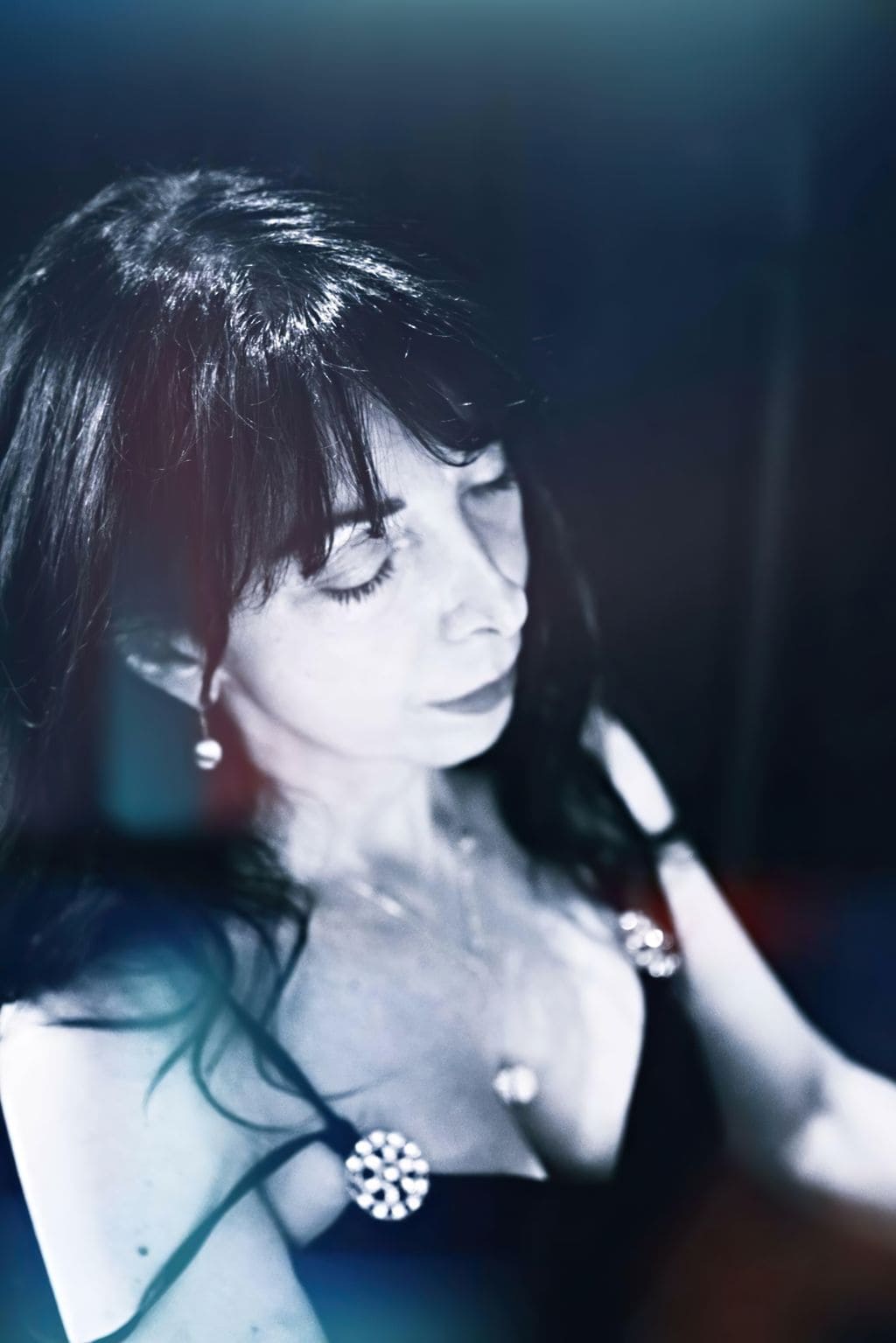
I started teaching at the Music Academy when I was nineteen, ten years later I started at the Conservatory as a teacher. That's quite a long time, isn't it. I still stay in touch with a number of students. They were also there at my Conservatory farewell, with speeches and – how could it be otherwise – live music, with flowers & memories, and that beautiful circle of connection really moved me then.
What has stayed with me most is that I gradually learned to understand how people tick. At first all students are insecure and carry their own issues with them. I found it extremely fascinating to be able to witness how they could optimally blossom. In group lessons I saw that they barely talked to each other in September for example and usually felt quite tense. By December that looked very different! It's so important to relax when playing music. Playing together with your instrument… How hard and how fast you want to go: everything depends on that. And so proper breathing is vital. Because only with good breathing can you completely relax. It also helps if you accept that there's no way around it: you have to go through various phases. If necessary, you start by performing two pages. Such a piano education should not hurt, but should be experienced as a form of peace. Then you also learn more easily to share that music with others.
I learned to work with all kinds of personalities. A heavenly gift.
Quite a few of my students have also become teachers or lecturers, each one excellent in their field. I am tremendously proud of them.
How do you see music education evolving further?
When I studied myself, I had mainly contact with Jacques Detiège and much less contact with other professors. In the meantime, the Royal Conservatory Antwerp as School of Arts is part of the AP University of Applied Sciences Antwerp with bachelor's and master's degrees. And more theoretical subjects have been added. But even people in theory realize that practice is the most important thing, and they take that into account. You still have to pass the entrance exam first. And we all know that you already need to have quite a lot of skills/talents, just to be able to start.
There's even more that has changed in your life. Recently you moved to Switzerland with your husband. Are you getting used to it there? Does it also mean a switch in your concert activities?
In Switzerland we encounter a lot of nationalities who work together with the necessary respect for each other. Many of these people have a heart for culture, and that's always a pleasure. Recently I also heard someone speaking Portuguese there, so nice: suddenly Brazil was there again, right in front of my nose!
I also have a piano in the area there, they often give concerts in all possible genres, and I use that piano for my weekly live stream on Saturday afternoons on Facebook. I started that during the lockdown. Even after the covid pandemic I continued to do it. And now in Switzerland, in addition to my virtual visitors, I also have an enthusiastic live audience. Great!
As for my concert activities: I just live a bit further away now. An artist knows no borders.
Were you addicted to Switzerland? Because you had your own festival there for more than twenty summers.
You can certainly say that, yes (laughs). Musica Romantica – that's what my festival in Saas-Fee was called – was an extraordinary experience. We had – with those magnificent mountains around as a backdrop – wonderful orchestras from Sint-Petersburg and Vilnius visiting us, conductors such as Yuri Serov, Florian Heyerick and Jaap Van Zweden, and incredible soloists such as Yves Storms, Luc Tooten, Vitaly Samoshko, my own daughter Nina Smeets. With posters ranging from Tchaikovsky to Piazzolla and film music. My husband Ernest was often alone in Switzerland to prepare the entire festival and keep it running smoothly – while I was teaching in Antwerpen and couldn't be with him. Now I can, though! We do everything together now, and that is particularly pleasant.
Actually, I have that addiction to thank him for. As a young boy, he regularly spent time in Switzerland with his family, and dreamed of a life in that imposing nature. Now I'm making that dream come true together with him. How much happiness can one person have!
Many people know you especially as an internationally renowned concert pianist. And as a dedicated pedagogue. But what happens to the conductor and composer in you?
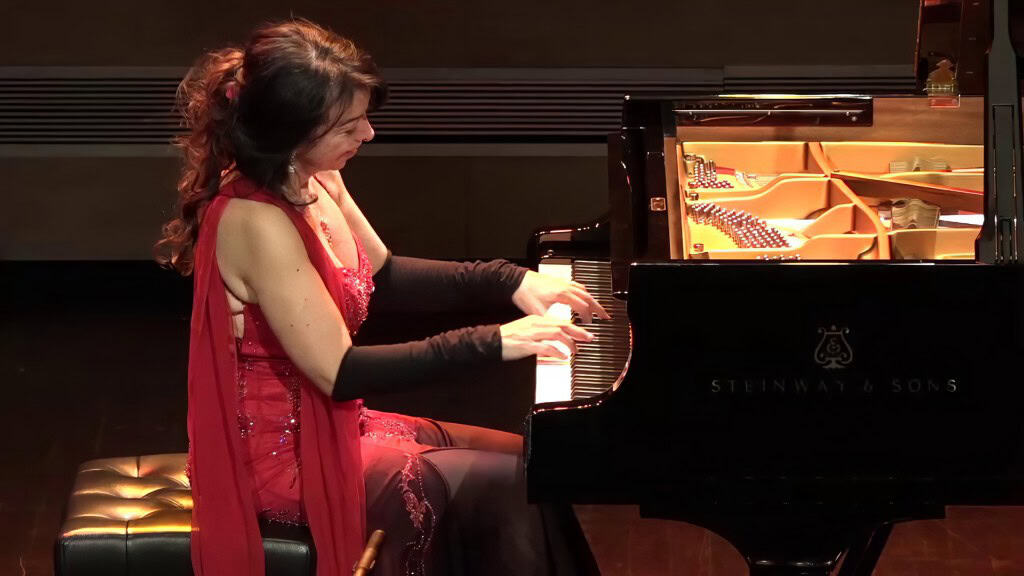
That composing does continue to exist, but more as an improviser. During the live-streams I can really enjoy it. And my audiences with me.
During various editions of Musica Romantica I conducted orchestras, and I did that truly with great pleasure. When my husband became more ill, I had to stop doing that – it became practically impossible.
My entire life my only goal has been: sharing music with others. Without much ambition, without the jacket of a Streber, without diligently tinkering away at an extensive network. I don't do any of that. Call it serendipity: whatever comes my way, I embrace it with both hands and cherish it. With a symphonic orchestra or with a chamber ensemble: for me that makes no difference. I go from one moment to the next, step by step.
At the Conservatory these days they teach students how to pitch, how to sell themselves. That's really something of our time. I never learned that, and I don't regret it either. With that serendipity you run less risk of becoming disappointed. I am grateful and happy for everything I have been able to do in my career.
You've lived in Europe longer than you ever lived in Brazil, but that's where you grew up and where you received your basic training, where you took your first steps in the concert circuit. Sometimes homesick for Rio de Janeiro? Still in touch?
While we're sitting here at the table, my brother André is walking around in Brazil. That's a pleasant thought. I think it's recognizable for quite a few people with a similar background: you're not entirely at home anywhere and at the same time you're at home everywhere. That varies from day to day: sometimes I feel I have no fatherland at all. Sometimes I feel like a citizen of the world through and through. Brazil is an inseparable part of me, and I still speak Portuguese. My children do too, by the way. Homesickness – that plays a role especially when it comes to family.
Family – and that includes your mother. She is no longer with us. Do you still talk to her?
Yes, I often talk to her in my thoughts. Whenever I play Chopin, I think of her. Chopin's music meant a great deal in her life. One of the last gifts she received from her son — who died in a car accident at the age of fourteen — was a record by Rubinstein with the two piano concertos by Chopin.
That's why I wanted to make a CD with those two concertos in 2024. Unfortunately she passed away – just as I was making the recordings with Brussels Philharmonic. I made some adjustments to the orchestra's score that weren't originally there, and I wrote a cadenza myself for the end of the first movement of the second concerto.
I would have liked to give her this CD so much… Still, I hope that she was able to experience it somehow and that she is happy with my gift. Whenever I play pieces from Italy, too, I think of her very hard… and of her smile.
For years you released albums on the Stylin'Art label, a house label so to speak. By chance you started with another label. Is a record label still important for an artist today?
To this day, in my view a record label carries weight because the label, in addition to recordings, also facilitates contacts and alliances with other artists. Though the whole online business should not be underestimated now, social media and streaming platforms. That doesn't mean Deutsche Grammophon and the like have weakened; they still exert considerable power and authority in Concertland. But Spotify and such form an invaluable, democratic tool, particularly for lesser-known and/or rising stars. That's why I fully understand that educational institutions like the Conservatory include subjects such as self-promotion. Social media and streaming platforms are now indispensable in our digital society and create more space for broad communication campaigns and experiments.
Does your piano music change as you get older?
Logical, isn't it? A human life evolves together with advancing insights or new emotions, and those bring new, different colors to your interpretations, to the way you read a score or to your personal approach to composers. I cherish those nuances. Especially on a Fazioli grand piano (the Italian piano I've been using for so long now) I feel the inspiration bubbling up – I don't honestly know how that works – especially on a Fazioli I like to explore new colors. Because yes, I've become so intertwined with the piano (think of a rider & horse that can also be so intimately connected with each other). Look at the piano as a little boat that gives me the opportunity to relax and let emotions loose. It seems like a particularly great gift that I have received, that I've been able to play piano for so long now.
Someone recently called classical music a 'panacea', a medicine that helps everyone with all possible ailments.
Completely agree. I see that happening too when I sit on stage. I see the transformation in the facial expressions of the audience in the hall when they hear music. Miraculous.
You still have a few concerts on your agenda.
Concerts I'm very much looking forward to. On Thursday afternoon January 15 I'll be bringing a program around Love Poetry with poet and former Klara luminary Bart Stouten in OC De Kleine Beer in Beernem. I've collaborated with him before, and that's always a pleasure.
On Saturday evening January 17 I'll be a guest at Cultuurcentrum Herentals, together with pianist Stephanie Proot and percussionists Carlo Willems and Koen Wilmaers. Dear colleagues of mine who are connected to the Koninklijk Conservatorium Antwerpen.
That evening we'll be presenting work by Gershwin & Bernstein. Their music leans heavily toward jazz, and I can identify with that very well – it's as if you're putting on a different jacket.
And on Sunday evening March 29 there's another concert at Cultuurcentrum Hasselt.
Not to forget the livestream recitals of course. Every Saturday afternoon at three o'clock via my Facebook page.
All other concerts can be found on my website www.elianerodrigues.com